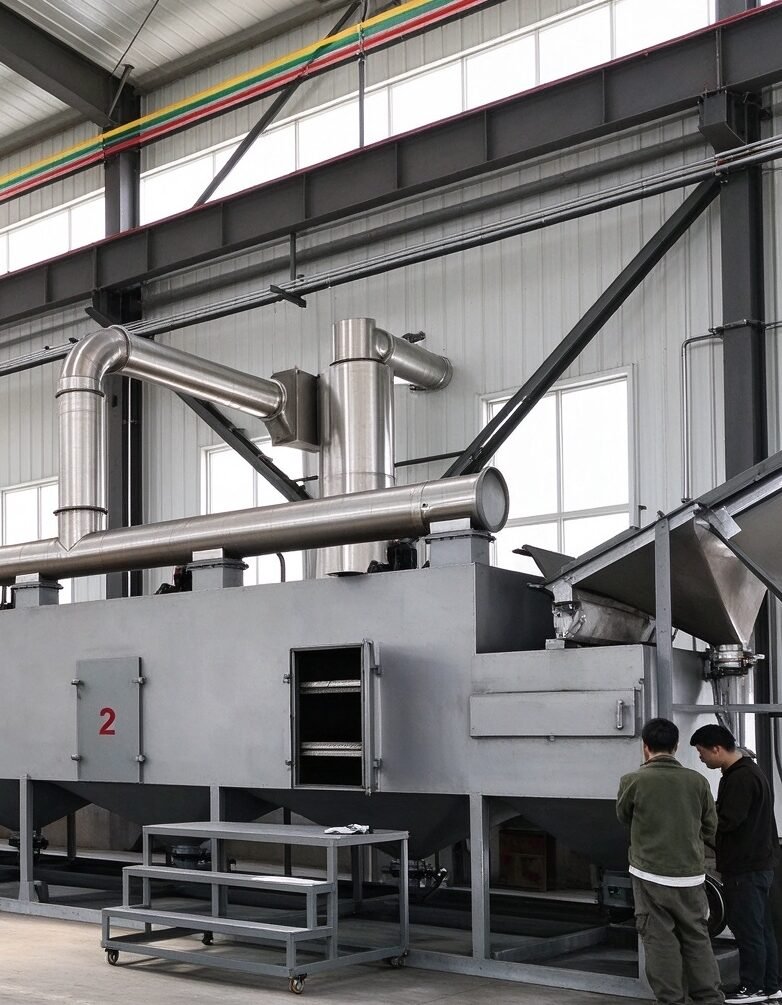
Belt Dryer for Continuous Industrial Drying
Configure belt layout, airflow and heating around your material, moisture target and production line.
- Through-flow drying
- Adjustable belt speed and temperature
- Single-layer and multi-layer configurations
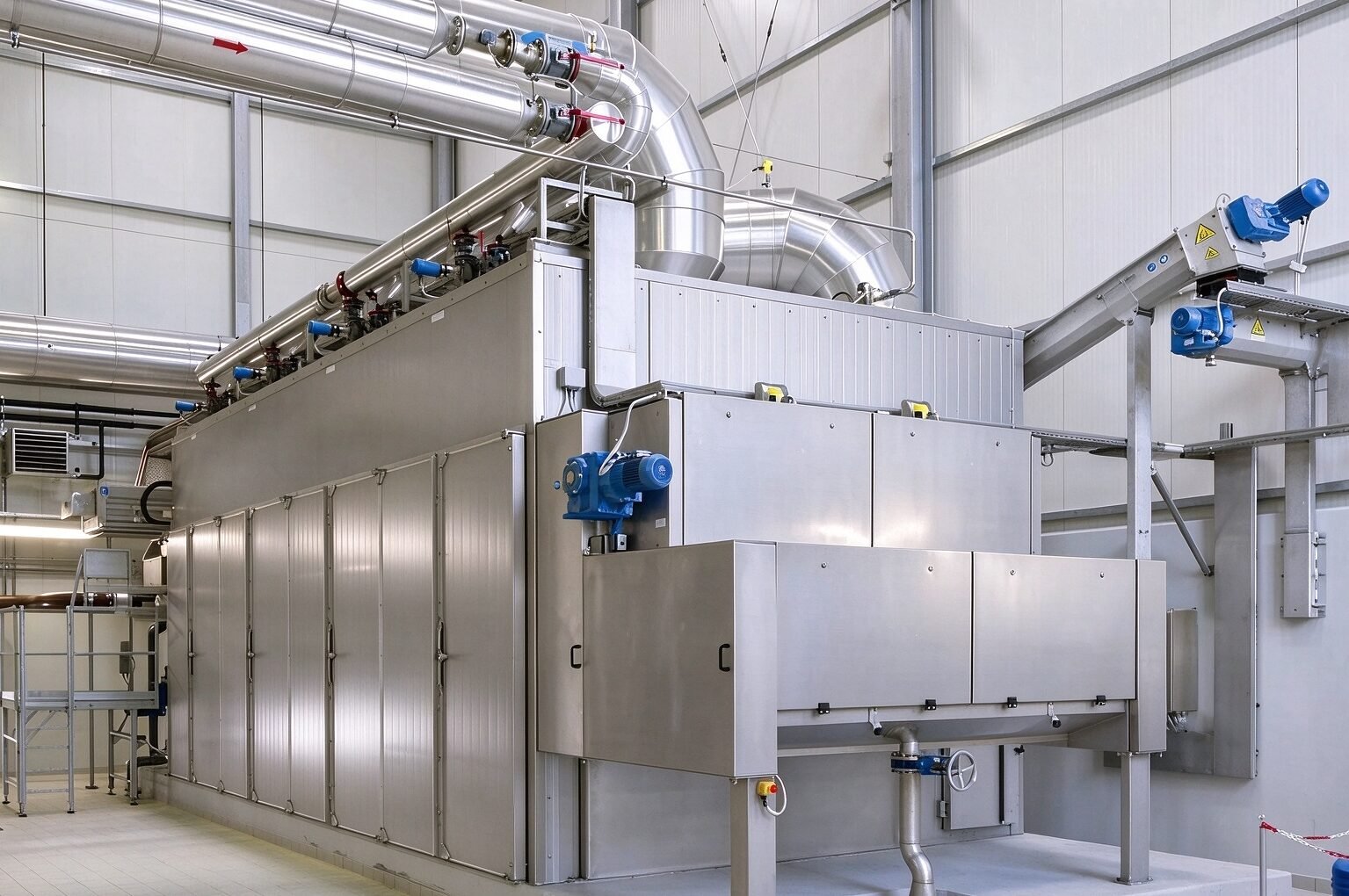
Belt Dryer Configurations
Select the core structure based on your material's physical form, required drying time, and available plant space.
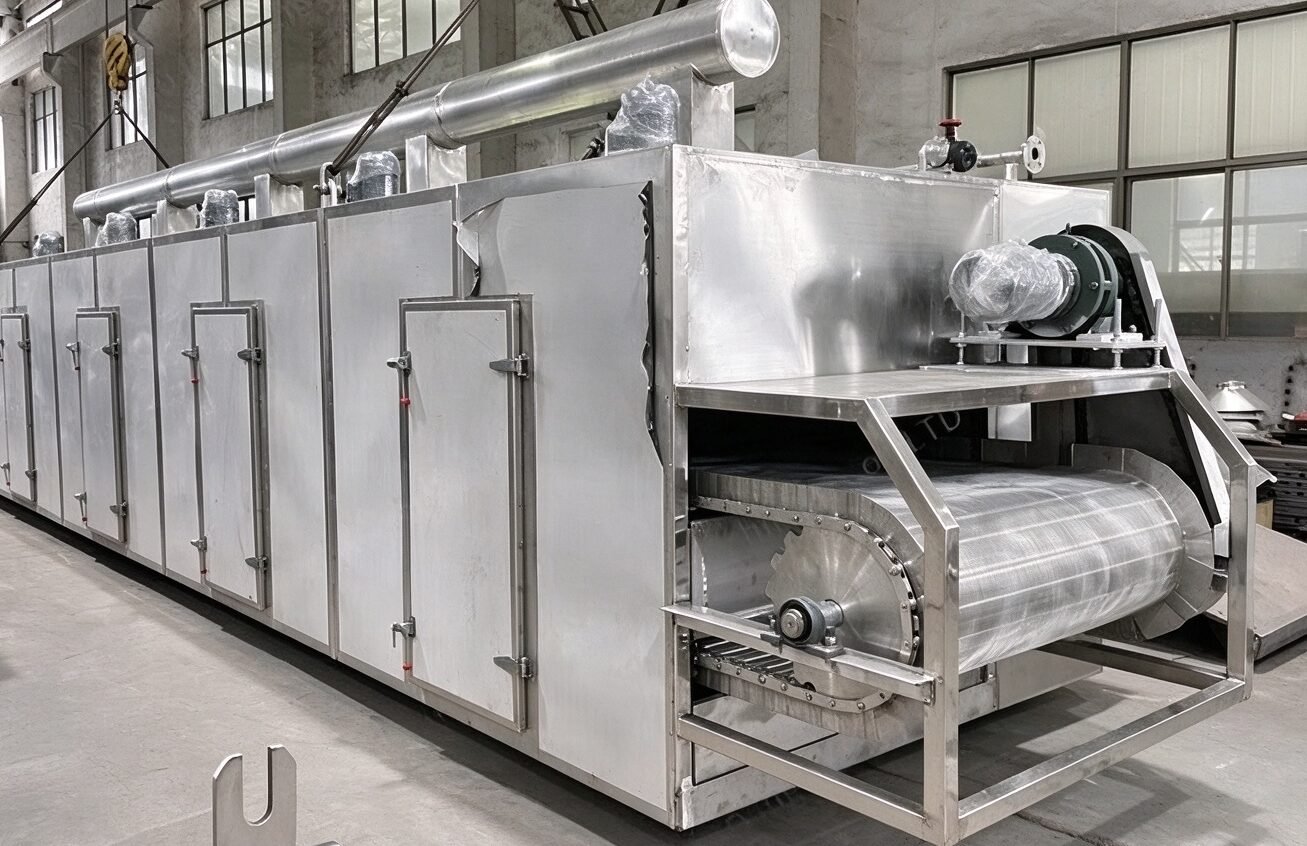
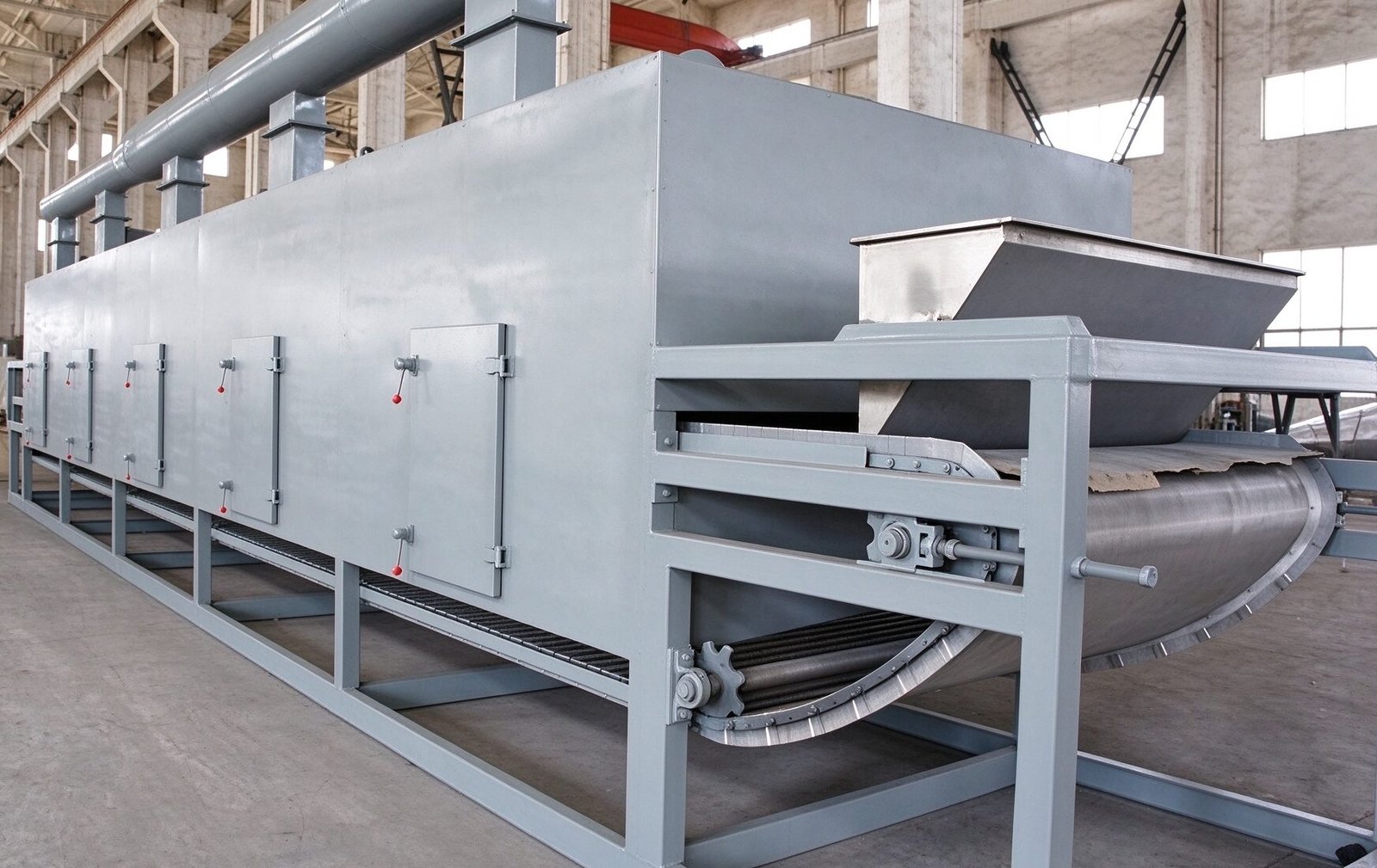
DW Single-Layer Mesh Belt Dryer
- Suitable For: Flakes, strips, and granules with good air permeability.
- Structural Feature: Continuous single-level conveying, supporting shape retention during the drying process.
- Selection Focus: Material bed depth and uniform spreading are critical for consistent results.
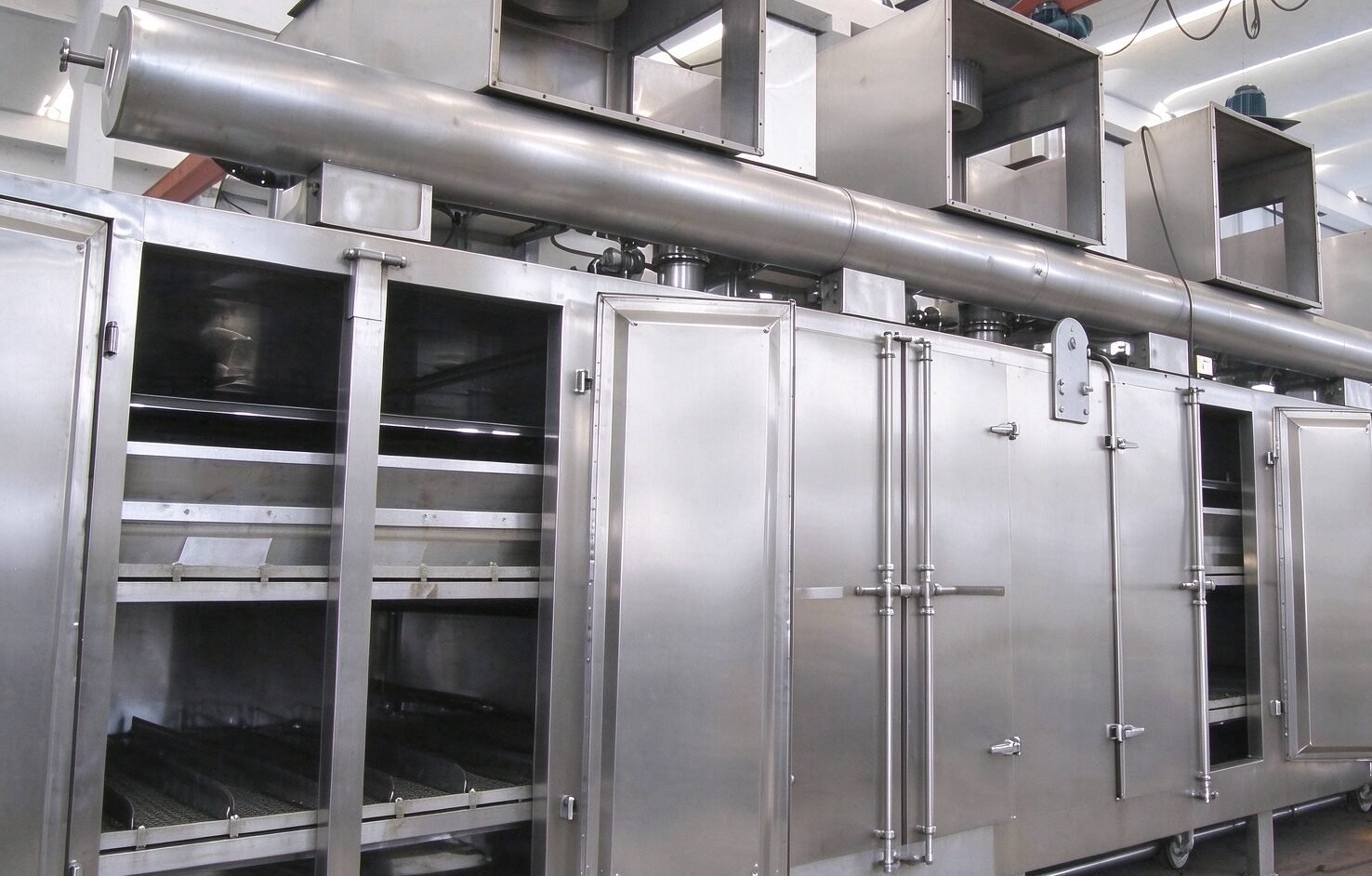
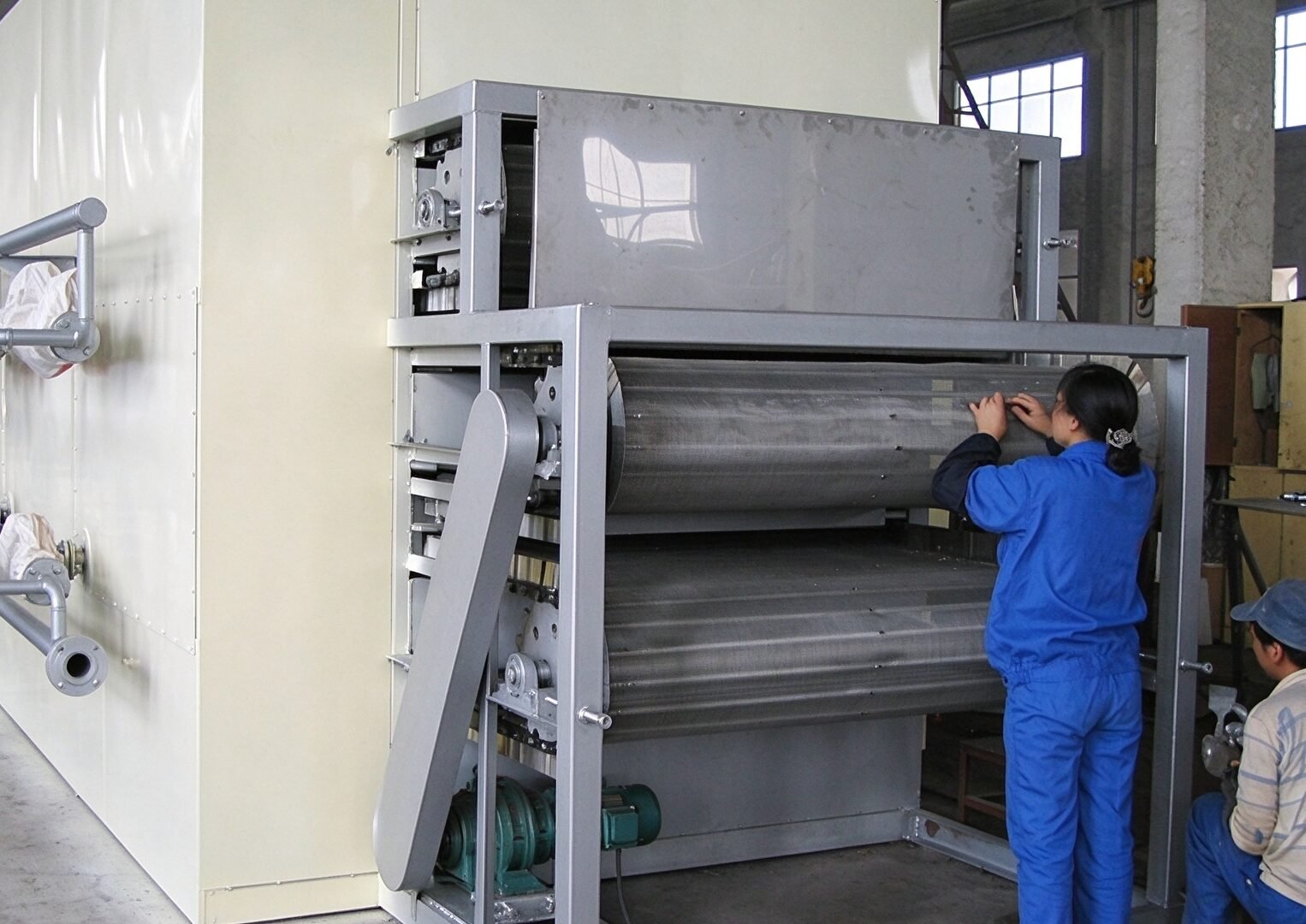
DW Multi-Layer Mesh Belt Dryer
- Suitable For: Materials requiring a longer drying path within a limited floor footprint.
- Structural Feature: Stacked belt layout (typically 3, 5, or 7 layers) maximizing vertical space utilization.
- Selection Focus: Plant height, maintenance access, and material suitability for layer-to-layer transfer.
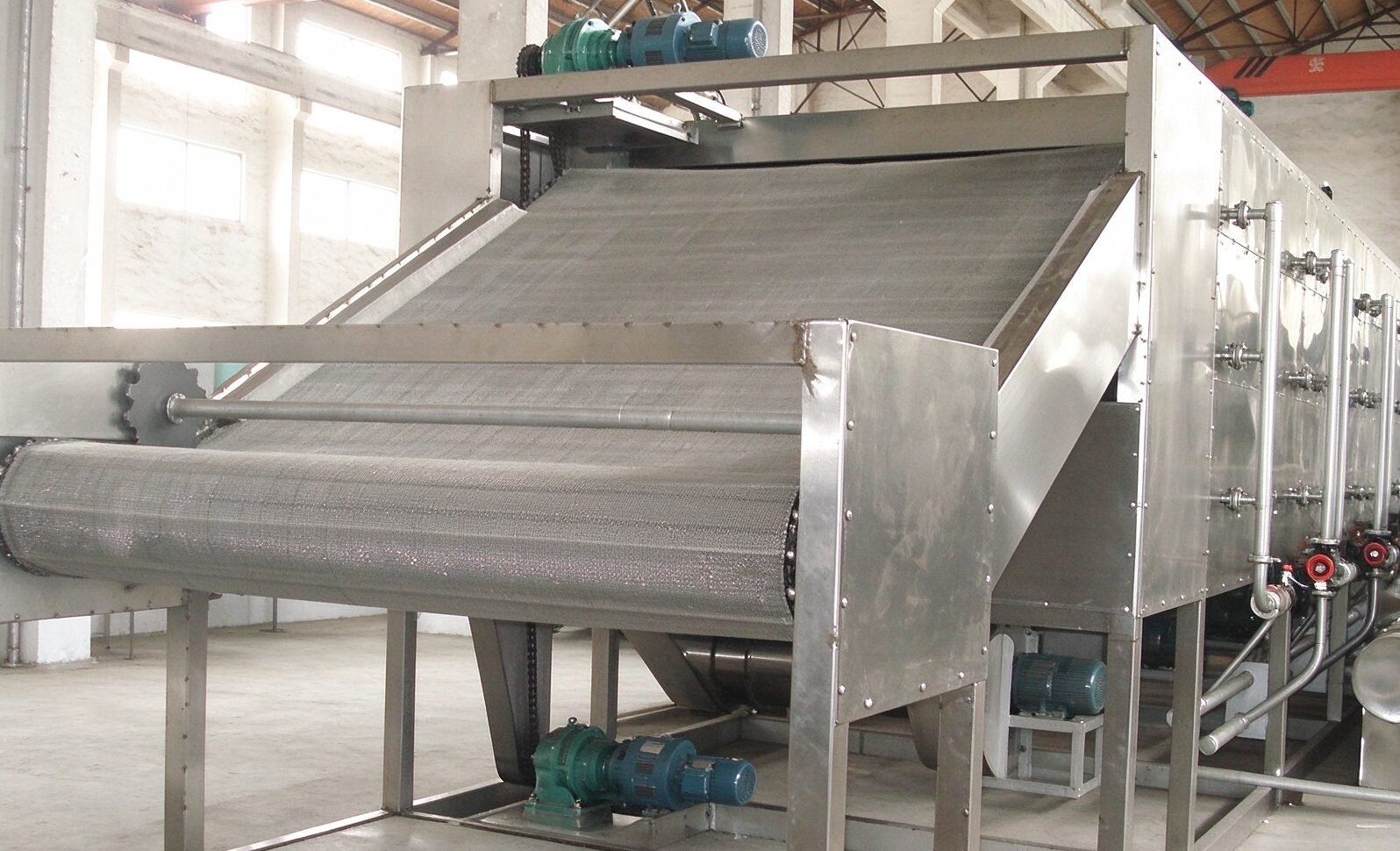
DWT Vegetable Dehydration Dryer
- Suitable For: Agricultural ingredients and vegetable dehydration processes.
- Structural Feature: Configured in sections (DWT-I feeding, DWT-II intermediate, DWT-III discharge) to match specific dehydration stages.
- Selection Focus: Matching temperature zones and airflow to the shrinking behavior of vegetables.
Belt Dryer Specifications
Catalog values are reference data. Final sizing and performance depend on the material, moisture targets and agreed operating conditions.
DW Single-Layer Belt Dryer — Catalog Reference
| Model | Belt Width (m) | Drying Length (m) | Reference Evaporation (kg/h) | Equipment Power (kW) |
|---|---|---|---|---|
| DW-1.2-8 | 1.2 | 8 | 60–160 | 11.4 |
| DW-1.2-10 | 1.2 | 10 | 80–220 | 13.6 |
| DW-1.6-8 | 1.6 | 8 | 75–220 | 11.4 |
| DW-1.6-10 | 1.6 | 10 | 95–250 | 13.6 |
| DW-2-8 | 2.0 | 8 | 100–260 | 19.7 |
| DW-2-10 | 2.0 | 10 | 120–300 | 23.7 |
Single-Layer Reference: Bed depth 10–80 mm; Operating temperature 50–120°C.
* Note: "Water evaporation" indicates moisture removal capacity, not wet feed rate. "Equipment power" refers to mechanical drives and fans, excluding the main thermal energy source. Operating temperatures vary strictly by material tolerance.
DW Multi-Layer
- Cumulative path: 24m or 30m (not footprint)
- Bed depth: ≤60 mm
- Catalog temp: 50–140°C
- Layers: Configured to layout
DWT Series
- Sections: DWT-I, II, III (Feed, Mid, Discharge)
- Section belt width: 1.6 m
- Section length: 8–10 m
- Catalog temp: 50–140°C
Parameters Defined for Your Material
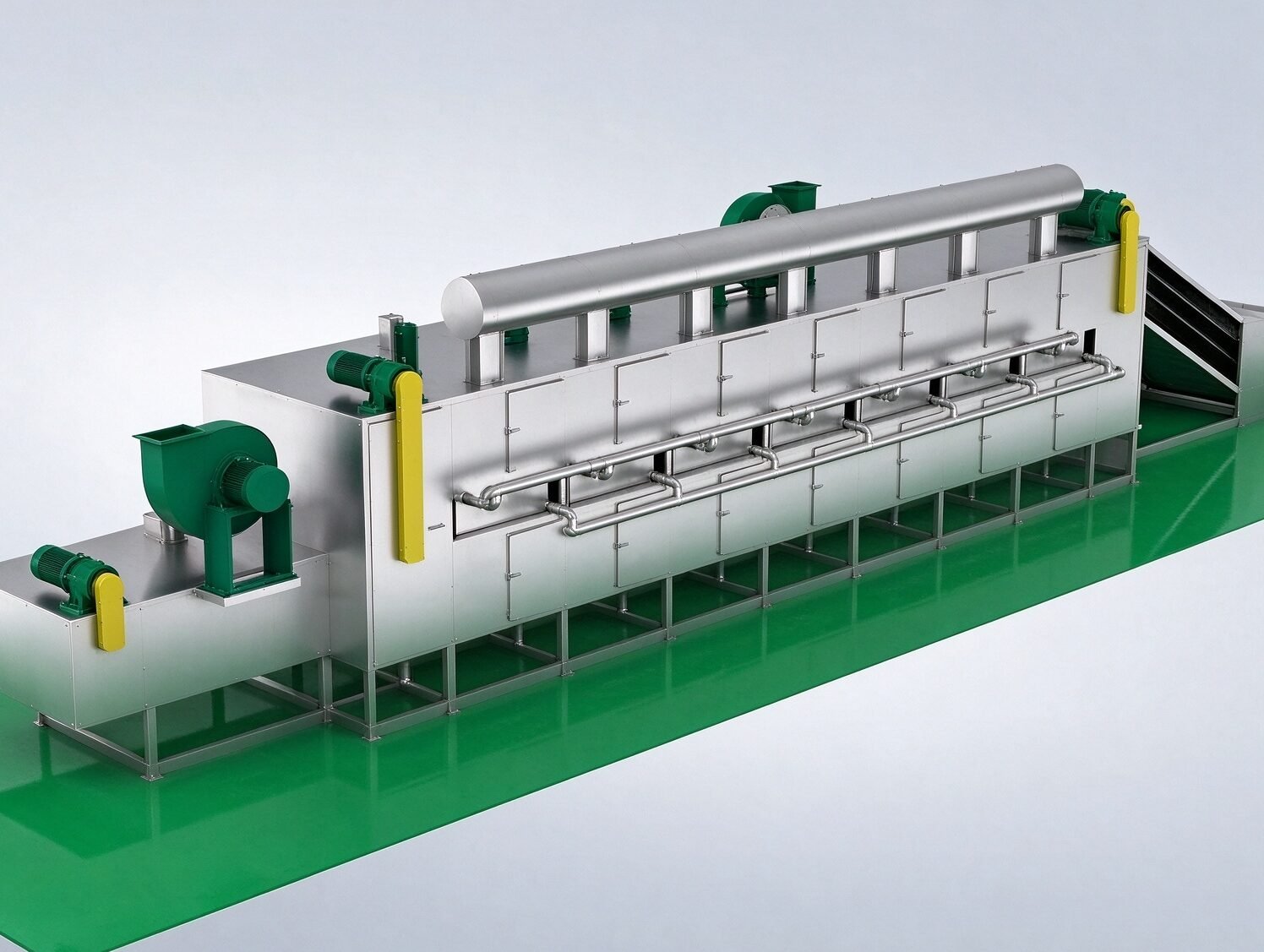
- Material and physical form
- Wet feed rate
- Inlet/outlet moisture
- Moisture measurement basis
- Required water evaporation
- Particle size & bulk density
- Allowable product temp
- Belt width & layout
- Heat source & utilities
- Product-contact materials
- Cleaning requirements
- Installation space
Applications and Suitable Materials
Belt dryers are ideal for materials that can form a stable, air-permeable bed.
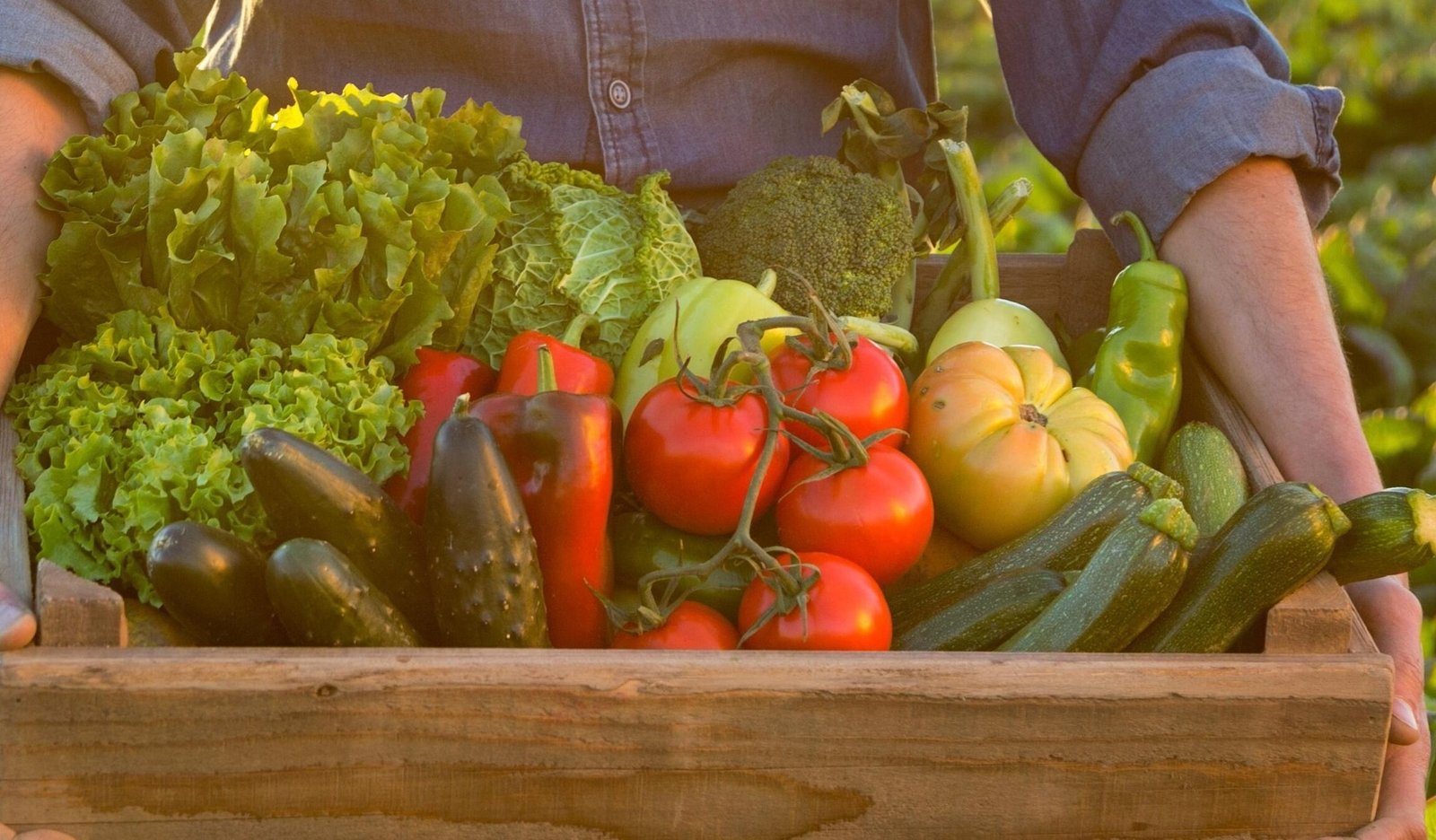
Vegetables & Agricultural Products
Typical Materials:
- Garlic slices
- Green pepper pieces
- Pumpkin slices
- White radish slices
- Yam slices
- Bamboo shoot slices
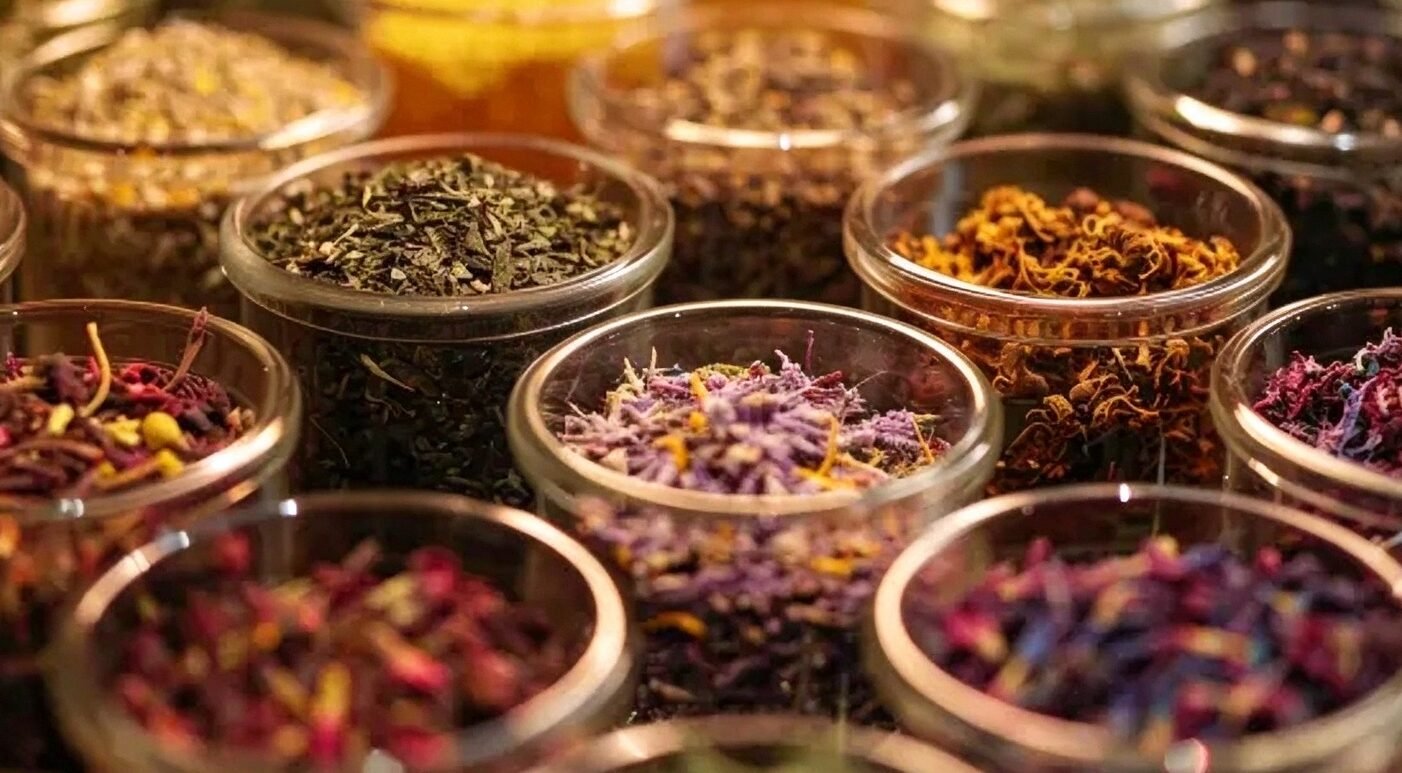
Herbal Slices & Botanicals
Typical Materials:
- Licorice root slices
- Astragalus root slices
- Angelica root slices
- Mint leaves
- Chamomile flowers
- Chrysanthemum flowers
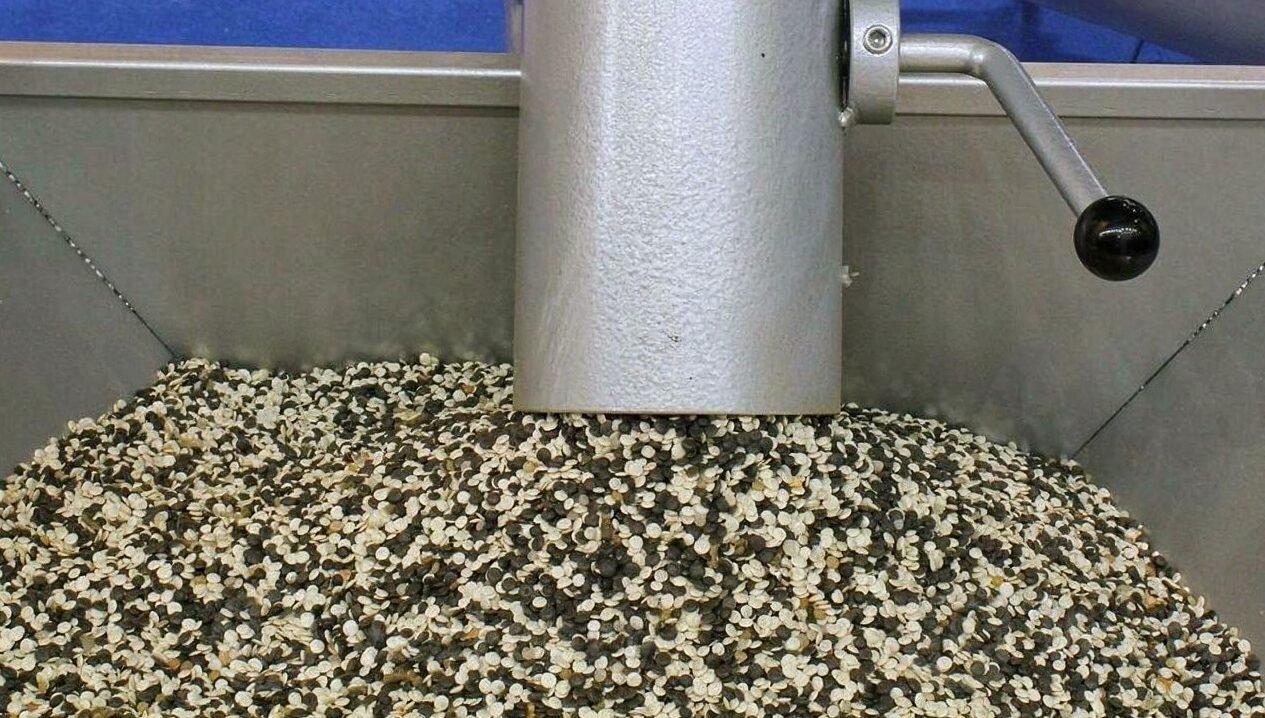
Chemical Granules & Formed Materials
Typical Materials:
- Silica gel beads
- Catalyst pellets
- Organic pigment granules
- Synthetic rubber crumbs
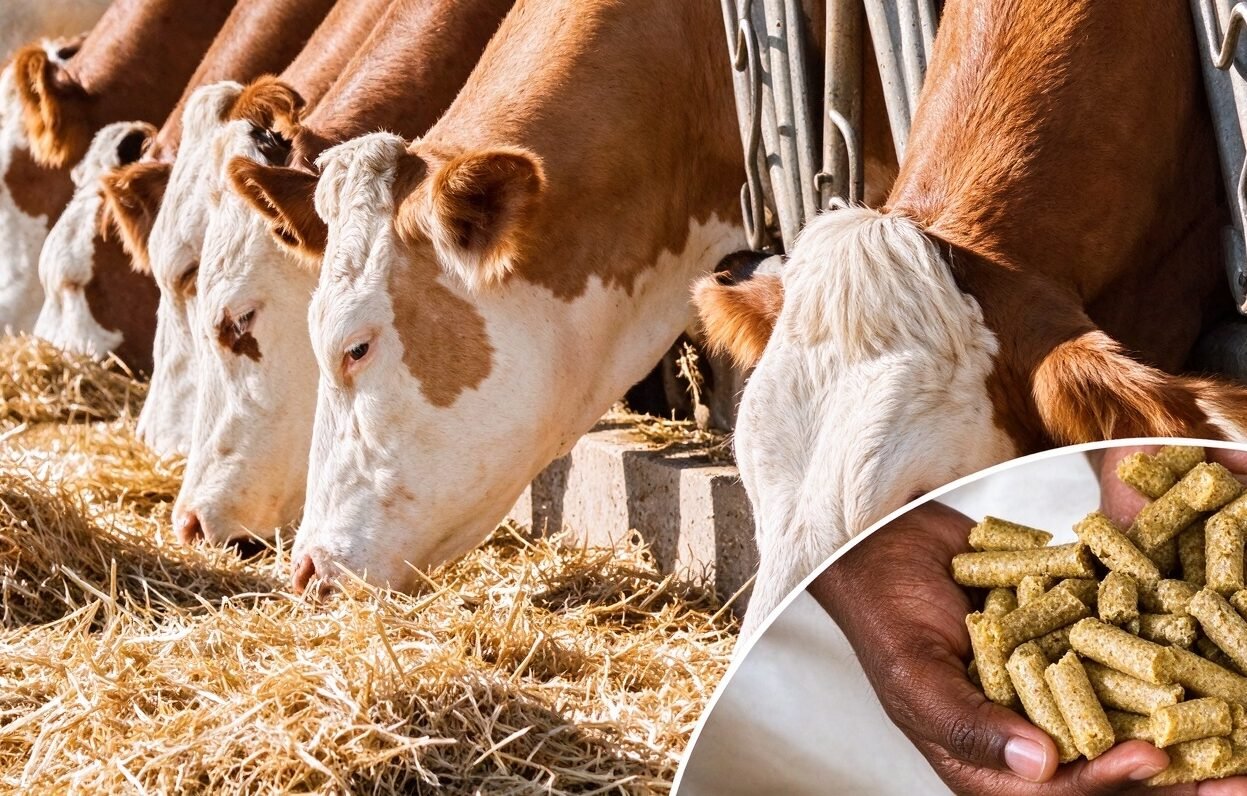
Food Ingredients & Feed Pellets
Typical Materials:
- Shredded coconut
- Monosodium glutamate (MSG) crystals
- Animal feed pellets
- Extruded pet food
- Aquafeed pellets
- Granola cereals
Material suitability and dryer configuration depend on product form, moisture targets and allowable drying temperature.
Pre-treatment Note for Sticky or Fine Materials
Filter cakes, pastes, or very fine powders cannot be directly spread on the mesh belt as they block airflow. They typically require granulation, extrusion, or proper pre-treatment before belt drying can be evaluated.
Check Material SuitabilityWhat Is a Belt Dryer and How Does It Work?
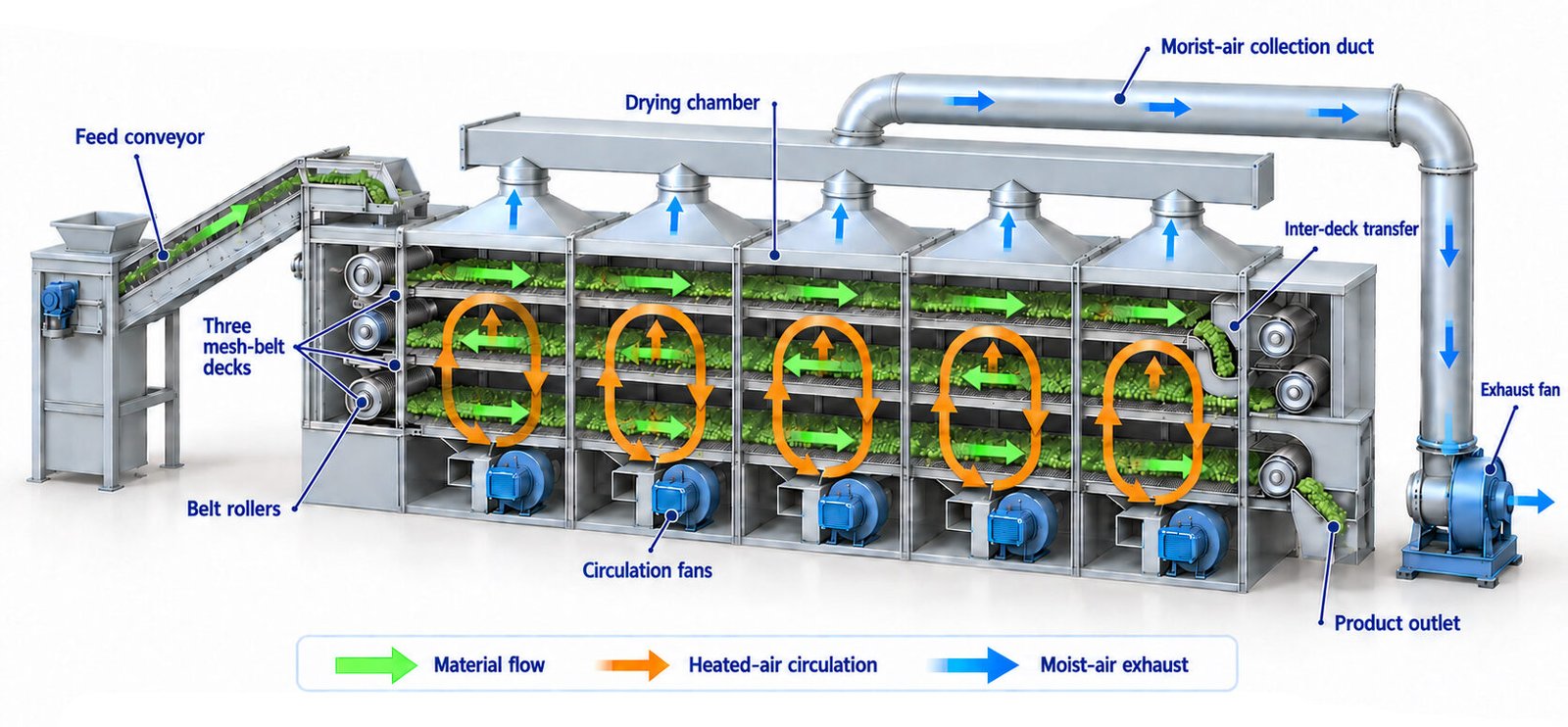
An industrial continuous hot air belt dryer works by spreading material onto a permeable conveyor belt that moves continuously through a drying chamber. Heated air flows through the material bed to remove moisture. A portion of the air is recirculated, while humid air is exhausted
Material Preparation & Feeding
Feeding and spreading equipment distributes the material evenly across the mesh belt.
Through-Flow Drying
The belt and drive move the material through heating sections where an air distribution system forces hot air through the bed.
Air Circulation & Exhaust
Circulation fans reuse heat, while exhaust fans remove moisture. Temperature and belt-speed are adjusted to control residence time.
Product Discharge
Dried material exits the system continuously for downstream handling.
Drying Challenges & JEXDRY Design Responses
Practical engineering features designed to address common continuous drying issues.
Uneven drying across the bed
Design: Material spreading, suitable bed depth, and managed air distribution.
Helps manage drying differences across the belt.
Variable feed requirements
Design: Belt-speed and temperature adjustment capabilities.
Provides operating flexibility within the designed range.
Long drying time vs floor space
Design: Multi-layer layout creating a longer cumulative drying path.
Helps fit the required drying area into the available layout.
Heat utilization & cost
Design: Air recirculation, controlled exhaust, and suitable insulation.
Supports better use of supplied thermal energy.
Cleaning & inspection
Design: Appropriate contact materials and accessible inspection doors.
Helps operators reach relevant internal components.
Matching plant utilities
Design: Heat-source and process-interface review during engineering.
Supports integration with the available production conditions.
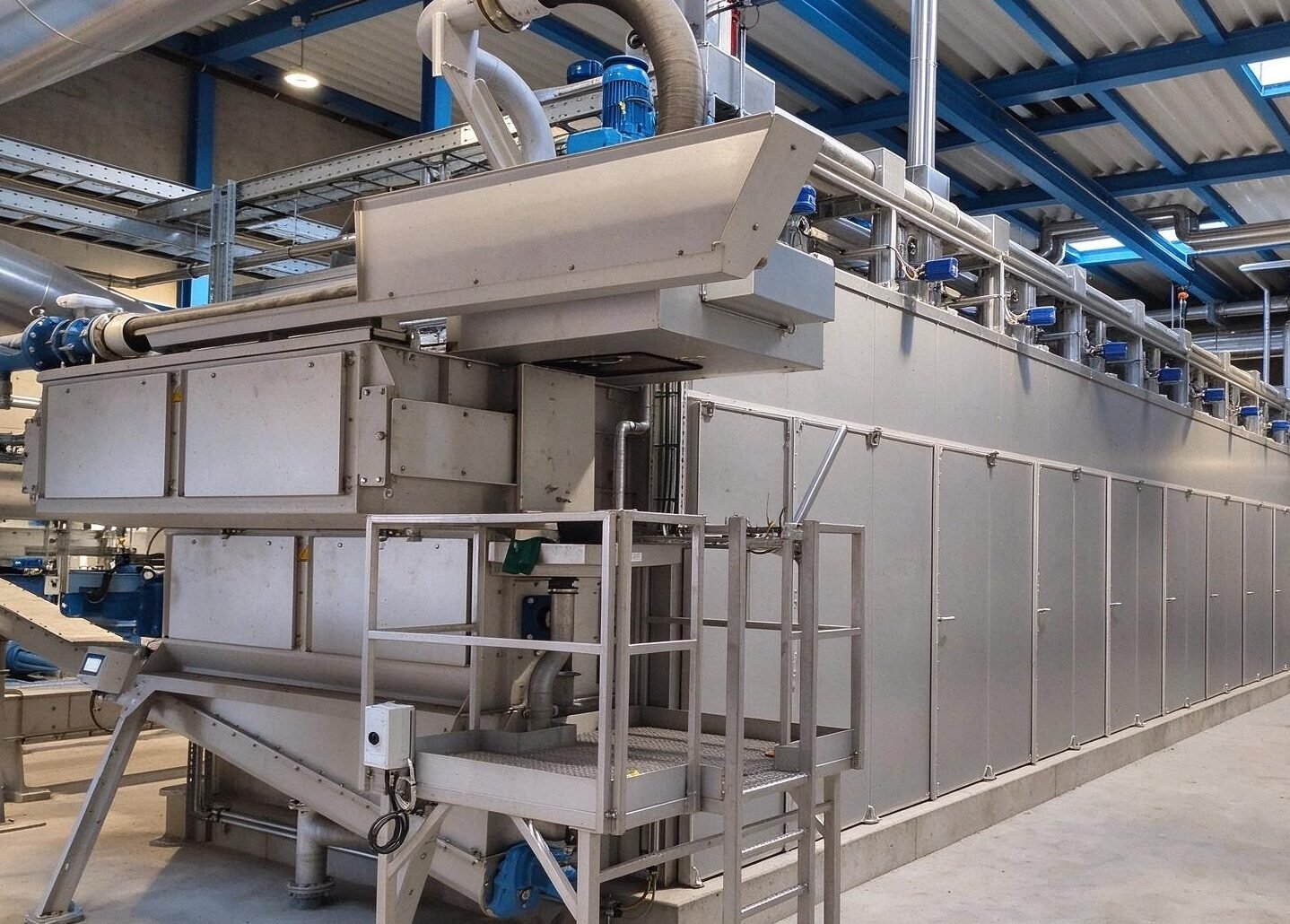
Note: External utilities and pre-treatment are subject to project scope.
Configure the Dryer Around Your Process
A complete drying system involves more than just the main unit. We discuss the following interfaces to match your site:
-
Layout & Belt Selection Single or multi-layer; mesh size matched to material; SUS304 or specified contact materials.
-
Heat Source & Airflow Steam-heated air, or evaluation of available clean waste heat (subject to gas temp, flow, and direct-contact safety).
-
Operating Controls Temperature monitoring, and adjustable belt speed to manage residence time.
-
Plant Integration Feed/discharge connections, exhaust routing, and required cleaning access space.
Engineering Proposal References
Review how we approach specific drying requirements based on
Green Pepper Drying
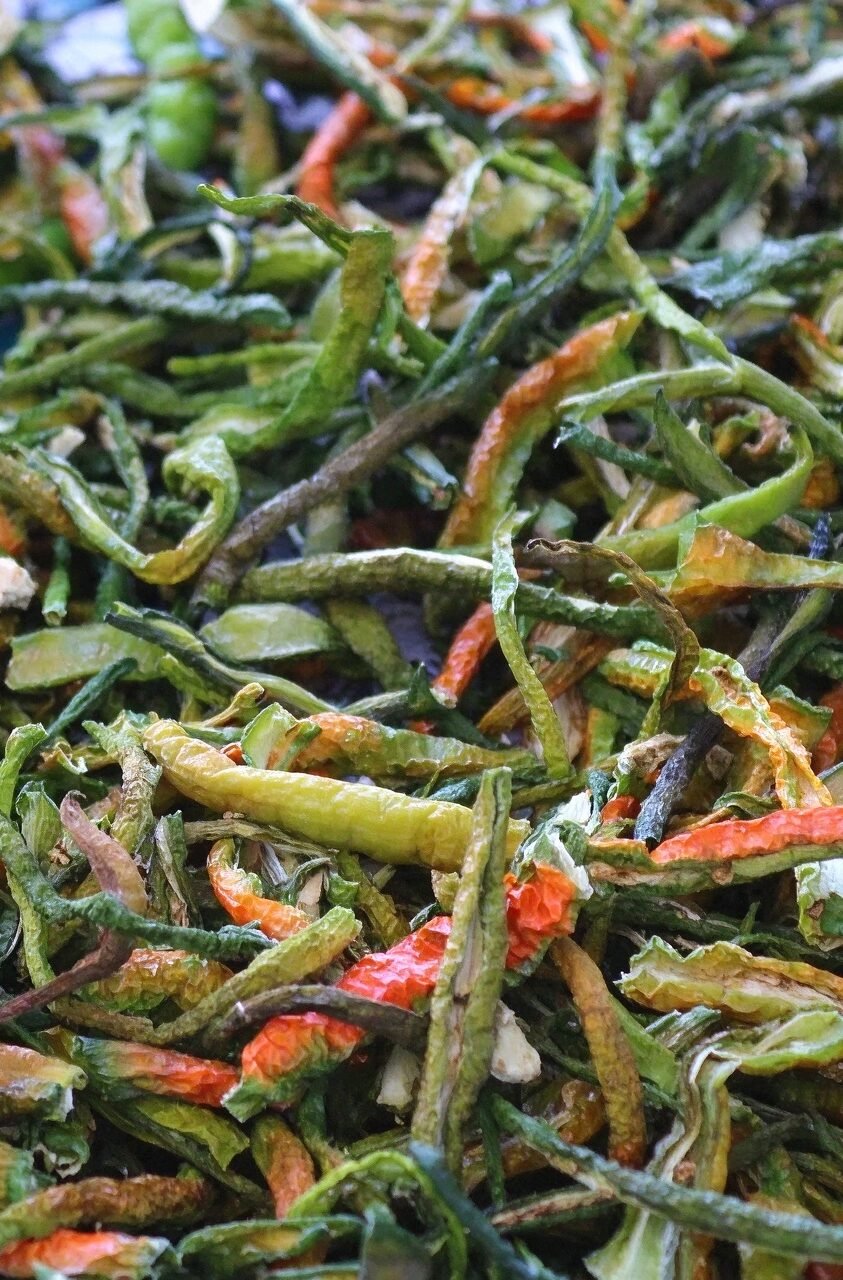
Design Requirement: Continuous dehydration while controlling the maximum temperature the material is exposed to. Source-stated moisture targets: Approx. 60% to 13% (measurement basis subject to confirmation).
Proposed Configuration: Three-layer continuous belt dryer with SUS304 mesh belt.
Engineering Consideration: Proposed a lower-temperature drying approach with a larger airflow, selected specifically for the material's temperature limits. Belt speed and inlet/outlet air temperatures are adjustable.
Heating Concept: Steam-heated air.
Cylindrical Granules
- Moisture Target: 15% to <8% (basis TBC).
- Proposed Configuration: 1.6 m effective belt width with a 40 m cumulative drying path. Organized into 5 circulation units.
- Engineering Consideration: Evaluated the utilization of available site waste heat. Included adjustable belt speed, stainless steel contact parts, and access doors for maintenance.
Belt Dryer vs Other Drying Technologies
Why choose a belt dryer over other common industrial drying methods?
Belt Dryer
Material stays relatively static on the belt while air flows through.
- Form: Flakes, strips, stable granules
- Action: Gentle, maintains shape
- Key Check: Can it form a permeable bed?
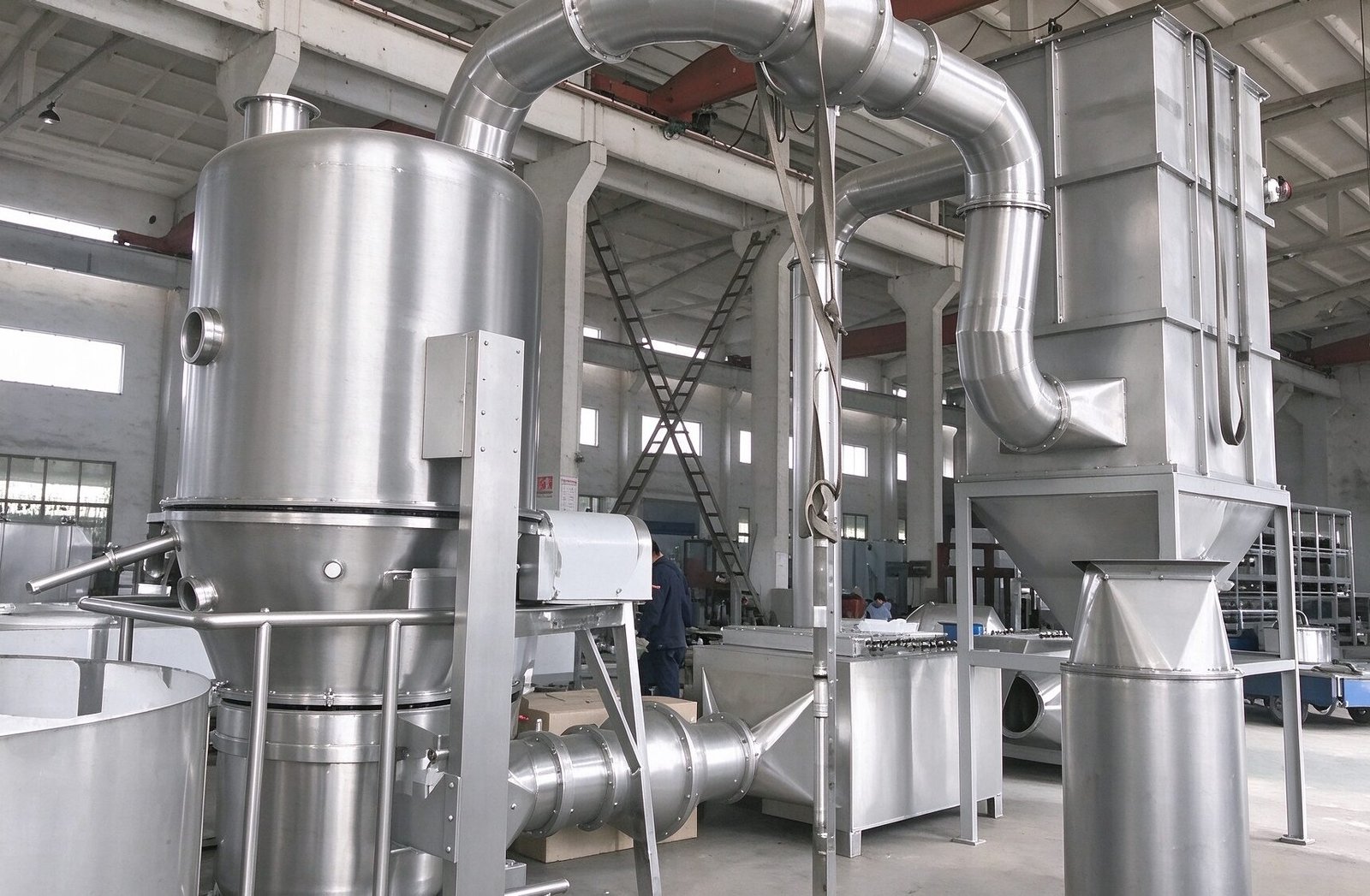
Fluid Bed Dryer
Material is suspended and mixed by upward airflow.
- Form: Powders, uniform granules
- Action: High mixing, rapid heat transfer
- Key Check: Fluidization stability & fines
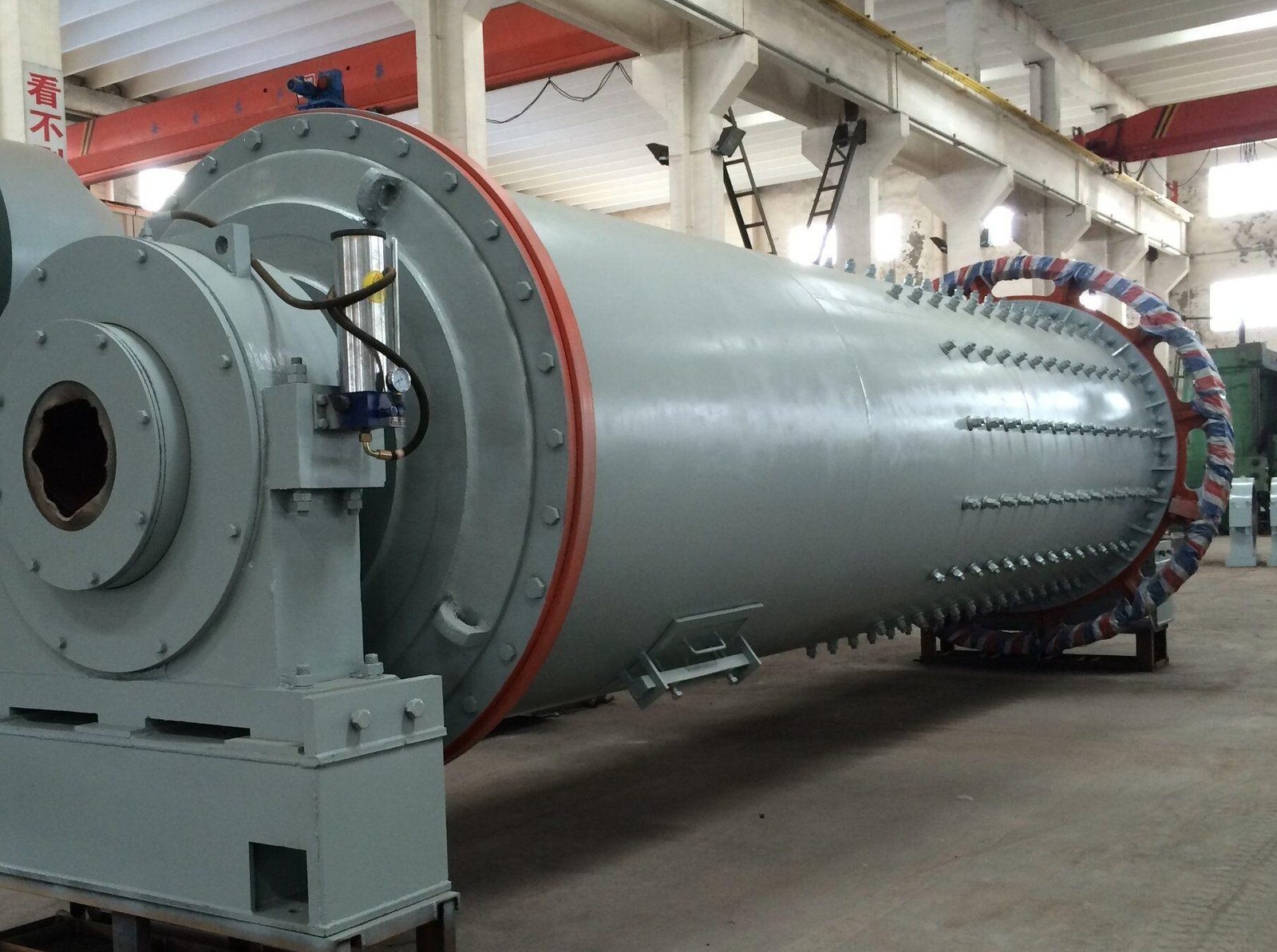
Rotary Drum Dryer
Material is tumbled inside a rotating cylinder.
- Form: Heavy ores, robust bulk materials
- Action: Tumbling, high capacity
- Key Check: Tolerance to mechanical impact
Single-Layer vs Multi-Layer
Single-Layer: Simple planar layout, easy inspection, no material dropping. Best for fragile items or short drying times.
Multi-Layer: Uses plant height to achieve a long cumulative path. Material transfers between layers. Best for limited floor space and longer residence times.
Help Me Select a Drying Technology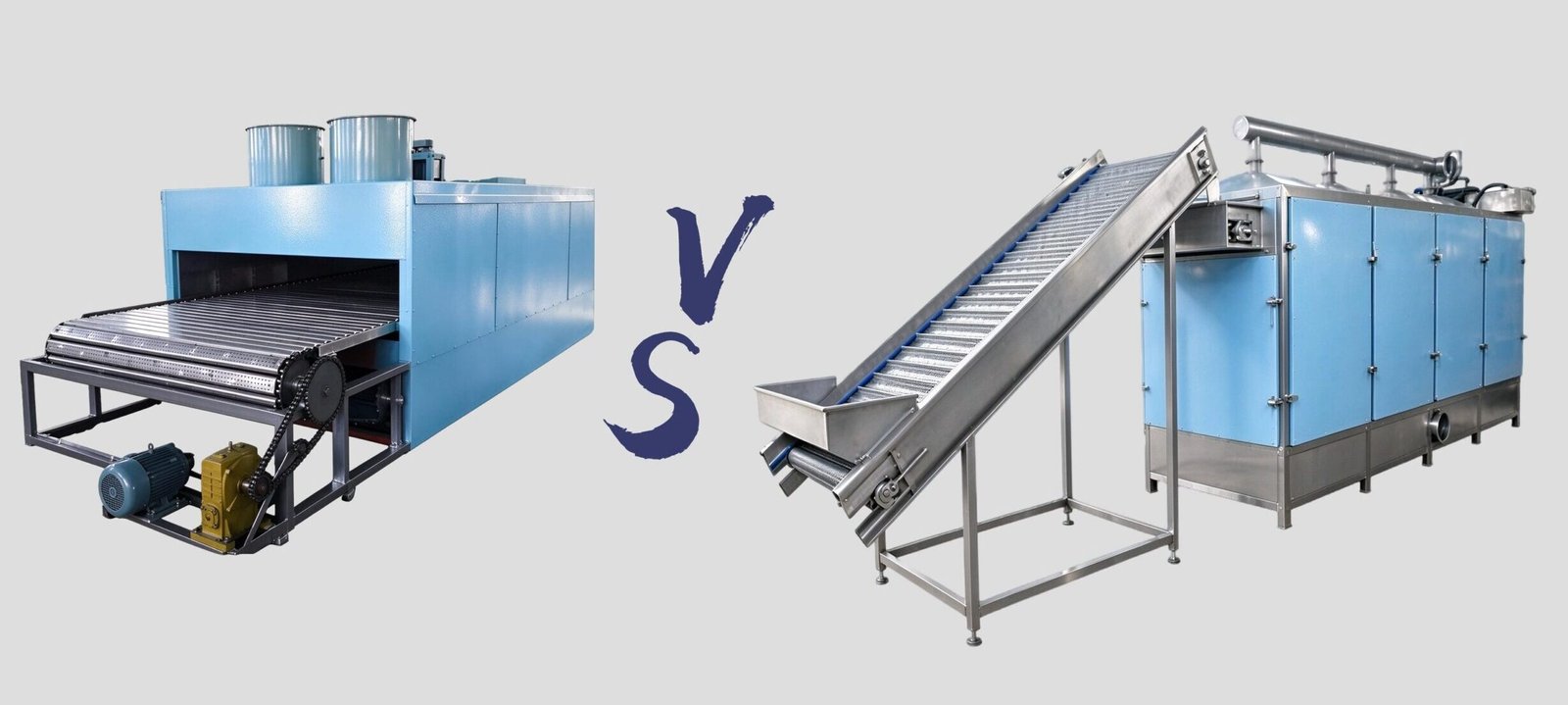
How to Choose a Belt Dryer
Follow these steps to gather the necessary information for a technical proposal.
Identify if it's flake, strip, granule, or a filter cake requiring pre-forming.
Determine wet feed rate and whether production is continuous.
Specify initial and target moisture (clarify wet basis or dry basis) to calculate required evaporation.
Note allowable maximum material temperature and shape retention needs.
Confirm available heat sources (steam, gas, thermal oil, or clean waste heat).
Review installation space, cleaning requirements, and supply scope.
What Affects Belt Dryer Cost?
Identical wet feed rates can require vastly different investments depending on initial/final moisture and material properties. Key cost drivers include:
- Effective drying area (width × length)
- Number of layers
- Product-contact material grades
- Heat source integration
- Control complexity and exhaust treatment
We recommend discussing material evaluation to define accurate equipment sizing rather than relying on standard catalog prices.
Manufacturing, Documentation & Project Support
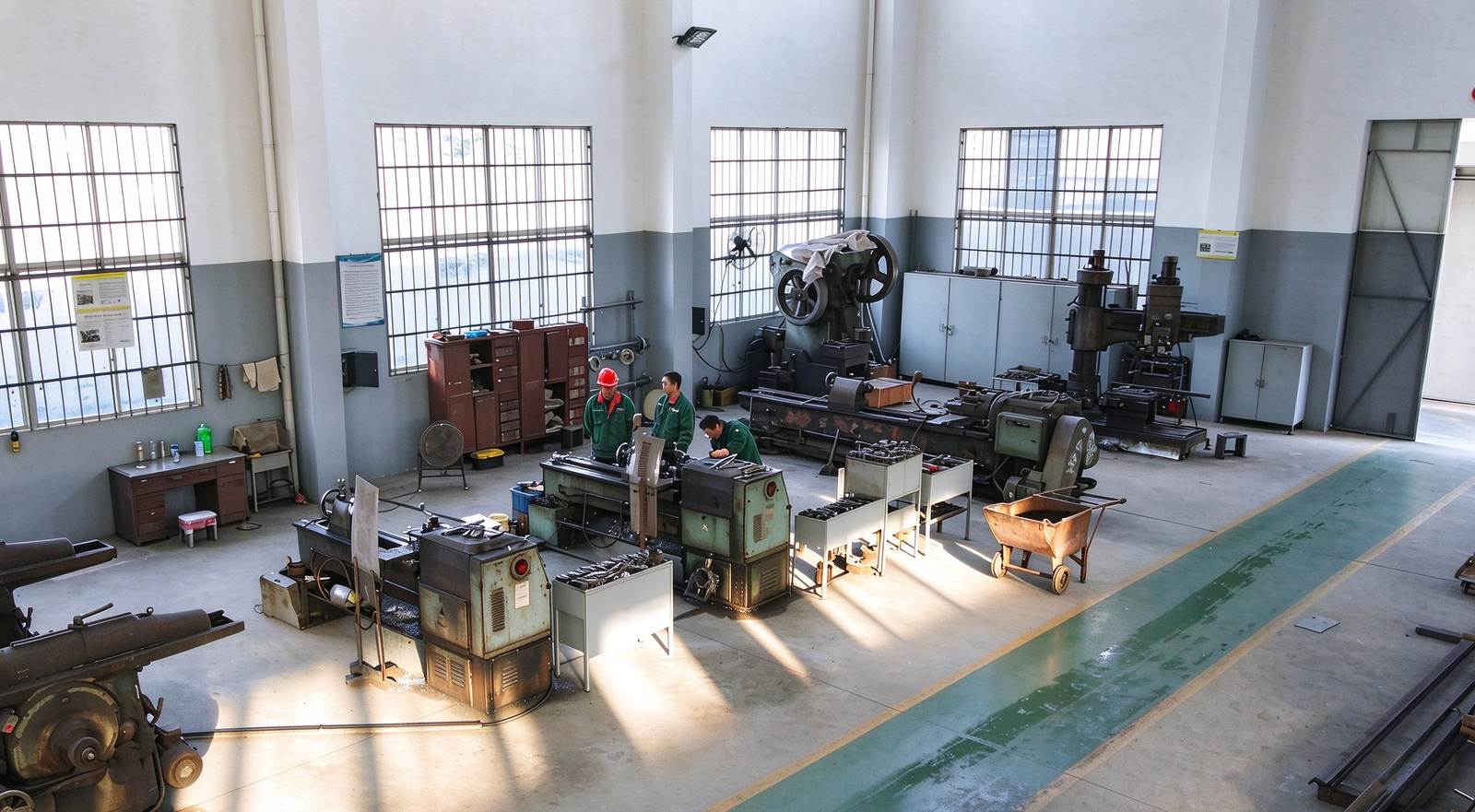
We build drying systems based on verified engineering practices. From fabrication to site installation, we provide the necessary documentation to support your project.
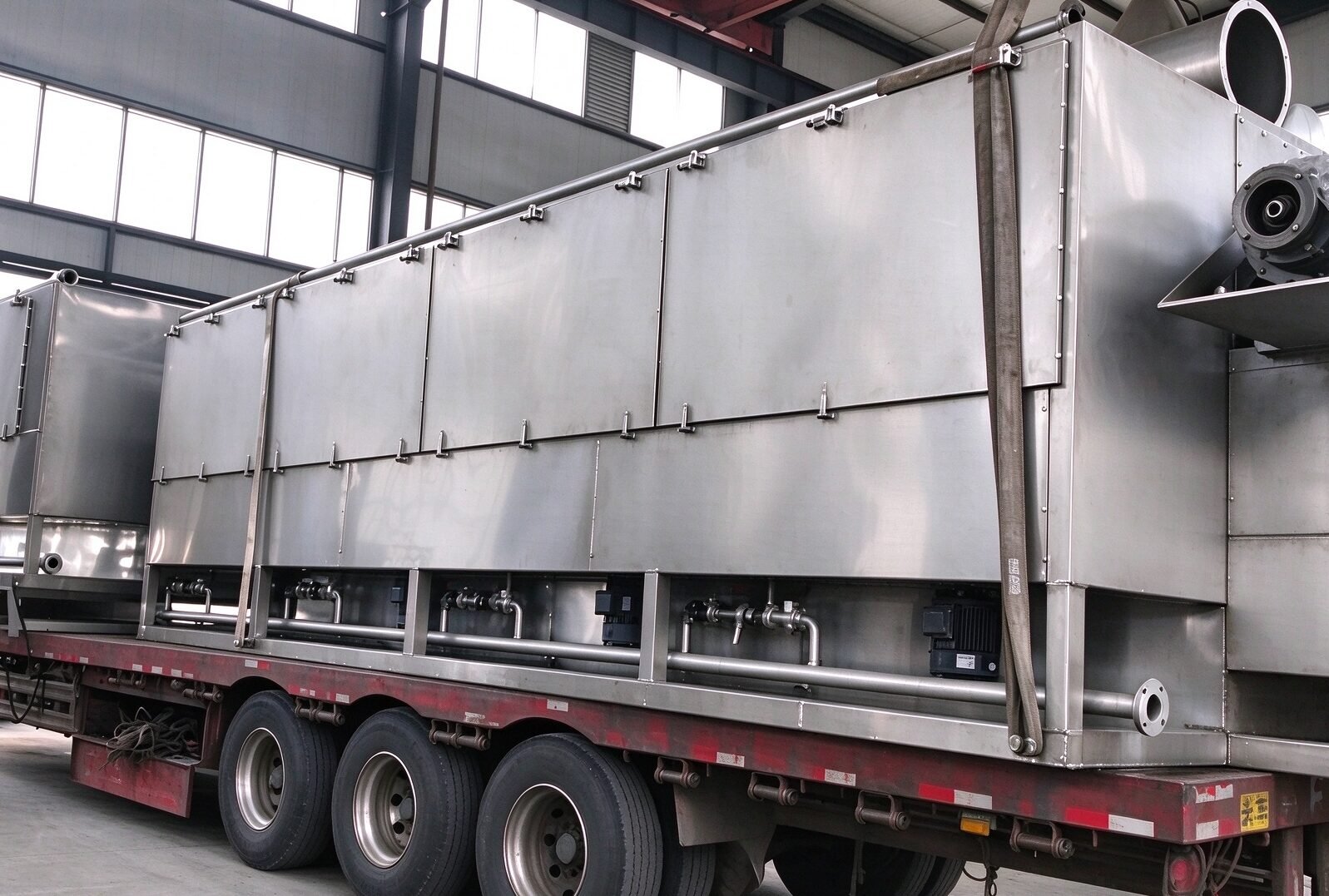
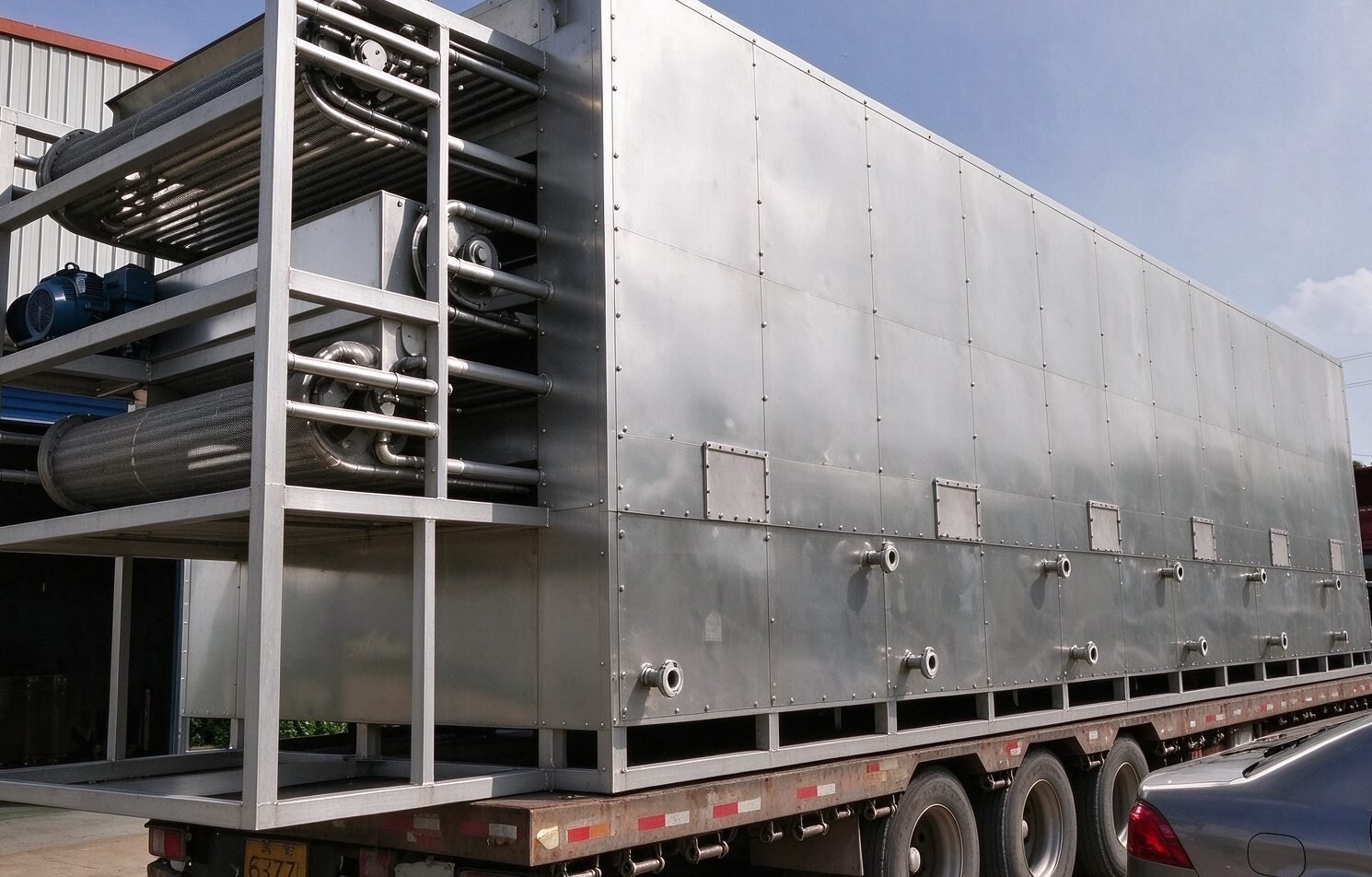
Manufacturing Quality: Inspection of mesh belts, drives, air ducts, and enclosures.
Engineering Documents: Equipment layout, installation information, electrical documentation, and material certificates (where agreed).
Operational Support: Operation and maintenance manuals, spare/wear-part information, and installation guidance.
Frequently Asked Questions
What materials are suitable for a belt dryer?
What is the difference between feed capacity and water evaporation?
Should I choose a single-layer or multi-layer belt dryer?
Which heat sources can be considered?
How are belt speed and drying temperature selected?
Still have questions?
Our engineering team is ready to review your specific material and process constraints.
Ask About Your Application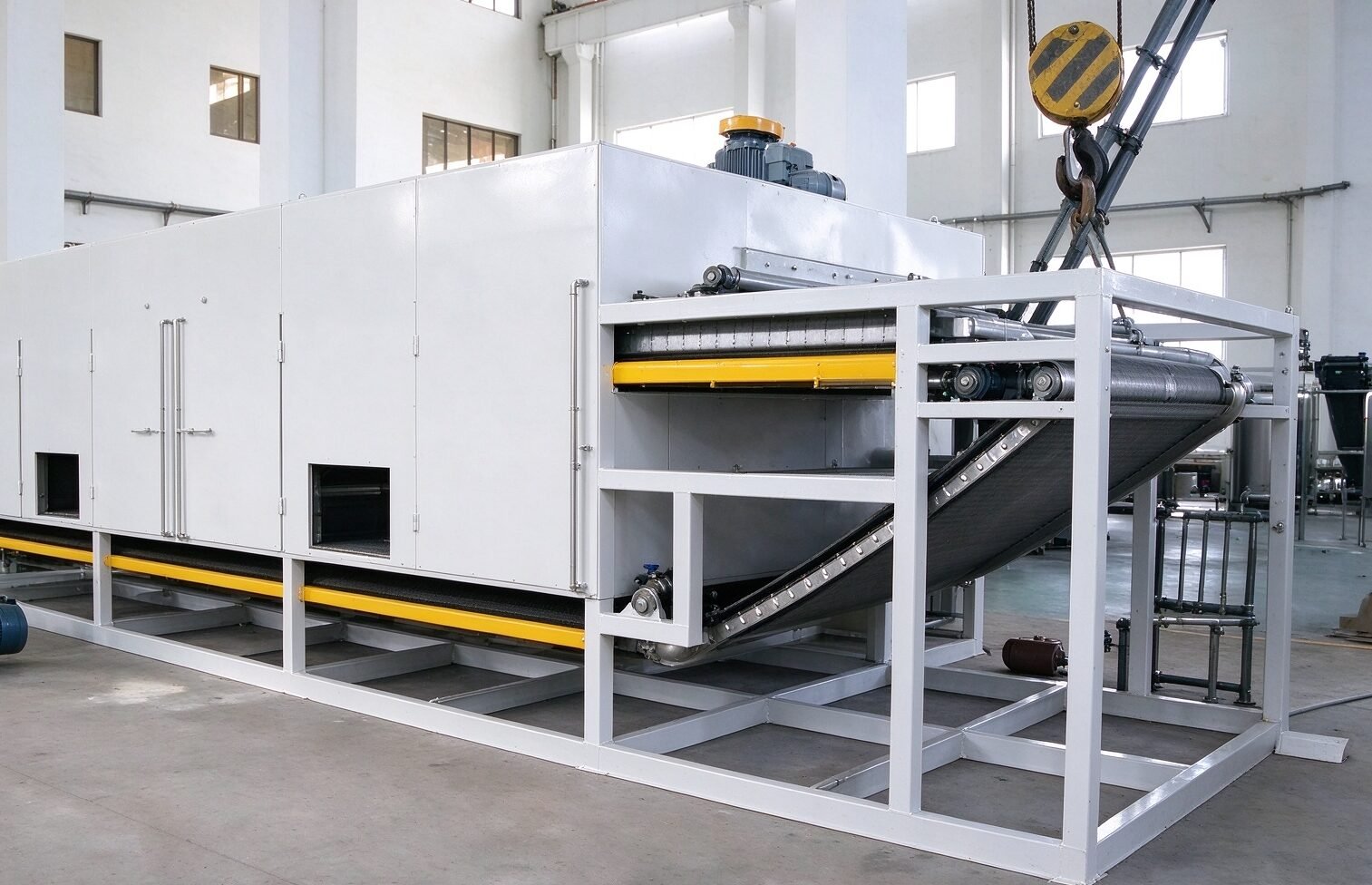
Tell Us About Your Material and Drying Target
Providing key operating conditions helps JEXDRY engineers evaluate suitable configurations and sizing.