Double Cone Vacuum Dryer
Batch vacuum drying for suitable powders, granules and crystals. Select an SZG model and heating configuration around your material and process requirements. Reference models range from 100 to 5,000 L.
What Is a Double Cone Vacuum Dryer?
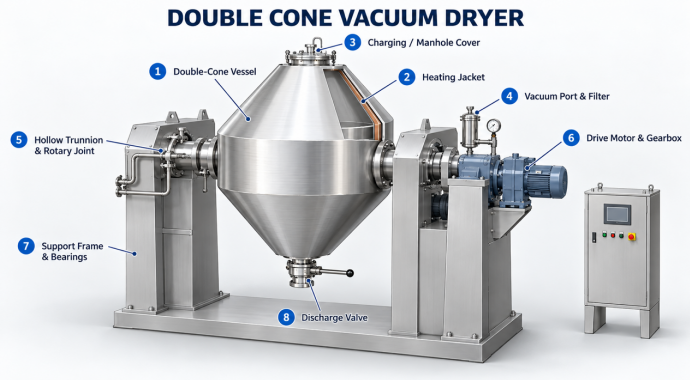
The SZG Series is a batch drying equipment designed to remove moisture or solvents from powders, granules, and crystals. It achieves this through a combination of indirect heat transfer, vacuum-assisted evaporation, and continuous vessel rotation. Specific heating structures depend on whether thermal fluid circulation or electric heating is configured for the project.
Indirect Heat Transfer
Heat is supplied to the vessel jacket (via hot water, steam, or thermal oil) or through electric heating plates. The heat transfers through the inner wall to the material without direct contact with heating media.
Vacuum-Assisted Evaporation
A connected vacuum system lowers the pressure inside the vessel, reducing the boiling point of moisture or solvents. This allows evaporation at lower temperatures, suitable for heat-sensitive materials.
Rotating Vessel and Tumbling
The double cone vessel rotates slowly (typically 4–6 rpm for standard reference models), continuously tumbling the material. This renews the contact surface with the heated wall, promoting uniform drying.
SZG Series Specifications
Reference data from the supplied product specification. Actual loading and equipment configuration depend on material properties and the agreed technical specification.
| Model | Vessel Volume (L) | Maximum Material Fill Volume (L) | Heating Area (m²) |
|---|---|---|---|
| SZG-100 | 100 | ≤50 | 1.16 |
| SZG-500 | 500 | ≤250 | 2.63 |
| SZG-750 | 750 | ≤375 | 3.50 |
| SZG-1000 | 1000 | ≤500 | 4.61 |
| SZG-1500 | 1500 | ≤750 | 5.58 |
| SZG-2000 | 2000 | ≤1000 | 7.50 |
| SZG-3500 | 3500 | ≤1750 | 11.20 |
| SZG-5000 | 5000 | ≤2500 | 14.10 |
Important Note:
Fill volume in liters is not the same as batch mass in kilograms. The maximum load mass must be calculated based on your wet material bulk density and the mechanical load limits of the specific equipment configuration.
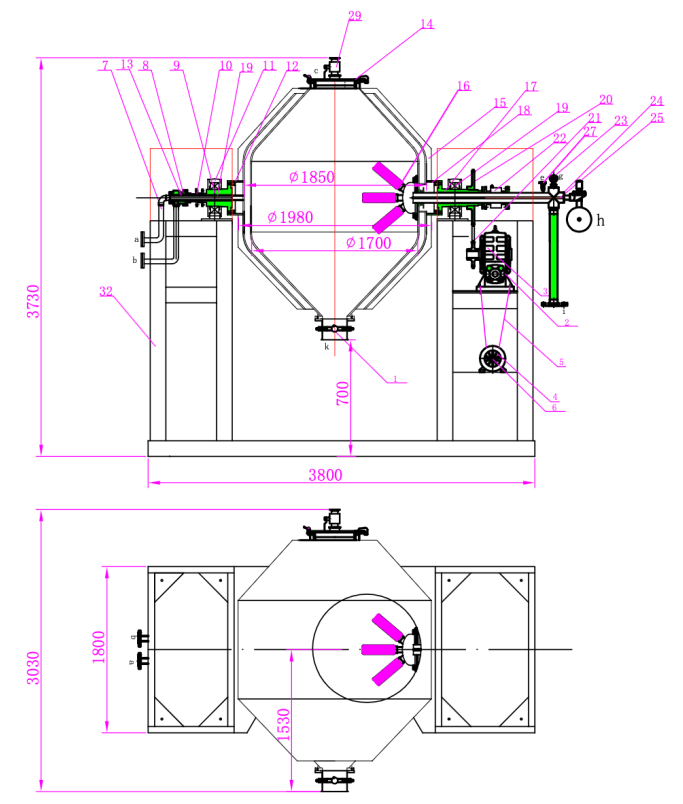
Configuration Options for Your Process
The SZG Series is highly adaptable. Industrial buyers can specify configurations based on site utilities, material corrosiveness, and process control requirements.
Heating Configuration
Choose between circulating thermal media (hot water, steam, thermal oil) in the jacket, or specific electric heating plate designs depending on available site utilities and required temperatures.
Material Selection
Material contact parts, inner layers, outer covers, and vacuum components can be specified individually (e.g., SUS304 or SUS316L) to meet chemical compatibility and hygiene standards.
Drive & Control
Configurations range from basic motor drives to variable frequency drives (VFD) for adjustable rotation speed, and PT100/PID controllers for precise temperature feedback and interlocks.
Vacuum & Vapor Handling
Design the vapor path with suitable internal vacuum filters, vacuum pumps, buffer tanks, and optional condenser systems for solvent recovery based on the specific material profile.
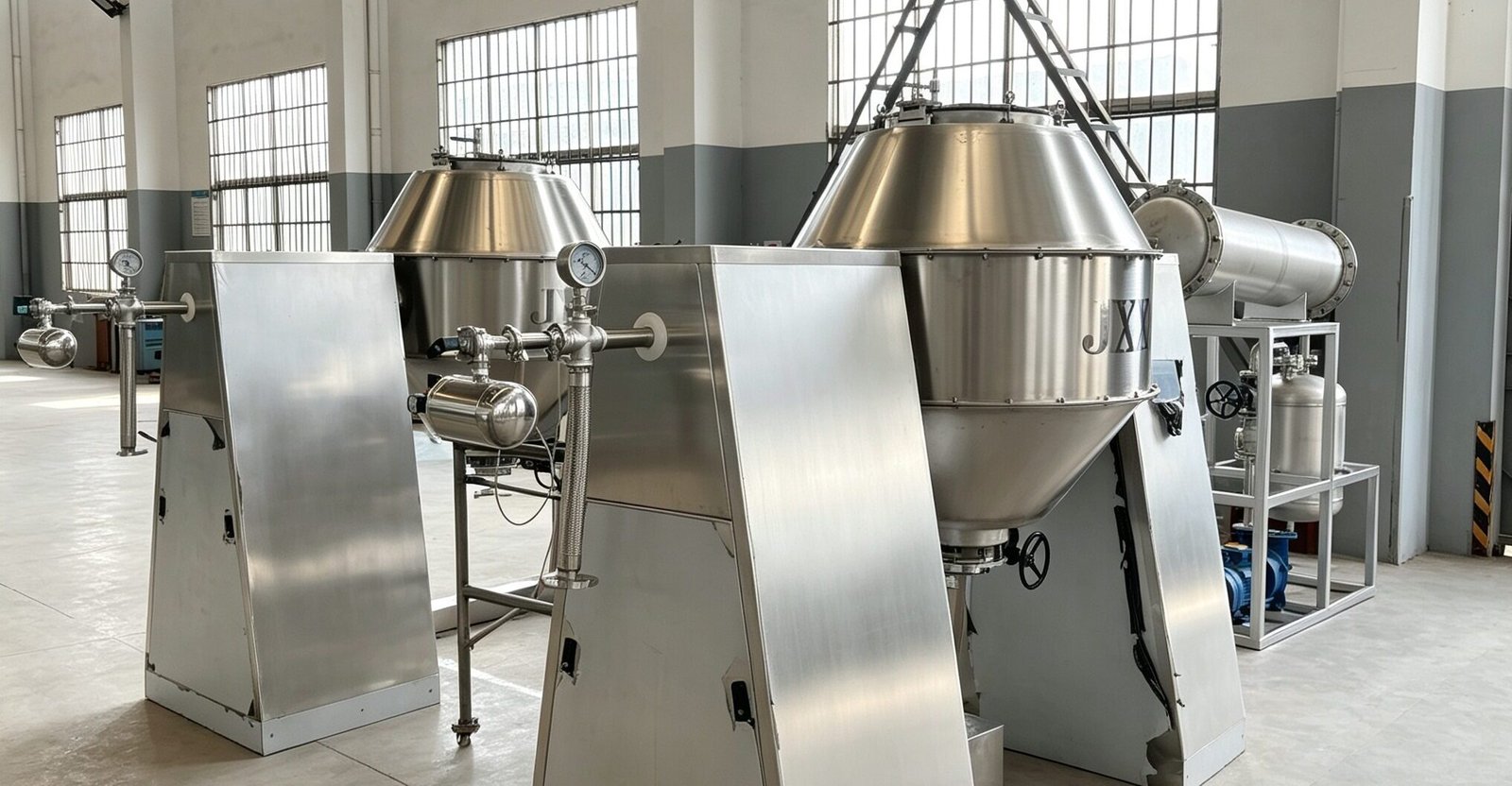
Ready to configure?
Tell us about your utility availability and material constraints, and we will propose the right setup.
Discuss Your ConfigurationWhen Site Steam or Hot-Water Heating Is Not Available
Some drying projects are limited by site utilities before equipment selection even begins. For this SZG-300 double cone vacuum dryer proposal, the available site conditions did not support steam or hot-water heating.
The proposed solution therefore used electric heating, allowing the vacuum drying configuration to be reviewed without relying on a plant steam or hot-water heating circuit.
No Steam or Hot Water at Your Site?
When steam or hot-water heating is unavailable, the heating method needs to fit the utilities already available on site. This SZG-300 proposal uses electric heating instead of depending on an external steam or hot-water supply. How to choose a heating method
Need a Controlled Heating Approach for Sensitive Material?
The proposed configuration combines electric heating with PT100 temperature sensing and PID control. This gives engineers a defined basis for reviewing the heating approach against your material’s allowable temperature and drying requirements.
Want Clarity Before You Commit to a Configuration?
The proposal identifies selected internal vacuum components in SS316L, together with a buffer tank and water-ring vacuum pump. This helps define the proposed equipment scope before material compatibility, vapor handling and site utilities are confirmed for the final design.
Engineering Starts With Your Process, Not a Standard Machine
Before confirming a double cone vacuum dryer, we review your material, batch size, initial and target moisture, allowable temperature, vapor characteristics and available utilities. These inputs determine the heating method, material specification and vacuum arrangement.

Tell Us What Makes Your Material Difficult to Dry
Share your material, batch size, moisture target, temperature limit and available utilities. Our engineers can discuss a suitable double cone vacuum dryer configuration for your process.
How Does a Double Cone Vacuum Dryer Work?
Drying time and efficiency depend on material properties, initial/target moisture, load mass, heat transfer conditions, and vacuum levels. Below is the standard batch sequence.
Batch Loading
Wet material is fed into the vessel through the top port, adhering to the calculated maximum fill volume and mass.
Heating & Vacuum
The vessel is sealed. The vacuum pump establishes negative pressure, and the heating medium (or electric plate) is activated.
Tumbling
The vessel rotates, lifting and folding the material to ensure continuous contact with the heated inner walls.
Vapor Removal
Evaporated moisture/solvent is drawn out through the internal vacuum filter, passing to the buffer tank or optional condenser.
Discharge
Rotation stops with the discharge valve facing down. Vacuum is broken, and dried material is discharged.
Engineering Details That Address Drying Challenges
Industrial drying involves more than just applying heat. We address specific material behaviors through targeted engineering configurations.
Heat-Sensitive Materials
Design: Vacuum operation lowers evaporation temperature. PT100 sensors and PID controllers monitor jacket/plate temperatures.
Check: Confirm maximum allowable product temperature.
Batch Consistency
Design: The double cone shape and rotation ensure the entire batch is mixed and exposed to the heated surface, minimizing cold spots.
Check: Assess material tendency to agglomerate.
Powder Entrainment in Vacuum
Design: Removable internal vacuum filters are fitted to prevent fine powders from being drawn into the vacuum pump.
Check: Select filter mesh size based on particle size.
Cleaning & Changeovers
Design: Mirror-polished inner walls, smooth arc transitions, and quick-release discharge valves improve access for cleaning.
Check: Specify required surface finish (e.g., Ra value).
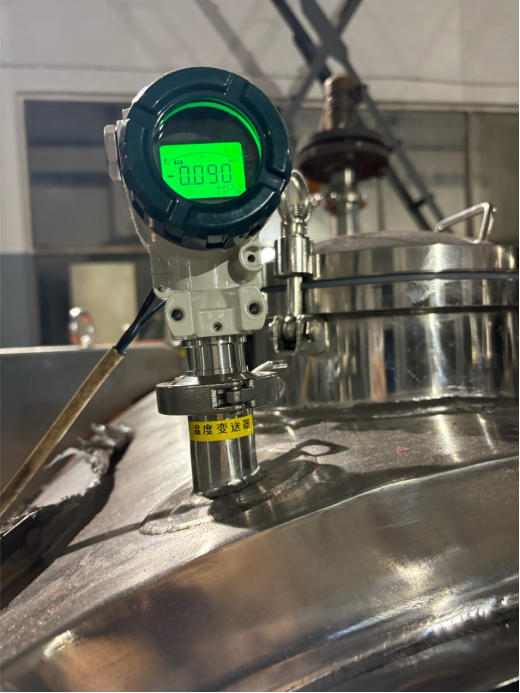
Applications and Suitable Materials
The SZG Double Cone Vacuum Dryer is designed for batch drying of powders, granules, and crystals that can tumble freely. Vacuum operation supports low-temperature drying in an enclosed vessel, making it suitable for many heat-sensitive and
Pharmaceutical Materials
Typical materials include:
- APIs
- Pharmaceutical intermediates
- Antibiotics
- Vitamins
- Herbal extracts
- Crystalline products
SUS304 or SUS316L contact parts and the required internal finish can be selected to match cleaning and product-contact requirements.
Fine Chemicals
Suitable materials may include:
- Pigments
- Dyes
- Catalysts
- Specialty salts
- Polymer powders
- Resins
- Chemical intermediates
For solvent-containing products, the dryer can be connected to a condenser, receiver, and suitable vacuum system for controlled vapor recovery.
Food Ingredients
Typical applications include:
- Flavorings
- Plant extracts
- Seasoning powders
- Vitamins
- Food additives
- Nutritional ingredients
Low-temperature vacuum drying helps reduce heat exposure, while the rotating vessel gently turns the material without an internal agitator.
Check Material Suitability
- The double cone vacuum dryer is better suited to free-flowing or moderately cohesive materials. Sticky pastes, materials that form hard lumps, or products requiring forced agitation should be evaluated for a vacuum rake, vacuum paddle, or vertical conical vacuum dryer.
- Fragile crystals, flammable solvents, and oxidation-sensitive products require confirmation of particle breakage, solvent recovery, nitrogen protection, and other project-specific safety measures.
Equipment Comparison
No single structure fits all materials. Compare the SZG Double Cone with other vacuum drying technologies to ensure the right mechanical action for your product.
| Feature |
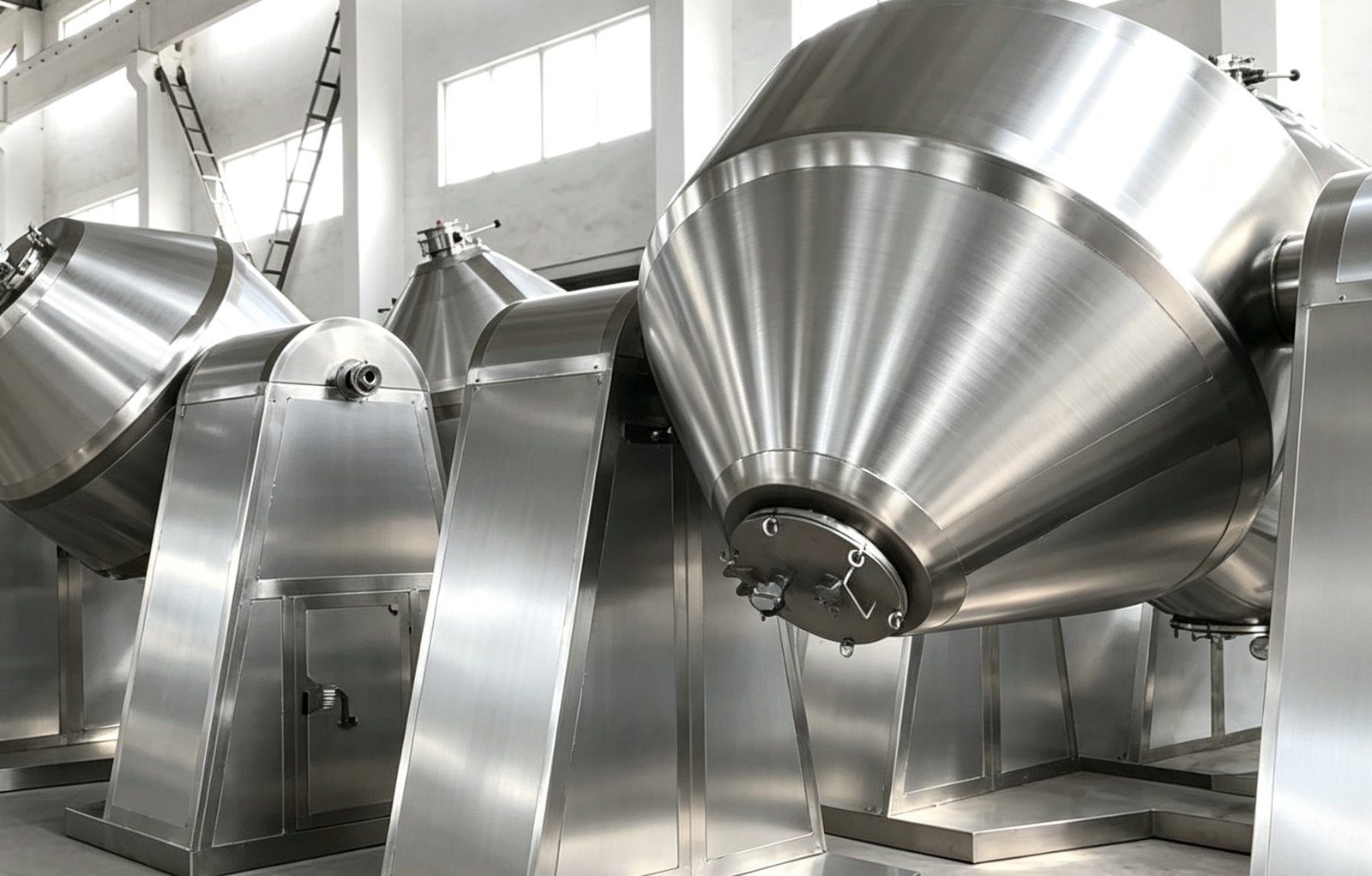 SZG Double Cone Vacuum Dryer
|
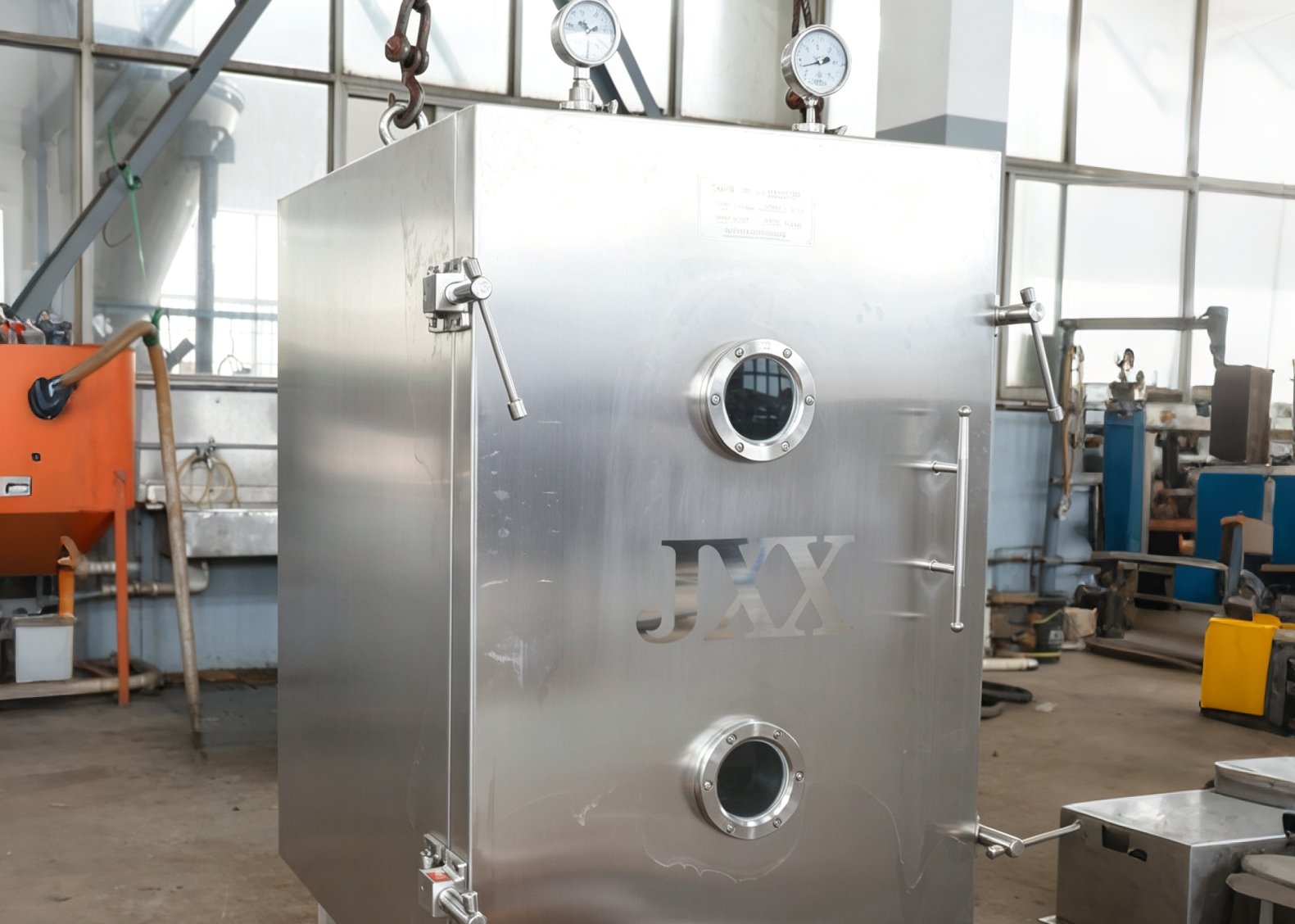 GZY/GZF Vacuum Tray Dryer
|
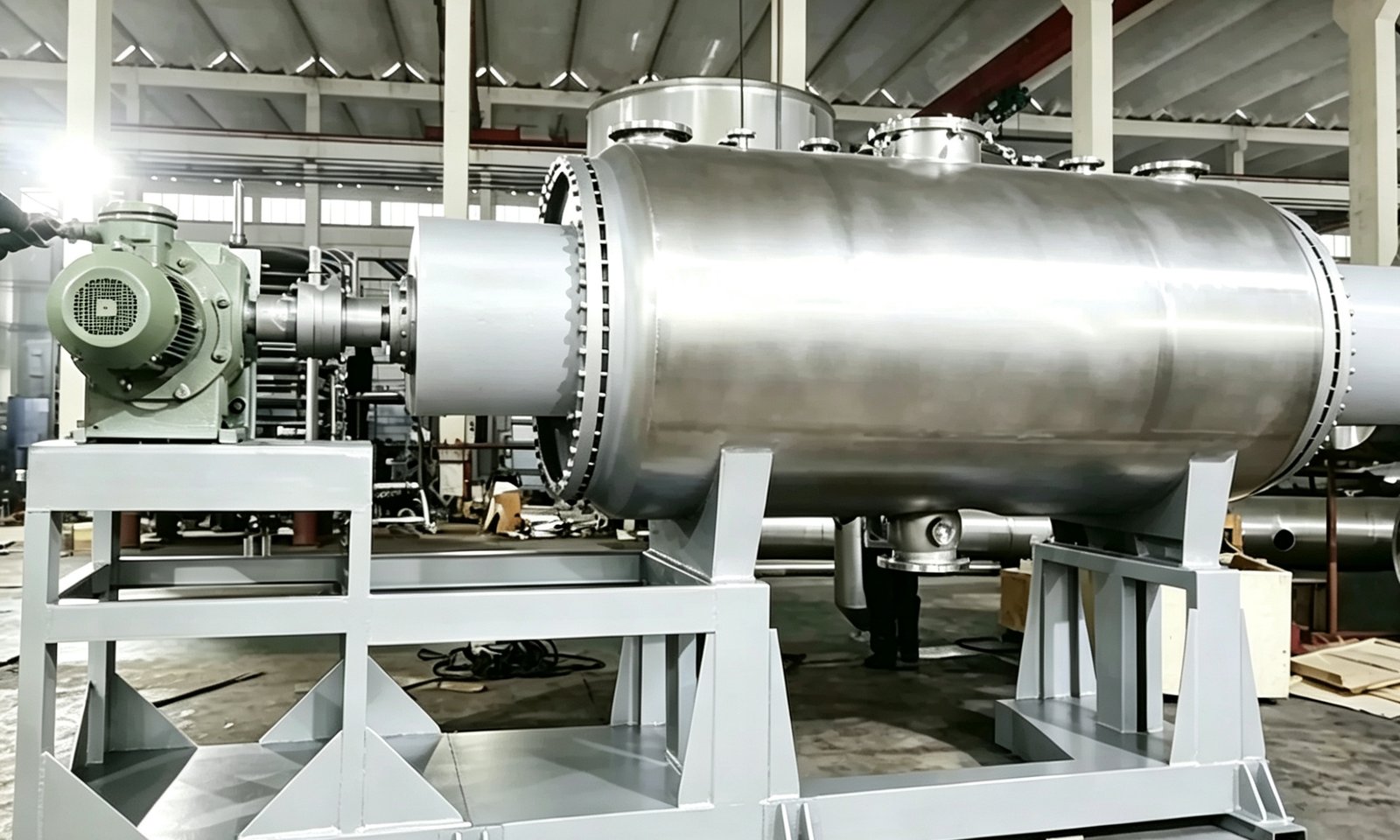 ZKG Vacuum Rake Dryer
|
|---|---|---|---|
| Material Movement | Tumbling via vessel rotation | Static layer on trays | Forced agitation by internal rake teeth |
| Ideal Material Form | Free-flowing powders, granules | Fragile items, pastes, liquids in pans | Slurries, pastes, sticky materials |
| Mechanical Impact | Mild tumbling (may break highly fragile crystals) | Zero mechanical impact | High shearing and scraping |
| Loading & Cleaning | Bulk loading, relatively easy internal access | Manual tray loading, labor-intensive cleaning | Bulk loading, complex shaft cleaning |
Note: A standard SZH Double Cone Mixer is primarily for blending and lacks the vacuum and heating jackets required for drying.
How to Choose the Right Model
Follow this procurement checklist to gather the necessary data for an accurate technical proposal.
- 1 Identify material name, state, wet bulk density, and flowability.
- 2 Determine wet batch mass (kg), initial moisture, and target moisture (specify wet or dry basis).
- 3 Specify the type of moisture (water or specific solvent) and maximum allowable product temperature.
- 4 Note stickiness, corrosiveness, heat sensitivity, and crystal breakage limits.
- 5 Calculate required cycle times (loading, drying, cooling, discharging, cleaning).
- 6 Confirm available heat sources, electrical supply, cooling utilities, and installation space.
- 7 List required documentation (e.g., material certificates, FAT protocols) and electrical standards.
Preliminary Volume Estimation
This formula provides a basic estimate. Final selection must verify mechanical load limits and heat transfer requirements.
= Wet batch mass (kg)
÷ Wet bulk density (kg/L)
÷ Selected fill fraction (e.g., 0.4 to 0.5)
Volume = 100 / 0.5 / 0.4 = 500 L (Points to SZG-500).
Real Manufacturing Evidence Behind Your Double Cone Vacuum Dryer
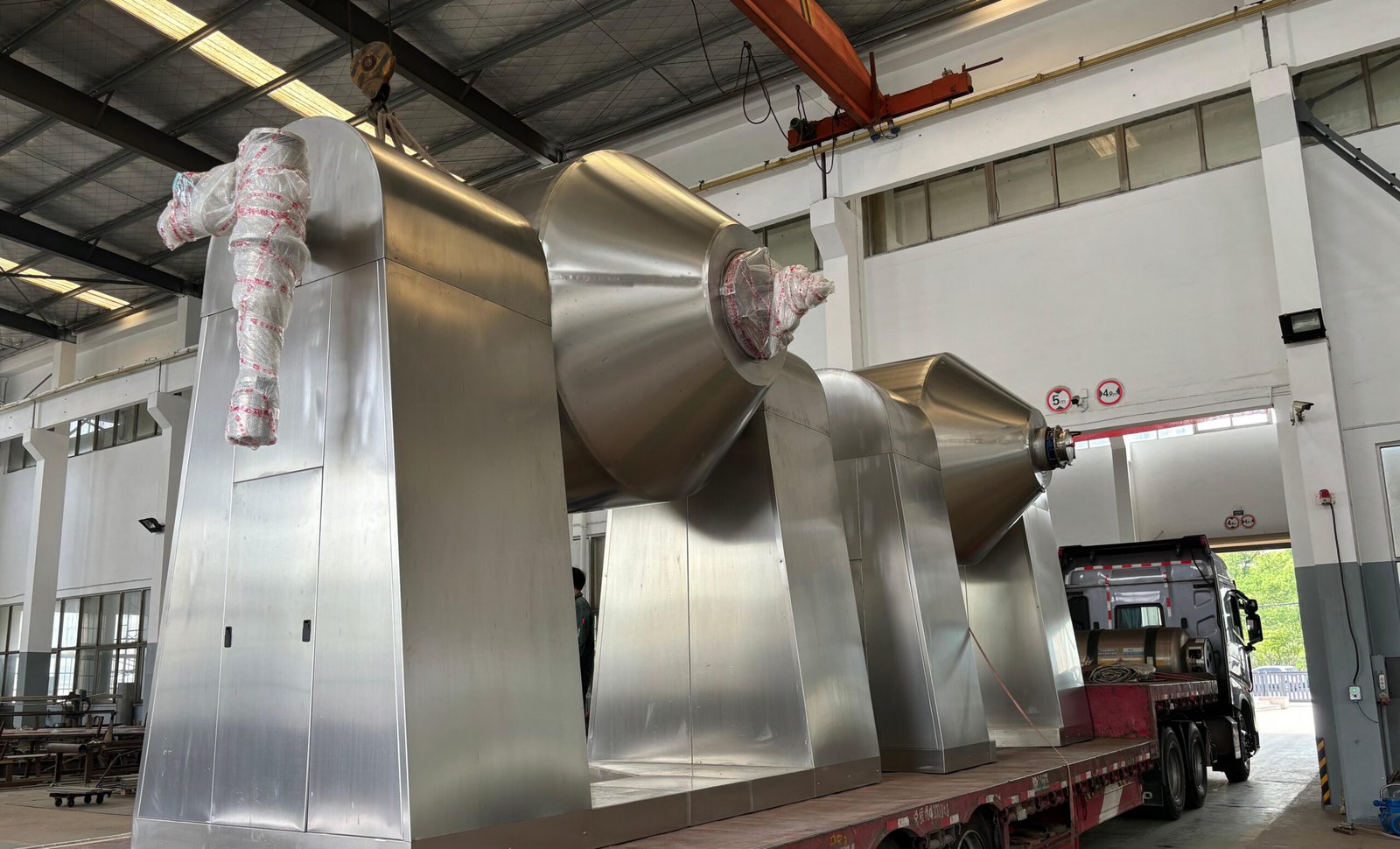
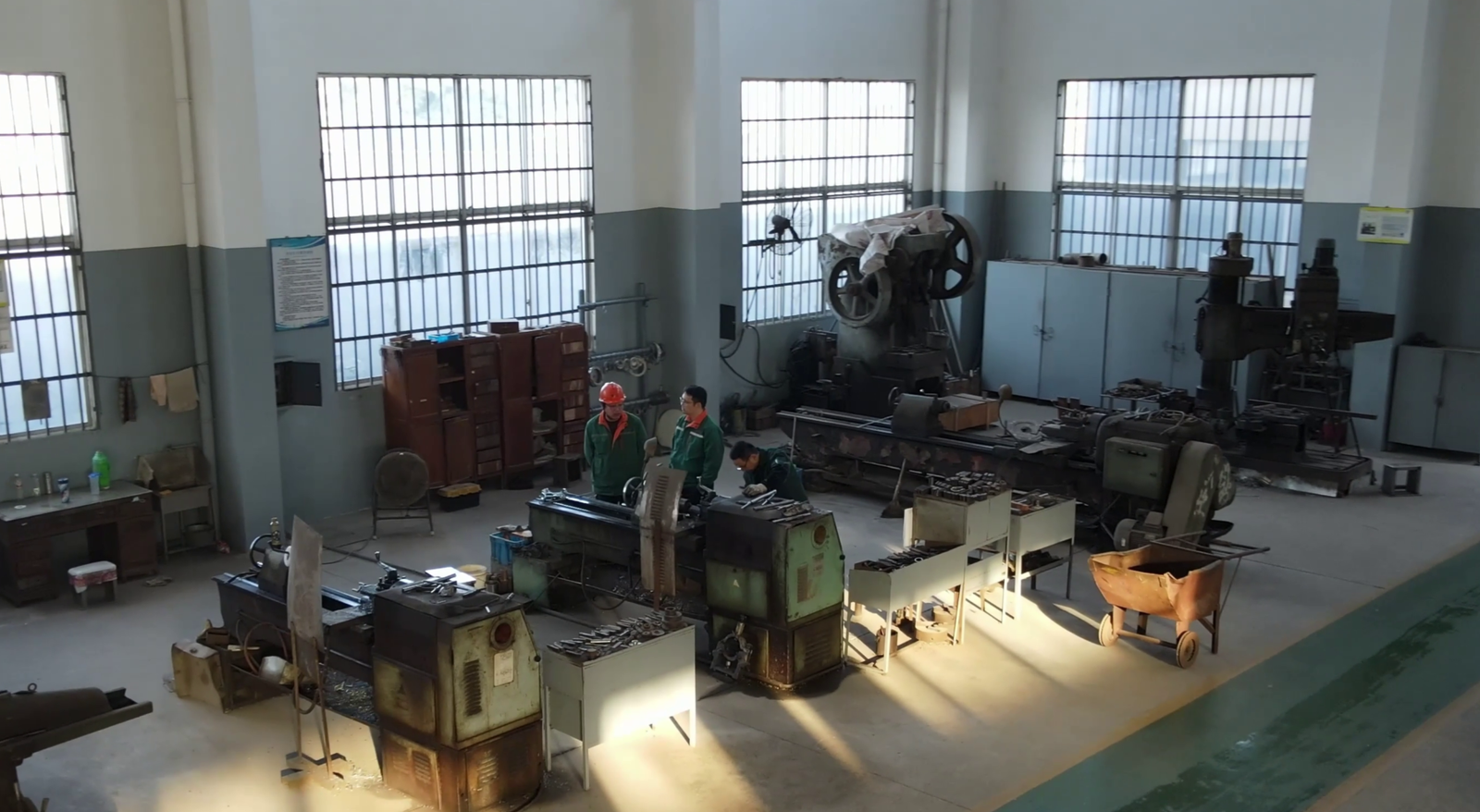
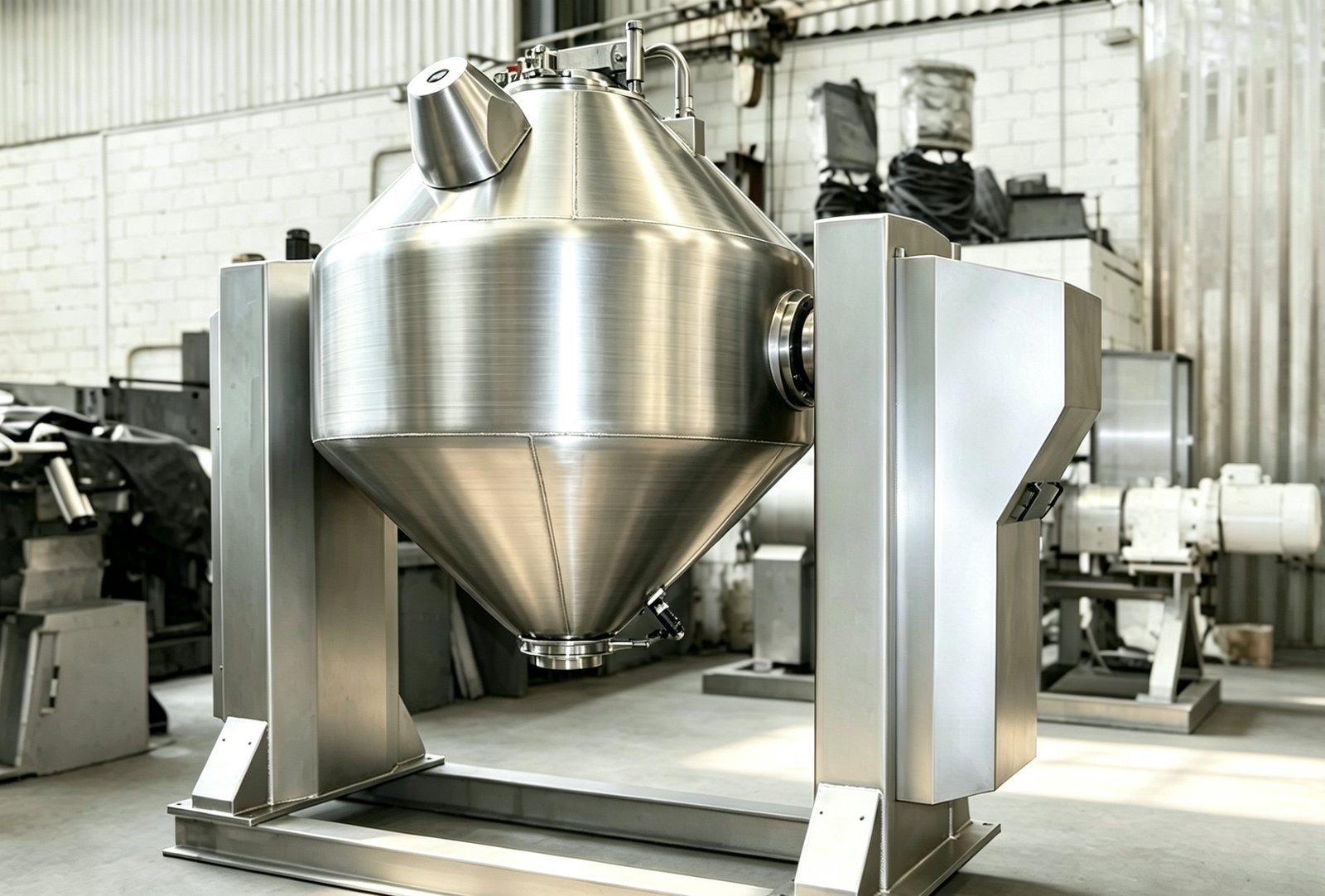
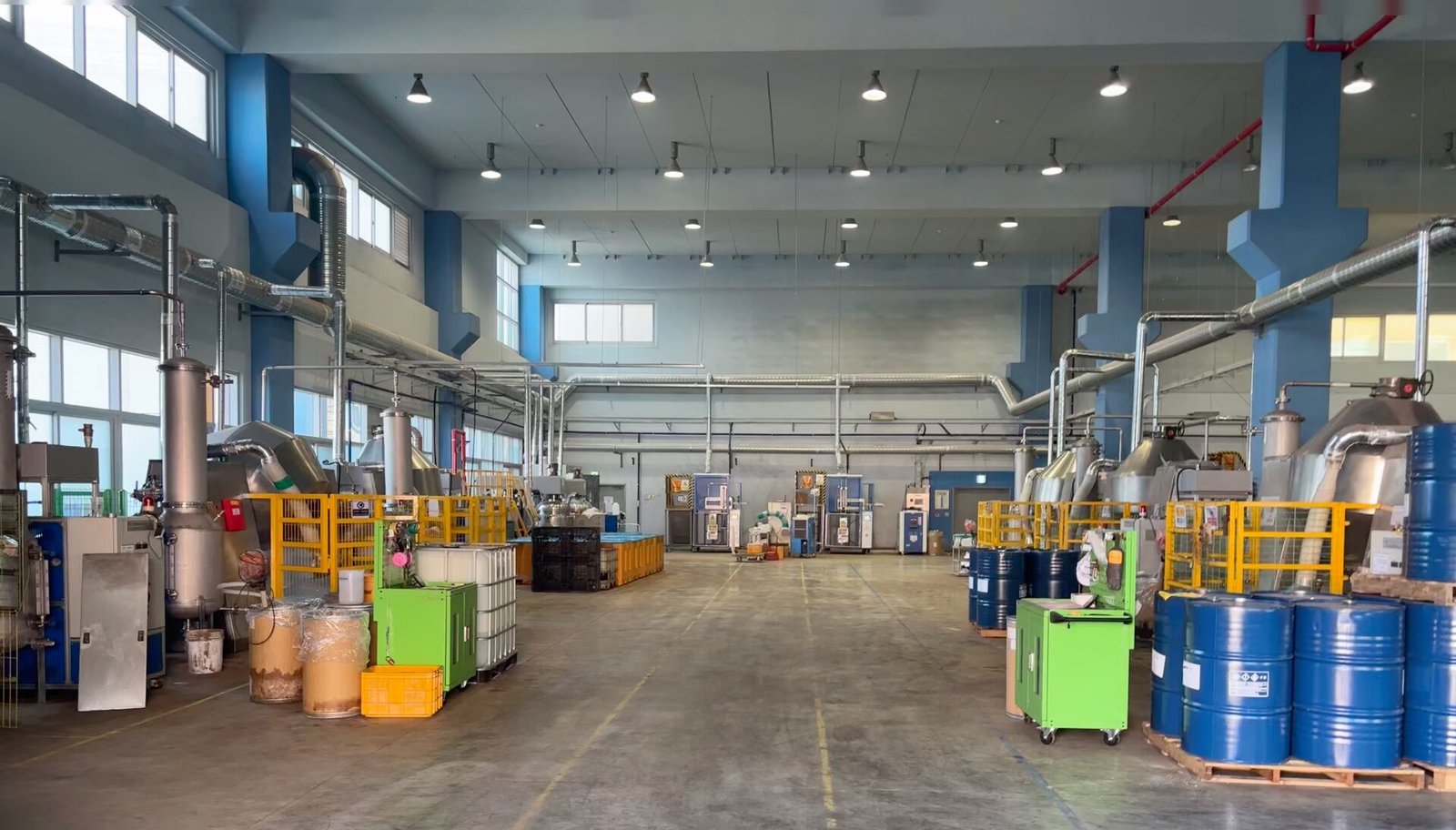
Before choosing a vacuum drying equipment supplier, buyers want to see more than product renderings. These images show real JEXDRY workshop, including stainless steel drying equipment fabrication, assembly, inspection preparation and shipment readiness.
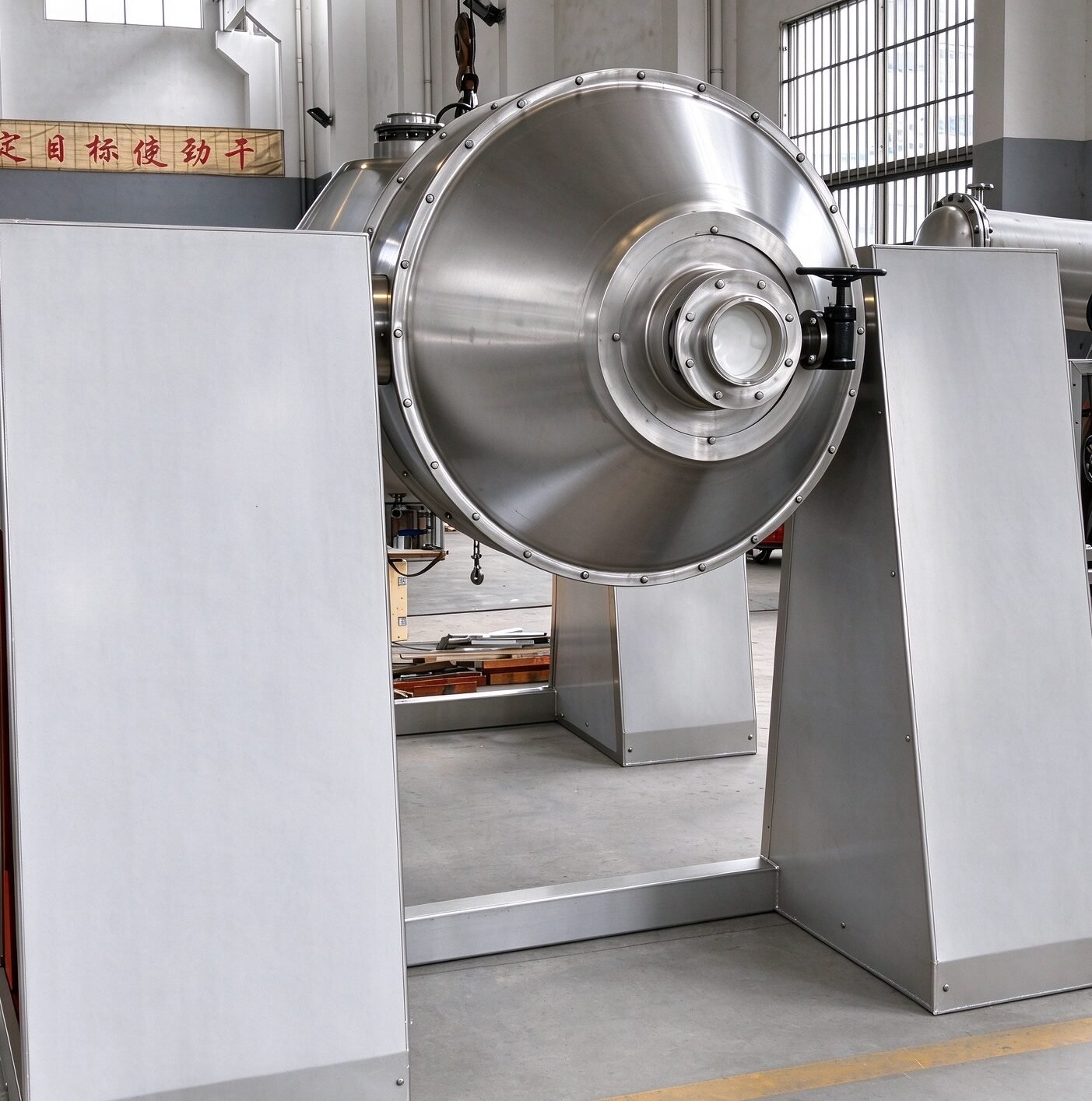
Completed double cone vacuum dryer in the JEXDRY workshop.
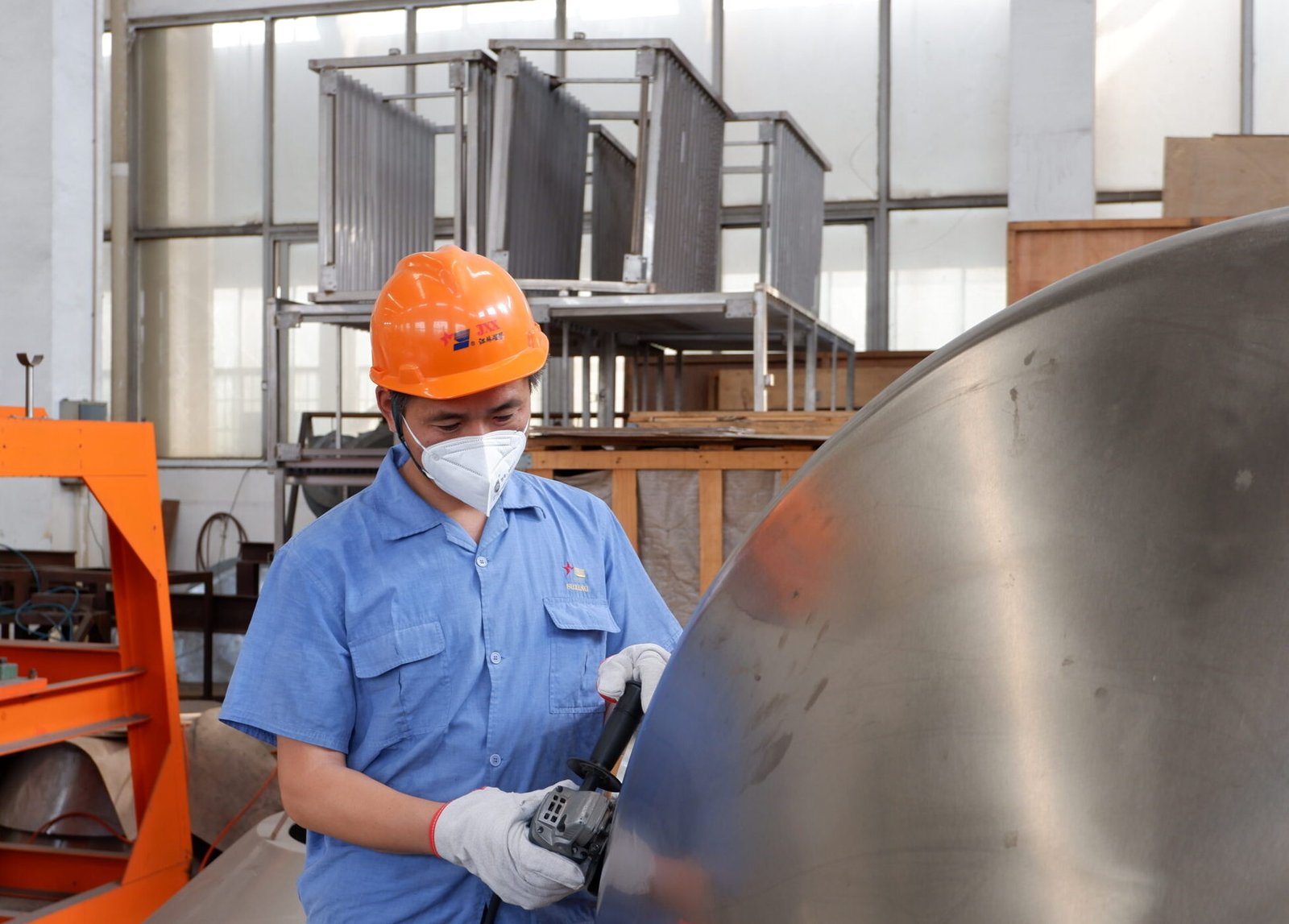
Stainless-steel vessel fabrication and assembly for drying equipment.
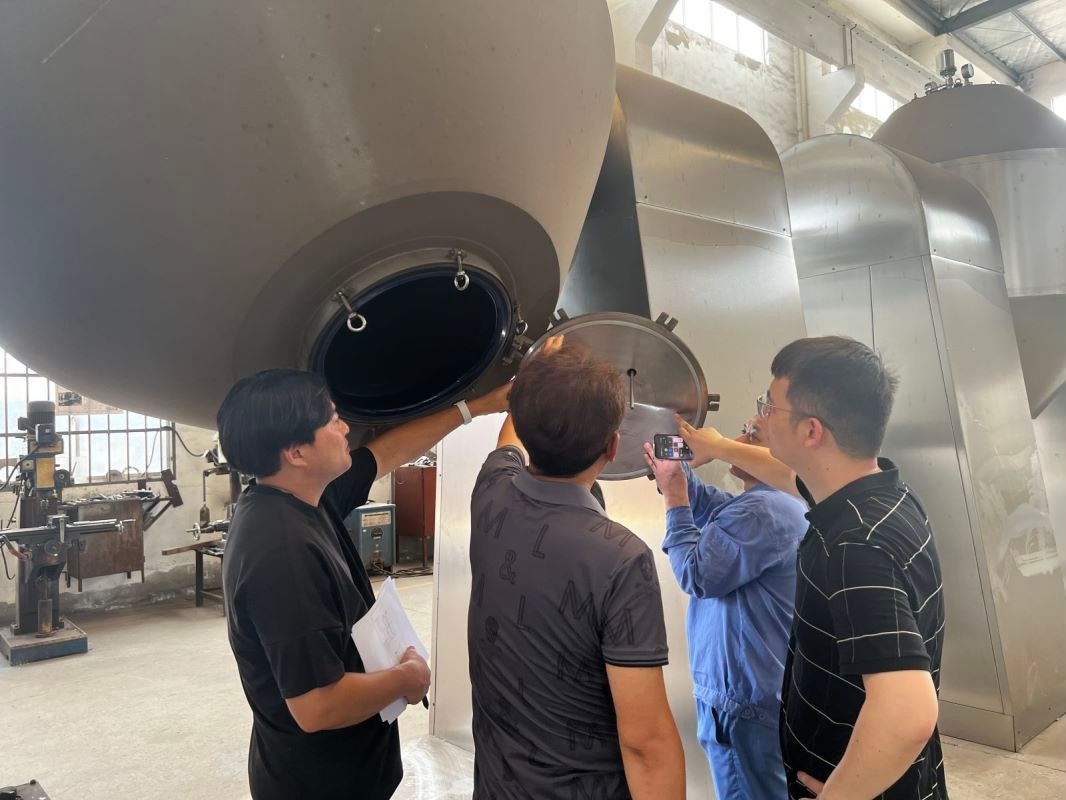
Mechanical components and system connections prepared for the agreed configuration.
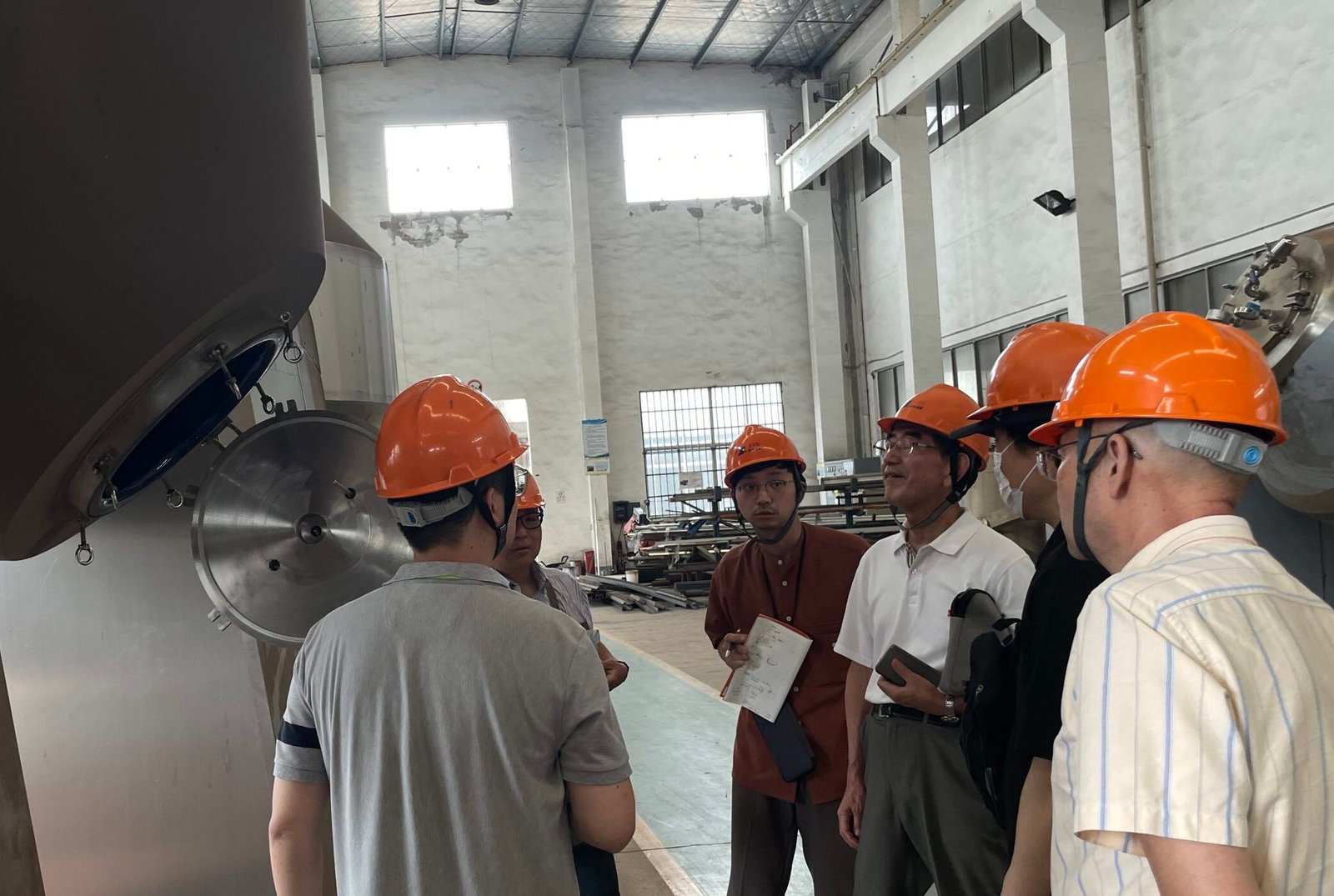
Equipment prepared for agreed inspection and shipment requirements.
What Buyers Can Verify Before Ordering
During quotation review, customers can discuss the proposed configuration, inspection scope, technical documents and delivery requirements before production begins.
Real double cone vacuum dryer manufacturing
Stainless-steel fabrication and equipment assembly
Project-specific component configuration
Agreed inspection and shipment preparation
Images shown are real JEXDRY workshop and equipment references. Final machine configuration, inspection scope and documentation are confirmed according to the individual project.
Want to See the Right Evidence for Your Project?
Tell us your material, application and site requirements. We can discuss the proposed dryer configuration, relevant manufacturing details, inspection scope and technical documentation for your project.
Frequently Asked Questions
Clarifications on specifications, configurations, and operations for industrial buyers.
Is a double cone vacuum dryer a batch dryer?
What is the difference between vessel volume, fill volume and loading mass?
Why can two SZG-300 dryers have different specifications?
Can the dryer use hot water, steam, thermal oil or electric heating?
Is the motor power the total power required by the system?
Can it handle sticky materials or wet filter cake?
Does the supplied system include a condenser?
What determines drying time and final moisture?
How are contact materials and surface finishes selected?
What information is needed for a quotation?
What affects price, delivery time and documentation scope?
Is a double cone mixer the same as a double cone vacuum dryer?
Related Equipment and Resources
Explore alternative drying technologies or request our full company catalog.
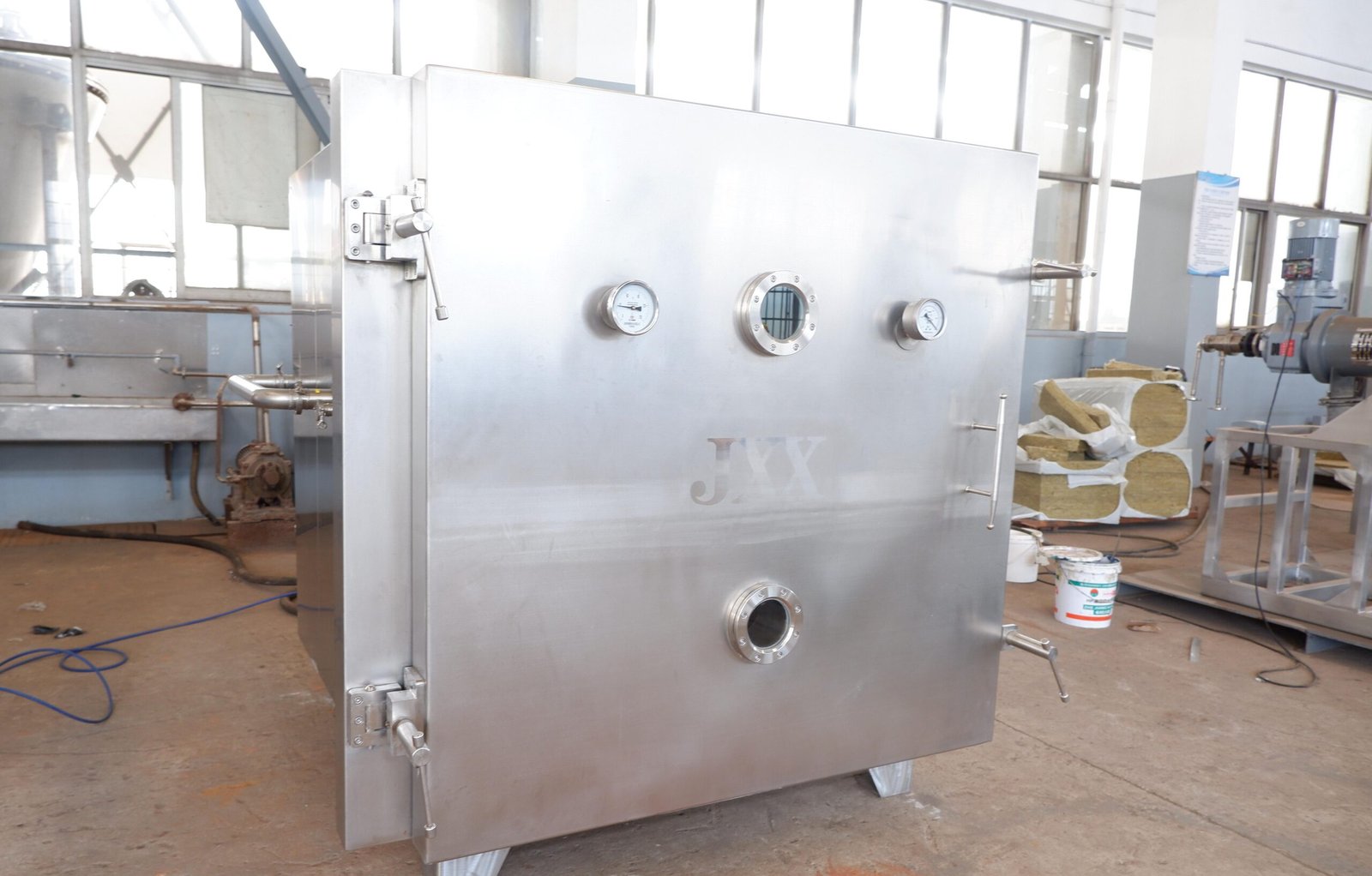
GZY/GZF Vacuum Tray Dryer
Consider this if your material is highly fragile, liquid, or cannot withstand the tumbling action of a double cone.
View Details →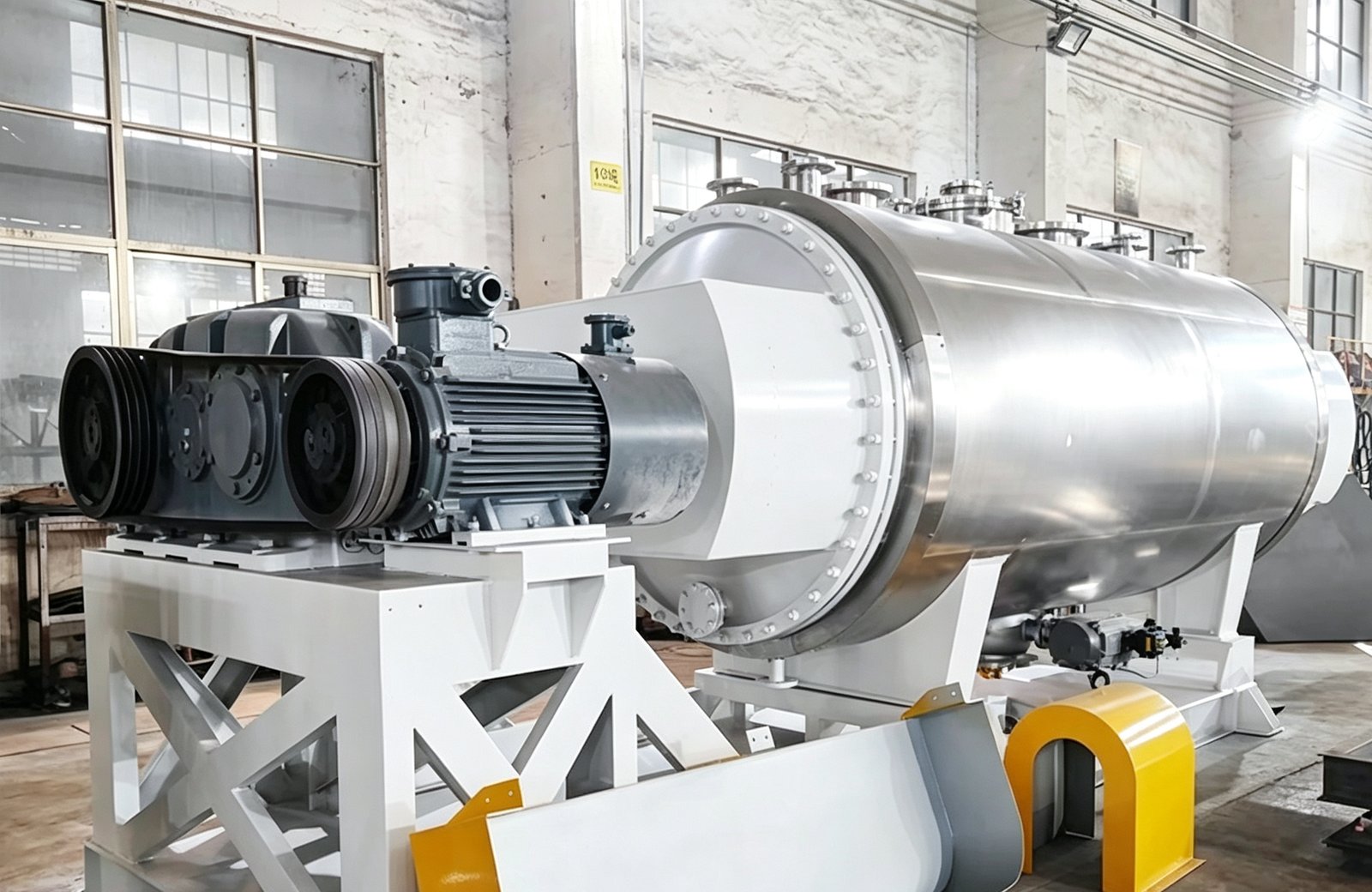
ZKG Vacuum Rake Dryer
Suitable for slurries, pastes, and sticky materials requiring strong mechanical agitation during vacuum drying.
View Details →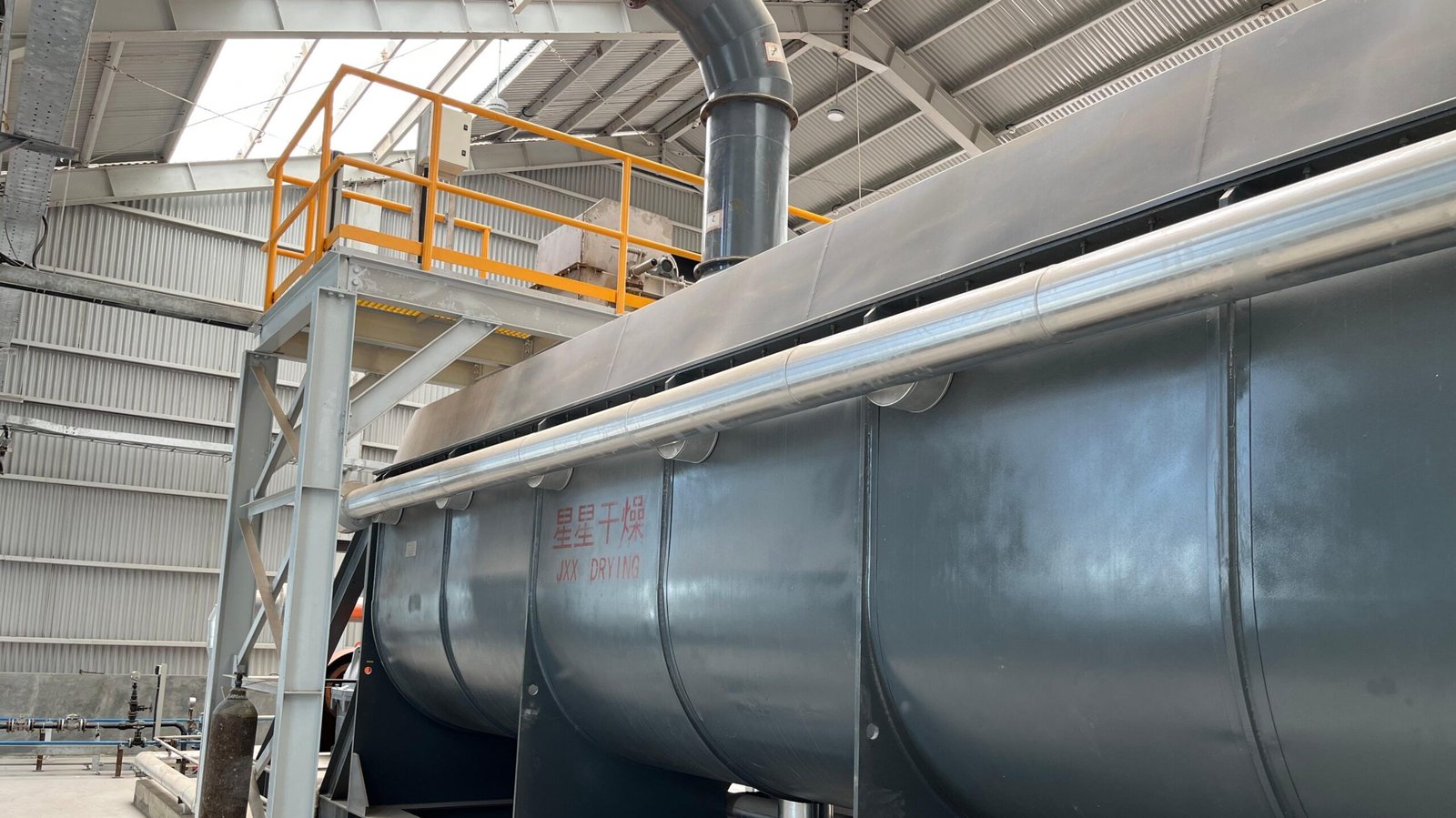
KJG Hollow Paddle Dryer
Ideal for continuous drying of pastes, granules, and powders using highly efficient indirect heat transfer without sweeping air.
View Details →Packaging & Quotation Scope
We provide customized technical proposals based on your specific material and facility constraints.
Export Packaging
Equipment is typically secured in wooden cases for export. However, exact packing arrangements, disassembly state, dimensions, and weights are confirmed per order based on the selected model size and auxiliary components.