Fishmeal Dryer — Hollow Paddle & Rotary Disc Options
Indirect drying approaches for fishmeal press cake and prepared fish by-products.
Evaluate hollow paddle and rotary disc drying for your feed material, moisture removal duty and available utilities. JEXDRY can review your process requirements and help define a suitable drying configuration.
Explore Two Fishmeal Drying Approaches
Both designs transfer heat through metal surfaces while moving the material through the drying chamber. Their suitability depends on the actual feed, drying duty and required product condition.
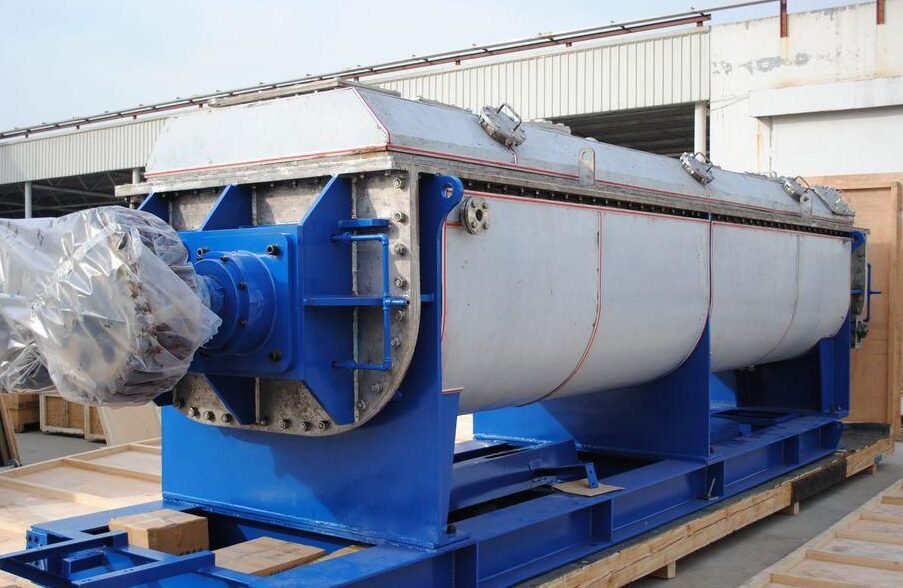
Hollow Paddle Dryer
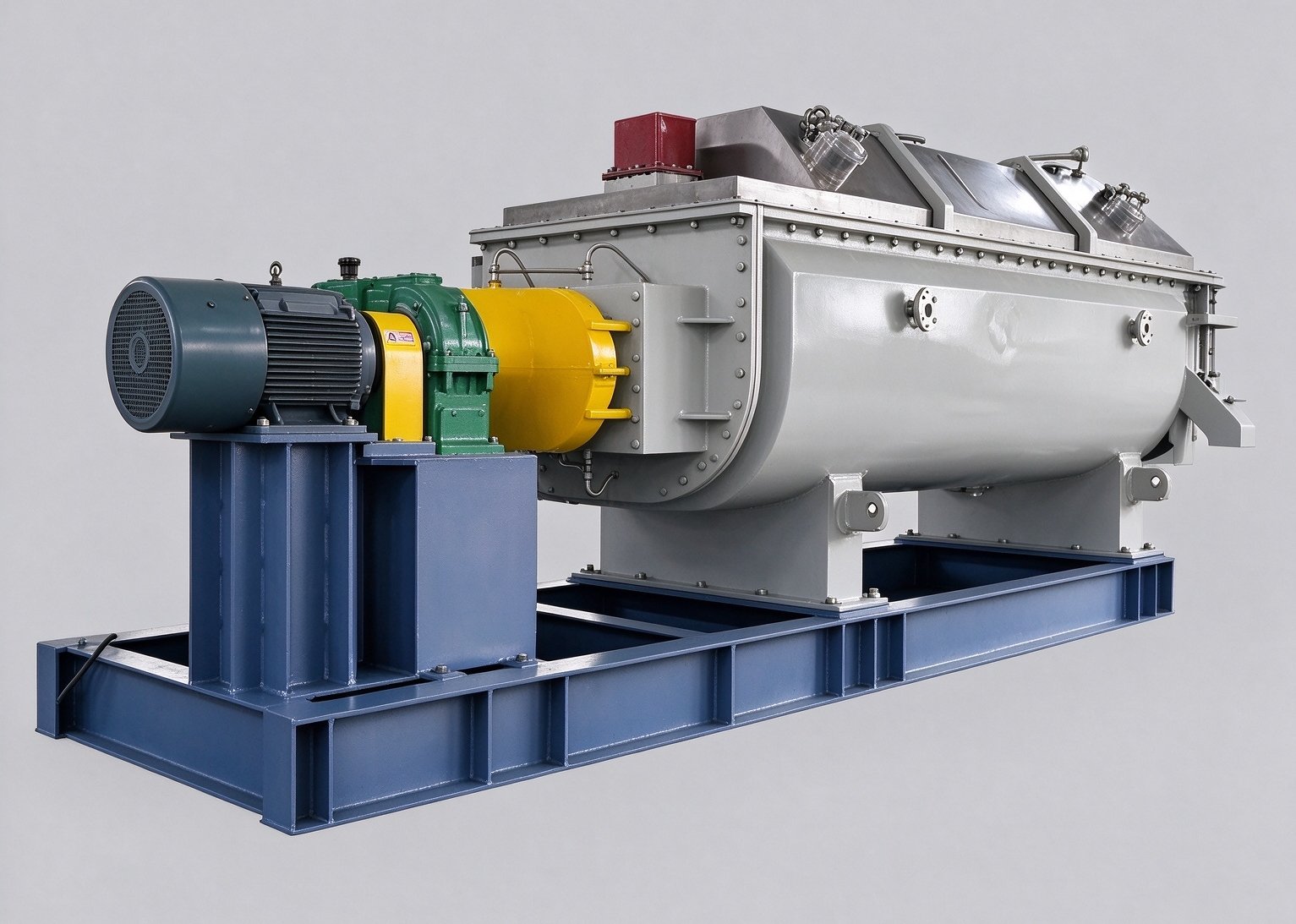
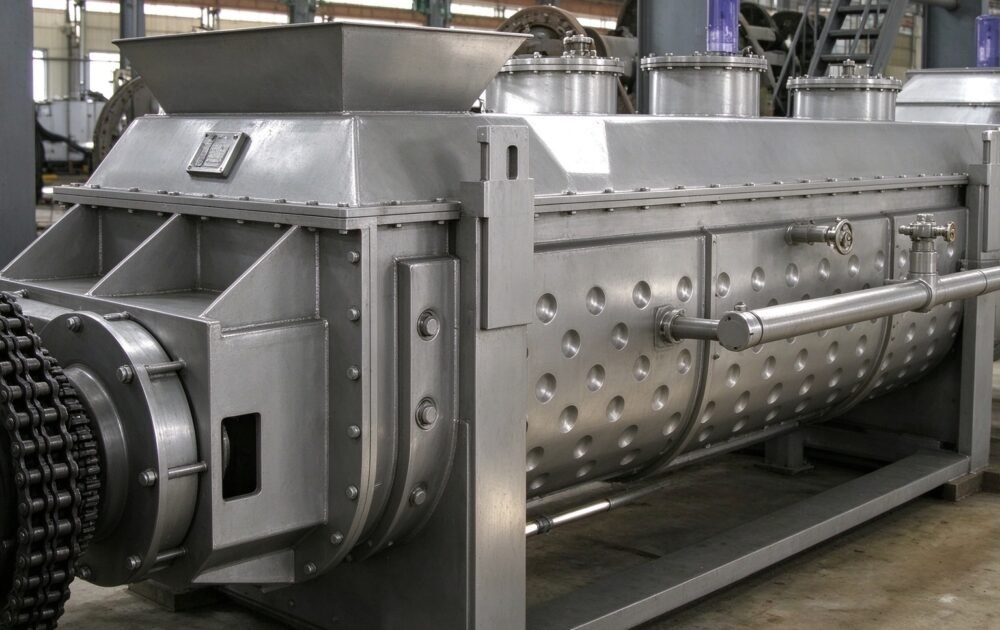
A hollow paddle dryer transfers heat through heated paddles, shafts and the jacket, depending on the configuration. Rotating paddles mix the feed and renew contact with the heated surfaces. Fishmeal applications require evaluation of drying behaviour, buildup tendency and drive load.
- Heated hollow paddles and shafts
- Agitation during moisture removal
- Feed-specific heating and discharge design
Key checks: stickiness during drying, fat content, lump formation, torque and product temperature.
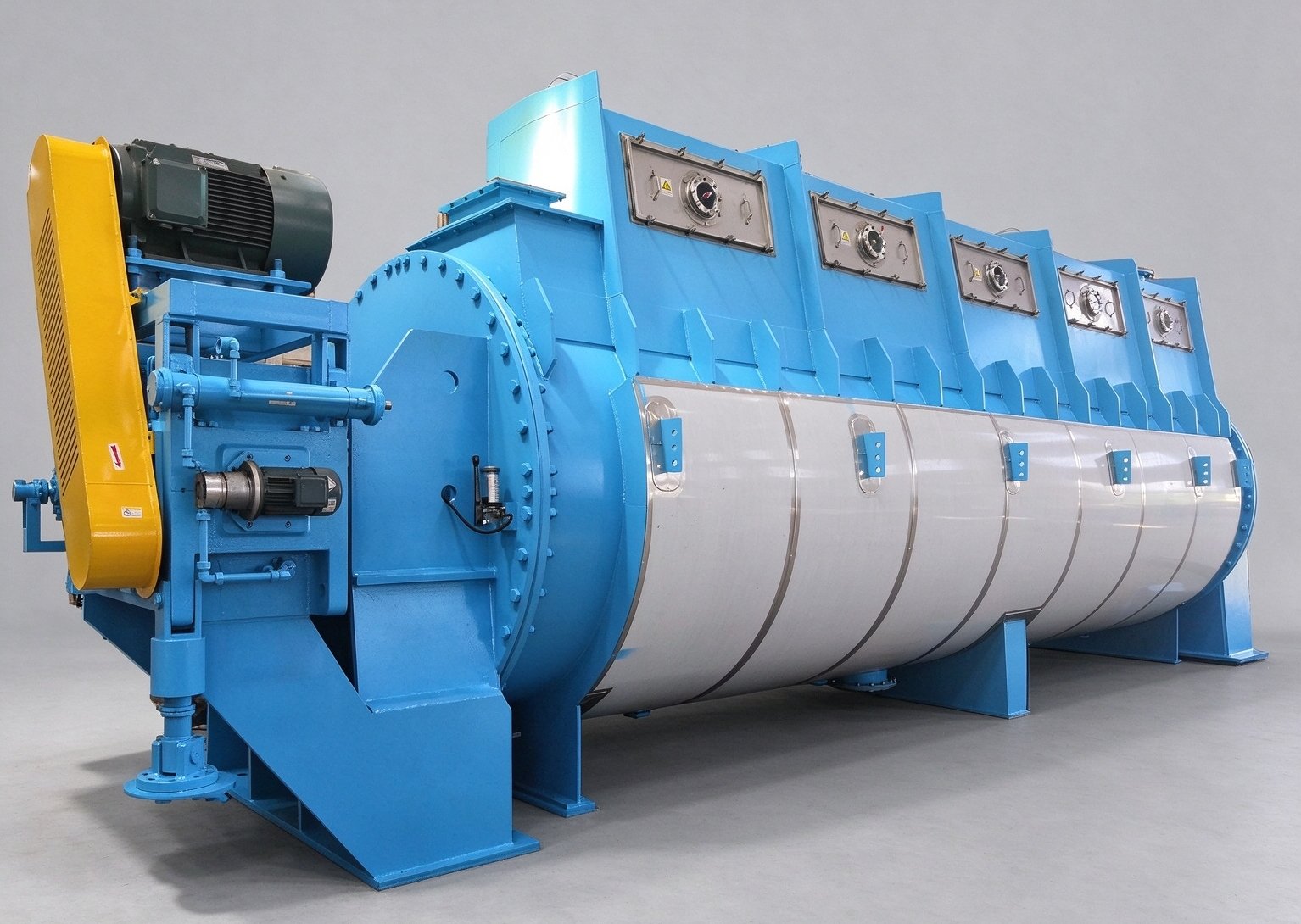
Rotary Disc Dryer
A rotary disc dryer uses heated hollow discs mounted on a rotating shaft inside a horizontal vessel. In steam-heated designs, heat passes through the disc surfaces to the material. Material movement and buildup control depend on the conveying and scraping arrangement.
- Heated disc rotor
- Continuous material movement
- Vapour collection for downstream treatment
Key checks: press cake consistency, concentrate addition, fouling behaviour, steam conditions and discharge control.
Not sure which design fits your feed?
Request a Process ReviewFishmeal Dryer Specifications & Sizing Basis
Dryer size depends on how much water must be removed and how the feed behaves during drying. Wet feed rate, water evaporation duty and dry product output are different quantities.
| Design Parameter | Hollow Paddle Dryer | Rotary Disc Dryer |
|---|---|---|
| Main heating surfaces | Hollow paddles, shafts and jacket as configured | Hollow discs and shaft; jacket if specified |
| Heating medium | Steam or thermal fluid, subject to process review | Steam-heated concept; detailed configuration to be confirmed |
| Wet feed rate, kg/h | Defined from feed data and operating schedule | Defined from feed data and operating schedule |
| Water evaporation duty, kg/h | Calculated from the agreed moisture balance | Calculated from the agreed moisture balance |
| Dry product output, kg/h | Calculated separately from wet feed rate | Calculated separately from wet feed rate |
| Inlet and outlet moisture, % wet basis | Agreed for the actual feed and product specification | Agreed for the actual feed and product specification |
| Heating area, m² | Determined after process evaluation | Determined after process evaluation |
| Product temperature and residence time | Established for the drying duty | Established for the drying duty |
| Heating-medium temperature and pressure | Matched to available utilities and equipment design | Matched to available utilities and equipment design |
| Drive power and rotor speed | Selected for material behaviour and mechanical load | Selected for material behaviour and mechanical load |
| Product-contact materials | Selected for corrosion, wear and cleaning requirements | Selected for corrosion, wear and cleaning requirements |
| Dimensions and maintenance access | Confirmed in the general arrangement | Confirmed in the general arrangement |
| Utility consumption and system scope | Confirmed on an agreed operating basis | Confirmed on an agreed operating basis |
Final specifications and performance guarantees require a defined feed specification and an agreed operating basis. Raw fish throughput for the upstream plant must not be used as the dryer wet feed capacity.
What Is a Fishmeal Dryer?
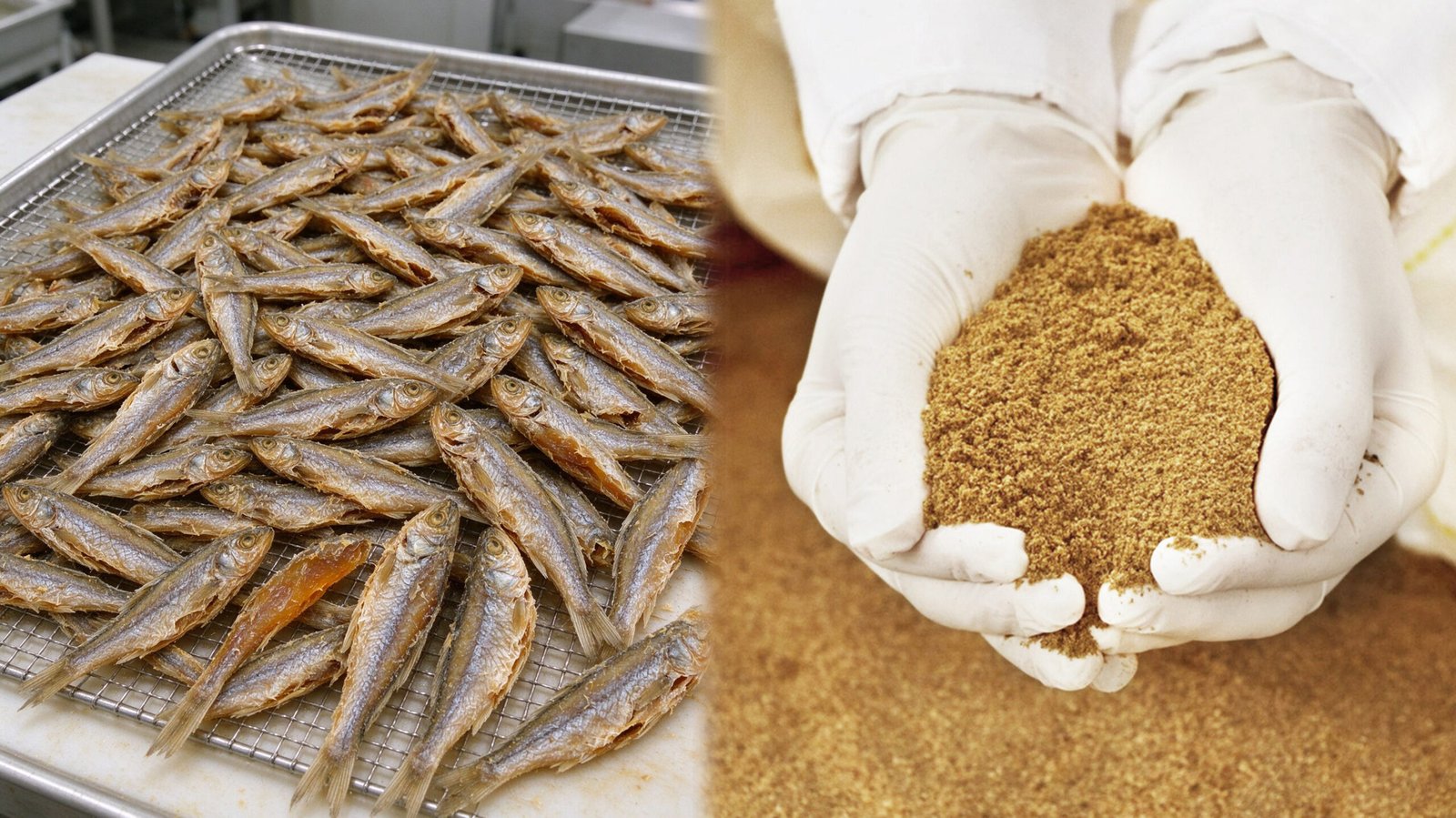
A fishmeal dryer removes moisture from prepared fish solids, typically after cooking and mechanical dewatering. Depending on the production process, the feed may also include recovered fines and stickwater concentrate.
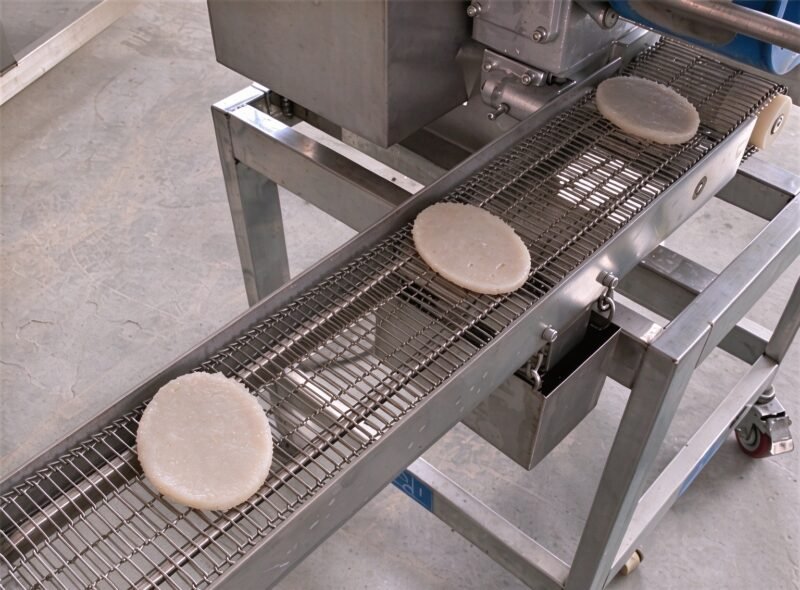
Fishmeal Press Cake
Mechanically dewatered solids from the cooking and pressing stages.
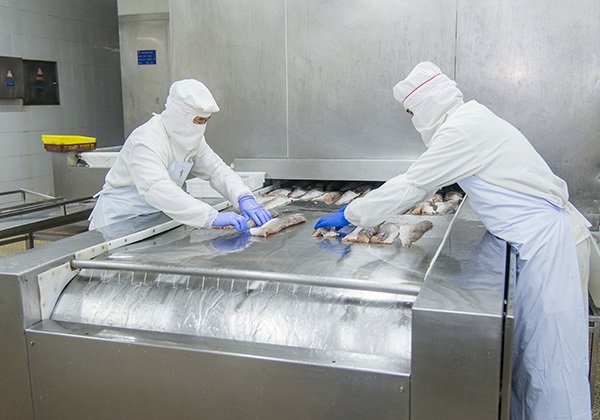
Prepared Fish By-Products
Processed fish residues with a defined moisture content, particle size and fat level.
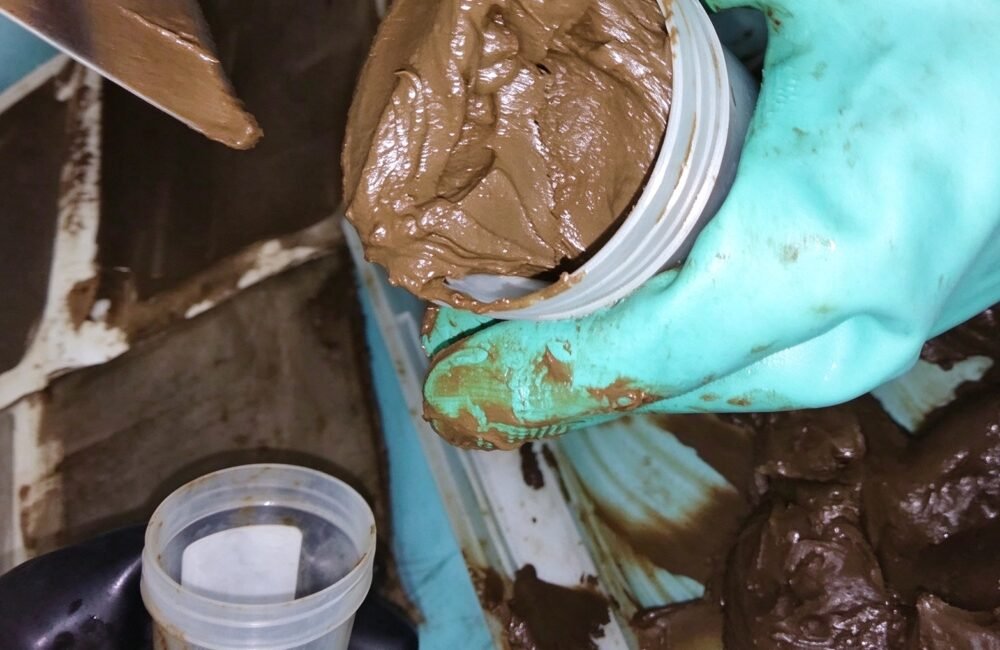
Press Cake with Recovered Solubles
A mixed feed containing recovered solids or concentrated stickwater, where required by the process.
Feed composition affects drying behaviour. Share the actual material condition rather than the finished fishmeal description alone.
Address the Process Challenges Behind Fishmeal Drying
Selecting an industrial drying configuration requires addressing material behaviour, thermal limits and plant integration constraints.
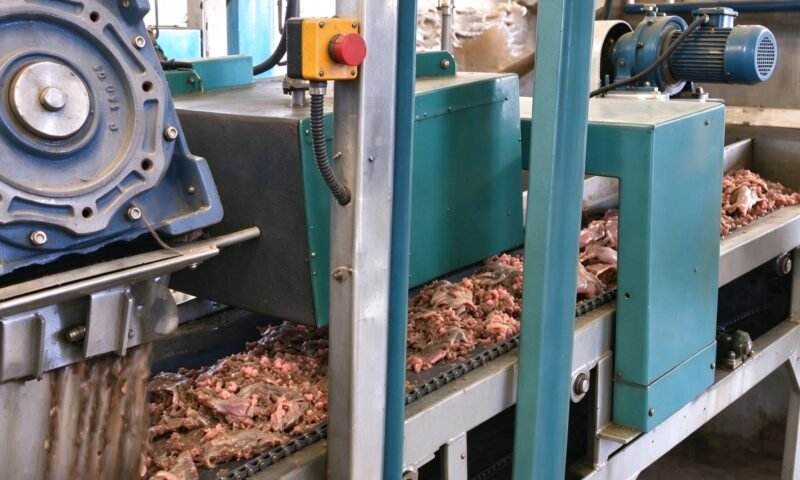
Variable Feed Moisture
Changes in pressing performance can change the dryer load. Define the normal feed range and review feeding, heat input and discharge control together.
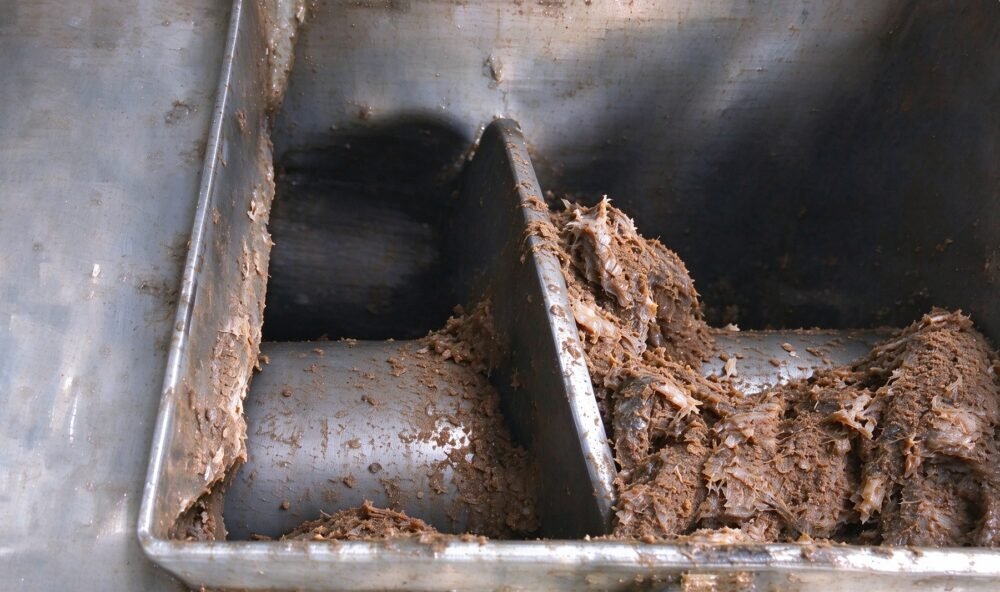
Buildup and Lumps
Fat, solubles and changing material consistency can affect mixing and heat transfer. Test the feed and review agitation, clearances, drive load and cleaning access.
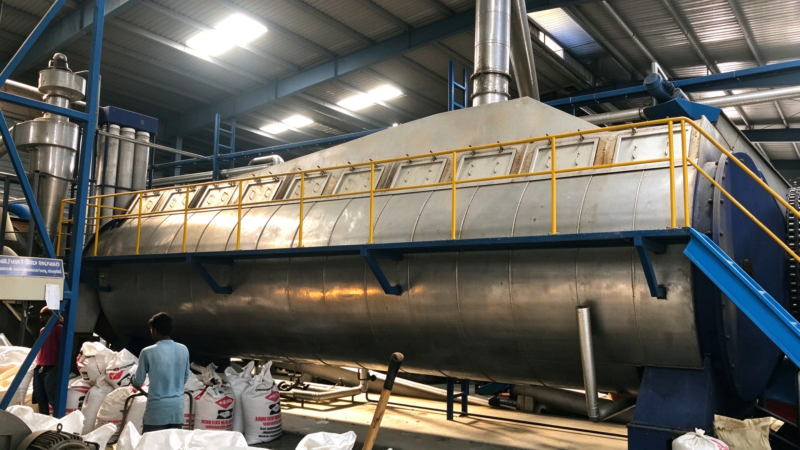
Product Temperature Limits
Drying conditions must match the product specification. Review heating-medium conditions and residence time against the allowable product temperature.
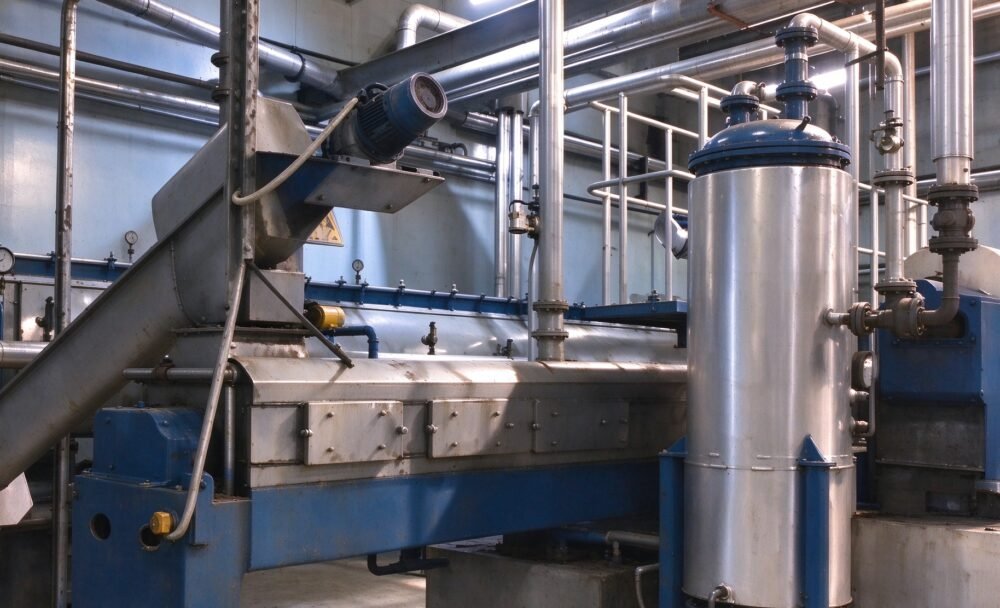
Odour and Process Vapour
An enclosed drying chamber provides a route for collecting process vapour. Condensation and odour treatment must be selected for the complete system.
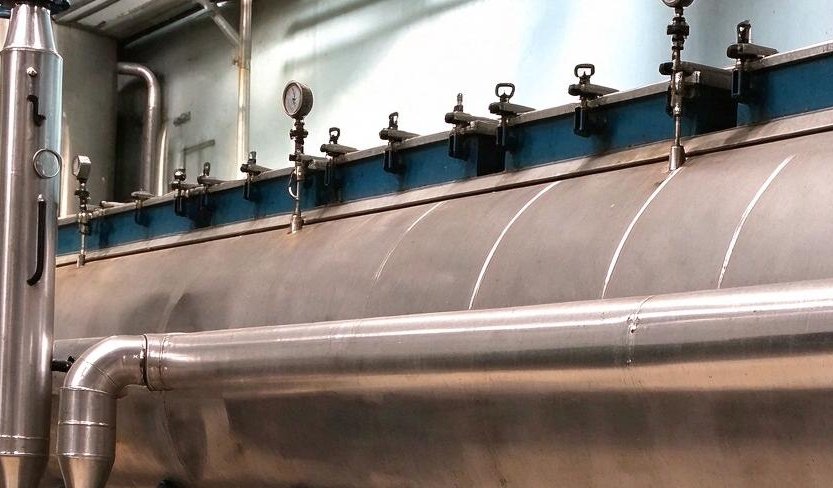
Utility Consumption
Compare systems on the same evaporation duty and utility boundary. Feed moisture, heat losses and condensate handling all affect operating cost.
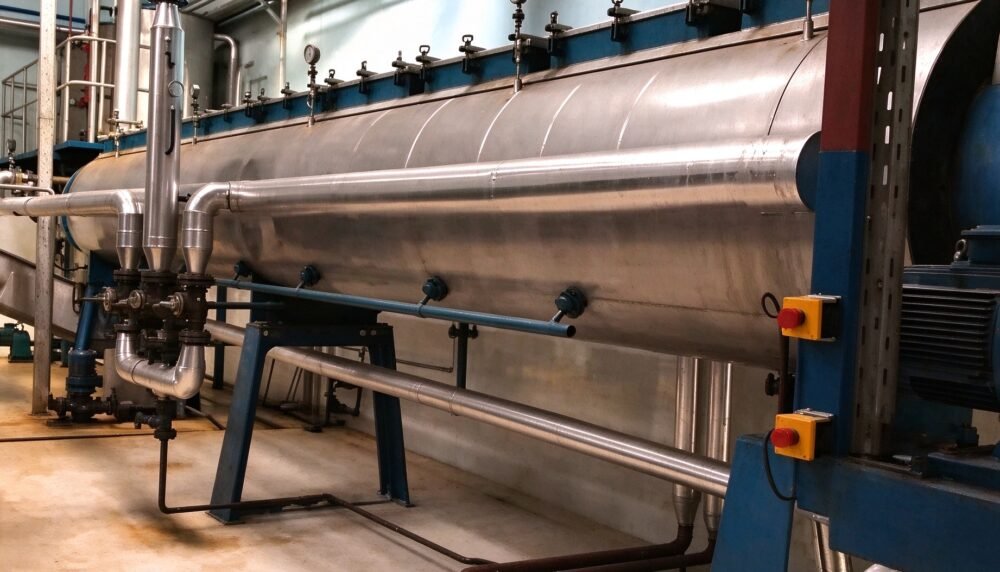
Maintenance and Plant Fit
Review wear, corrosion, seals, inspection access and rotor maintenance space before confirming the installation layout.
Where the Dryer Fits in Your Fishmeal Process
The dryer receives prepared material from the upstream process. Press cake consistency, recovered solids and concentrate addition must be included in the drying evaluation.
By-Products
Dewatering
Preparation
Milling
Packing
This diagram shows typical process interfaces. The equipment supply boundary is defined separately for each project. Image alt equivalent: Typical fishmeal process
Hollow Paddle Dryer vs. Rotary Disc Dryer
Both are indirect drying approaches. The preferred design depends on feed behaviour, moisture removal duty, available utilities and the required product condition.
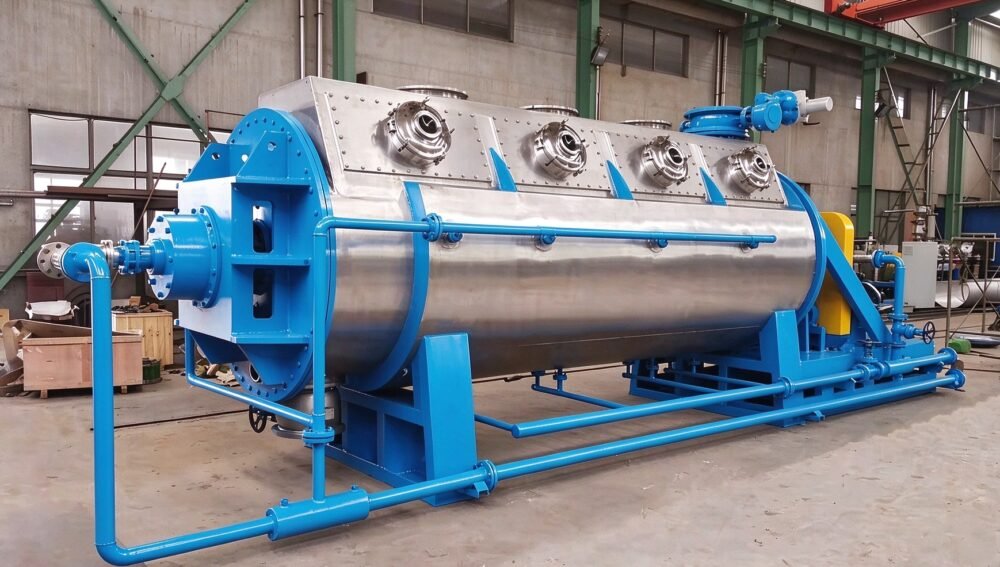
| Comparison Point | Hollow Paddle Dryer | Rotary Disc Dryer |
|---|---|---|
| Main heated components | Hollow paddles and shafts; jacket as configured | Hollow discs and shaft; jacket if specified |
| Material movement | Paddle rotation mixes the feed and renews surface contact | Disc rotation works with the actual conveying and scraping arrangement |
| Feed evaluation | Stickiness changes, lumps, fat content and agitation load | Press cake consistency, concentrate addition and buildup behaviour |
| Heating design | Heating medium and surface arrangement matched to the duty | Steam distribution and condensate removal matched to the duty |
| Moisture control | Review feeding, heat input, material hold-up and discharge | Review feeding, heat input, material hold-up and discharge |
| Maintenance review | Paddles, shafts, seals, wear and access | Discs, conveying parts, scrapers, seals and access |
| Final selection basis | Material data, testing where needed and engineering calculations | Material data, testing where needed and engineering calculations |
Choose the design that demonstrates suitable drying behaviour for your material and fits your plant interfaces. A comparison is meaningful only when both options use the same feed and product specifications.
Help Me Compare the Two OptionsHow to Choose a Fishmeal Dryer
Define the Feed
Identify the fish material, preparation method, moisture range, fat content, particle size and any recovered solubles.
Define the Drying Duty
Provide wet feed rate, operating hours and target moisture. Calculate water removal and dry product output separately.
Set Product Limits
Specify the allowable product temperature, required moisture consistency and agreed product quality checks.
Review Utilities and Installation
Confirm steam or thermal-fluid conditions, electrical supply, available space, maintenance clearance and vapour-treatment interfaces.
Validate the Configuration
Use material trials where needed, then agree the equipment configuration, operating basis and acceptance criteria.
Information to Prepare
- Feed description and photos
- Wet feed rate and operating schedule
- Initial and target moisture, wet basis
- Fat content and relevant composition data
- Stickwater concentrate addition, if applicable
- Available heating medium and conditions
- Product temperature limits
- Site layout and vapour-treatment requirements
Plan the Dryer with Its Supporting Systems
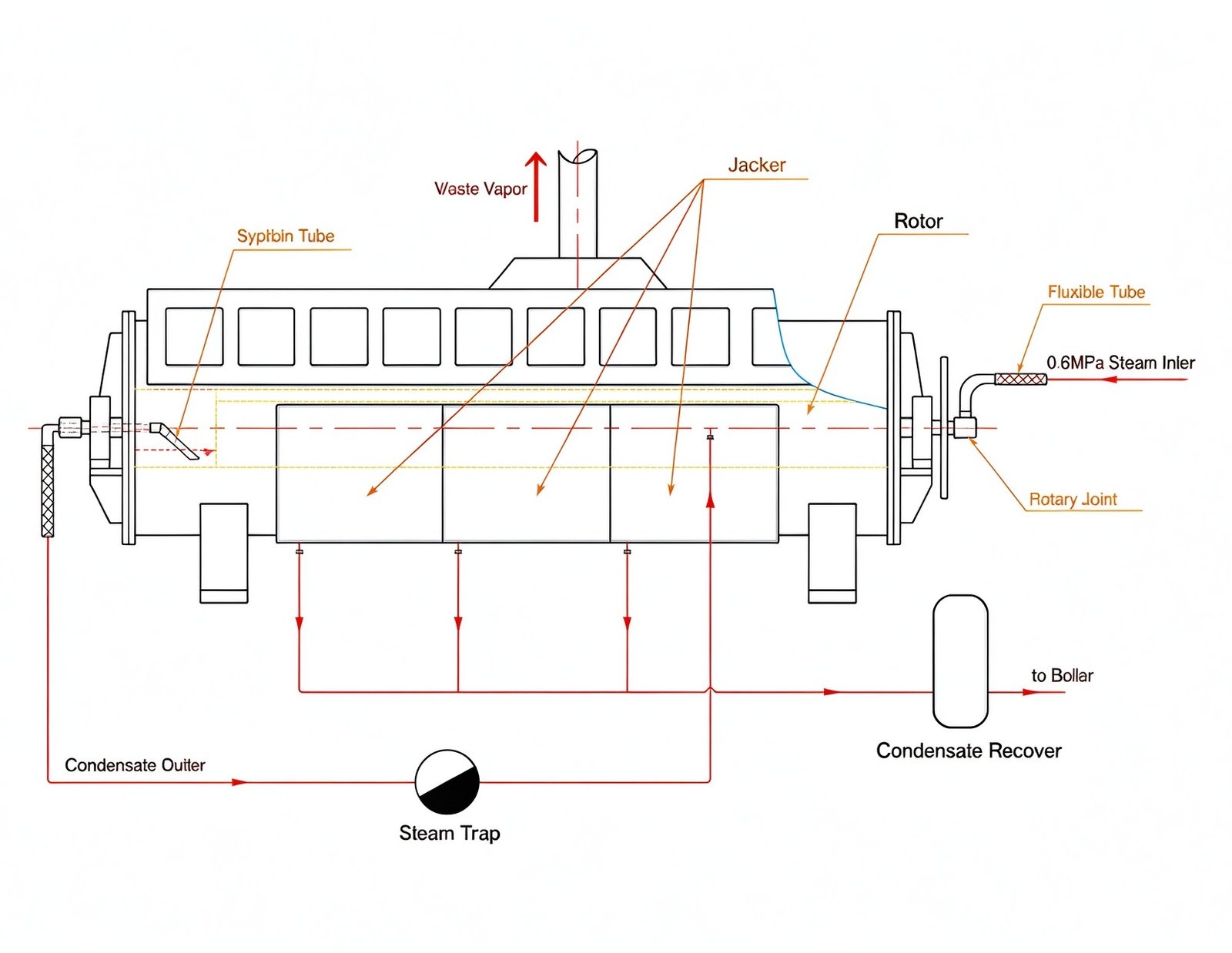
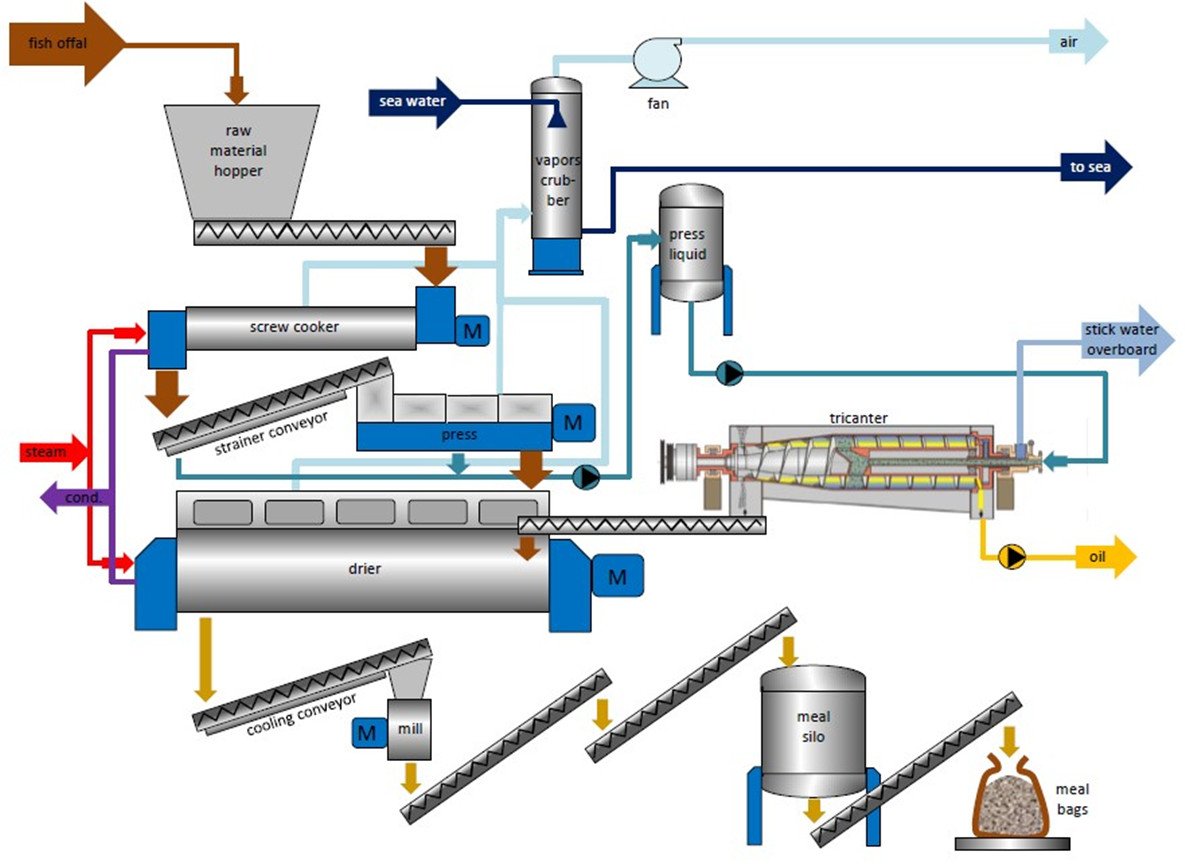
A drying proposal should define the dryer together with the interfaces that affect its operation. Feeding, heating, condensate return, product discharge and vapour handling must be reviewed as a connected process.
Process illustration
Material Path
Prepared Feed → Metered Feeding → Dryer → Product Discharge → Downstream Handling
Heating Path
Heating-Medium Supply → Heated Components → Condensate or Return Circuit
Vapour Path
Dryer Vapour Outlet → Solids Separation as Required → Condensation / Odour Treatment → Agreed Discharge Point
Supporting equipment, control functions and treatment stages are included only as specified in the agreed project scope.
From Feed Evaluation to Equipment Verification
JEXDRY is the international industrial drying equipment brand of Jiangsu Xingxing Drying Equipment Co., Ltd., established in 1998 in Changzhou, China.
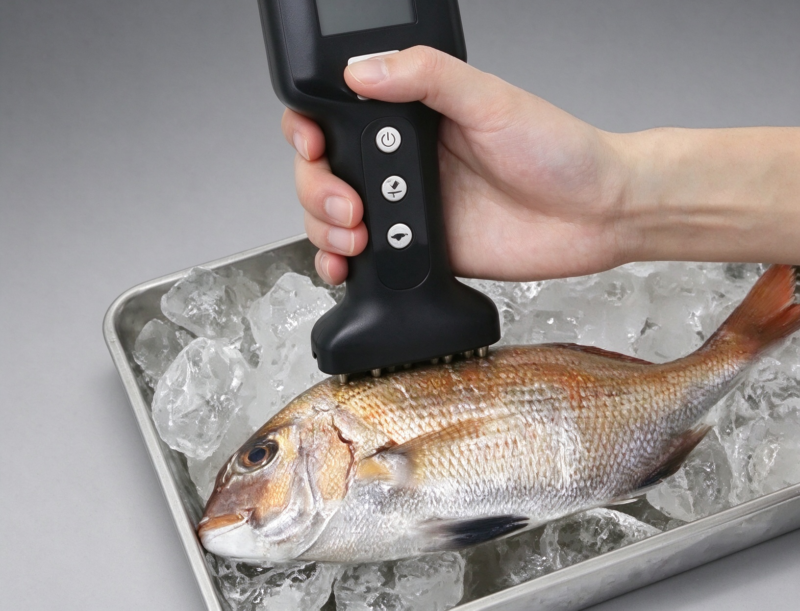
Material Review
Define the feed, drying target and operating conditions.
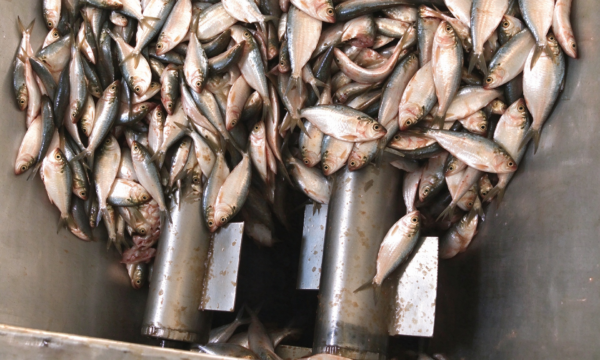
Testing Where Needed
Evaluate representative material behaviour before final selection.
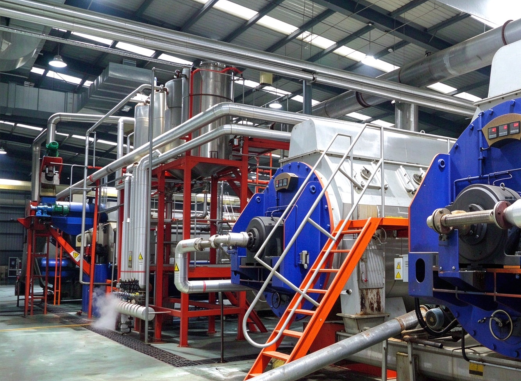
Equipment Engineering
Confirm the configuration, interfaces and technical scope.
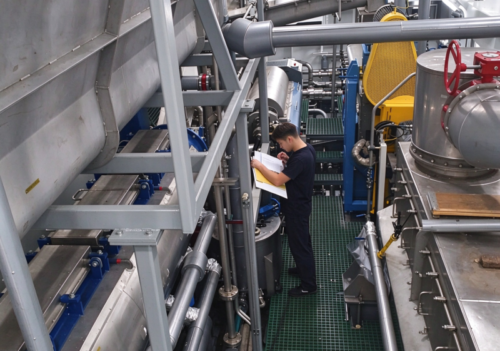
Agreed Inspection and FAT
Define inspection records, functional checks and documentation before shipment.
Material trials, acceptance checks and technical documentation are agreed for the individual project.
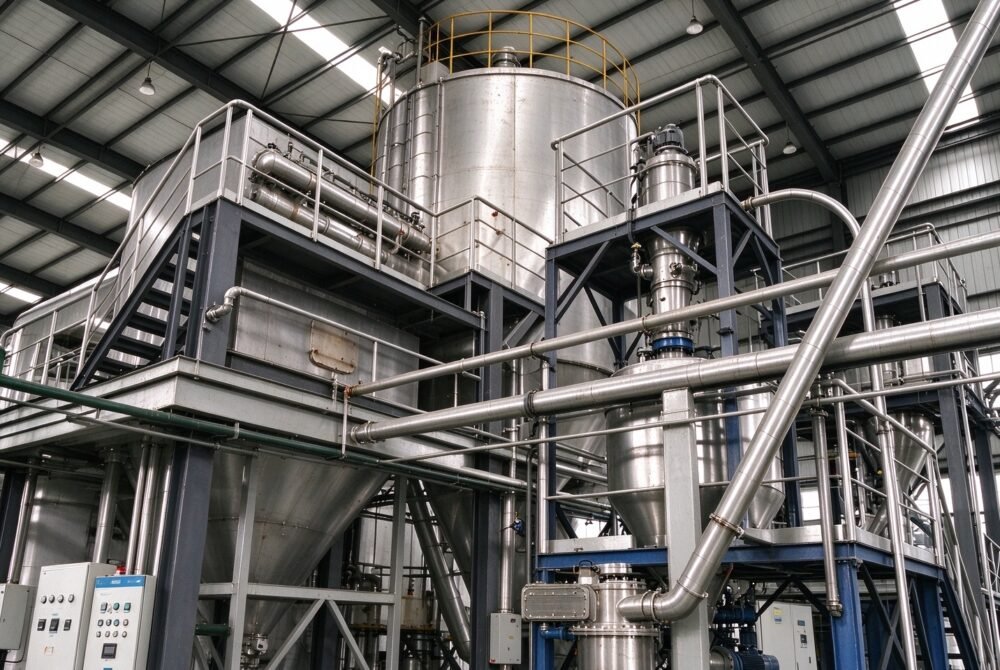
Peru Fishmeal Drying Project
A focus on low-temperature drying, product temperature control and nutritional quality.
For a fishmeal customer in Peru, the drying priorities centred on removing moisture while limiting thermal exposure. The customer wanted low-temperature drying, control of the product temperature and protection of heat-sensitive nutritional components.
Customer Priorities
Low-Temperature Drying
Drying conditions suited to the heat sensitivity of the material, with a focus on limiting excessive thermal exposure.
Protecting Nutritional Quality
Preserving the desired nutritional quality of the fishmeal was a central requirement when defining the drying conditions.
Product Temperature Control
The customer prioritised control of the material temperature during drying, with temperature limits forming part of the process requirements.
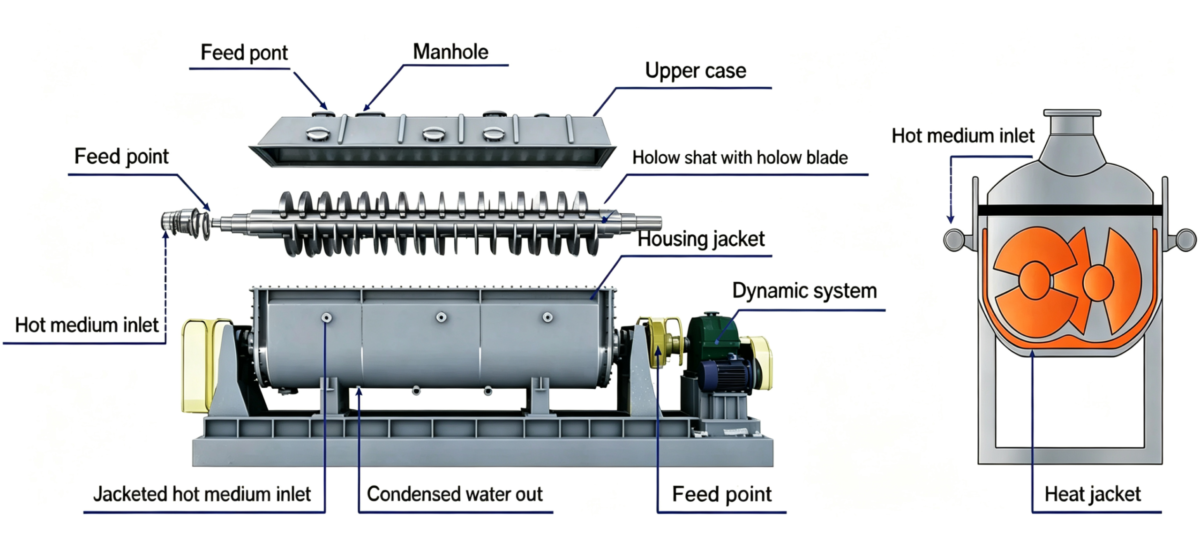
Paddle Dryer Configuration
The project proposal specified a BDM-41 paddle dryer with a twin-shaft arrangement and variable-speed agitation. Low-speed paddle movement brings the material into contact with heated surfaces during drying.
Have Similar Fishmeal Drying Requirements?
Tell us your allowable product temperature, moisture target and feed characteristics so we can review the drying requirements.
Fishmeal Dryer FAQs
Can these dryers process raw fish directly?
Can stickwater concentrate be added to the dryer feed?
What final moisture content can be achieved?
How should low-temperature fishmeal drying be evaluated?
Does heating steam contact the fishmeal?
How much steam does a fishmeal dryer consume?
Does an enclosed dryer eliminate odour?
Can the feed be tested before equipment selection?
How are product-contact materials selected?
What determines price and delivery time?
Discuss Your Fishmeal Drying Project
Share your feed material, throughput and moisture targets. JEXDRY can review the drying duty, identify missing information and discuss a suitable equipment configuration.