Custom-Engineered Industrial Drying Systems
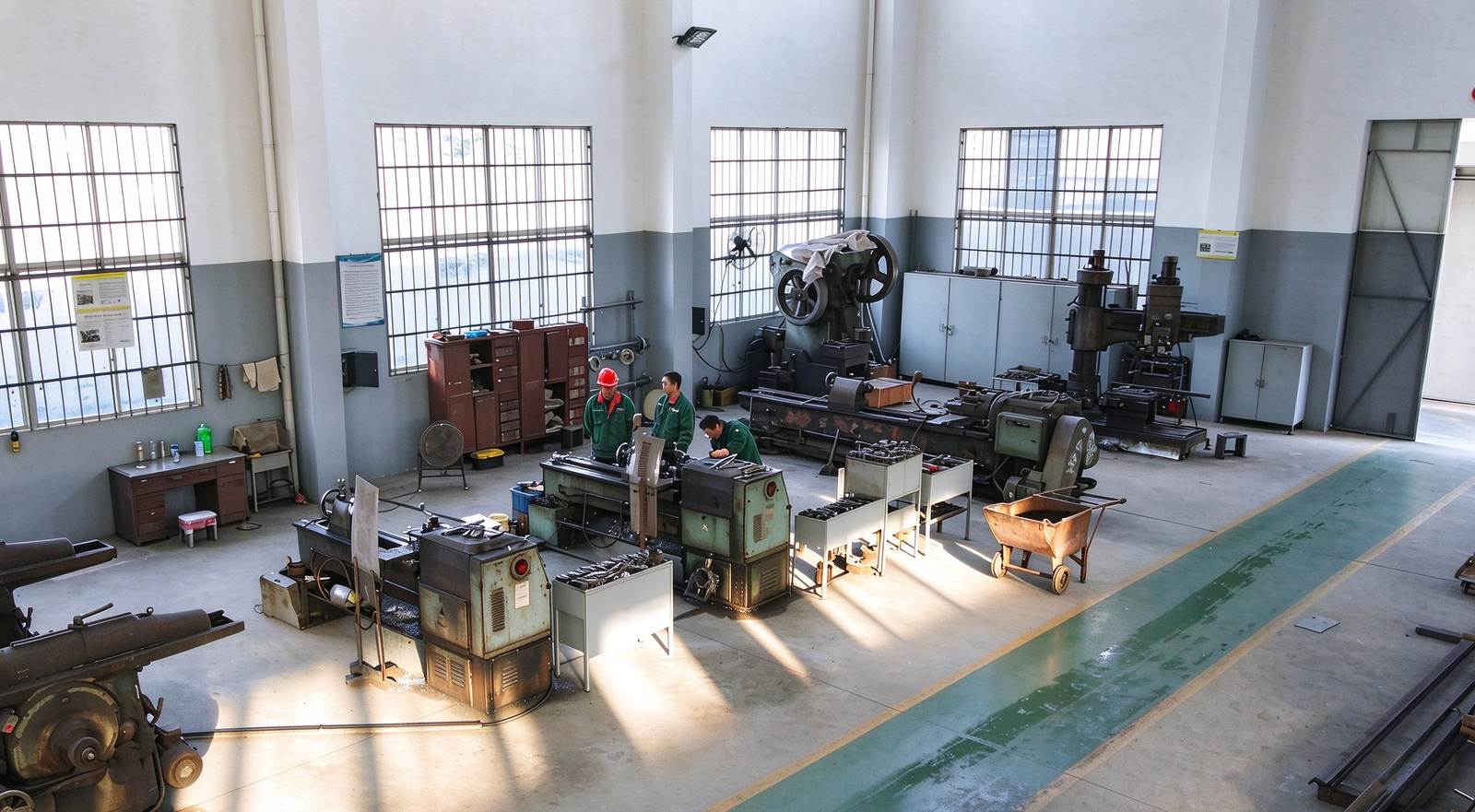
JEXDRY delivers complete, high-performance drying solutions tailored for enterprise applications. From comprehensive material testing to in-house manufacturing and global FAT support, we build reliable systems designed for your operational success.
25+
Years Experience
100%
In-House Mfg
Global
FAT Support
Tested Quality
Custom Engineered
Why Consider a Rotary Drum Dryer for Sludge Drying?
Municipal and industrial sludge typically undergoes mechanical dewatering first. Depending on stickiness, composition, available heat sources, and final disposal routes, a rotary drum system offers robust continuous processing capabilities.
1 Continuous Processing
When facing large volumes of mechanically dewatered sludge, batch drying causes bottlenecks. The rotary drum system is engineered around continuous feed and discharge, matching the steady evaporation load required by high-throughput wastewater facilities.
2 Effective Material–Gas Contact
Wet sludge cakes easily agglomerate, preventing core moisture evaporation. Through customized internal lifting flights and optional feed conditioning (like back-mixing dry product), the drum continuously breaks and cascades the material, exposing maximum surface area to the hot gas stream.
3 Potential for Waste-Heat Integration
High fuel costs restrict sludge drying viability. If your site has accessible boiler flue gas or other suitable high-temperature exhaust, the rotary dryer can be evaluated to utilize these existing heat streams, significantly reducing the need for newly generated thermal energy.
4 Less Water to Transport
Transporting 80% moisture sludge means paying to move water. By reducing moisture to targeted levels (e.g., 30% or lower), the total mass and volume are drastically cut. The actual savings depend on initial moisture, transport distance, and final disposal fees.
5 Integration with Downstream Treatment
Dried sludge requires proper handling before landfill, incineration, or resource recovery. The rotary system integrates seamlessly with downstream cooling conveyors, enclosed storage silos, and metered discharge valves tailored to your final disposal route.
What Is a Rotary Drum Dryer?
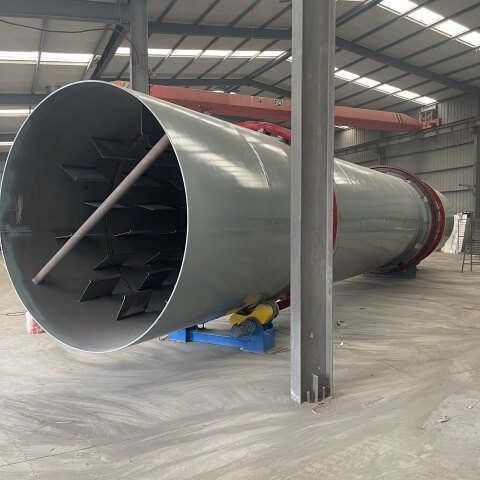
An industrial drying equipment consisting of a slightly inclined, rotating cylindrical shell. It utilizes direct or indirect heat transfer to evaporate moisture from bulk solids as they are conveyed through the drum.
HZG Basic Working Process:
- Wet Material Feeding: Material enters the higher end. For sludge applications, feed conditioning (mixing with dry product) is evaluated as an optional pre-treatment to reduce stickiness.
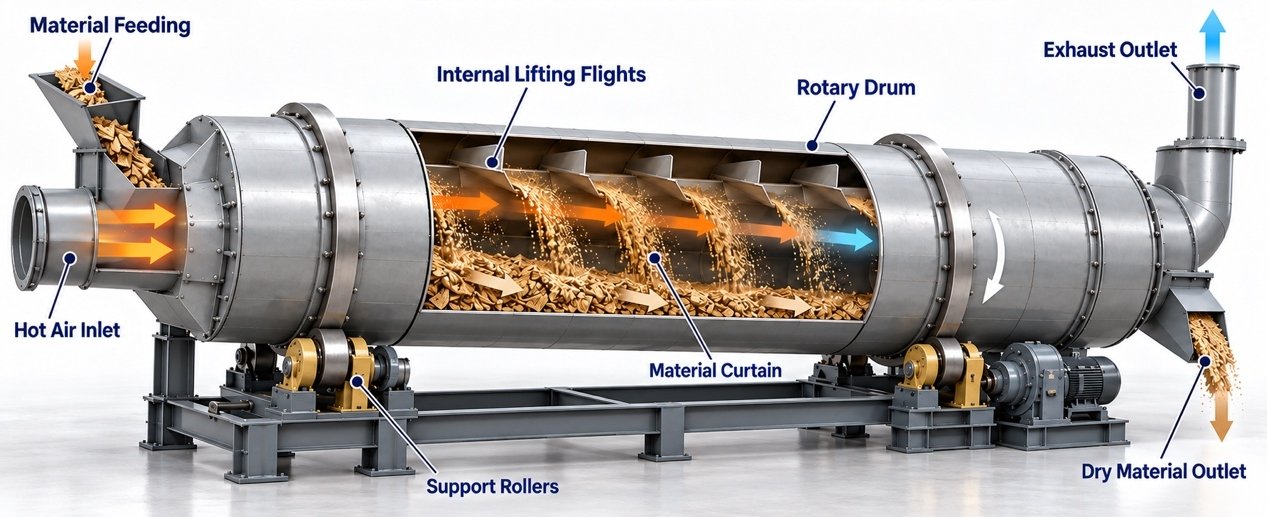
- Lifting and Mixing: Internal lifting flights scoop and drop the material, creating a curtain across the drum cross-section.
- Heat and Moisture Transfer: Hot gases pass through the material curtain, rapidly transferring heat and carrying away evaporated moisture.
- Product Discharge: The rotation and slight incline propel the dried solids toward the lower discharge end for collection.
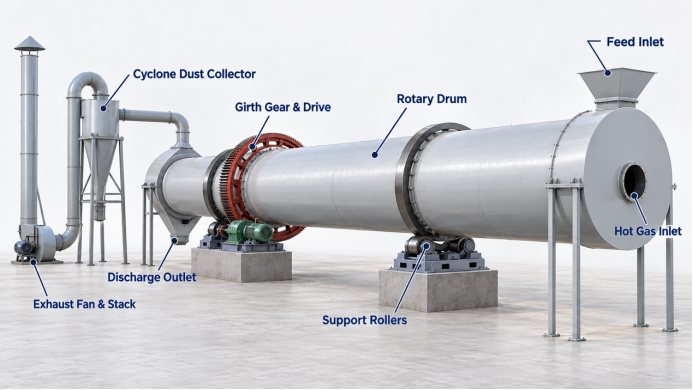
Cross-section showing feed inlet, lifting flights, drum shell, drive assembly, and discharge outlet.
Configurations for Different Materials
The interaction between hot gas and wet material dictates drying efficiency and product quality. We engineer the internal arrangement based on material characteristics.
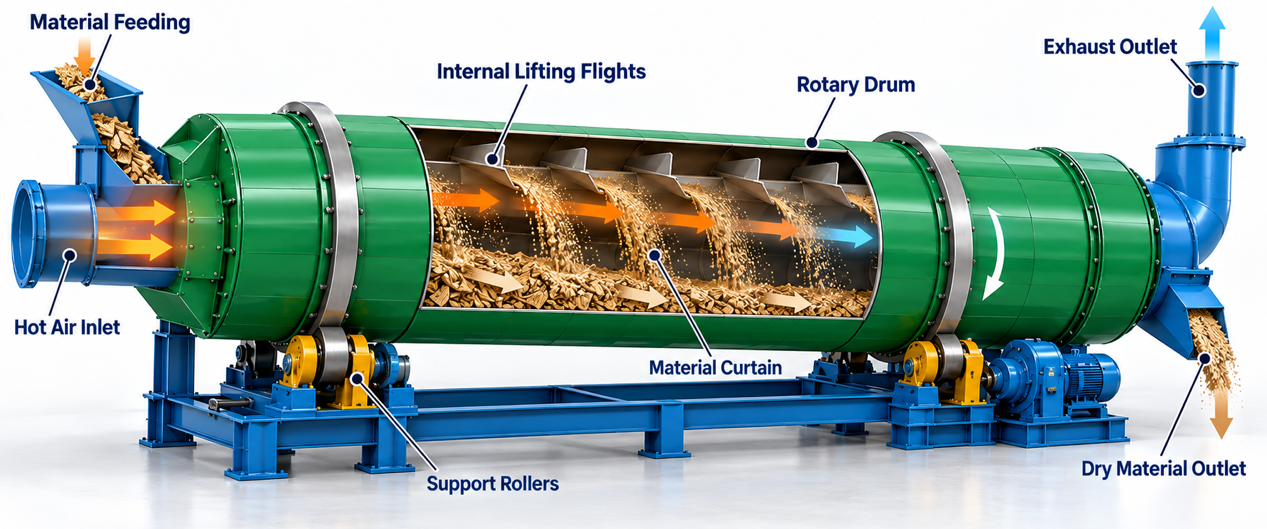
Co-current Configuration
Hot gas and wet material enter from the same end. The highest temperature gas meets the wettest material, enabling rapid initial evaporation.
- • Ideal for high-moisture materials like sludge.
- • Prevents heat damage to the final dried product.
- • High initial driving force for moisture removal.
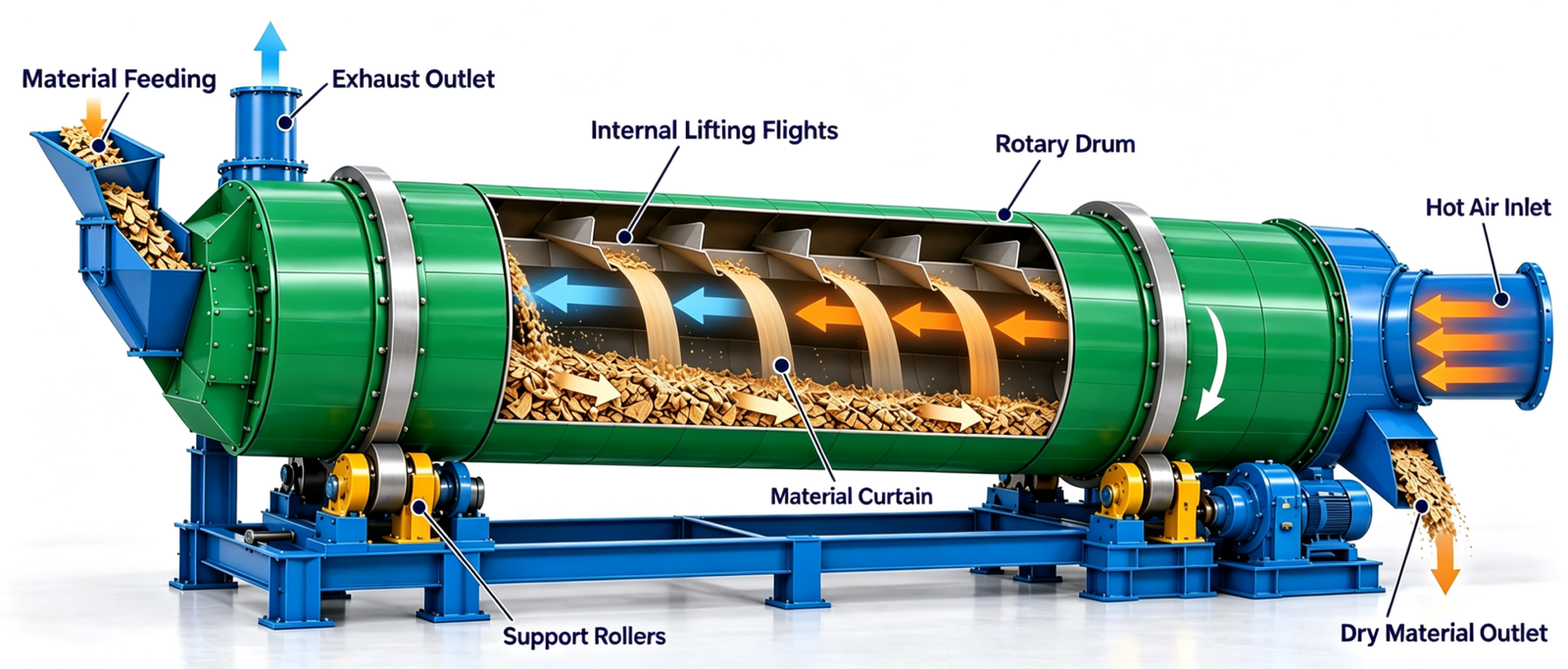
Counter-current Configuration
Hot gas enters from the discharge end, flowing opposite to the material. The driest product contacts the hottest gas before exiting.
- • Suitable for materials requiring low final moisture.
- • Better heat utilization for specific dense minerals.
- • Not recommended for heat-sensitive organics.
Sludge Project System Options
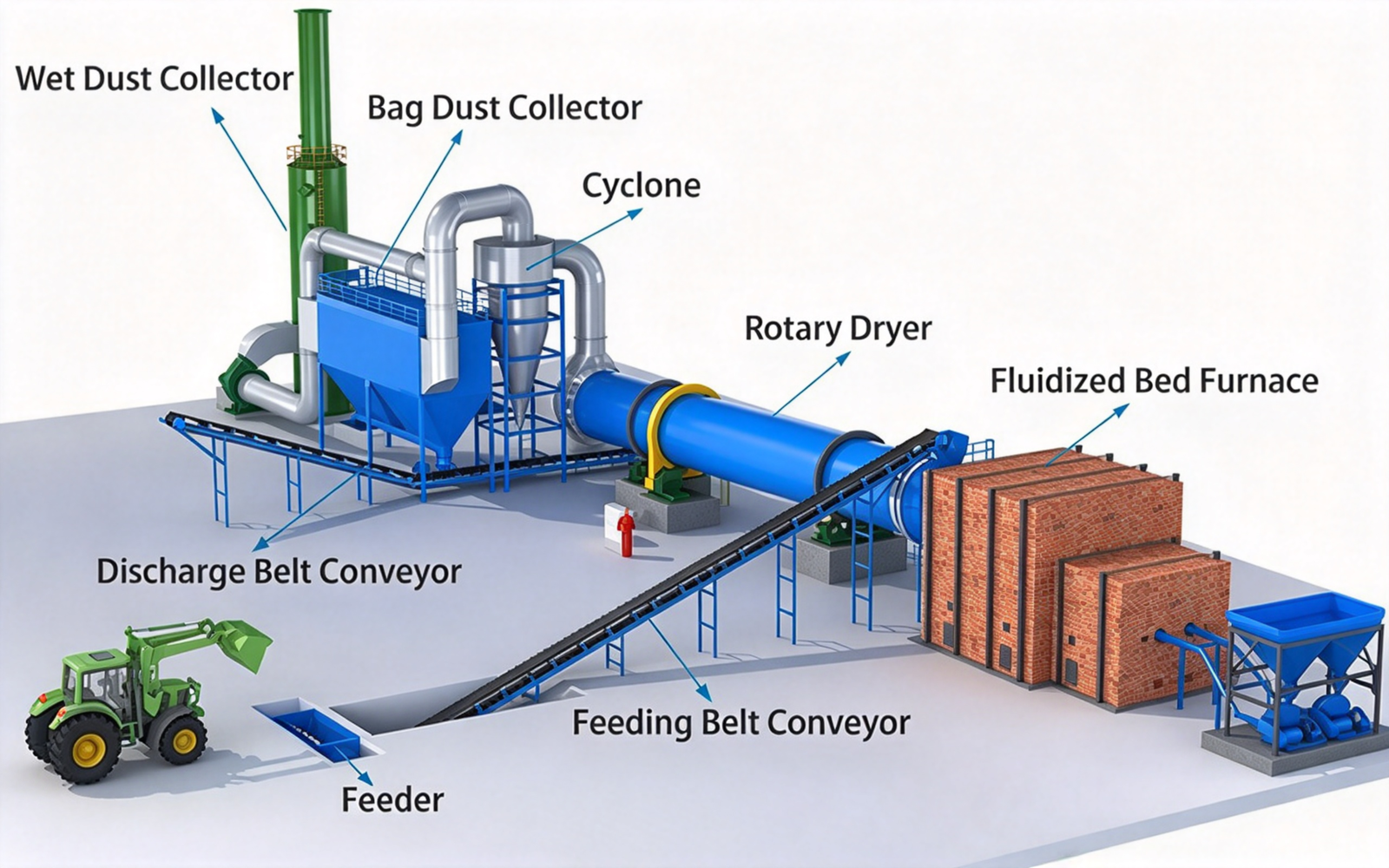
Sludge drying is rarely a plug-and-play process. Beyond the basic drum, we evaluate these project-specific options to ensure stable operation:
Technical Specifications
Rotary drum sizing is heavily dependent on material density, initial moisture, and heat transfer efficiency. The data below represents standard reference conditions.
HZG Brochure Reference Conditions
| Material | Catalog Throughput | Drum Dia. × Length | Drive Power |
|---|---|---|---|
| Ore | 1,000 kg/h | 2.0 × 20 m | 22 kW |
| HP Foaming Agent | 466 kg/h | 1.5 × 12 m | 7.5 kW |
| Blast Furnace Slag | 15,000 kg/h | 2.0 × 17 m | 15 kW |
| Ammonium Sulfate | 20,000 kg/h | 2.3 × 15 m | 11 kW |
* Note: These are catalog sample conditions for specific materials. Final equipment design, inlet/outlet sizing, and total system power consumption are defined by actual material testing. Sludge processing capacities differ significantly from minerals.
Parameters Needed for Sludge Sizing:
- Sludge type and composition
- Wet feed capacity (kg/h or t/d)
- Inlet and target outlet moisture
- Moisture basis (wet/dry basis)
- Required evaporation load
- Available heat source
- Site and exhaust-treatment requirements
Applications
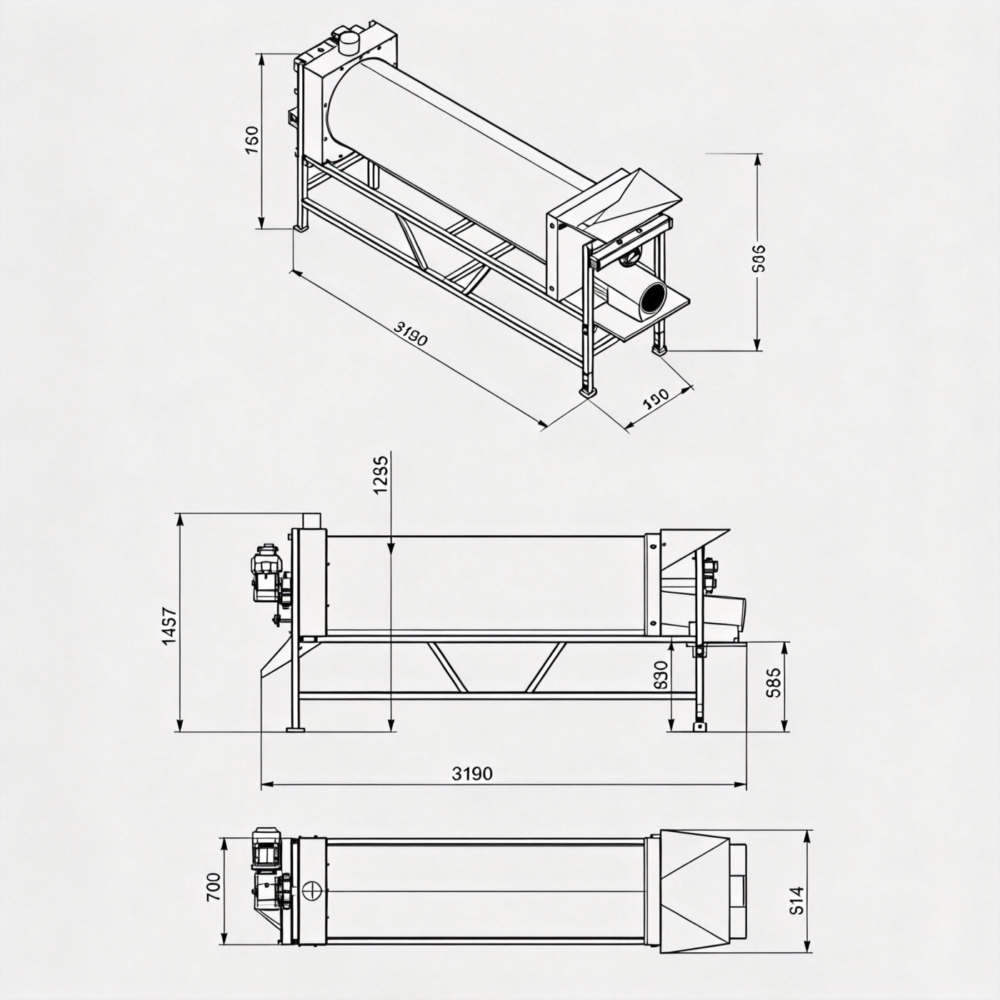
The rotary drum is highly versatile, capable of handling materials ranging from sticky dewatered sludges to abrasive mineral ores.
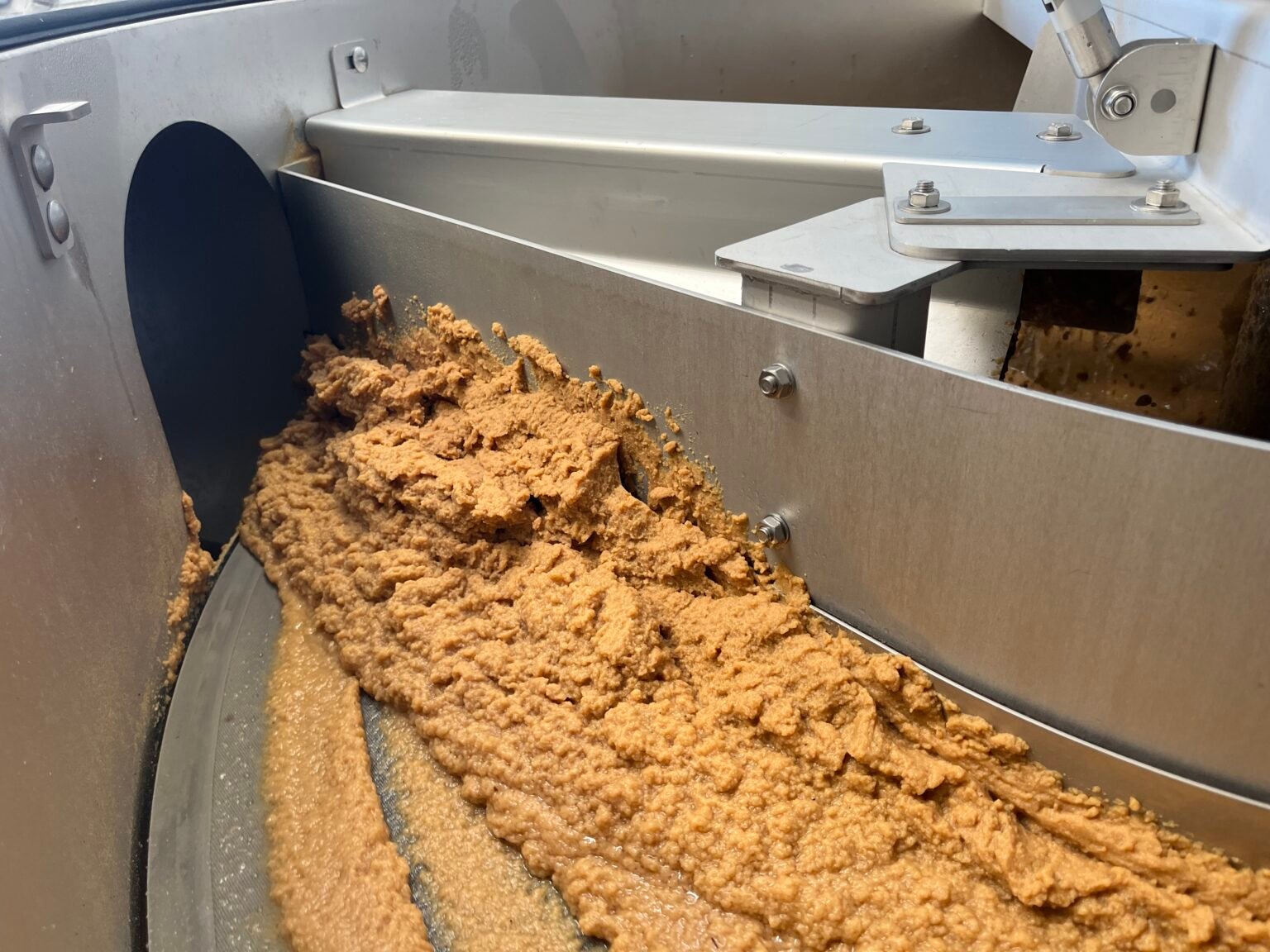
Dewatered Sludge
Engineering focus: Managing stickiness phase and ensuring continuous evaporation.
Explore Sludge Solutions →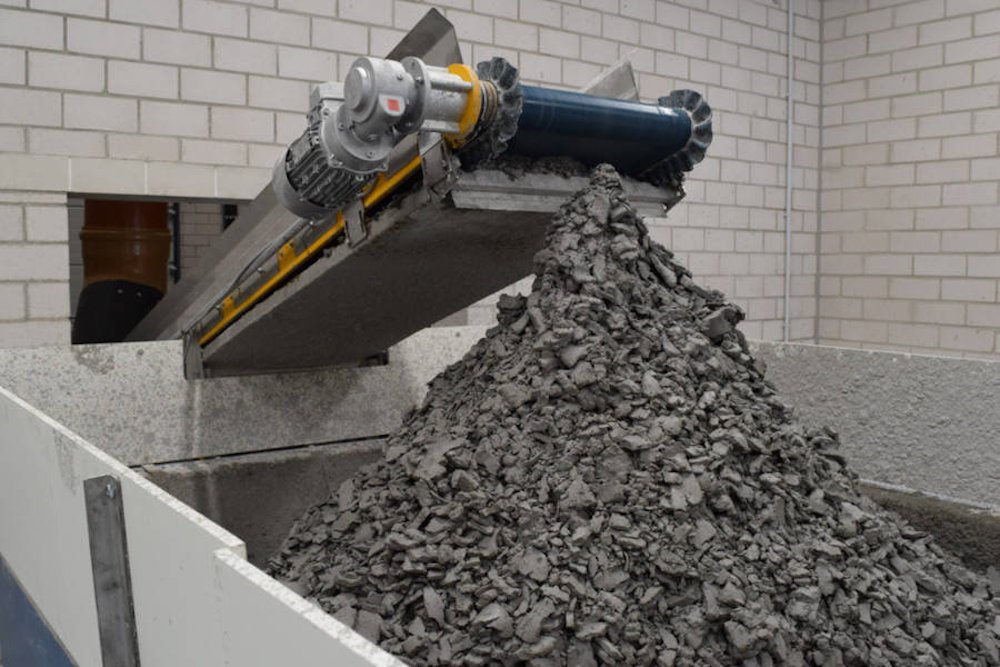
Industrial Sludge & Filter Cakes
Engineering focus: Assessing corrosivity and specific chemical composition risks.
View Details →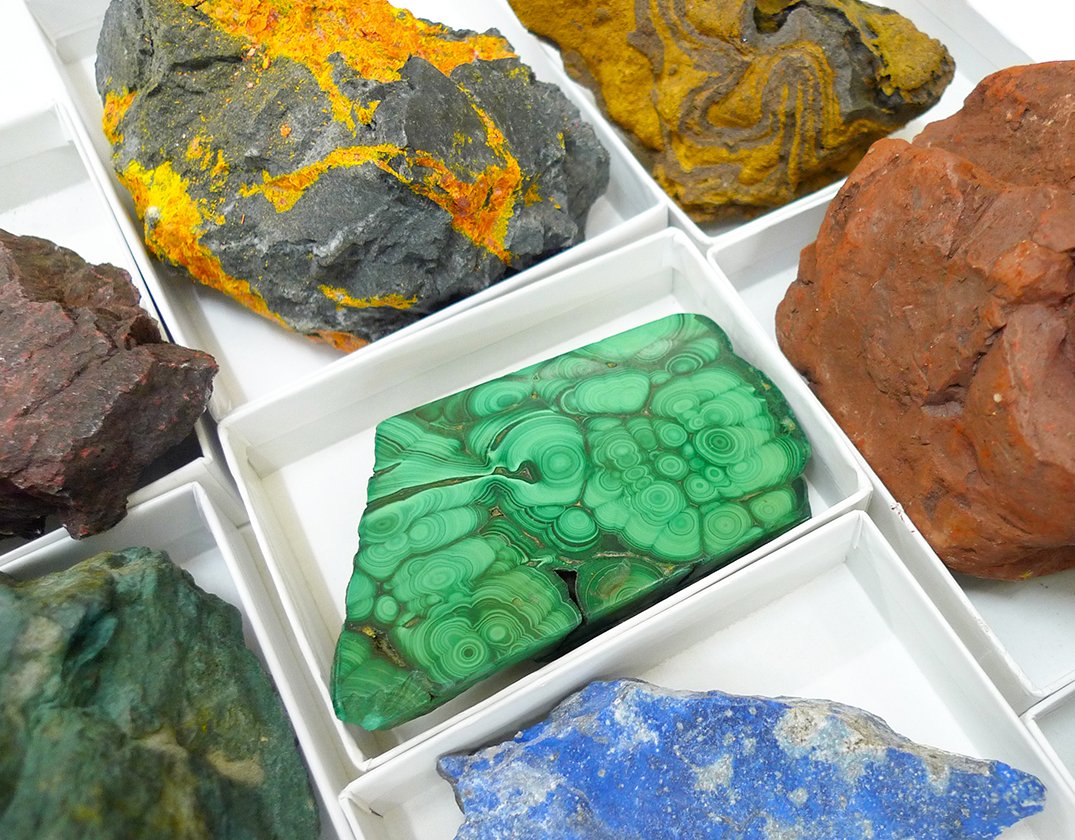
Minerals & Metallurgy
Engineering focus: High-temperature tolerance and wear-resistant drum lining.
View Details →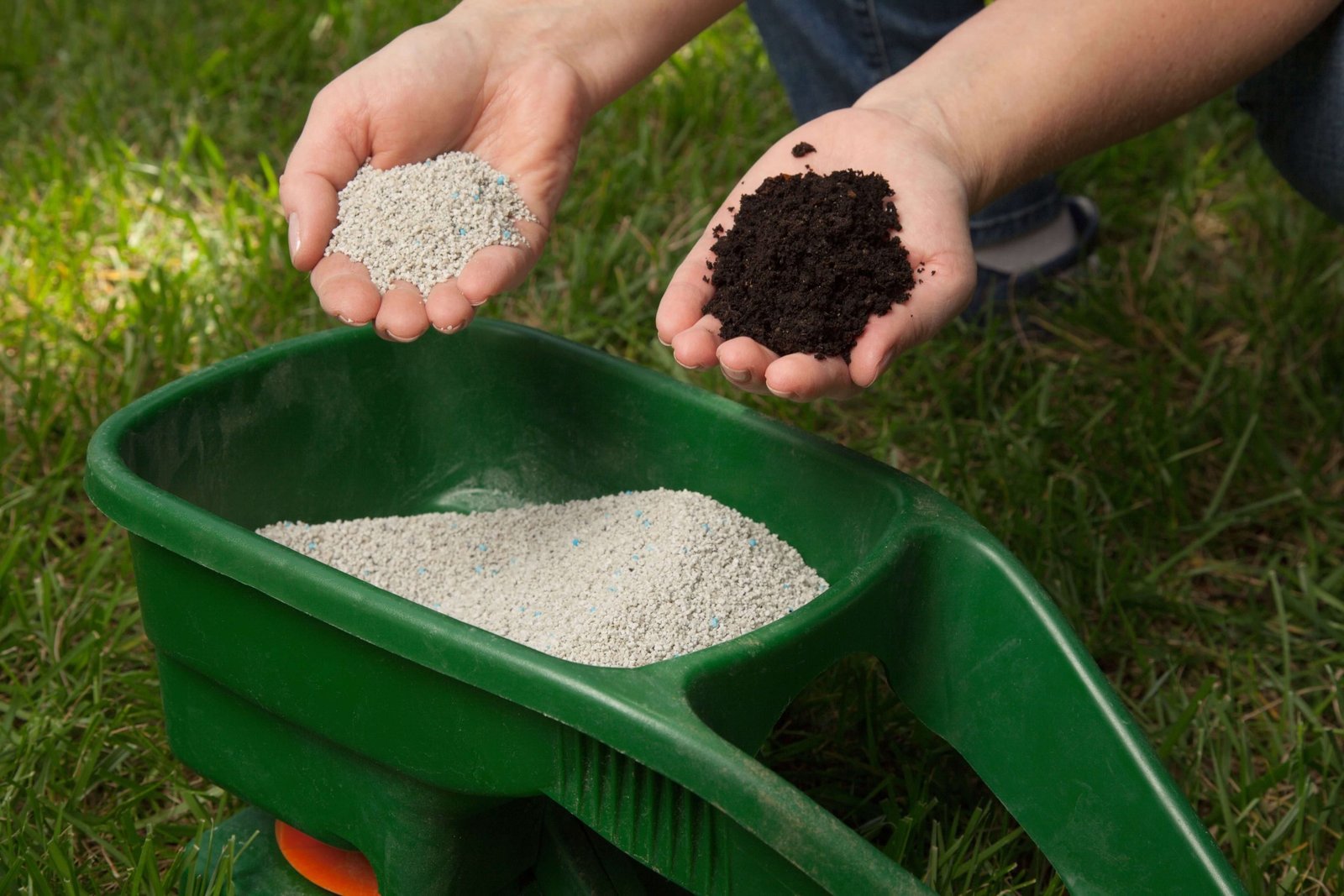
Chemical Solids & Fertilizers
Engineering focus: Preventing product degradation and ensuring uniform moisture.
View Details →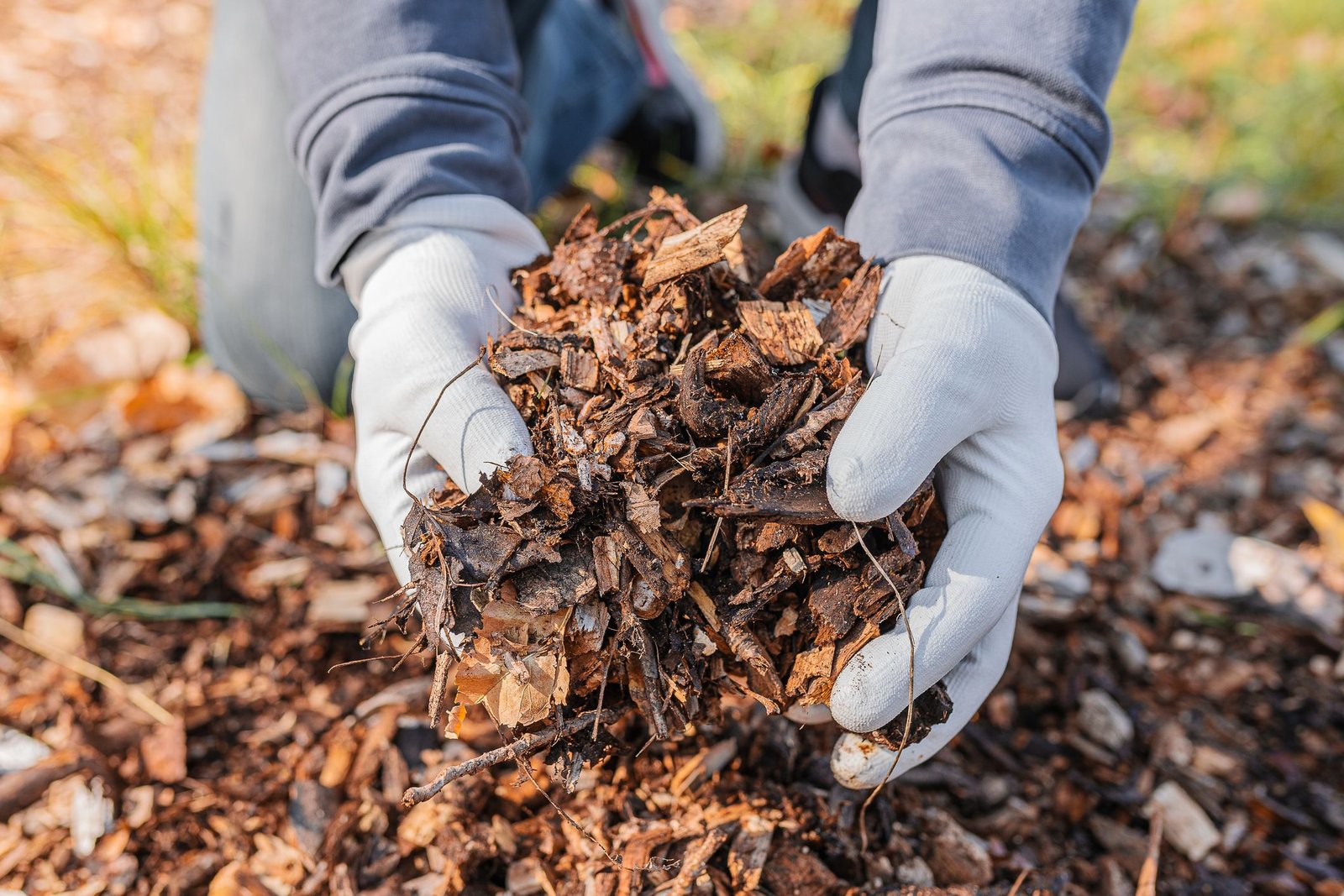
Agricultural Residues
Engineering focus: Handling bulk volume and utilizing low-grade heat sources.
View Details →
Herbal Extraction Residues
Engineering focus: Managing fibrous structures and avoiding charring.
View Details →How Does a Rotary Drum Dryer Work?
Inside a rotating drum, lifting flights raise and cascade the material through a hot gas stream. Moisture evaporates as the solids move toward the discharge end.
01 | Material Preparation & Feeding
Wet material enters the higher end of the drum. Depending on the material state, feed preparation such as crushing, conditioning, or dry-product back-mixing is evaluated to create optimal conditions. Feed preparation is matched to your material.
02 | Lifting, Mixing & Heat Transfer
As the drum rotates, internal flights lift and cascade the material, increasing contact with the hot gas. Drum configuration is selected for the drying duty, adapting internal geometry and flow direction to your material. Explore Rotary Dryer Working Principles
03 | Discharge & Exhaust Treatment
Moisture evaporates as solids move toward the discharge end, with drying targets aligned with downstream handling. Exhaust gas enters independent lines for Dust Collection and odor treatment, configuring supporting equipment around the process.
Project Cases
Review design conditions from recent industrial drying projects engineered by XINGXING DRYING.
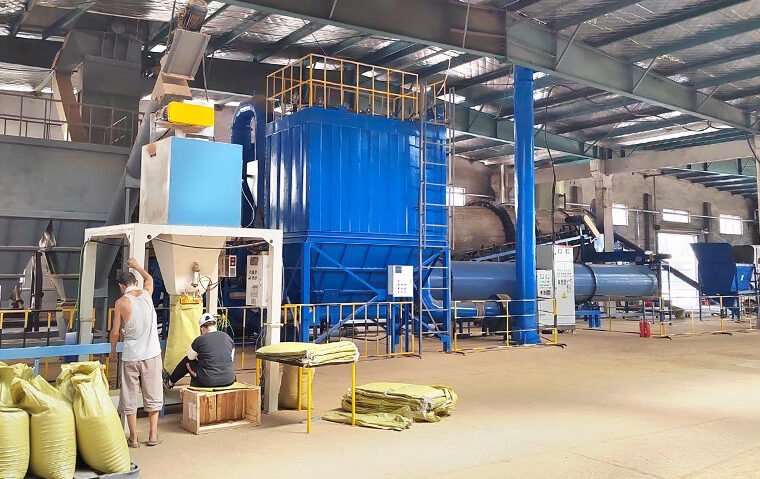
Herbal Residue Drying
- Material: Pressed herbal extraction residue
- Design Feed Rate: 15 t/h per operating unit
- Moisture Target: Approx. 60% → 30%
- Heat Source: Boiler flue gas
Engineering Focus: Configured around handling sticky fibrous materials with continuous feed, utilizing available flue gas as the primary heat source.
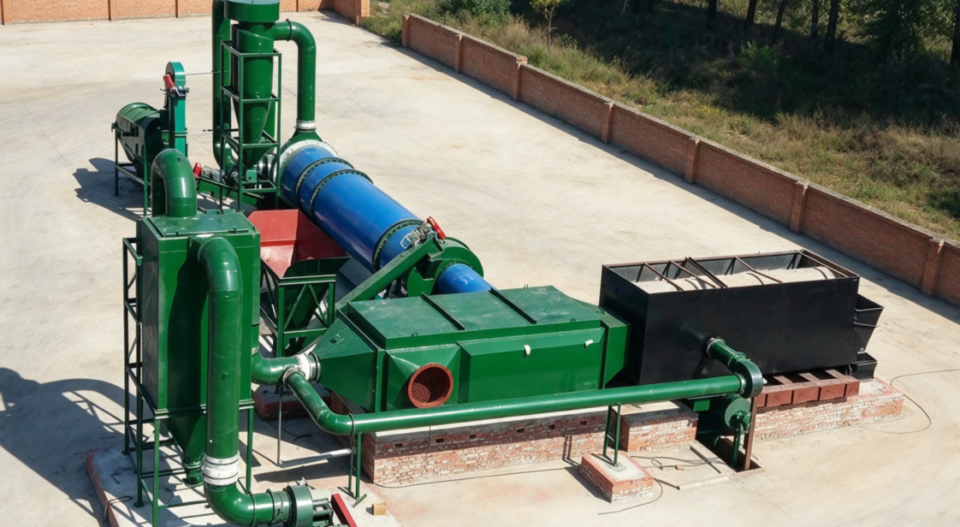
Corn Drying
- Material: Corn
- Proposal Capacity: 50 t/h
- Moisture Target: 35% → 14%
- Heat Source: Oil-fired hot air
Engineering Focus: Sized for high-throughput continuous processing to meet strict target moisture requirements using a dedicated hot air generation system.
Rotary Drum Dryer vs Other Sludge Dryers
Selecting the right technology depends on your specific sludge characteristics and site constraints. Here is a brief comparison to aid your evaluation.
| Comparison Dimension | Rotary Drum Dryer | Belt Dryer | Paddle Dryer |
|---|---|---|---|
| Typical Feed Considerations | High volume, continuous bulk feed. Requires handling for extreme stickiness. | Needs formable sludge (extrudable into noodles/pellets) for bed permeability. | Handles pasty, highly viscous sludge well due to shearing action. |
| Heat-Transfer Approach | Primarily direct convection (hot gas directly contacts material). | Direct convection (hot air flows through material bed). | Indirect conduction (heat transferred through metal paddles/walls). |
| Heat-Source Compatibility | Highly flexible: Flue gas, hot air furnace, natural gas, biomass. | Low-medium temperature hot water, steam, or low-grade waste heat. | Thermal oil or saturated steam. |
| Feed Preparation | Back-mixing often evaluated for wet cakes. | Granulation or extrusion usually required. | Minimal prep; accepts direct cake feed. |
| Exhaust-Treatment | Larger exhaust volume; requires robust dust/odor scrubbing. | Large volume of low-temp moist air; condensation systems used. | Very low carrier gas volume; easier to manage concentrated non-condensables. |
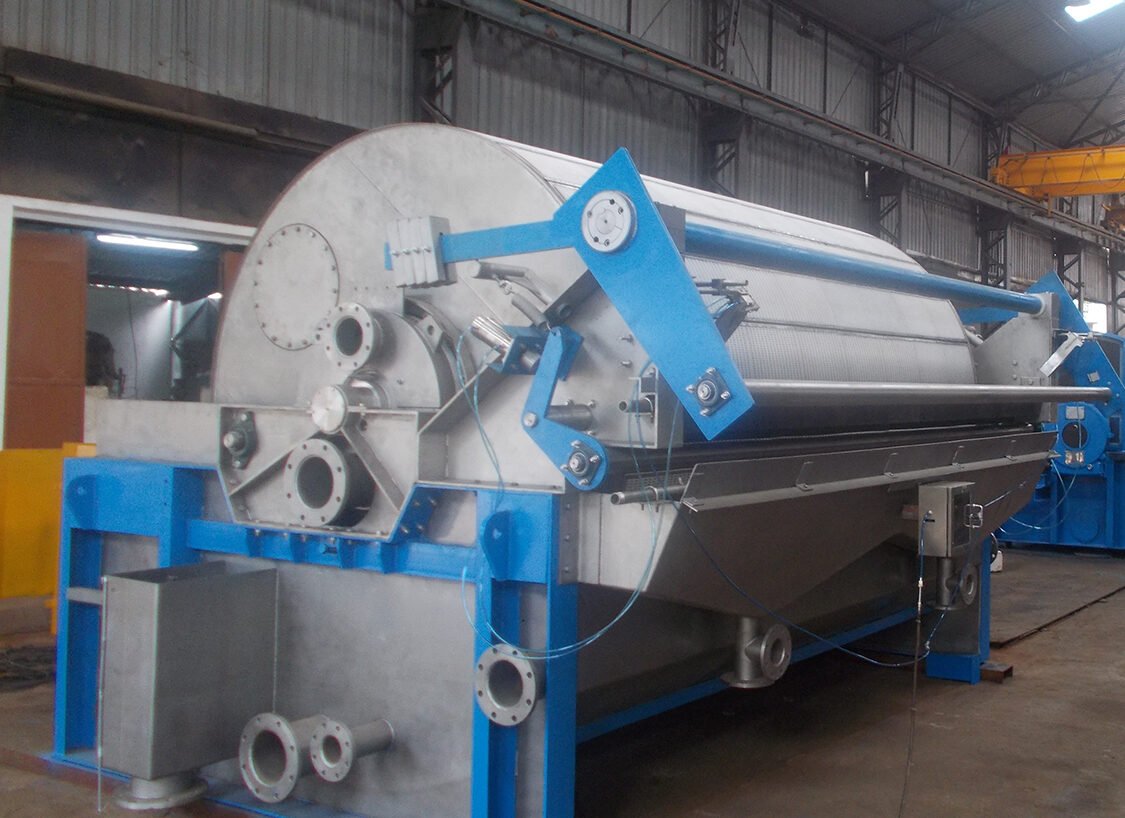
Rotary Drum
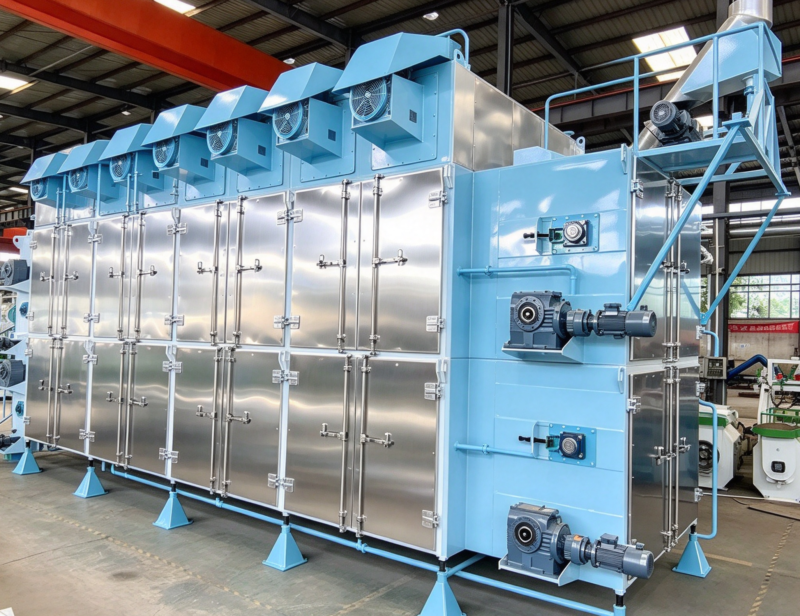
Belt Dryer
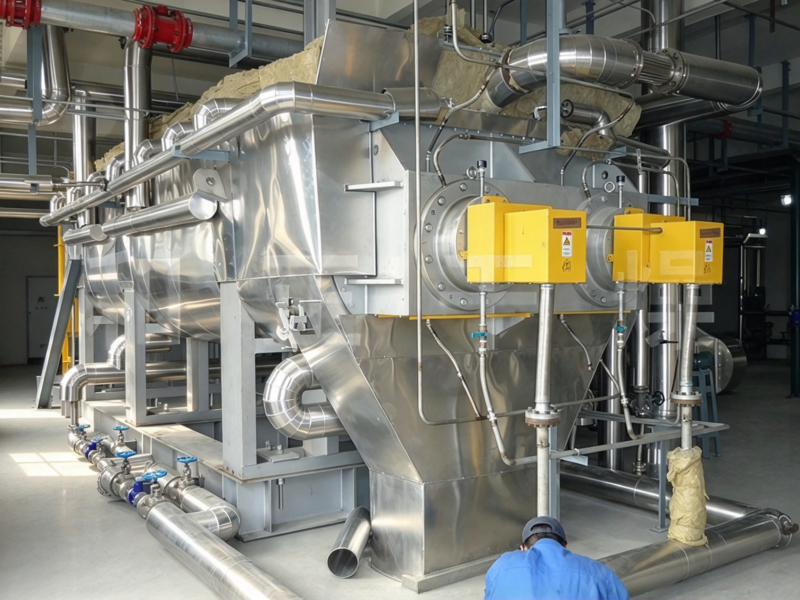
Paddle Dryer
How to Choose? Evaluate these 3 questions:
- What sludge and moisture targets are involved? (Volume, stickiness, target dryness)
- Which heat source is available? (Flue gas favors rotary; steam favors paddle/belt)
- What are the downstream use and site constraints? (Footprint, exhaust limits, final disposal)
Why Partner with JEXDRY?
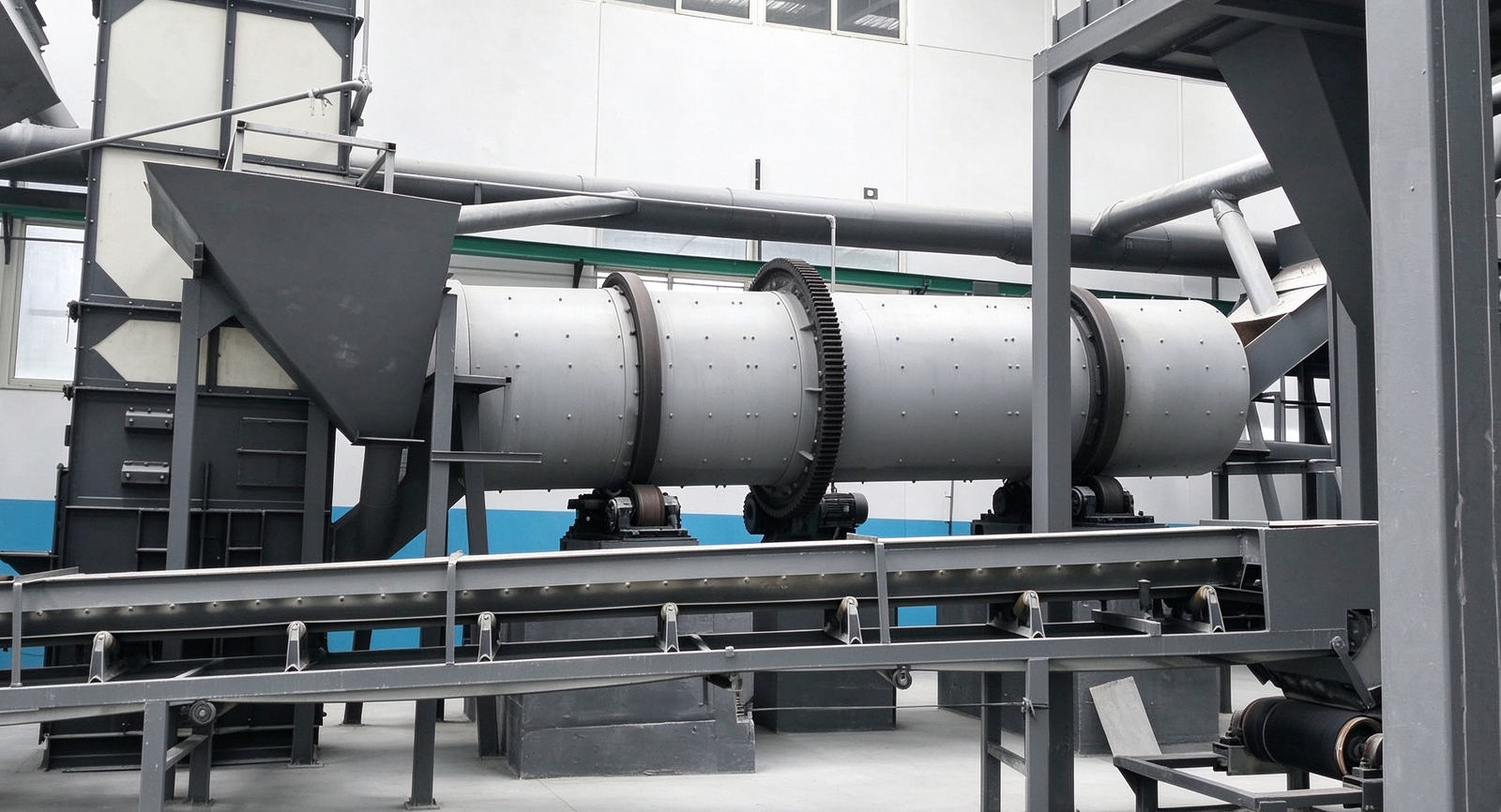
Since 1998, we have focused on industrial drying equipment manufacturing. We don't just supply a drum; we engineer the heat transfer process.
-
Established Manufacturing Facility
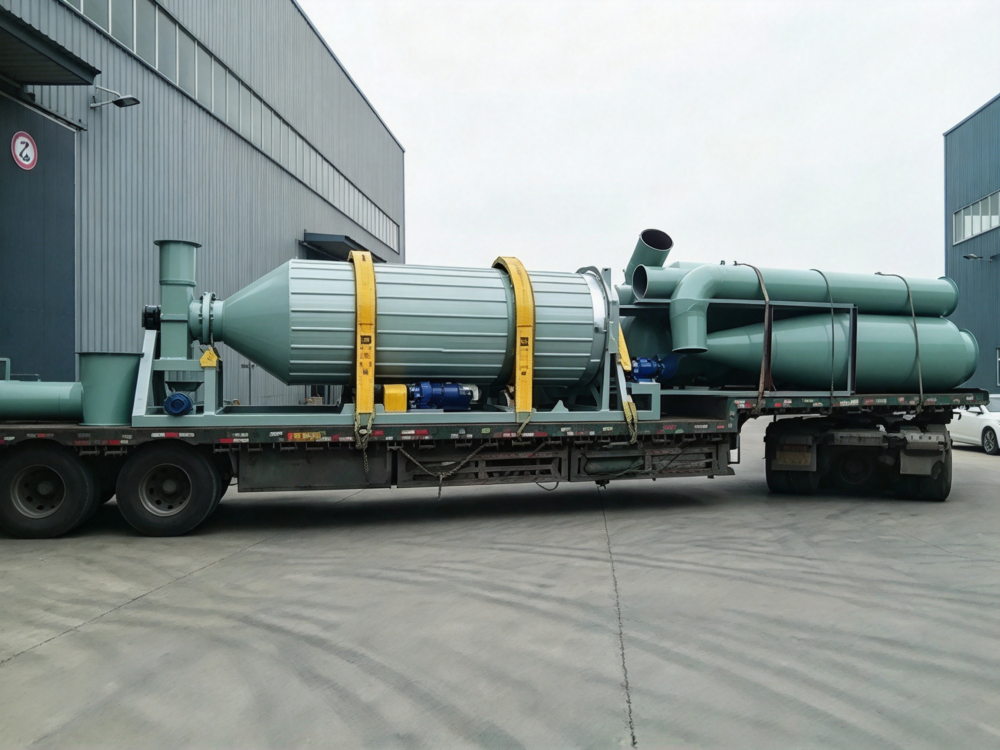
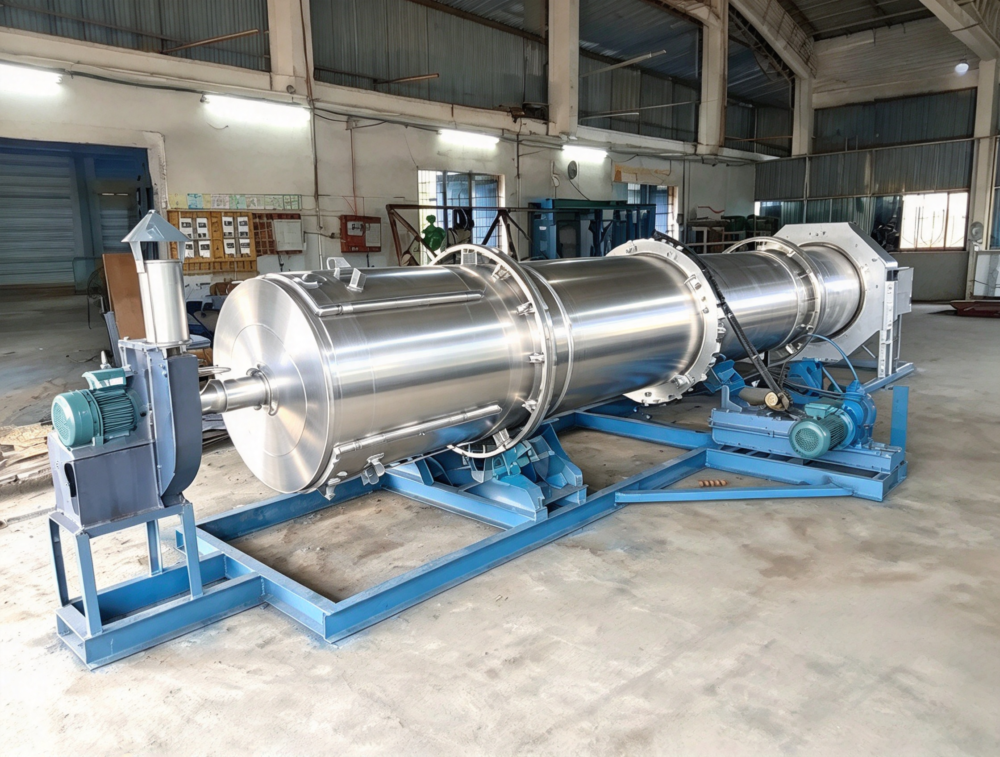
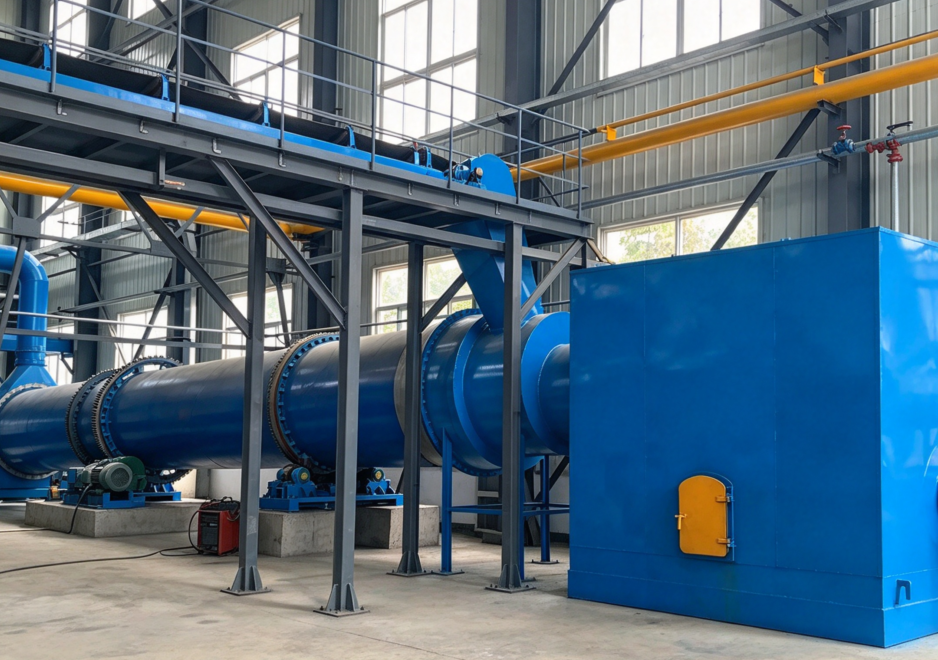
In-house fabrication of HZG series drums, ensuring quality control over heavy steel rolling, welding, and structural assembly.
-
Material-Specific Engineering
We assess your specific sludge or solid material to determine the correct internal flight design, co-current/counter-current configuration, and necessary feed prep.
-
Confirmed Project Support
From initial sizing calculations to layout drawings and installation guidance, providing engineering support backed by real project experience.
Frequently Asked Questions
Answers to common engineering and procurement queries regarding
Is a rotary drum dryer suitable for my sludge?
Does sludge need mechanical dewatering first?
Can the system use available waste heat?
How are sticky sludge and buildup handled?
How is the required drying capacity determined?
How are dust and odors managed?
What affects the price of a sludge drying system?
What information is needed for a quotation?
Tell Us About Your Material and Drying Target
Providing key operating conditions helps us select the right equipment configuration and prepare an accurate proposal.
Direct Engineering Contact
Email Us
zar@jexdry.comCall Us
+86 137 7501 3369Factory Location
Jiaoxi Industrial Zone, Zhenglu Town, Tianning District, Changzhou, Jiangsu Province, China
Process:
Material Info → Engineering Review → Preliminary Sizing → Proposed Configuration & Quote