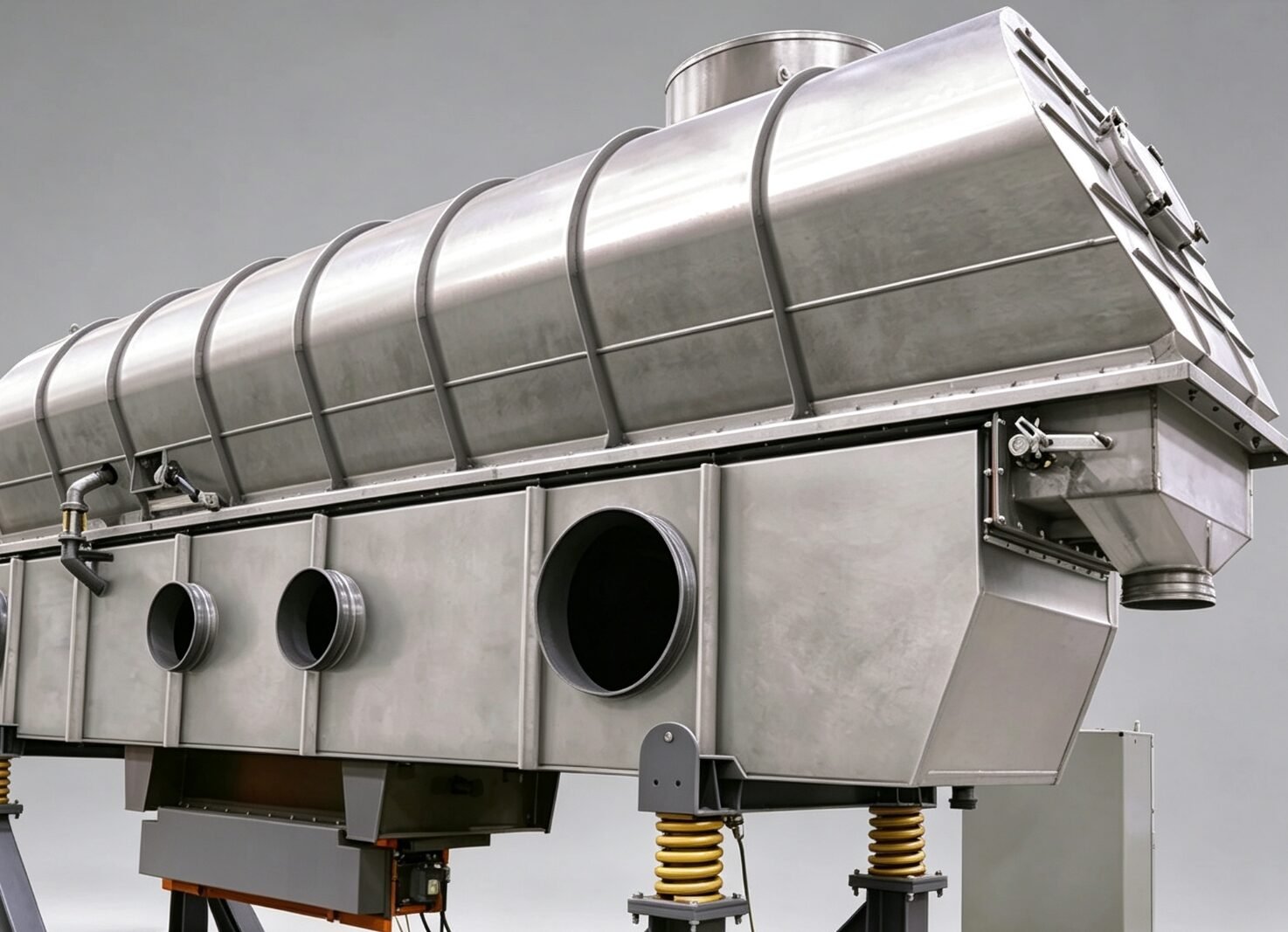
Vibrating Fluid Bed Dryer
Continuous Drying and Cooling for Suitable Powders and Granules
The ZLG series combines mechanical vibration with process air passing through the material bed. Engineered for materials suitable for fluidization and conveying, the final configuration is determined by your material properties, water evaporation load, and product temperature requirements.
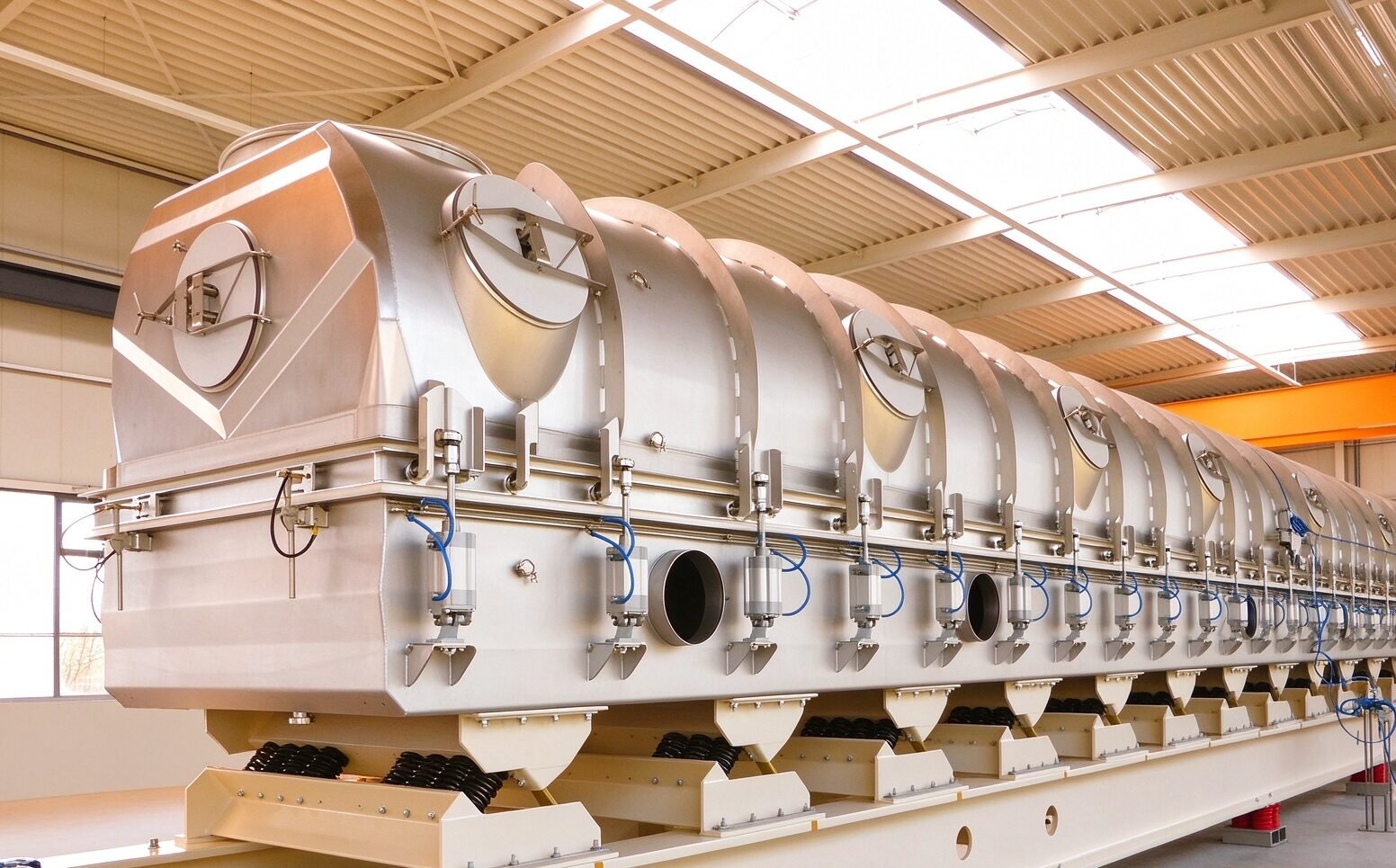
What Is a Vibrating Fluid Bed Dryer?
A vibrating fluid bed dryer is a continuous processing unit where mechanical vibration assists in moving the material along a horizontal perforated bed. Simultaneously, conditioned process air passes upward through the distributor plate, exchanging heat and moisture with the material. This system is engineered for suitable powders, granules, and crystals, allowing for continuous drying and optional cooling before discharge.
Feed: Suitable Wet Solids
Accepts crystalline, granular, or fluidizable powder materials with appropriate moisture limits.
Process: Airflow + Vibration
Vibration ensures consistent residence time and transport, while air handles the thermal load.
Output: Dried / Cooled Solids
Discharges material at the target moisture content and temperature for subsequent packaging.
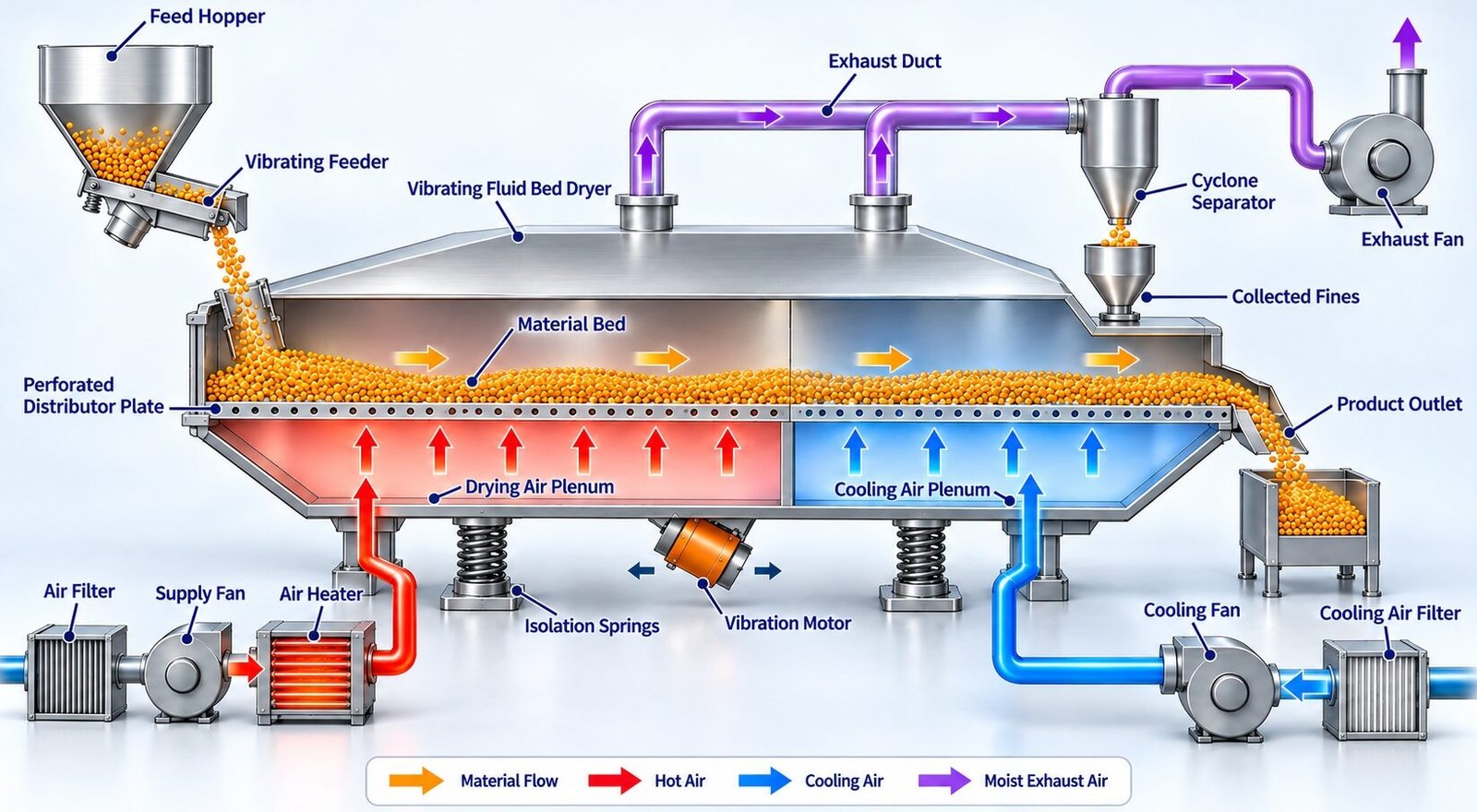
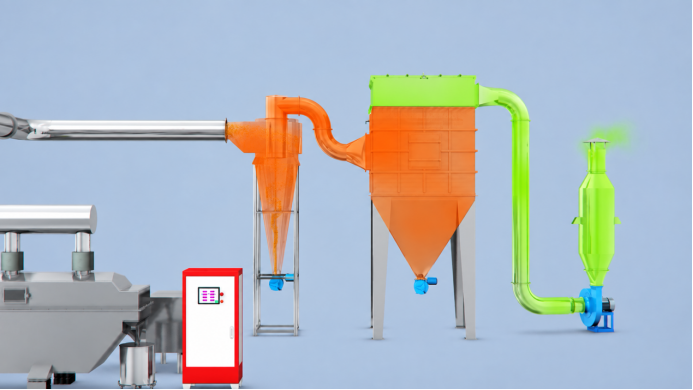
Schematic illustration of internal working mechanism.
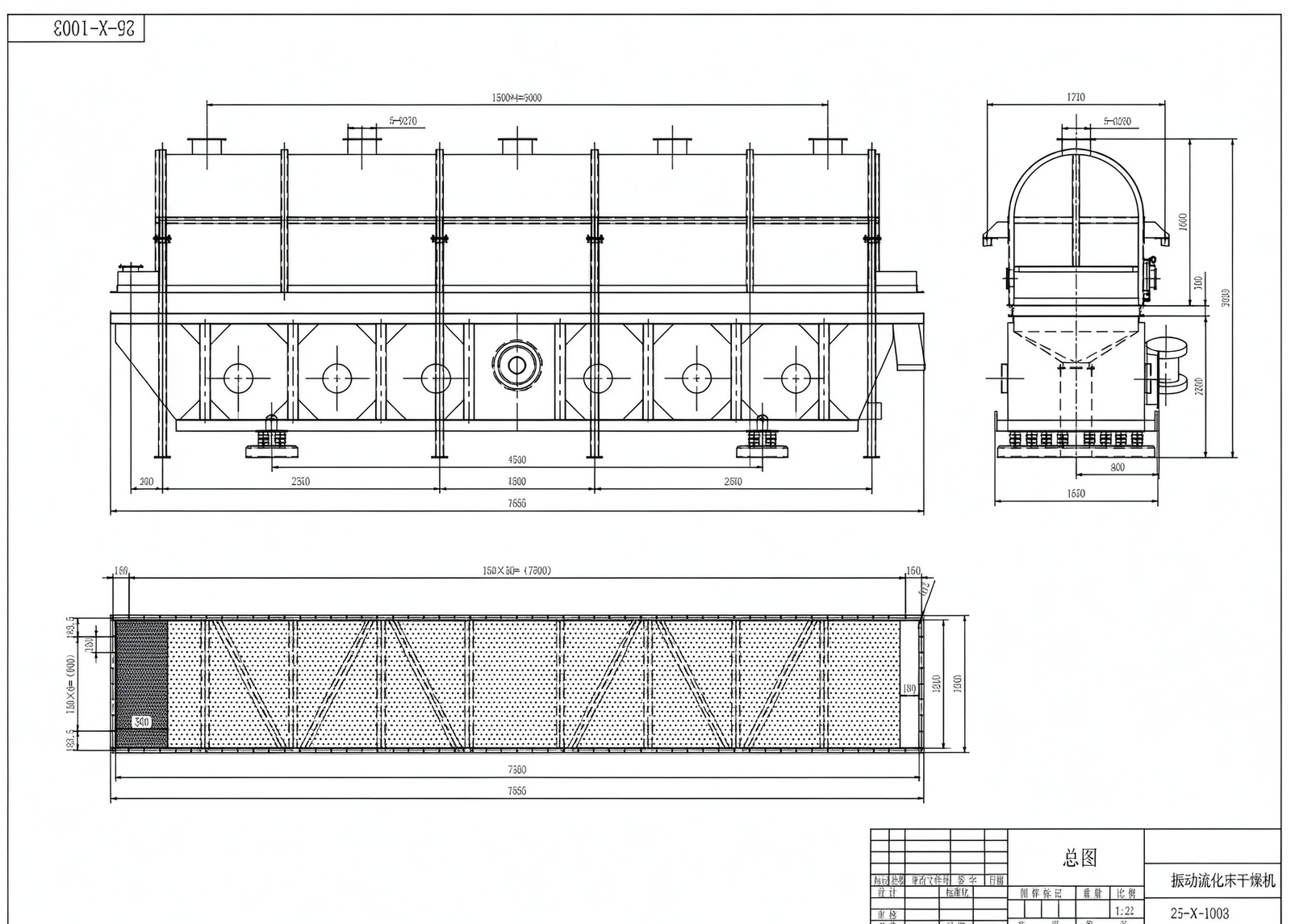
ZLG Vibrating Fluid Bed Dryer Technical Data
The following parameters are reference data from the ZLG product brochure. Final sizing and configuration must be verified based on your specific material properties
| Model | Bed area (m²) | Reference water evaporation (kg H₂O/h) | Vibration motor power (kW) |
|---|---|---|---|
| ZLG-3×0.30 | 0.9 | 20–35 | 0.8 × 2 |
| ZLG-4.5×0.30 | 1.35 | 35–50 | 0.8 × 2 |
| ZLG-4.5×0.45 | 2.025 | 50–70 | 1.1 × 2 |
| ZLG-4.5×0.60 | 2.7 | 70–90 | 1.1 × 2 |
| ZLG-6×0.45 | 2.7 | 80–100 | 1.5 × 2 |
| ZLG-6×0.60 | 3.6 | 100–130 | 1.5 × 2 |
| ZLG-6×0.75 | 4.5 | 120–170 | 2.2 × 2 |
| ZLG-6×0.90 | 5.4 | 140–170 | 2.2 × 2 |
| ZLG-7.5×0.75 | 5.625 | 150–180 | 3.0 × 2 |
| ZLG-7.5×0.90 | 6.75 | 160–210 | 3.0 × 2 |
| ZLG-7.5×1.20 | 9.0 | 200–260 | 3.7 × 2 |
Reference Operating Conditions
- Reference inlet air temperature: 70–140°C
- Reference outlet air temperature: 40–70°C
ZLG Configurations for Drying and Cooling
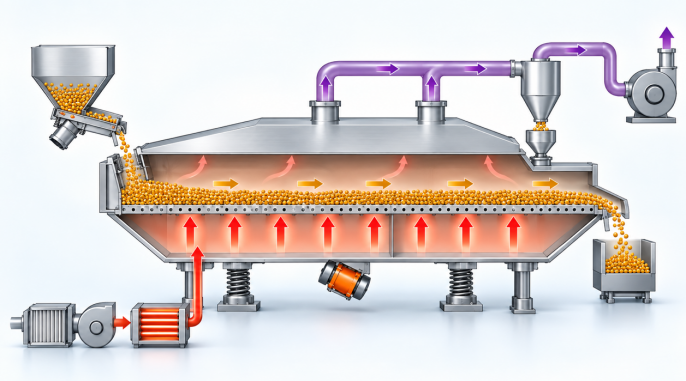
Drying Only
For applications where product cooling is not required after drying. The vibrating fluid bed is configured with a drying section only, based on feed rate, moisture removal and process temperature.
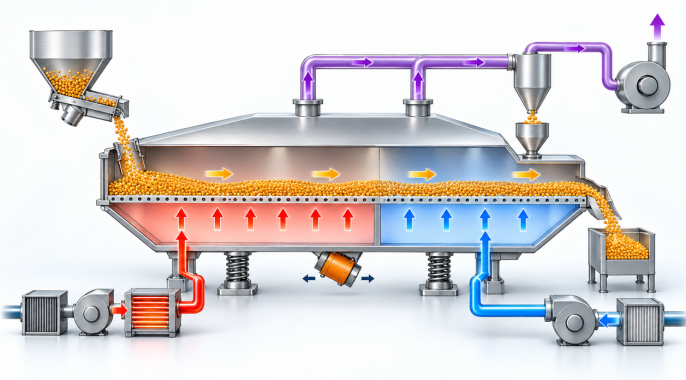
Integrated Drying + Cooling
For moderate production capacities, one extended vibrating fluid bed can be divided into a drying zone and a cooling zone. The product is dried first and then cooled before discharge within the same machine.
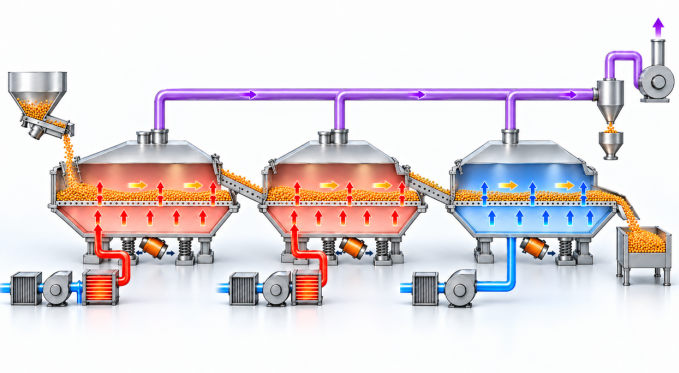
Separate Drying and Cooling Units
For higher-capacity lines, drying and cooling can be arranged as separate units. A typical configuration may use two vibrating fluid beds for drying followed by one dedicated vibrating fluid bed cooler, allowing the drying load and cooling load to be handled independently.
Engineering Note: For larger capacity requirements, a split-structure design may be evaluated. The specific components subjected to vibration and the exact zoning dimensions are subject to the approved project drawings.
Materials and Applications for Vibrating Fluid Bed Drying
The ZLG series is applied across various industries for materials that can be effectively fluidized and transported via mechanical vibration.

Food Crystals & Ingredients
e.g., Citric acid, MSG, sugar, salt.
- Focus: Heat sensitivity, caking prevention, discharge temperature, sanitary design.
- Verify: Material grade requirements and exact cleaning protocols.

Inorganic Chemicals & Fertilizers
e.g., Borax, ammonium sulfate, compound fertilizers.
- Focus: Corrosion resistance, crystal behavior, dust entrainment, target moisture.
- Verify: Required contact materials (e.g., SS316L) and dust collection capacity.

Grains & Seeds
Suitable agricultural granular materials.
- Focus: Particle size, bulk density, strict temperature limits for quality.
- Verify: Maximum allowable product temperature (seed viability is not universally guaranteed without testing).
Suitable Minerals & Granules
Selected mineral sands and industrial granules.
- Focus: Abrasiveness, particle size distribution, fluidization behavior.
- Verify: Wear resistance requirements and heavy-duty structural needs.
Material Suitability Notice
Highly viscous pastes, pumpable liquids, extremely fine powders prone to severe entrainment, or materials that agglomerate heavily and resist fluidization require testing, pre-treatment, or alternative drying equipment. Materials containing solvents, combustible dusts, or highly corrosive elements require specialized engineering evaluation and cannot default to standard hot air configurations.
How Does a Vibrating Fluid Bed Dryer Work?
The system introduces wet material onto a perforated distributor plate subjected to controlled mechanical vibration. This vibration assists in transporting the material forward while upward-flowing conditioned air fluidizes the bed, creating intense gas-solid contact for rapid heat and mass transfer. The dried (and optionally cooled) product is then discharged, while exhaust air
Material Processing Path
Air & Exhaust Route
Filtered Air → Supply Fan / Heating System → Lower Air Chamber → Distributor Plate and Material Bed → Exhaust Dust Collection → Exhaust Fan
* Cyclone separation or bag filters are configured based on fines content and local emission requirements. A cyclone alone does not guarantee compliance with all stringent emission standards.
Key control variables include feed rate, bed depth, air volume/temperature, vibration parameters, and residence time.
Read more on fluid bed dryer working principle →Engineering Features That Address Common Drying Problems
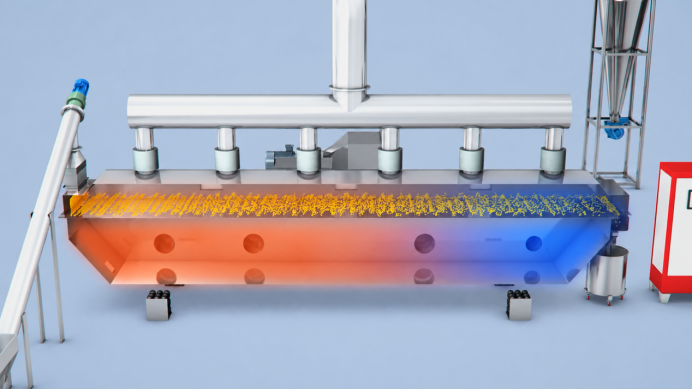
Problem: Uneven Moisture
Solution: Optimized air distribution plates and stable feeding systems manage residence time.
Verification: Measured by the consistency of moisture distribution in the discharged product.
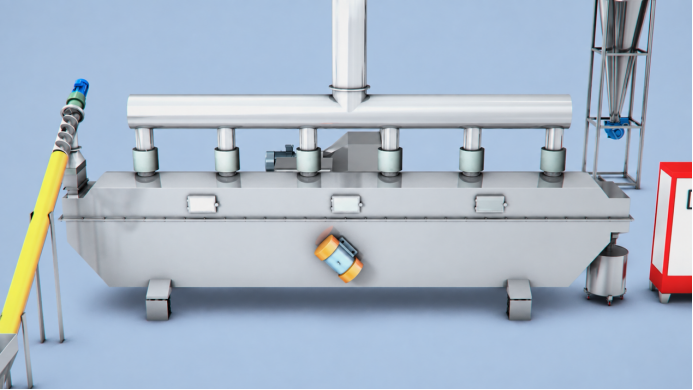
Problem: Particle Breakage
Solution: Adjustable vibration intensity allows transport with lower mechanical stress compared to agitators.
Verification: Evaluated by comparing inlet and outlet particle size distribution and fines ratio.
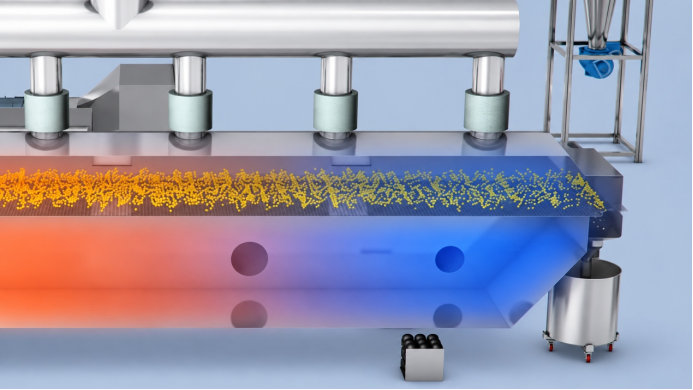
Problem: Discharge Too Hot
Solution: Integration of an independent cooling zone utilizing ambient or chilled air.
Verification: Confirmed by discharge temperature readings matching packaging constraints.
Problem: Dust Emission
Solution: Fully enclosed body, proper flexible joint sealing, and adequately sized dust collectors.
Verification: Checked via leak tests and dust collection load monitoring.
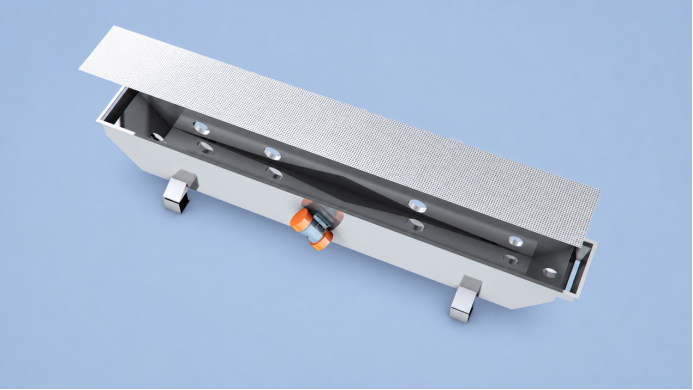
Problem: Hard to Clean
Solution: Strategic placement of access covers and inspection ports for reaching the distributor plate.
Verification: Actual construction details are subject to approved project drawings.
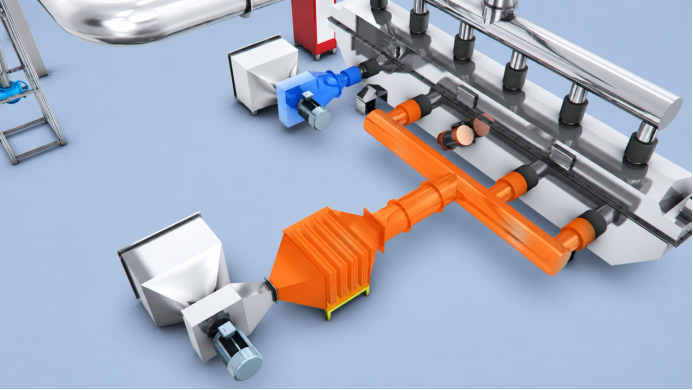
Problem: Unclear Operating Costs
Solution: Separate evaluation of thermal load, fan power, and filtration resistance during sizing.
Verification: Requires defined utility boundaries during the quotation phase.
Engineering Options to Review for Your Project
The ZLG series is highly configurable. The following options must be discussed and confirmed to ensure the system meets your site conditions and product specifications.
-
Contact Materials: Evaluate SS304, SS316L, or other alloys based on corrosion and cleaning requirements. Subject to supply confirmation.
-
Heat Source & Air Prep: Steam, electric, or gas. Confirm if indirect heating, primary filtration, or dehumidification is required.
-
Distributor Plate: Selected based on particle size to prevent leakage while maintaining proper pressure drop and fluidization.
-
Dust Collection: Cyclone and/or bag filter configurations based on fines content and downstream interfaces.
-
Controls & Instrumentation: Basic relays or PLC integration for temperature, airflow, and interlocks.
-
Maintenance Items: Routine checks for isolation springs, motor fasteners, flexible seals, and filter elements.
* Special certifications (e.g., ATEX, FDA, GMP) are not standard defaults and require individual engineering verification for your specific material.
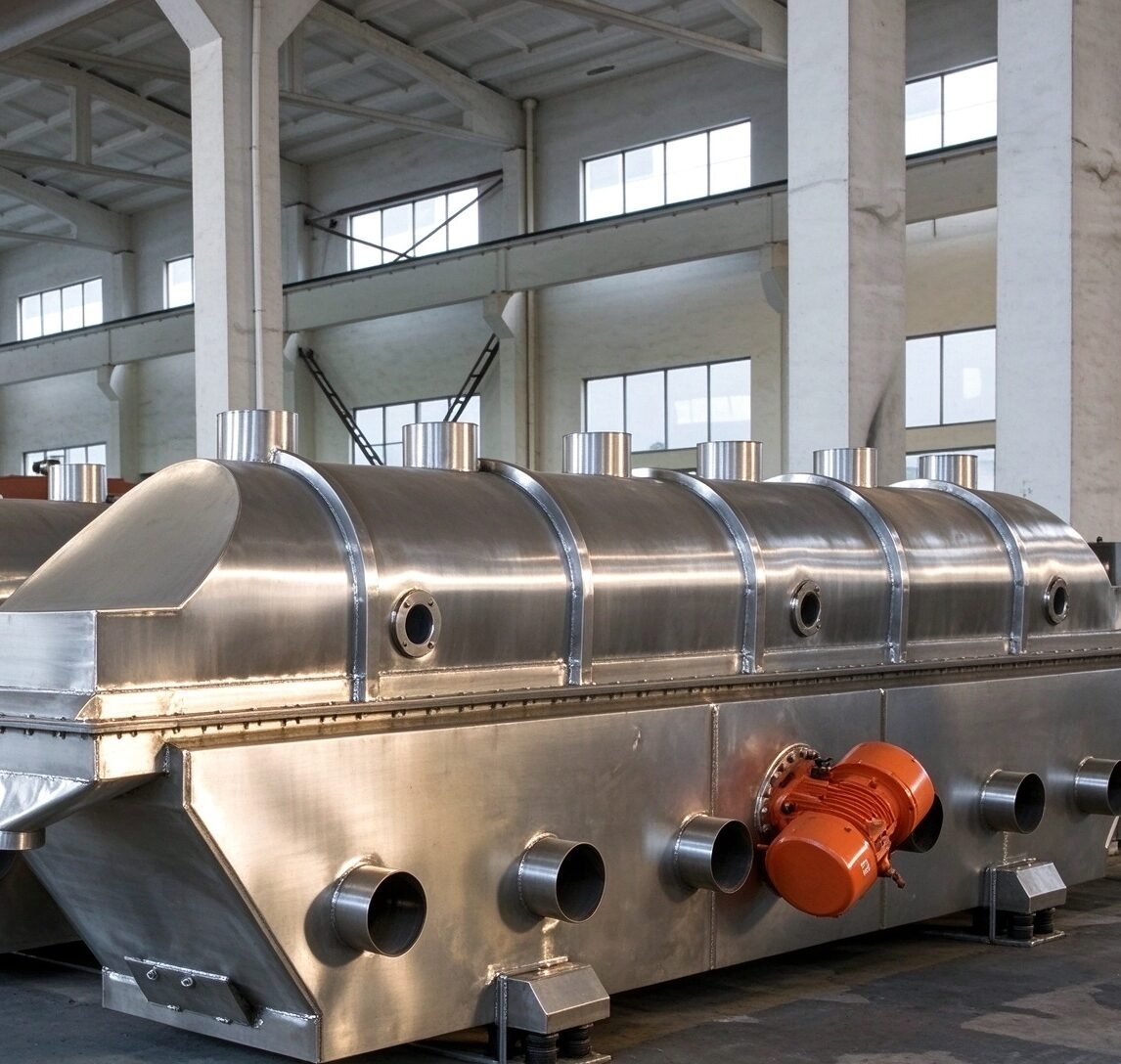
Vibrating Fluid Bed Dryer vs. Boiling Fluid Bed Dryer
ZLG vs. XF: Which Continuous Fluid Bed Fits Your Material?
Choose a ZLG vibrating fluid bed dryer when mechanical vibration is useful for moving material steadily through a shallow bed or when drying and cooling need to be combined in one continuous line. Consider an XF boiling fluid bed dryer when the material fluidizes readily and airflow can provide the primary bed motion in a continuous process. Final selection depends on particle size distribution, bulk density, moisture behavior, airflow demand, attrition and fines risk, required residence time, and discharge temperature.
| Comparison point | ZLG Vibrating Fluid Bed Dryer | XF Boiling Fluid Bed Dryer |
|---|---|---|
| Operating mode | Continuous | Continuous |
| Bed and material movement | Upward process air plus mechanical vibration; vibration assists directional conveying | Fluidization and bed motion rely mainly on process airflow, together with the feeding and discharge arrangement |
| Typical selection focus | Consider when the material benefits from assisted transport through a shallow horizontal bed | Consider when the material can form and maintain a suitable fluidized state primarily through airflow |
| Residence-time control | Evaluated through feed rate, vibration conditions, bed depth, airflow and equipment length | Evaluated through feed/discharge conditions, bed state, airflow and equipment configuration |
| Drying and cooling | A downstream cooling zone can be engineered in the same continuous unit when required | The sample presents a drying configuration; any integrated cooling requirement must be confirmed separately |
| Main equipment features | Horizontal bed, distributor plate, air chamber, vibration motors and isolation springs | Fluidizing main chamber, air filter, heater, blower and selected dust-separation system |
| Fines and particle integrity | Assess vibration intensity, airflow, particle strength and fines generation | Assess fluidizing velocity, entrainment, particle strength and dust-collection load |
| Maintenance focus | Bed plate, vibration motors, springs, fasteners, seals, flexible joints and air system | Air distribution, chamber access, heater, blower, filters, cyclone or bag filter and discharge system |
| Data needed for selection | Material, particle-size distribution, bulk density, wet feed rate, inlet/target moisture, temperature limit, heat source and cooling requirement | The same process data, plus confirmation that the material can fluidize reliably under the proposed airflow conditions |
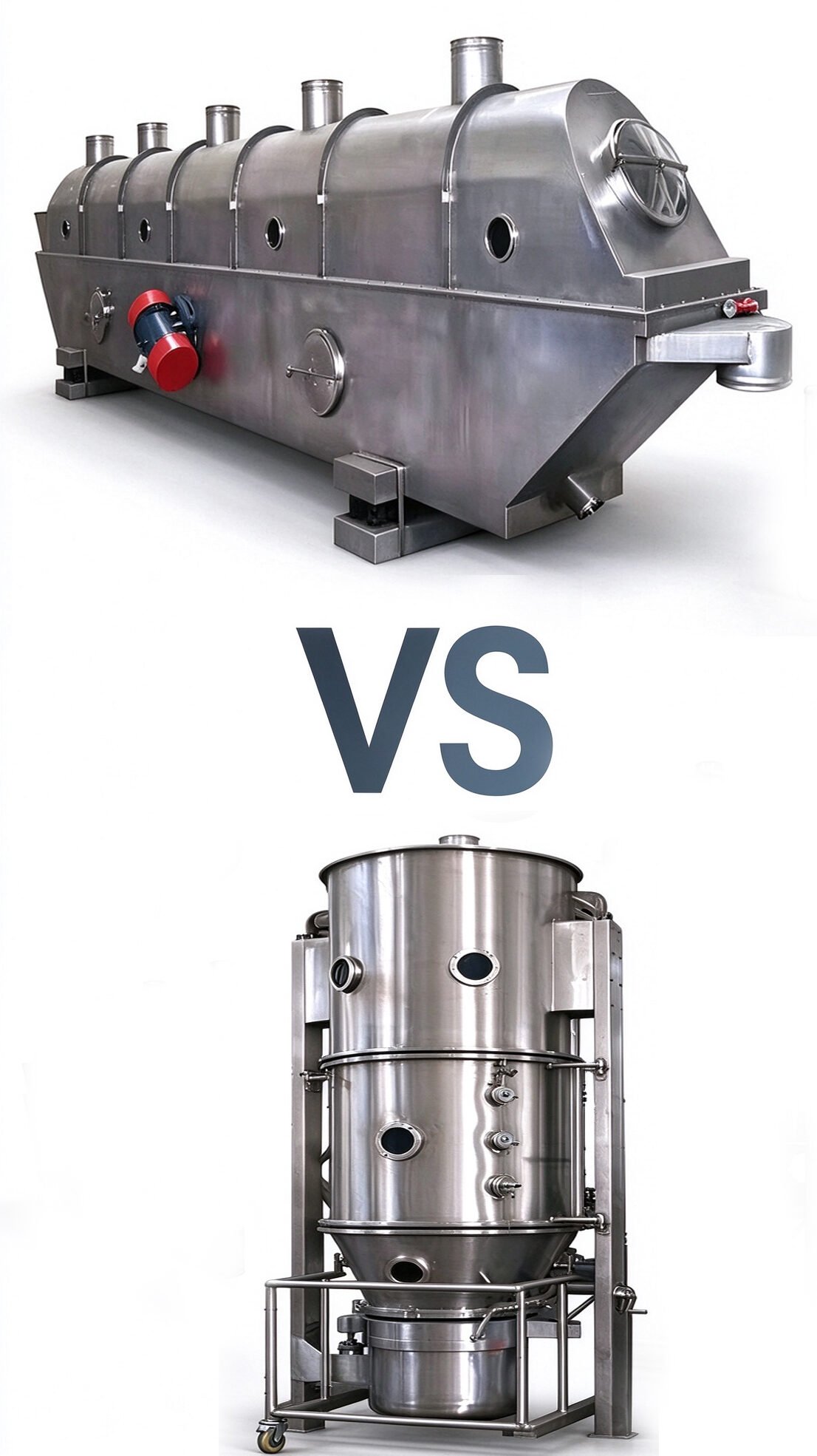
Both ZLG and XF are presented as continuous drying systems in the product brochure. This comparison is about how the bed is moved and controlled, not continuous versus batch operation.
Selection Guide
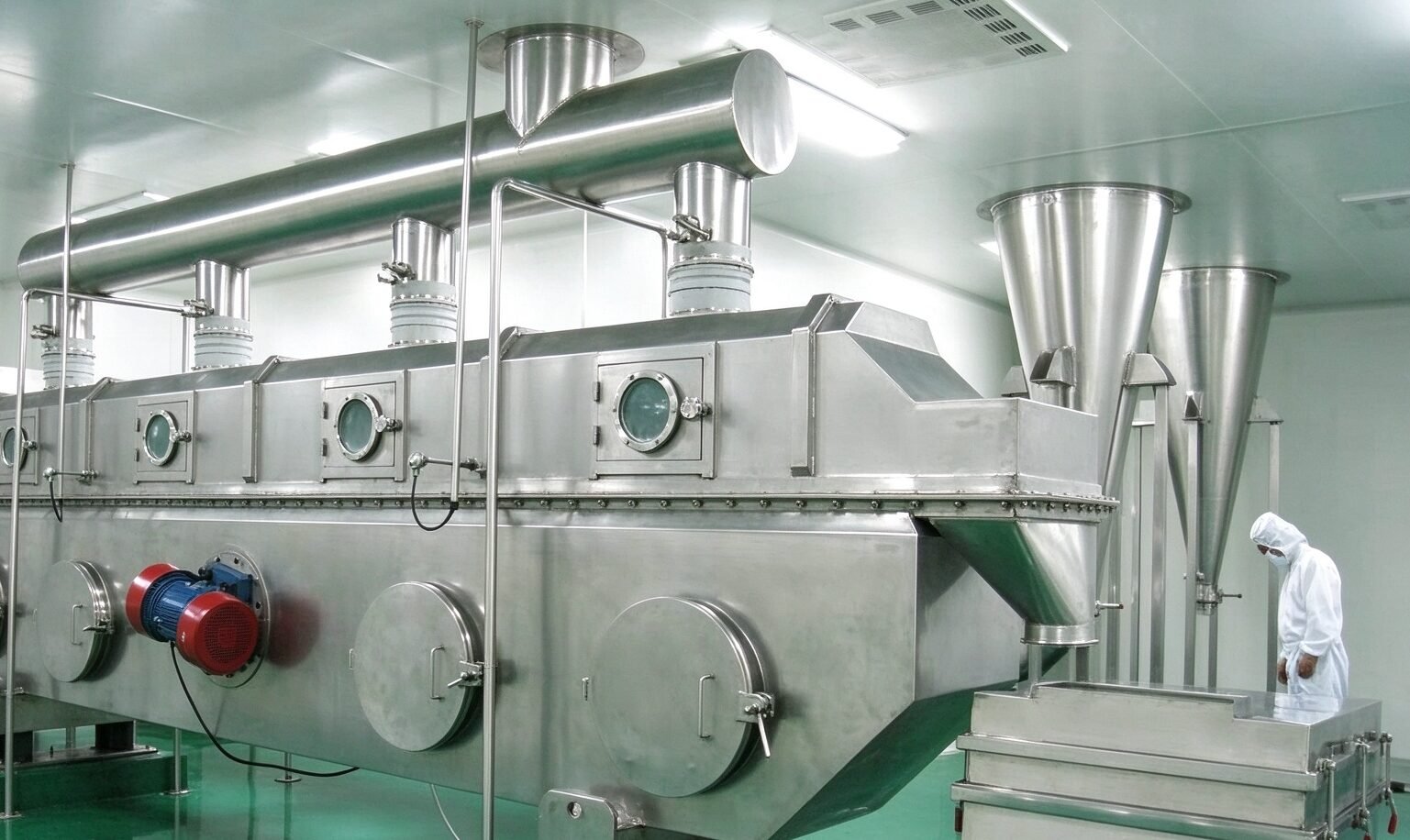
Consider ZLG
Requires vibration to assist continuous transport of material along the bed, or when evaluating drying and cooling in the same continuous equipment.
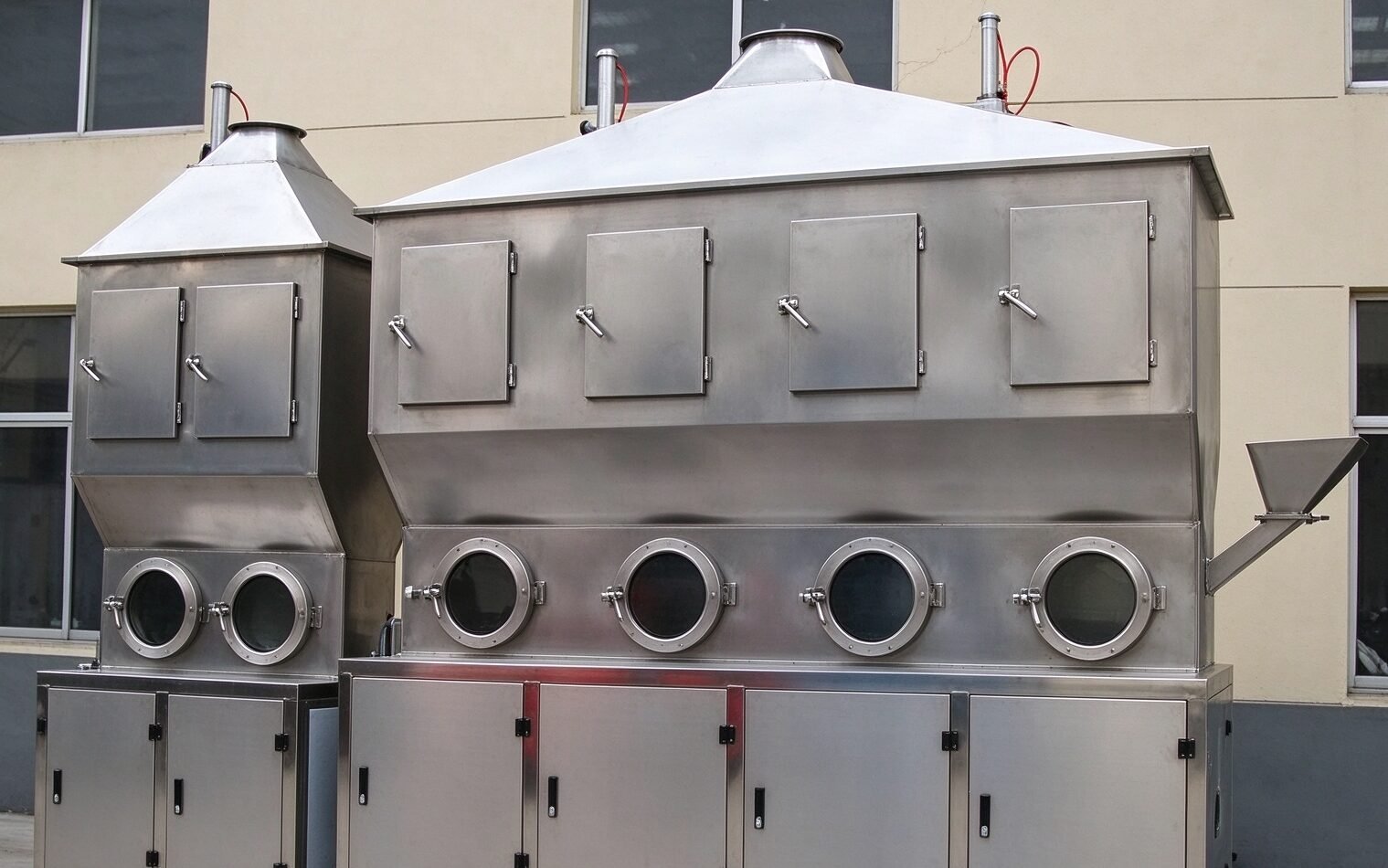
Consider XF
Material easily forms a stable fluidized state, and the process relies primarily on airflow for fluidization and drying.
Material Testing Recommended
For materials with high fines, wide size distribution, caking tendencies, fragility, or uncertain fluidization behavior, selection should be determined through material testing and thermal calculation.
How to Choose and Size a Vibrating Fluid Bed Dryer
-
1
Define Material Properties
Specify feed state, particle size distribution, bulk density, and flowability.
-
2
Establish Throughput & Moisture
State wet feed rate (kg/h) and clarify if moisture is on a wet-base or dry-base.
-
3
Calculate Water Evaporation Load
Determine the kg/h of water to be removed to reach the target moisture.
-
4
Review Constraints
Check heat sensitivity, stickiness, abrasiveness, and product temperature limits.
-
5
Confirm Site Conditions
Available heat sources, power supply, ambient air data, and footprint.
-
6
Engineering & Testing
Conduct material trials if necessary to finalize the bed area and airflow configuration.
Understanding Water Evaporation
When moisture is expressed on a wet basis and only water is evaporated (dry solid mass is constant):
Example: Wet feed is 1,000 kg/h. Moisture drops from 20% to 5%.
Water evaporation = 1000 × (0.20 - 0.05) ÷ (1 - 0.05) ≈ 157.9 kg/h.
Dried product output ≈ 842.1 kg/h.
Note: You cannot select a model based solely on this number. Residence time, bed area, and cooling loads must also be verified.
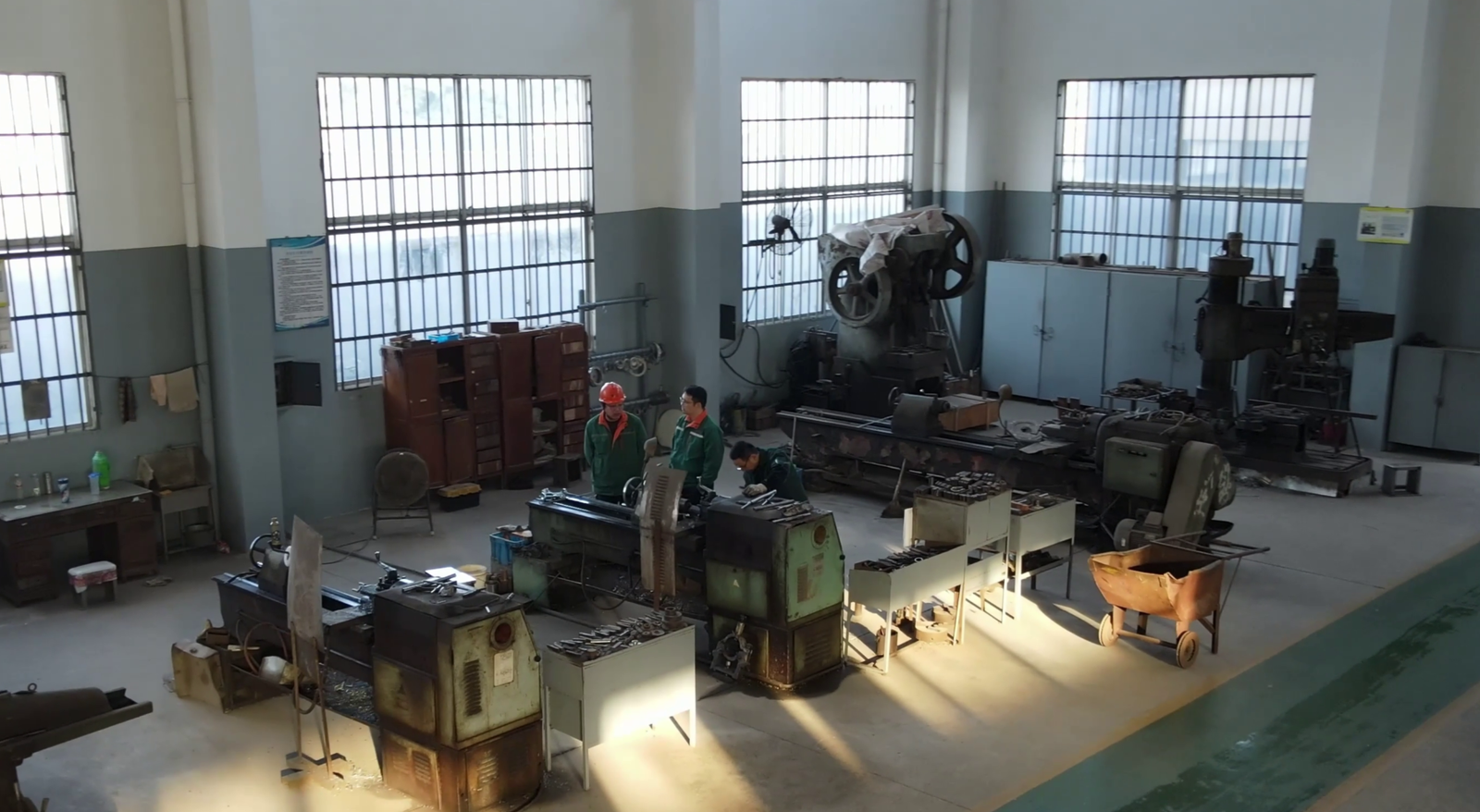
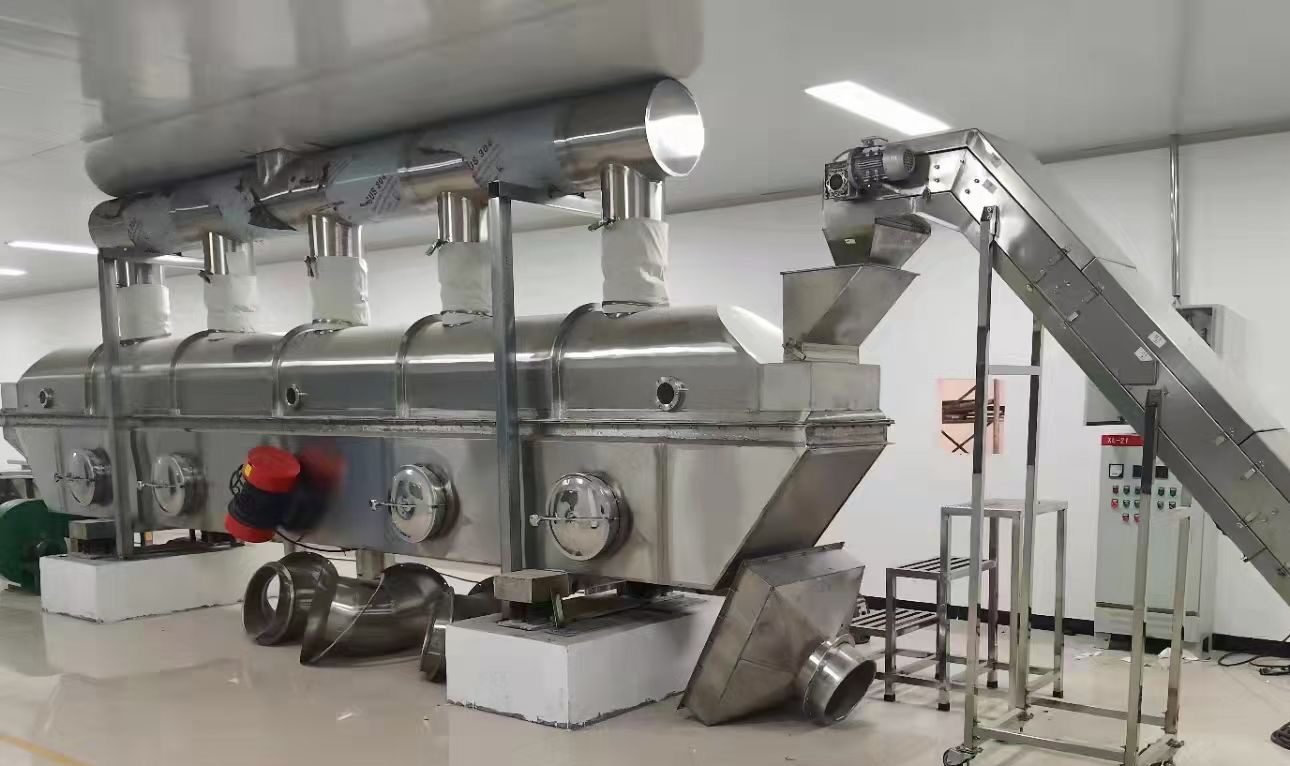
ZLG Manufacturing and On-Site Projects
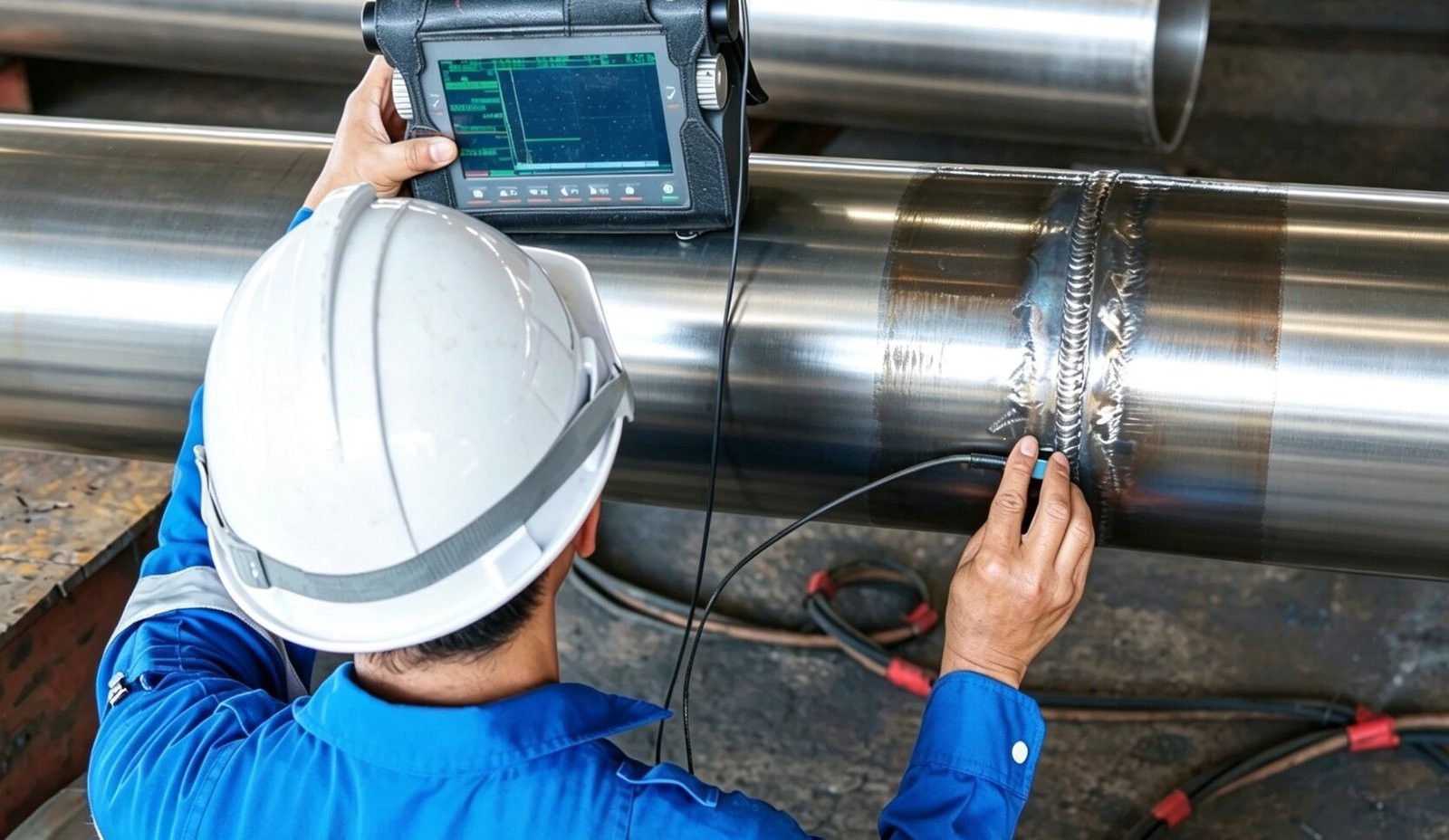
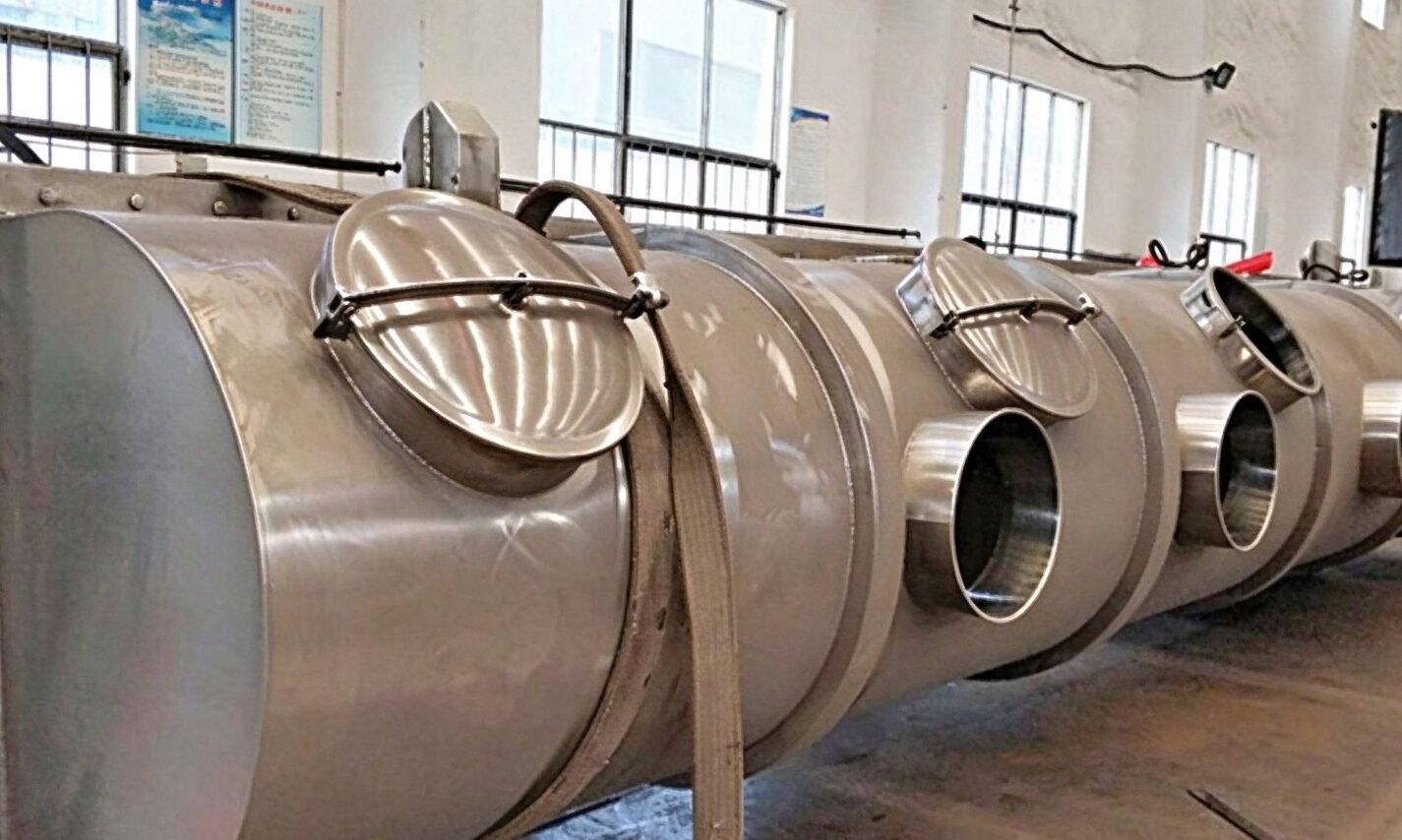
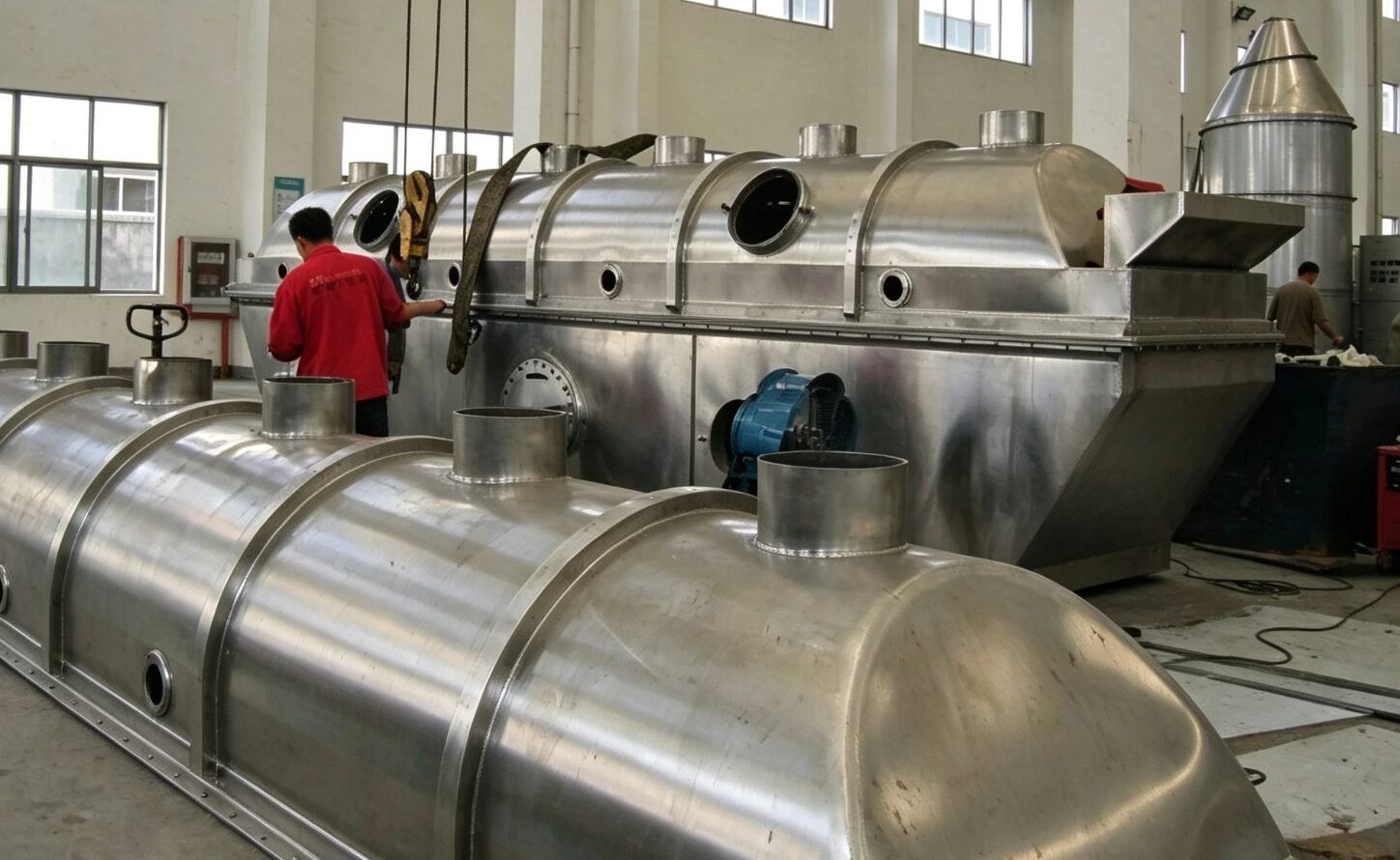
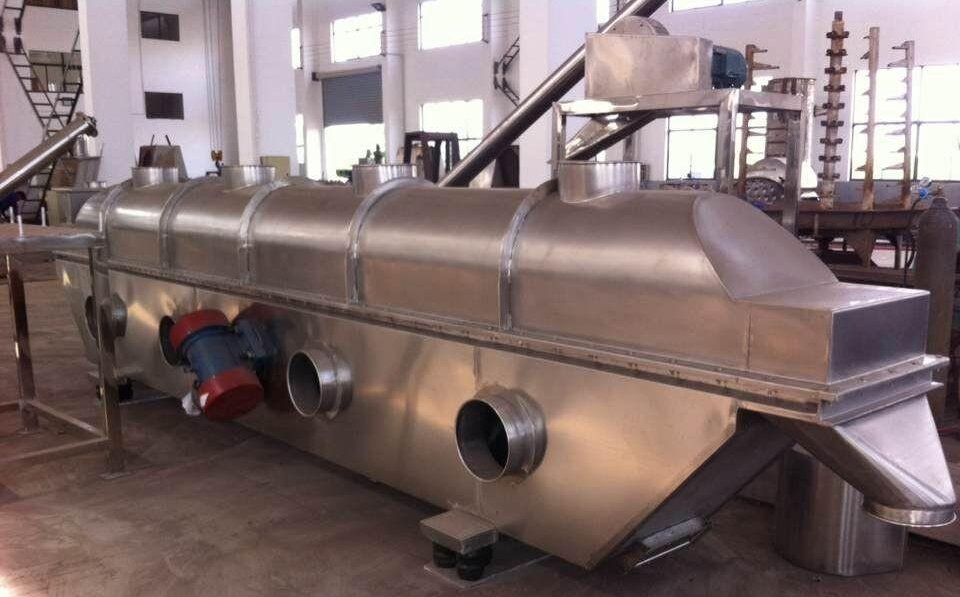
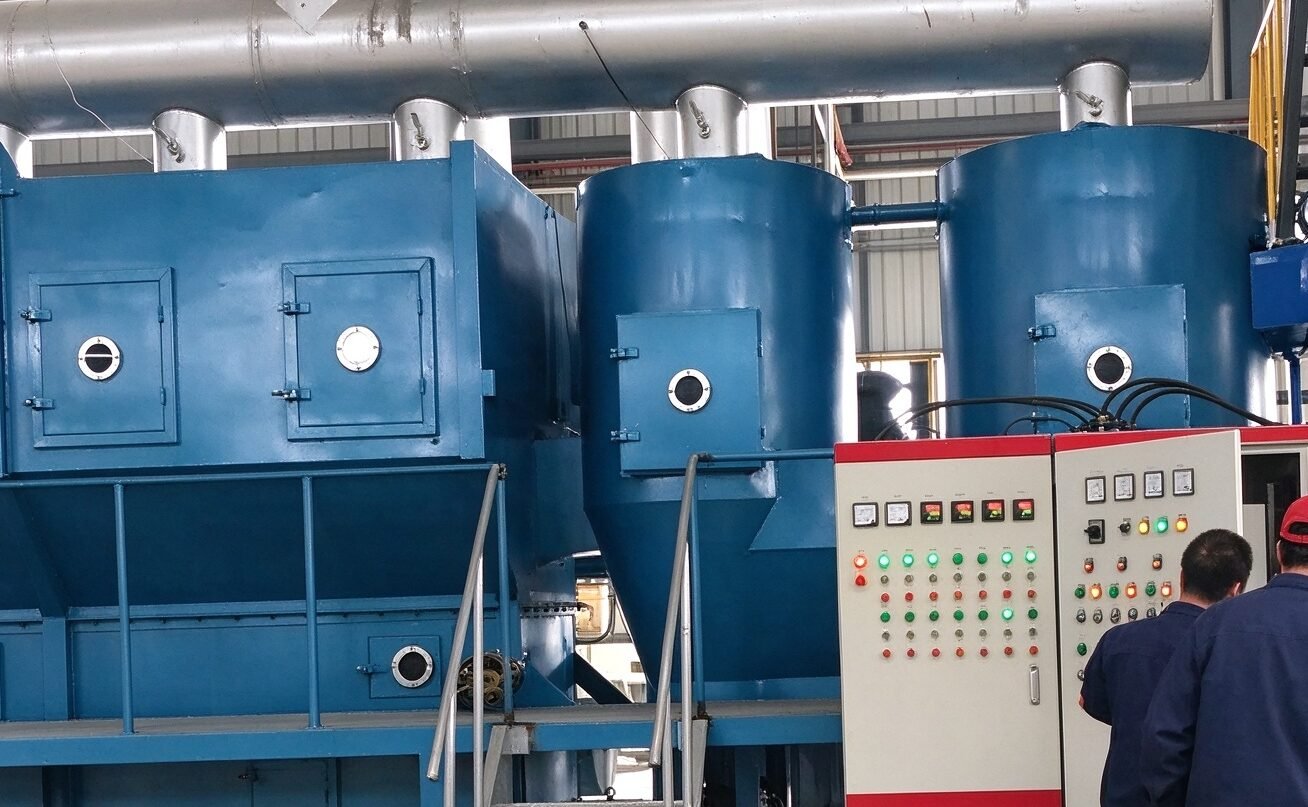
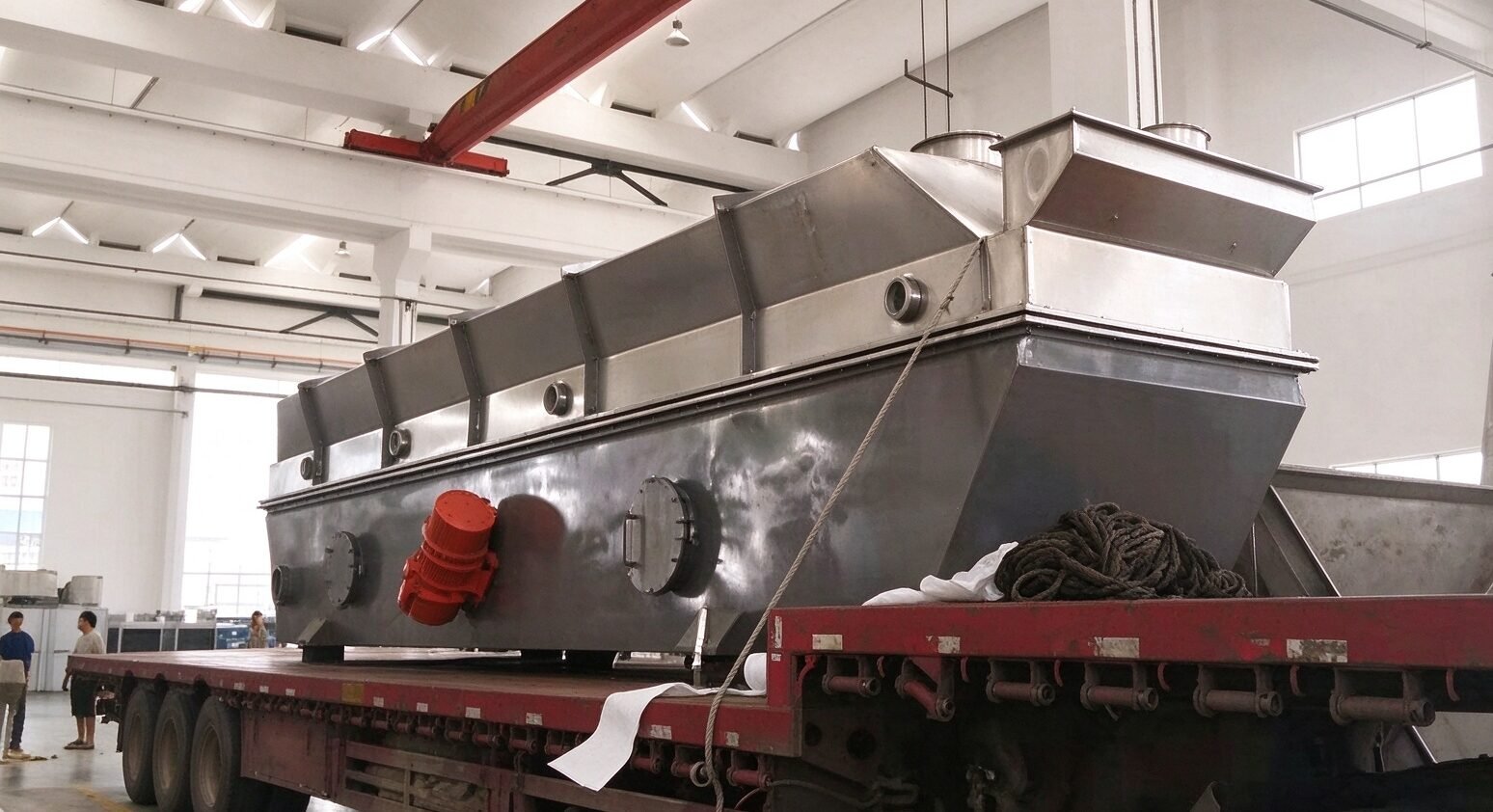
Since 1998, JEXDRY has delivered custom-engineered drying systems with uncompromising quality. Explore our transparent process from in-house fabrication and rigorous FAT to seamless global on-site installation.
Define the Supply Scope Before Ordering
1. Main Unit
- ZLG dryer model selection.
- Contact and non-contact materials.
- Drying and cooling zone partitioning.
- Vibration motors and isolation springs.
2. Ancillary Systems
- Feeding and discharging equipment.
- Heating system and supply fans.
- Dust collection (cyclones/filters).
- Ductwork and control cabinets.
3. Services & Documents
- General arrangement drawings.
- Operation manuals and material certs.
- Export packaging and transport.
- Commissioning support and training.
Typical Project Timeline
Vibrating Fluid Bed Dryer FAQs
What is the difference between evaporation capacity and feed throughput?
Can a vibrating fluid bed dryer combine drying and cooling?
Can it process sticky powders or very fine particles?
How are final moisture and product temperature controlled?
Which heat source should I use?
What information is needed for a quotation?
How much does a vibrating fluid bed dryer cost?
When is material testing needed before selecting a model?
Related Drying Solutions and Technical Resources
Request a Vibrating Fluid Bed Drying Proposal
Tell us about your material, moisture target, and required feed rate. We will review the available process data and clarify the information needed for a suitable ZLG drying configuration.