Updated: October 16, 2026
Choosing a paddle dryer manufacturer means matching the equipment to your material and production schedule. For a continuous sludge line, compare evaporation load, behavior through the sticky phase, and connections to feeding and vapor treatment. For a heat-sensitive filter cake processed in batches, usable loading, vacuum conditions, discharge, and cleaning time may determine the choice.
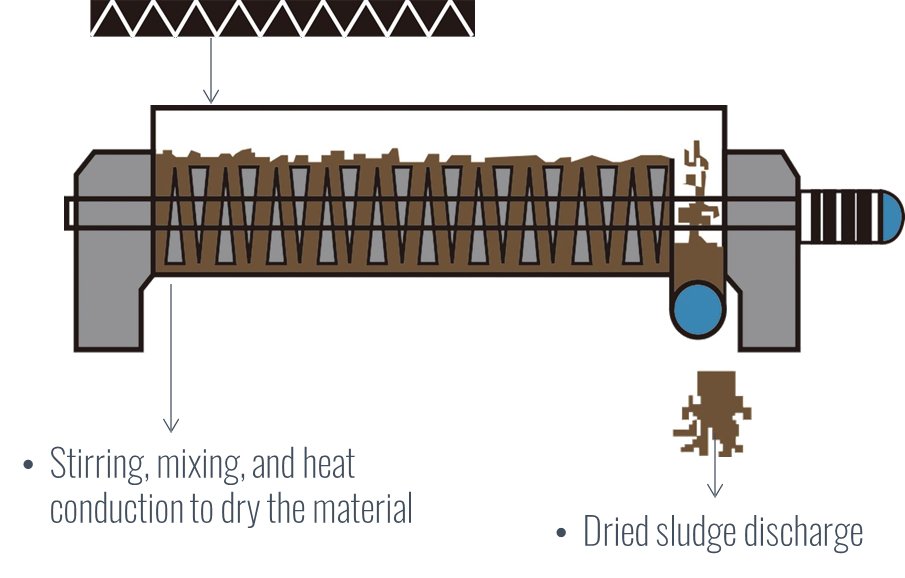
For a hollow paddle dryer, heat passes through the jacket and hollow components while the paddles mix the material. Understanding how a paddle dryer works helps you compare heating surfaces, agitation, and vapor handling before discussing machine size.
The ten companies and brands below supply paddle-drying equipment for industrial applications. They appear alphabetically, without a performance ranking. JEXDRY is the publisher and one of the manufacturers included.
Paddle Dryer Manufacturers: Features and Purchasing Considerations
Start with the operating mode. Most entries below concern horizontal indirect paddle equipment. Hosokawa’s conical vacuum dryer and Scott’s horizontal dryer are batch machines, so their usable batch size and complete cycle time need separate evaluation. Compare continuous machines on sustained feed rate and evaporation duty at the same inlet and outlet moisture.
| Manufacturer | Location | Equipment to compare | Main point to investigate |
| ANDRITZ Gouda | Netherlands | Continuous indirect paddle dryer | Wear components and temperature-zone options |
| AS Engineers | India | Hollow-shaft and jacket-heated paddle dryer | Feeding and vapor-handling configuration |
| Higao Tech | China | Continuous hollow-blade paddle dryer | Shaft arrangement and heating-medium selection |
| Hosokawa Micron B.V. | Netherlands | Conical batch vacuum paddle dryer | Batch processing, solvent recovery, and cleaning |
| JEXDRY | China | Continuous hollow paddle dryer | Material testing and complete-system scope |
| KILBURN Engineering | India | Paddle dryer and continuous vacuum paddle dryer | NARA technology collaboration and model selection |
| Komline-Sanderson | United States | Paddle Dryer/Processor | Pilot testing and process configuration |
| NARA Machinery | Japan | Nara Paddle Dryer (NPD) | Cohesive materials and solvent-recovery options |
| Scott Equipment Company | United States | Indirect Batch Paddle Dryer | Batch cycle, optional vacuum, and lump breaking |
| Thermosag | India | Continuous indirect paddle dryer | Residence-time adjustment and thermal zones |
ANDRITZ Gouda
Location: Waddinxveen, Netherlands.
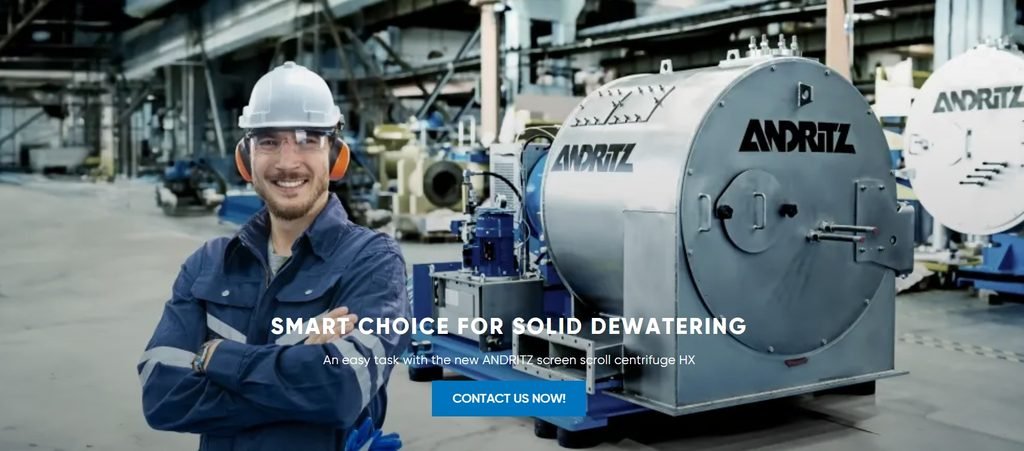
The ANDRITZ Gouda paddle dryer is a continuous indirect dryer with counter-rotating shafts and hollow wedge-shaped paddles. Available configurations include separate temperature zones, vacuum operation, and gas-tight construction. A replaceable wear-component package, including bimetal plates and cast paddle noses, is offered for new machines.
Consider when: Your sludge or mineral feed is abrasive, and you need to evaluate replaceable wear components alongside heating conditions and maintenance access.
Discuss before ordering: The wear package included in the quotation, the basis for estimating component life, and the access needed for replacement. Confirm the heating area and residence time demonstrated for your feed. Specify vacuum and gas-tight options explicitly.
AS Engineers
Location: Ahmedabad, Gujarat, India.
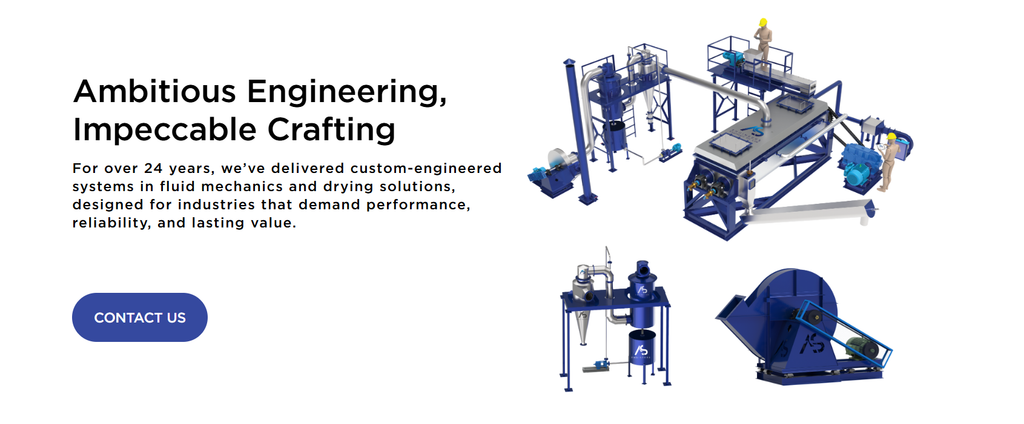
AS Engineers’ paddle dryer transfers heat through hollow shafts and a jacketed vessel. Its options include vacuum operation, dual-zone heating and cooling, screw feeders, condensers, solvent tanks, exhaust treatment, and product handling. The company also offers pilot trials.
Consider when: Your wet-solids project needs the dryer, metered feeding, and vapor-handling equipment evaluated together so the quotation covers the connections between them.
Discuss before ordering: The proposed operating mode and whether the trial includes the quoted feeding and vapor arrangements. Request a process-flow drawing identifying the feeder, condenser, exhaust equipment, and controls as included, optional, or buyer-supplied.
Higao Tech
Location: Shanghai, China, with a listed Jiangsu branch.
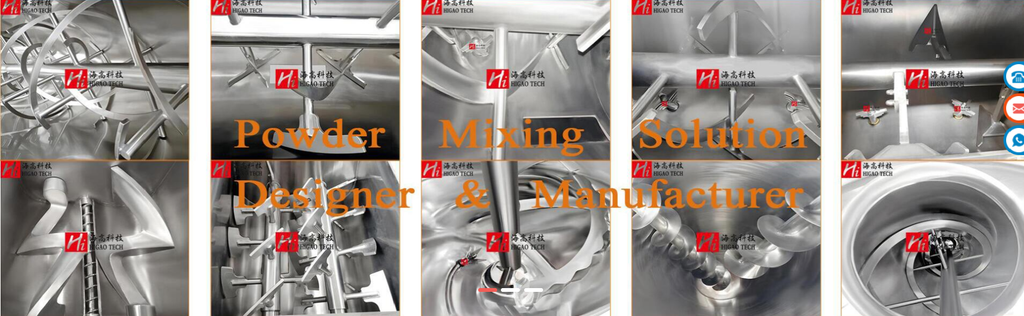
Higao Tech offers a continuous hollow-blade paddle dryer for pastes, powders, particles, and slurries. Its product range describes two- or four-shaft arrangements, hollow wedge-shaped blades, a jacketed shell, and steam, thermal oil, or water as heat-transfer media.
Consider when: You are comparing shaft arrangements for an existing plant with fixed heating utilities, limited installation space, or restricted access for seal and shaft maintenance.
Discuss before ordering: The exact shaft layout, heating area, product-contact materials, and seal construction. Request the general arrangement drawing and evaporation duty at your available heating-medium conditions; shaft count alone cannot establish capacity.
Hosokawa Micron B.V.
Location: Doetinchem, Netherlands.
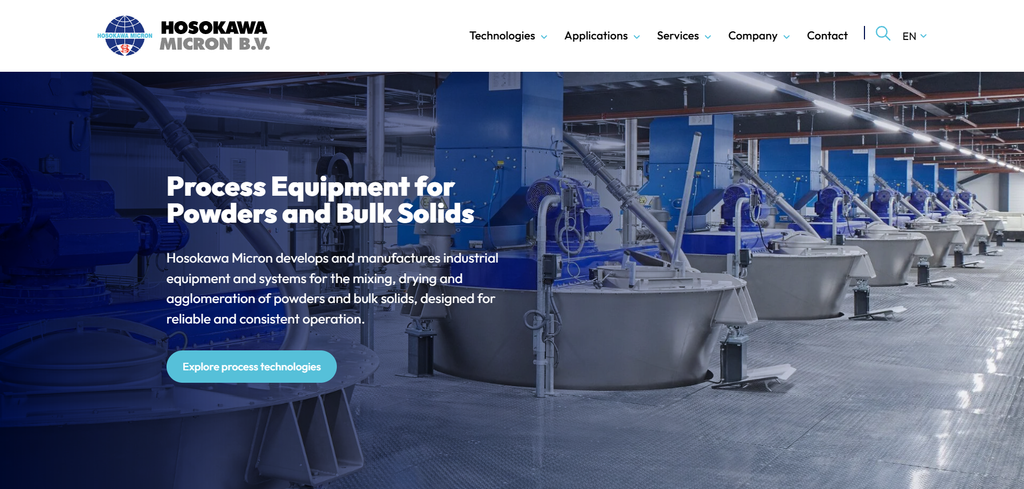
Hosokawa’s Conical Paddle Dryer is a vertical batch vacuum dryer. A central paddle rotor moves material against the heated vessel wall. Condensation and solvent recovery can be incorporated, with cleaning-in-place (CIP) and sterilization-in-place (SIP) options for suitable configurations.
Consider when: A heat-sensitive filter cake needs controlled batch drying, solvent removal, and cleaning between products, making temperature limits and the complete batch cycle central to selection.
Discuss before ordering: Usable loading, residual product after discharge, and the cleaning procedure. Include loading, drying, cooling where required, unloading, and cleaning when calculating hourly production from batch capacity.
JEXDRY
Location: Changzhou, Jiangsu, China.
JEXDRY is the international industrial drying-equipment brand of Jiangsu Xingxing Drying Equipment Co., Ltd. Its continuous hollow paddle dryers transfer heat through a jacket, hollow shafts, and hollow paddles. Steam, thermal oil, or hot water is selected for the duty. Material evaluation, testing where needed, manufacturing, and agreed factory checks support equipment and system selection.
Consider when: A sludge or filter-cake line must connect to existing conveyors, utilities, and exhaust treatment, and you need those interfaces defined before fabrication.
Discuss before ordering: The test basis for selection, heating area, drive requirements, and supply boundaries. Confirm feed elevation, discharge position, utility connections, and maintenance clearance on the layout, together with FAT scope and commissioning responsibilities.
KILBURN Engineering
Location: India, with its corporate office in Mumbai and manufacturing facilities in Maharashtra.
KILBURN’s paddle dryer uses heated hollow wedge-shaped paddles and a jacketed vessel. KILBURN states that it manufactures these dryers under technical collaboration with NARA Machinery of Japan. It also offers a separate continuous vacuum paddle dryer for heat-sensitive materials.
Consider when: You are evaluating India-based manufacturing or a continuous vacuum process where material-temperature limits and sealed feeding and discharge must be addressed together.
Discuss before ordering: The operating pressure, feed and discharge seals, and supporting material-trial results. If both KILBURN and NARA quote, confirm the manufacturing, engineering, commissioning, and service responsibilities in each offer.
Komline-Sanderson
Location: Peapack, New Jersey, United States.
The Komline-Sanderson Paddle Dryer/Processor uses counter-rotating shafts and intermeshing hollow paddles. Vapor-tight, vacuum, and two-temperature-zone configurations are available. Its Peapack operation provides bench and pilot testing, with rental equipment available for selected trials or small-scale production needs.
Consider when: Access to US-based trials or rental equipment would help establish sticky-phase behavior, product-temperature limits, and drying conditions before selecting a production machine.
Discuss before ordering: Which test unit can reproduce the proposed heating and operating conditions. Ask how the measured results support production heating area, residence time, and drive selection, and identify the feed range covered by the proposal.
NARA Machinery
Location: Tokyo, Japan.
The Nara Paddle Dryer (NPD) uses intermeshing wedge-shaped heat-transfer paddles. The arrangement helps limit material attachment when processing viscous feeds, wet slurries, and powders. Vacuum operation and inert-gas circulation are available for appropriate solvent-recovery duties.
Consider when: Your material becomes cohesive during drying, or a solvent-bearing feed requires the agitation, sealing, and vapor-recovery arrangements to be evaluated as one process.
Discuss before ordering: Buildup, mixing behavior, and discharge across the relevant moisture range. For solvent service, confirm the selected shaft seals, operating atmosphere, and recovery system against the actual solvent and required final product condition.
Scott Equipment Company
Location: New Prague, Minnesota, United States.
Scott’s Indirect Batch Paddle Dryer supplies heat through a jacketed vessel while dual paddle shafts mix the batch. Optional vacuum operation supports lower-temperature drying, and high-speed choppers can be added to break agglomerates. Test-lab evaluation is available for moisture targets, cycle time, energy use, and product integrity.
Consider when: A filter cake forms lumps during batch drying, and combining drying with agglomerate breakup could improve downstream handling within your particle-size specification.
Discuss before ordering: The full batch cycle, including loading, cooling if required, and discharge. Establish whether choppers are needed, and measure final moisture and particle size together to assess their effect on the product.
Thermosag
Location: Gujarat, India.
The Thermosag paddle dryer uses twin counter-rotating shafts with intermeshing wedge-shaped paddles. Steam or thermal oil supplies indirect heat. An adjustable overflow weir controls material hold-up and residence time, and two-temperature-zone configurations are available for different thermal stages.
Consider when: Your continuous process needs residence-time adjustment or separate thermal stages, and you want to establish how those controls respond to changes in feed rate or inlet moisture.
Discuss before ordering: The operating range for weir height, material hold-up, and outlet moisture. Confirm the zone arrangement and utility circuits, and identify whether separate downstream cooling or vapor-treatment equipment is required.
What Should You Look for in a Paddle Dryer Manufacturer?
A paddle dryer manufacturer should explain how the proposed heating area, agitation, and discharge arrangement fit your feed. For sticky sludge, that means evaluating the change in consistency during drying; for heat-sensitive filter cake, it means controlling product temperature and accounting for the complete batch cycle. Use the same material data and operating limits when comparing suppliers.
Define the Feed and Evaporation Duty
Start with composition, particle size, bulk density, initial and target moisture, and the expected variation between batches or shifts. Include stickiness, abrasive particles, corrosive constituents, and the maximum allowable product temperature. A supplier evaluating variable industrial sludge needs the operating range, not just one moisture result from an unusually dry sample. These details determine what material testing must reproduce.
Consider an inquiry for 2,000 kg/h with moisture reduction from 90% to 5%: does capacity mean wet feed or dried product, and are both moisture figures on a wet basis? Ask for a heat and mass balance that connects the evaporation load to heating area, working volume, and residence time. For batch equipment, include loading, drying, cooling where required, unloading, and cleaning in the production calculation.
Specify Contact Materials and Wear Protection by Component
For corrosive sludge or chemical salts, request a component-level material schedule covering the vessel, shafts, paddles, seals, and other product-contact parts. If SS316L is proposed, ask the supplier to explain the choice against the feed analysis and operating temperature. For abrasive mineral feed, compare replaceable wear plates, paddle protection, and access for replacement. A written specification lets the inspection team check what was fabricated and helps maintenance staff identify the parts they will need.
For food ingredients or pharmaceutical filter cakes, define the cleaning method, discharge residue limit, and required surface finish before selecting a vessel. Ask how seals, inspection openings, and internal surfaces will be inspected or cleaned between products. A stainless steel grade or surface-roughness number alone does not demonstrate that the complete machine meets your process hygiene requirements.
Review Drive Torque, Seals, and Thermal Expansion
A sticky filter cake can create different mixing loads as it dries. Ask the supplier to explain motor and gearbox selection, the permitted startup condition, and the response to a stoppage with material inside. Review shaft support, paddle clearances, and overload protection together. A familiar motor brand does not establish whether the drive can handle your material through its sticky phase.
For repeated heating and cooling cycles, ask how the shaft and vessel accommodate thermal expansion without losing the required clearances. Review bearing location, heat protection, lubrication access, and shaft-seal replacement space on the arrangement drawing. For vacuum or inert-atmosphere service, define the operating pressure, allowable leakage, and any seal-support utilities. These details affect maintenance access and whether the proposed atmosphere can be maintained during operation.
Match Heating Utilities to the Quoted Duty
If a proposal lists 2,300 kg/h of steam and 140 kW, request the steam pressure and temperature and clarify whether the electrical figure is installed power or expected operating demand. Confirm whether each figure covers the dryer alone or the complete line. For thermal oil or hot water, request supply and return temperatures and flow requirements. Your boiler, electrical, and circulation-system checks depend on those definitions; the figures above are an example to clarify, not a general consumption benchmark.
For a heat-sensitive product, distinguish heating-medium temperature from maximum product temperature and identify the measurement points. If a supplier proposes heat recovery or additional insulation, ask for the expected utility reduction at the same feed and final-moisture conditions, with the extra equipment and maintenance included. This makes the operating-cost comparison usable for your plant.
Check the Complete System Against the Site Drawing
Bring the plant layout into the discussion before fabrication. Request a general arrangement drawing showing equipment dimensions, feed elevation, discharge position, foundation or mounting details, utility connections, and seal or shaft removal space. For a sludge drying system, identify the feeder, vapor treatment, controls, product cooling, and conveyors as included, optional, or buyer-supplied. Resolving those interfaces early reduces the risk of pipework changes and inaccessible maintenance points.
An existing plant may also need the new control cabinet to communicate with upstream feeding and downstream conveying. Agree on the electrical supply, control signals, alarm and interlock responsibilities, and required English electrical drawings. For solvent-bearing material, specify solvent identity, expected vapor load, and recovery requirements so sealing, condensation, and the applicable safety assessment can be addressed as a system.
How Can You Verify a Paddle Dryer Supplier’s Reliability?
Verify a paddle dryer supplier through manufacturing records, representative material trials, and agreed acceptance tests. A factory visit can show how shafts and jackets are made; a trial can show how a particular feed behaves. Tie both forms of evidence to the proposed equipment and purchase specification before accepting a performance commitment.
Follow the Manufacturing Route During a Factory Audit
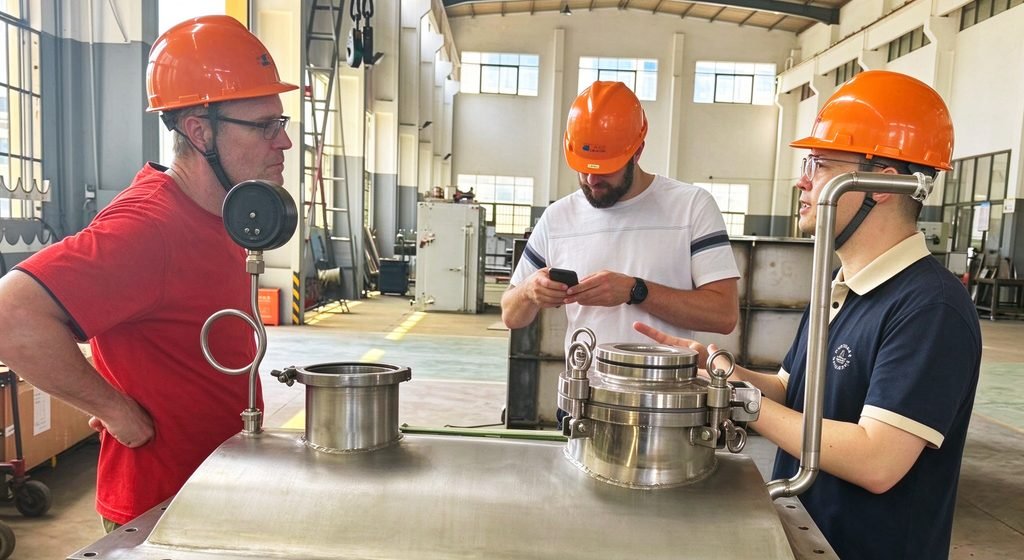
During a factory visit or live video inspection, follow a relevant job through shaft machining, agitator fabrication, welding, and inspection. Ask to see material identification, the equipment used to check critical dimensions, and pressure-testing arrangements for heated components. Confirm which work is completed at that location and which is subcontracted, including who approves inspection results and handles rework. This establishes responsibility more clearly than a collection of workshop photographs.
Review references for similar material, evaporation duty, operating mode, and commissioning year. Where the customer permits contact, ask about buildup, seal replacement, startup difficulties, and service support. A reference from a batch food-powder application gives limited evidence for a continuous abrasive-sludge project unless the supplier explains which design and operating conditions are comparable.
Use Material Trials to Define the Performance Commitment
For variable sludge, arrange a laboratory or pilot trial using a representative sample before final equipment selection. Agree on sample quantity, preparation, safety information, and the characteristics the sample must represent. The report should record initial and final moisture, temperature, processing time, buildup, and discharge behavior. Ask how the trial supports the proposed production heating area and drive selection, and which conditions remain to be verified at full scale.
Put the agreed feed range, capacity definition, final-moisture target, utility conditions, and verification method into the purchase specification. If performance is contractually committed, define the test duration, sampling method, corrective actions, and retesting responsibilities. A successful trial on one sample should not become an unrestricted promise covering every sludge composition or feed rate.
Agree on an Inspection and Test Plan Before Fabrication
Request an inspection and test plan that identifies the component, check, acceptance criterion, record, and any buyer-witness point. For a hollow paddle dryer, relevant records can include material certificates linked to component or heat numbers, critical dimensions, weld maps, agreed non-destructive examination results, and pressure or leakage tests for the heated circuits. The applicable design code and test scope should be agreed for the actual equipment and destination; a sample report from another machine is not a substitute.
If a quotation cites a management-system certificate or third-party audit, check the issuing organization, covered company and location, scope, and validity. For pressure parts, request the relevant design and fabrication documentation rather than assuming that a general factory certificate covers the jacket, shafts, and paddles. Record any buyer or independent-inspector attendance before those parts become inaccessible during assembly.
Separate Factory Checks from Site Acceptance
Define factory acceptance testing (FAT) and site acceptance testing (SAT) separately. FAT can cover agreed mechanical operation, instrumentation, sealing, alarms, interlocks, and control-cabinet checks. State whether the test is unloaded or uses an agreed test material. A mechanical run with a substitute material can check specified functions, but it does not demonstrate the drying performance of your actual sludge.
SAT should define how sustained throughput, outlet moisture, heating-utility consumption, and electrical demand will be measured at the installed line. Identify who supplies the feed, utilities, instruments, and sampling labor, and how a failed result will be investigated and retested. For an overseas delivery, also agree on the applicable conformity documents and noise, vibration, and emissions acceptance criteria for the machine and supplied system.
How to Find Reliable Paddle Dryer Suppliers in China
Use industrial directories, trade exhibitions, and search results to build a candidate list, then request an official product proposal and manufacturing address. Ask whether the supplier is the manufacturer, an exporter, or a system integrator, and who performs engineering, fabrication, testing, and commissioning. An exporter may coordinate a project, but the contract must identify who is accountable for technical decisions and corrective work.
Request the Chinese legal company name and Unified Social Credit Code from the business license, then check the entity through the National Enterprise Credit Information Publicity System. Reconcile the contracting entity, manufacturing location, and payment beneficiary; document the relationship if different companies are involved. Registration establishes an identity to investigate. It does not verify the proposed drying capacity, so retain the factory audit and material-trial checks above.
For communication across time zones, identify the project engineer and agree on drawing-review deadlines, document language, and how design changes will be approved. Review a sample general arrangement drawing, piping and instrumentation diagram (P&ID), and electrical schematic before ordering. A clear drawing register and named technical contact help prevent unresolved interface questions from reaching the installation team.
Compare the Complete Project Cost, Delivery, and Support
Put Quotations on the Same Supply Basis
Compare offers for the same feed, evaporation duty, construction materials, and operating mode. Separate the dryer and drive from feeding, vapor treatment, controls, insulation, product cooling, engineering, testing, freight, and site supervision. Ask for the exclusions and the price of each required option. This lets your team identify equipment and installation work that must be purchased separately before selecting the apparent lowest price.
An export quotation also needs a named delivery location and a clear allocation of packing, transport, insurance, unloading, and site services. Request shipping dimensions, gross weights, lifting requirements, and container-loading details. If comparing EXW, CIF, or DAP offers, have the commercial team reconcile the stated responsibilities and remaining costs before comparing totals. Do not treat a freight-inclusive quotation as proof that installation is included.
Link the Schedule to Drawings, Tests, and Site Readiness
Ask for a schedule covering drawing approval, material procurement, fabrication, inspection, FAT, packing, shipment, installation, and SAT. State what starts the quoted lead time and which buyer approvals or utilities are needed at each stage. Agree on payment milestones and the documents or acceptance records attached to them. If delay remedies or performance remedies are required, put the agreed terms in the contract rather than relying on email assurances.
Define Warranty, Spares, and Commissioning Responsibilities
Before placing the order, confirm when the warranty starts, what it covers, and who pays for service labor, travel, and accommodation. Request a priced list of recommended spares for two years of operation, including seals and bearings, with part identification and replacement lead times. Discuss expected parts availability and distinguish the time to respond to a fault from the time to dispatch or deliver a replacement. This gives the maintenance team a practical basis for stocking critical parts.
For overseas startup, state the number of commissioning engineers, planned site days, work scope, and costs if additional days are needed. Agree on remote-support arrangements, operator training, and delivery of English operation and maintenance manuals, electrical and control drawings, P&IDs, and parts lists. Inspect packing, moisture protection, and identification of loose-shipped components before release so the site team can match deliveries to the installation plan.
What to Include in Your Paddle Dryer RFQ
Send each shortlisted manufacturer the same request for quotation (RFQ). Ask them to identify assumptions and deviations against the items below; this helps separate a proposal based on your material and utilities from a generic machine quotation.
Material and production: Composition, safety data where applicable, particle size, bulk density, wet feed rate or batch size, operating hours, initial and target moisture, and maximum product temperature.
Plant utilities and layout: Heat source with available temperature, pressure, and flow; electrical supply; relevant cooling water, compressed air, or inert-gas services; installation dimensions and feed/discharge interfaces.
Required equipment scope: Dryer, feeder, conveyors, vapor treatment, product cooling, control cabinet, instrumentation, and installation supervision, with buyer-supplied items identified.
Evidence and acceptance: Material-trial requirements, comparable references, component material schedule, inspection records, FAT scope, and the method for measuring capacity, final moisture, and utilities during SAT.
Delivery and operating support: Required delivery location and schedule, packing information, commissioning days, warranty start and coverage, recommended spares, and English-document submission dates.
Paddle Dryer Purchasing FAQs
How Should You Compare Paddle Dryer Capacity?
Compare evaporation load as well as wet feed rate. If the 2,000 kg/h example above means wet feed at 90% moisture, it contains 200 kg/h of dry solids. Drying it to 5% final moisture would produce approximately 211 kg/h of product and require removal of approximately 1,789 kg/h of water. This illustrative balance assumes wet-basis moisture, retention of all dry solids, and water as the only evaporated component. It defines the evaporation duty; the supplier still needs to demonstrate the proposed machine’s capacity at the specified heating and feed conditions.
Can a Vacuum Paddle Dryer Handle Solvent-Bearing Material?
Suitability depends on the solvent, temperature limit, seals, operating atmosphere, and vapor-recovery design. NARA, Hosokawa, and Komline offer relevant vacuum or solvent-handling options, but the selected system must be assessed for the actual material. Include solvent identity, expected vapor load, condenser requirements, and required residual solvent level in the inquiry. A vacuum connection alone does not define a solvent-recovery system.
What Are Warning Signs in a Paddle Dryer Quotation?
Pause the comparison if capacity is quoted without inlet and outlet moisture, materials are described only as “stainless steel,” or utility figures do not identify what equipment they cover. Unexplained manufacturing locations, untraceable inspection reports, and an undefined commissioning scope also need resolution. Ask for the missing calculation, component specification, or written responsibility before accepting the offer.
Discuss Your Paddle Drying Project with JEXDRY
Send your material and process requirements, including composition, wet feed rate or batch size, initial and target moisture, product-temperature limit, available heat source, and site drawings. Include safety data and solvent information where applicable. Our team can review the drying duty, discuss material testing, and prepare a proposal defining the dryer configuration, supporting equipment, and installation interfaces.