A thermal sludge dryer supplies heat to wet sludge, evaporates part of its water and removes the resulting vapour. The remaining material leaves with a lower moisture content and a higher percentage of dry solids. Effective drying depends on three processes working together: heat reaching the sludge, moisture moving out of the material and vapour leaving the drying zone.
The sludge drying process usually follows mechanical dewatering. Filter presses, centrifuges and screw presses remove water mechanically; thermal drying continues moisture removal through evaporation. Every kilogram of water entering the dryer adds to its evaporation load. The EPA’s heat-drying fact sheet describes both direct and indirect heating as methods of evaporating water from wastewater solids.
What Enters a Sludge Dryer?
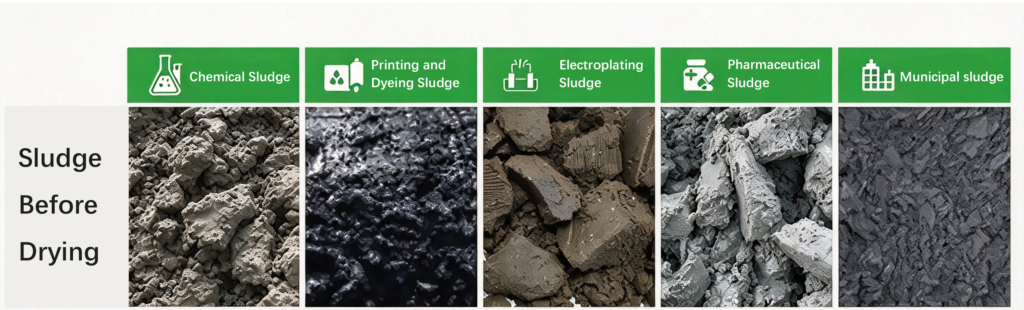
Depending on its composition and upstream treatment, sludge may enter the dryer as a pumpable paste, wet filter cake or conditioned material. Its moisture content, consistency and variability affect feeding, heat transfer and the amount of water that must be evaporated.
Two measurements help describe the feed:
- Moisture content: the mass of water as a percentage of the total wet material.
- Dry solids content, or DS: the mass of dry material as a percentage of the total wet material.
On this wet-mass basis, sludge containing 90% moisture contains 10% dry solids. A 2,000 kg/h feed therefore carries 1,800 kg/h of water and 200 kg/h of dry solids.
As water evaporates, the percentage of dry solids increases. This does not mean the dryer creates additional solids—the water portion of the material becomes smaller.
How the Sludge Drying Process Works
A typical system combines controlled feeding, material distribution, heat transfer, vapour removal, moisture control and discharge. These functions overlap during operation. In a continuous dryer, feeding, heating, evaporation and discharge can occur simultaneously.
The main process routes are:
| Route | What moves through the system |
| Material | Wet sludge → controlled feeding → drying → discharge and any required cooling |
| Heat | Heat source → drying air or heated metal surfaces → sludge |
| Moisture | Water in sludge → water vapour → condensation or exhaust treatment |
Vapour treatment and dry-product handling form separate branches after moisture leaves the sludge.
Step 1: Feed Sludge at a Controlled Rate
Wet sludge moves from storage or upstream dewatering equipment into the dryer. The feeding arrangement may use a sludge pump, screw feeder or another device suited to the material’s consistency.
A buffer hopper or storage vessel can help maintain supply, while the metering device controls how much material enters the drying zone.
Stable feeding matters because the dryer must accommodate both the material flow and its water content. If the feed becomes wetter while the wet feed rate remains unchanged, the evaporation load increases. Without a corresponding adjustment in drying capacity, the discharged product may remain wetter than intended.
Step 2: Distribute the Material for Heat Transfer
Inside the dryer, sludge must contact heated surfaces or drying air effectively. The method depends on the equipment:
- In a paddle dryer, rotating paddles mix the sludge and renew contact with heated metal surfaces.
- In a belt dryer, sludge is distributed across a moving belt, sometimes after forming or extrusion.
- In a thin-film dryer, rotating elements spread and move material along a heated surface.
Distribution affects how evenly heat reaches the material. Thick deposits, uneven loading or poorly dispersed lumps can leave some portions wetter than others.
Step 3: Transfer Heat into the Sludge
Thermal sludge dryers commonly use either direct convection or indirect contact heating.
| Heat-transfer method | How heat reaches the sludge | Examples |
| Direct, or convective drying | Heated gas contacts the material and supplies energy for evaporation | Hot-air belt dryers and direct rotary dryers |
| Indirect, or contact drying | Heat passes through a metal surface separating the heating medium from the sludge | Paddle, disc and thin-film dryers |
HUBER’s sludge-drying overview illustrates this distinction through convective belt drying and contact drying.
In a steam-heated paddle dryer, steam releases heat as it condenses inside the heating passages. That heat crosses the metal wall into the sludge. The heating steam and the moisture evaporated from the sludge travel through separate systems.
For the shaft, paddle and jacket arrangement, see the detailed explanation of how a paddle dryer works.
Heating-medium temperature and sludge temperature are different measurements. A steam temperature alone does not establish the temperature reached throughout the material.
Step 4: Evaporate Water and Remove the Vapour
As sludge absorbs heat, water evaporates. Vapour must then move away from the material and leave the drying zone.
In convective systems, the drying air carries moisture away. Some designs recirculate part of this air after moisture removal and reheating. In indirect systems, vapour leaves through an extraction arrangement selected for the process.
For example, LCI’s thin-film sludge dryer description explains how evaporated moisture travels to a condenser with assistance from an exhaust fan.
Downstream equipment has different functions. A condenser removes moisture by cooling vapour, while dust separators and scrubbers address particular particulate or gas-treatment duties. The required arrangement depends on sludge composition and exhaust conditions.
Supplying heat and removing vapour must remain coordinated. Increasing heat input cannot compensate for an unsuitable or restricted vapour-removal system.
Step 5: Control the Outlet Moisture Content
Final moisture depends on the combined effects of feed conditions, available heat, material contact, vapour removal and residence time.
Relevant operating measurements may include:
- Feed rate and feed moisture.
- Heating-medium temperature and pressure.
- Material temperature.
- Airflow or vapour-extraction conditions.
- Outlet moisture content.
Where suitable online moisture instruments are installed, their readings should be checked against an appropriate sampling method. Otherwise, representative product samples provide the basis for confirming outlet moisture.
Control adjustments depend on the dryer design. Rotor speed, belt speed, feed rate and discharge level do not influence every machine in the same way. Their effects must be established for the particular equipment and material.
Step 6: Discharge and Handle the Dried Solids
The product leaves continuously or after a batch reaches its specified endpoint. Depending on the system, it may pass through a cooler before conveying, storage or further treatment.
The discharged material may consist of granules, fragments or powder. Product temperature, dust generation and downstream handling requirements influence the discharge arrangement.
Low moisture content alone does not establish suitability for agricultural or fuel use. The intended destination also depends on material composition, treatment requirements and applicable acceptance criteria.
How Does Sludge Change During Drying?
During moisture removal, sludge can change its consistency as well as its weight. These changes affect feeding, mixing and contact with heated surfaces.
Wet Sludge Cake or Paste
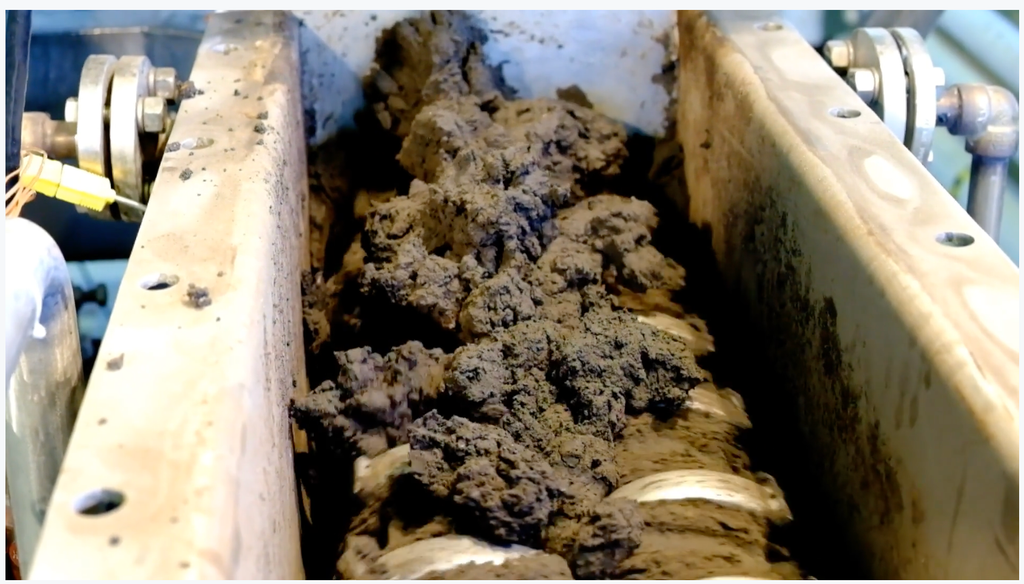
At the inlet, dewatered sludge may be soft, cohesive or paste-like. Its consistency influences how it enters the dryer and spreads through the drying zone.
Controlled feeding and effective distribution help avoid intermittent loading and uneven treatment.
The Plastic or Sticky Phase
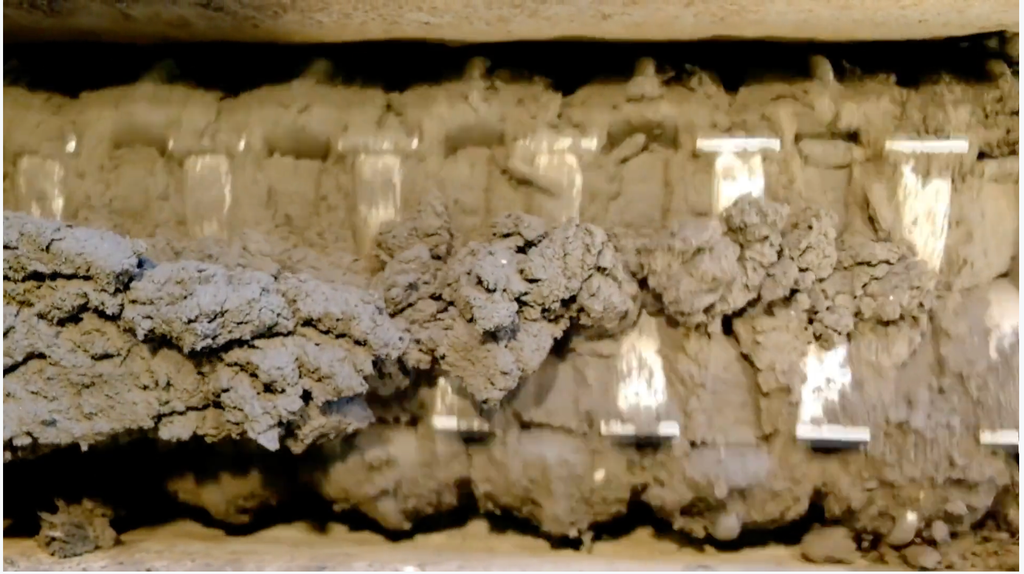
Some sludges become particularly sticky as their moisture content falls. Material can become harder to move or mix, increasing mechanical resistance.
In an agitated contact dryer, mixing helps renew contact between the sludge and heated surfaces. The drive must accommodate the material’s changing behaviour. Komline’s sludge dryer technical description identifies the plastic-sticky phase as a condition that can demand higher torque.
Shearing describes a mechanical action applied to the material during this period. It is not a separate physical state that every sludge must pass through.
Drier Granules, Fragments or Powder
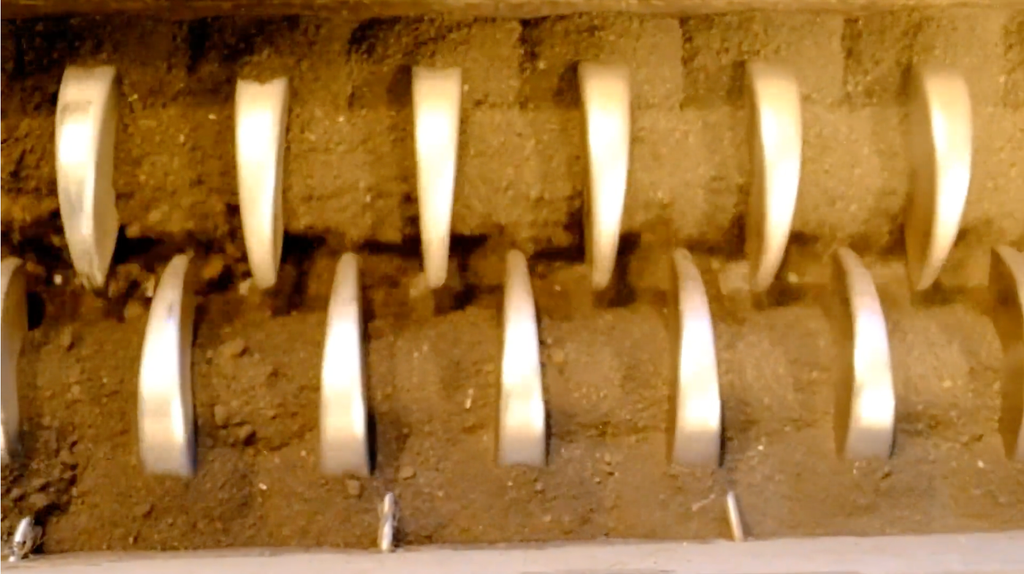
With further water removal, sludge may form drier particles or fragments. The final texture depends on its composition, the mechanical treatment it receives and the target outlet moisture.
These changes do not follow one universal sequence or occur at fixed moisture percentages. Representative material testing helps establish how a particular sludge behaves.
A Simple Sludge Drying Calculation Example
Consider sludge entering a drying system at 2,000 kg/h with 90% moisture. If the final moisture content is 25%, the mass balance is:
| Parameter | Value |
| Wet sludge feed | 2,000 kg/h |
| Dry solids in the feed | 200 kg/h |
| Final product at 25% moisture | 266.67 kg/h |
| Water evaporated | 1,733.33 kg/h |
The calculation assumes wet-basis moisture percentages and negligible dry-solids loss. The dry solids remain at 200 kg/h while water leaves as vapour.
2,000 kg/h feed = 266.67 kg/h dried product + 1,733.33 kg/h evaporated water
This evaporation load helps define the drying duty. Heating area, energy consumption and residence time require separate assessment. The figures describe mass reduction; volume reduction also depends on bulk density.
What Affects the Rate of Moisture Removal?
Two sludges with the same inlet moisture can behave differently in a dryer. Composition, stickiness, particle structure and drying conditions influence how quickly moisture is removed.
| Factor | Why it matters |
| Feed moisture and its variation | Determine the water load entering the system |
| Material distribution | Affect contact with heated surfaces or drying air |
| Stickiness and agglomeration | Can change mixing resistance, movement and exposed surface |
| Available heat | Must support material heating, evaporation and process losses |
| Airflow or vapour extraction | Move evaporated moisture away from the drying zone |
| Residence time | Determines how long material remains under drying conditions |
| Target outlet moisture | Sets the endpoint that the process must consistently achieve |
Improving upstream dewatering can reduce the thermal drying load. Cambi’s discussion of dewaterability and sludge drying explains how a drier feed can reduce the amount of water requiring evaporation.
For operating comparisons, wet sludge throughput should therefore be considered alongside evaporation rate and inlet and outlet moisture. A stated capacity in kg/h is incomplete without those conditions.
Discuss Your Sludge Drying Process
Start with the wet feed rate, inlet moisture, target outlet moisture and available heat source. For a staged process, identify the flow and moisture content entering and leaving each dryer.
Explore JEXDRY’s sludge drying systems and send your material data for a preliminary engineering review. Our team can evaluate the evaporation load, suitable equipment configuration and need for material testing.