Choosing a sludge dryer manufacturer means comparing a complete process against your sludge and site conditions. A municipal plant may need to dry biosolids before incineration. An industrial wastewater treatment plant may be handling corrosive filter cake with variable moisture. Those projects can require different feeding equipment, heating arrangements, and vapor treatment systems.
The manufacturers below offer equipment relevant to paddle, belt, vacuum rake, disc, and rotary drum sludge drying. Companies appear alphabetically, without a performance ranking. JEXDRY publishes this article and is included under the same selection criteria.
Sludge Dryer Manufacturers at a Glance
| Manufacturer | Location | Equipment to compare | Main point to investigate |
| ANDRITZ | Austria; Gouda business in the Netherlands | Paddle, belt, and drum sludge drying systems | Process selection and integration with the treatment line |
| AS Engineers | India | Indirect paddle sludge dryer | Cake behavior, heating conditions, and pilot testing |
| ELIQUO Technologies | Germany | ELODRY low temperature belt dryer | Feed distribution, circulating air, and heat recovery |
| Haarslev | Denmark | TST disc dryer | Heating utility and access to discs and scrapers |
| HUBER SE | Germany | Belt Dryer BT and RotaDry disc dryer | Belt drying versus partial drying before incineration |
| JEXDRY | China | Paddle, belt, vacuum rake, disc, and rotary drum dryers | Material testing, process configuration, and system scope |
| KILBURN Engineering | India | Indirect paddle sludge dryer | Heating medium and sludge behavior during drying |
| Komline-Sanderson | United States | K-S Paddle Sludge Dryer | Feeding cake without dry product backmixing |
| SEVAR AG | Germany | Modular belt sludge dryer | Heat source, belt arrangement, and exhaust treatment |
| Uzelac Industries | United States | Direct fired rotary sludge dryer | Feed conditioning and downstream gas handling |
ANDRITZ
Location: Graz, Austria, with its Gouda equipment business in Waddinxveen, Netherlands.
ANDRITZ offers several thermal sludge drying technologies, including paddle, belt, and drum systems. Its Gouda paddle dryer uses counter-rotating shafts and hollow wedge-shaped paddles for indirect heating. The wider portfolio gives wastewater treatment projects several processes to compare against their heat source and final sludge destination.
Consider when: A municipal or industrial plant is still selecting its drying process and needs to coordinate the dryer with upstream dewatering and downstream solids handling.
Discuss before ordering: Why the proposed process suits the sludge, what testing supports its evaporation duty, and whether feeding, vapor treatment, controls, and dried product handling are included.
AS Engineers
Location: Ahmedabad, India.
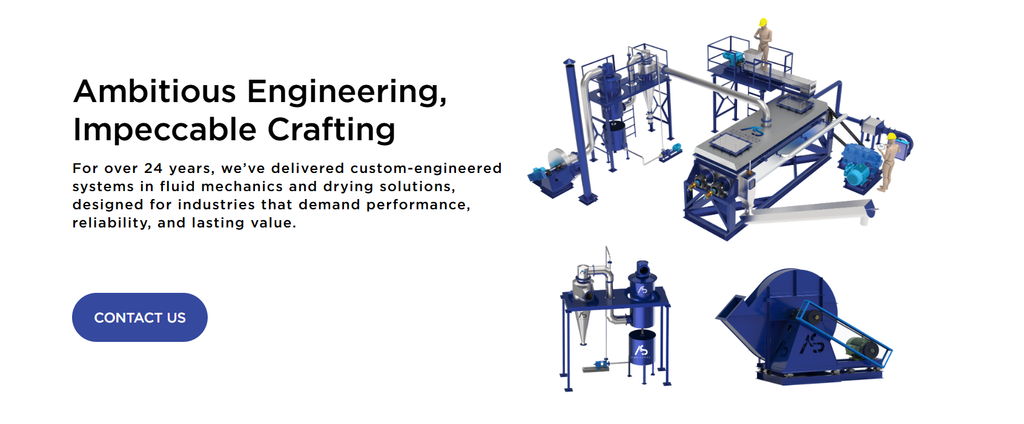
AS Engineers manufactures paddle-type sludge dryers for industrial effluent and sewage treatment applications. Its design uses counter-rotating shafts with hollow wedge-shaped paddles, transferring heat indirectly from steam or thermal fluid. The company also offers pilot testing to help evaluate the proposed configuration.
Consider when: Your treatment plant produces sticky filter cake and has an available steam or thermal fluid supply. Testing the actual cake can help assess feeding, buildup, and discharge before equipment sizing is finalized.
Discuss before ordering: The sludge composition and moisture range, heating conditions at the dryer connection, and observations from representative trials. Confirm the proposed contact materials, vapor treatment scope, and conditions used to assess evaporation capacity and final moisture.
ELIQUO Technologies
Location: Germany; ELODRY equipment is manufactured in the Black Forest region.
The ELODRY is a low temperature belt dryer for sewage sludge. Material travels across an upper and lower belt while heated circulating air removes moisture. Its described heat recovery arrangement uses exhaust air to preheat incoming air.
Consider when: A wastewater treatment plant is evaluating belt drying and needs to fit the feeding equipment, drying chamber, and air system into an existing site.
Discuss before ordering: How cake will be prepared and distributed, the available heat source, and the operating conditions used to estimate energy demand. Check belt cleaning access and the destinations of exhaust air and condensate.
Haarslev
Location: Søndersø, Denmark.
The Haarslev TST Disc Dryer is an indirect dryer designed for municipal and industrial sludge and other residues. Its rotor uses double-wall discs as heated contact surfaces, while scraper arms help move material and limit lump formation. Published heating options include steam and thermal oil.
Consider when: A plant has a suitable heating utility and is assessing disc drying for dewatered sludge that may become sticky or form lumps.
Discuss before ordering: Required final dry solids content, heating conditions, and access to discs and scrapers. Request the inspection and replacement procedure for components exposed to abrasive or corrosive sludge.
HUBER SE
Location: Berching, Germany.
HUBER offers the Belt Dryer BT and the RotaDry disc dryer. The belt system uses circulating process air and integrated condensation. RotaDry, offered through cooperation with OESTERGAARD, is a steam-heated contact dryer aimed at partial drying before fluidized bed incineration.
Consider when: A municipal project needs to compare belt drying with a disc system selected around a subsequent incineration step.
Discuss before ordering: The dry solids content required by the next process, sludge acceptance specifications, and available heat. Confirm whether the proposal includes vapor condensation, feeding, discharge, and interfaces with the incineration plant.
JEXDRY
Location: Changzhou, Jiangsu, China.
JEXDRY is the brand of Jiangsu Xingxing Drying Equipment Co., Ltd. Its relevant equipment range includes paddle, belt, vacuum rake, disc, and rotary drum dryers. For sludge drying projects, the company evaluates sludge properties, feed and target moisture, available heat, and final product requirements. Supply can cover a standalone dryer or an agreed system with feeding, vapor treatment, conveying, and controls.
Consider when: A plant needs to compare different equipment structures against its actual sludge, operating schedule, and installation drawing.
Discuss before ordering: Which sample represents normal and difficult feed conditions, what the trial will measure, and which process assumptions support the proposed duty. Request an equipment list and general arrangement drawing showing utilities, supply exclusions, and maintenance access.
KILBURN Engineering
Location: India, with its corporate office in Mumbai and manufacturing operations in Maharashtra.
KILBURN offers an indirect paddle sludge dryer heated through its jacket and hollow paddles. Its paddle dryer range is manufactured through a technical collaboration with NARA Machinery of Japan.
Consider when: A plant is evaluating paddle drying and has steam, hot water, or thermal fluid that may supply the required evaporation duty.
Discuss before ordering: Heating conditions at the connection point, sludge behavior during drying, and the materials specified for parts in contact with the cake. Clarify testing, commissioning, and replacement component responsibilities.
Komline-Sanderson
Location: Peapack, New Jersey, United States.
The K-S Paddle Sludge Dryer uses a jacketed trough and two counter-rotating shafts with hollow paddles. Steam or thermal oil supplies indirect heat. Its stated process arrangement does not require dry product backmixing to make incoming cake conveyable or an external sweep gas supply.
Consider when: A biosolids project is evaluating enclosed indirect drying and wants to assess a process without a dry sludge recycle loop.
Discuss before ordering: Results for comparable sludge, expected drive load during the sticky phase, and the proposed condenser and odor treatment equipment. Define the feed conditions under which capacity and final moisture will be assessed.
SEVAR AG
Location: Near Karlsruhe, Germany.
SEVAR designs and manufactures belt drying equipment for municipal and industrial sewage sludge, digestate, and other materials. It emerged from Haarslev’s environmental technology division in 2020 and operates as a separate business. Its documented projects include belt dryers integrated with wet cake reception, conveying, and dried material storage.
Consider when: A wastewater treatment plant needs a belt dryer coordinated with its cake reception system, available heat source, and exhaust treatment.
Discuss before ordering: Feed distribution, belt loading, usable heat throughout the operating year, and cleaning access. Confirm whether receiving bunkers, conveyors, air treatment, and dry product storage are included.
Uzelac Industries
Location: Pewaukee, Wisconsin, United States.

Uzelac designs and manufactures direct fired rotary sludge drying systems for applications including municipal biosolids and industrial sludge. Its equipment includes single-pass and triple-pass arrangements. Heated gas contacts the material, so feed preparation and downstream gas separation form part of the process assessment.
Consider when: A project is evaluating rotary drum drying and needs the drum coordinated with sludge conditioning and exhaust treatment.
Discuss before ordering: The basis for selecting the drum arrangement, the required feed condition, and results from test drying where applicable. Include dust collection, odor treatment, and product discharge in the scope review.
Which Sludge Dryer Type Fits Your Project?
A thermal sludge dryer usually receives cake from a filter press, centrifuge, or screw press. Equipment selection then depends on how that cake feeds, mixes, forms a layer, or moves through the drying chamber.
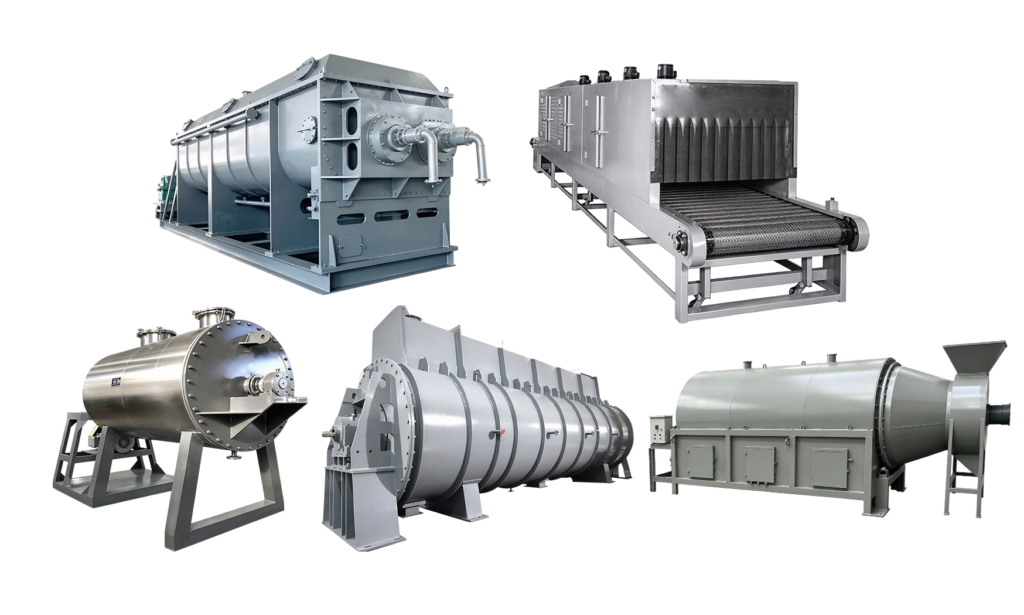
| Dryer type | Conditions to investigate | Main question for the manufacturer |
| Paddle dryer | Cohesive cake, continuous operation, suitable steam or thermal fluid supply | Can the agitation and drive handle the sludge throughout drying? |
| Belt dryer | Cake that can be formed and spread as a permeable layer | How will feed preparation, air circulation, and belt cleaning be controlled? |
| Vacuum rake dryer | Batch production and a need to evaluate drying at reduced pressure | Can the complete batch cycle keep up with daily sludge production? |
| Disc dryer | Defined final solids requirement and a suitable heating utility | How are discs, scrapers, condensate removal, and discharge arranged? |
| Rotary drum dryer | Suitable hot gas supply and material that can be conditioned for the drum | What feed preparation and exhaust treatment will be required? |
For sticky cake, evaluate a paddle dryer against its mixing behavior and heat supply. A belt dryer needs a feed layer that allows air movement. A vacuum rake dryer must be assessed by its full batch cycle, while a rotary drum proposal should include any necessary cake conditioning. Disc drying deserves particular attention where the required discharge condition is tied to a subsequent thermal treatment step.
What Should You Confirm for Your Sludge Drying Project?
Feed Range and Final Sludge Destination
Give each supplier the same wet feed rate, incoming dry solids range, target dry solids content, and operating hours. State the moisture measurement basis and the sludge source. Cake from a chemical plant may need a different feeding and materials assessment from municipal biosolids, even at the same wet feed rate.
Define the destination of the dried material before fixing the final moisture target. Partial drying before incineration, transport to another facility, and storage can require different discharge conditions. Where a proposal uses primary and secondary drying stages, identify each stage’s duty and the effect of taking one stage out of service.
Available Heat and Vapor Treatment
Provide usable steam pressure and flow, thermal fluid conditions, hot water temperatures, or the hot gas supply at the proposed connection point. Include seasonal or shift changes in waste heat availability. Ask suppliers to separate thermal demand from electrical demand and identify the auxiliaries covered by each figure.
For a complete sludge drying system, review the wet cake buffer, feeder, dryer, vapor or exhaust treatment, cooler, and discharge conveyors together. Use the plant drawing to mark connection elevations, exhaust routing, utility interfaces, and shaft or rotor removal space.
Material Trials and Acceptance
Ask a representative trial to establish moisture removal, sticking or buildup, and discharge behavior for your sludge. The supplier should explain how the results support production sizing and what feed variation the proposal covers. Record any performance commitments with the agreed feed, utilities, sampling method, and test duration.
Distinguish factory acceptance testing (FAT) from site acceptance testing (SAT). A factory mechanical run can check rotation, instruments, controls, and interlocks; the agreed process test must establish capacity and final moisture under suitable operating conditions. Define corrective work and retesting responsibilities before ordering.
Sludge Dryer Procurement Checklist
Use this checklist after the drying process and system boundary have been defined. It keeps equipment quotations, site costs, and operating support on a comparable basis.
| Procurement item | What to request in writing |
| Price and exclusions | Price validity and any escalation terms; breakdown of equipment, engineering, testing, supervision, and documentation; all excluded equipment and services |
| Materials and wear | Materials by component, corrosion or abrasion provisions, and the cost of any SS316L upgrade in specified zones |
| Installation and commissioning | Engineer numbers, site days, service scope, and responsibility for labor, travel, accommodation, and lifting equipment |
| Payment and acceptance | Defined payment milestones, agreed security or retention, and the process for resolving failed acceptance items |
| Schedule and logistics | Milestones through FAT, shipment, installation, and SAT; delivery basis, named place, packing, transport dimensions, weights, and insurance |
| Warranty and spares | Warranty start date and exclusions; service labor and travel coverage; priced spares for the first two years and replacement lead times |
| Operating support | Critical failure response process, component availability, and service life assumptions for major equipment and wear parts |
| Technical documentation | Mechanical, electrical, and control drawings; applicable conformity documents; agreed noise, vibration, and emission limits and test methods |
For EU projects, confirm conformity requirements against the intended date of placing the machinery on the market. Machinery Regulation (EU) 2023/1230 applies from 20 January 2027, which can affect projects purchased earlier but placed on the market later. European Commission machinery guidance
Sludge Dryer FAQs
Why do sludge dryer prices vary for the same wet feed rate?
Suppliers may be using different incoming moisture, final dryness, heat supply, or operating hours. Their quotations may also cover different equipment: one may include only the dryer, while another includes feeding, vapor treatment, cooling, and controls. Compare the evaporation duty and supply boundary first.
Can waste heat be used for sewage sludge drying?
Potentially, provided its temperature, flow, and availability match the process. Belt systems are often evaluated for suitable hot water or waste heat arrangements. Ask the manufacturer to calculate the required drying area and auxiliary demand using the heat conditions actually available at the plant.
What should a sludge drying trial prove?
It should help establish drying behavior for the tested sample, including moisture removal, sticking, and discharge condition. The manufacturer should explain how the trial supports equipment sizing. Any production performance commitment needs defined feed properties, utilities, and an agreed acceptance method.
Does drying make sludge suitable for fertilizer or fuel?
Drying reduces moisture. Suitability for fertilizer, fuel, or another use also depends on composition, contaminants, product condition, and requirements at the destination. Set the intended outlet route before choosing the final dry solids target.
Discuss Your Sludge Drying Project with JEXDRY
Send JEXDRY the sludge source, wet feed rate, incoming and target dry solids content, operating hours, and available heat source. Include a material analysis, site drawing, and required delivery schedule where available. Contact the JEXDRY team to discuss process selection, representative sample testing, and the equipment scope from wet cake feeding through dried sludge discharge.