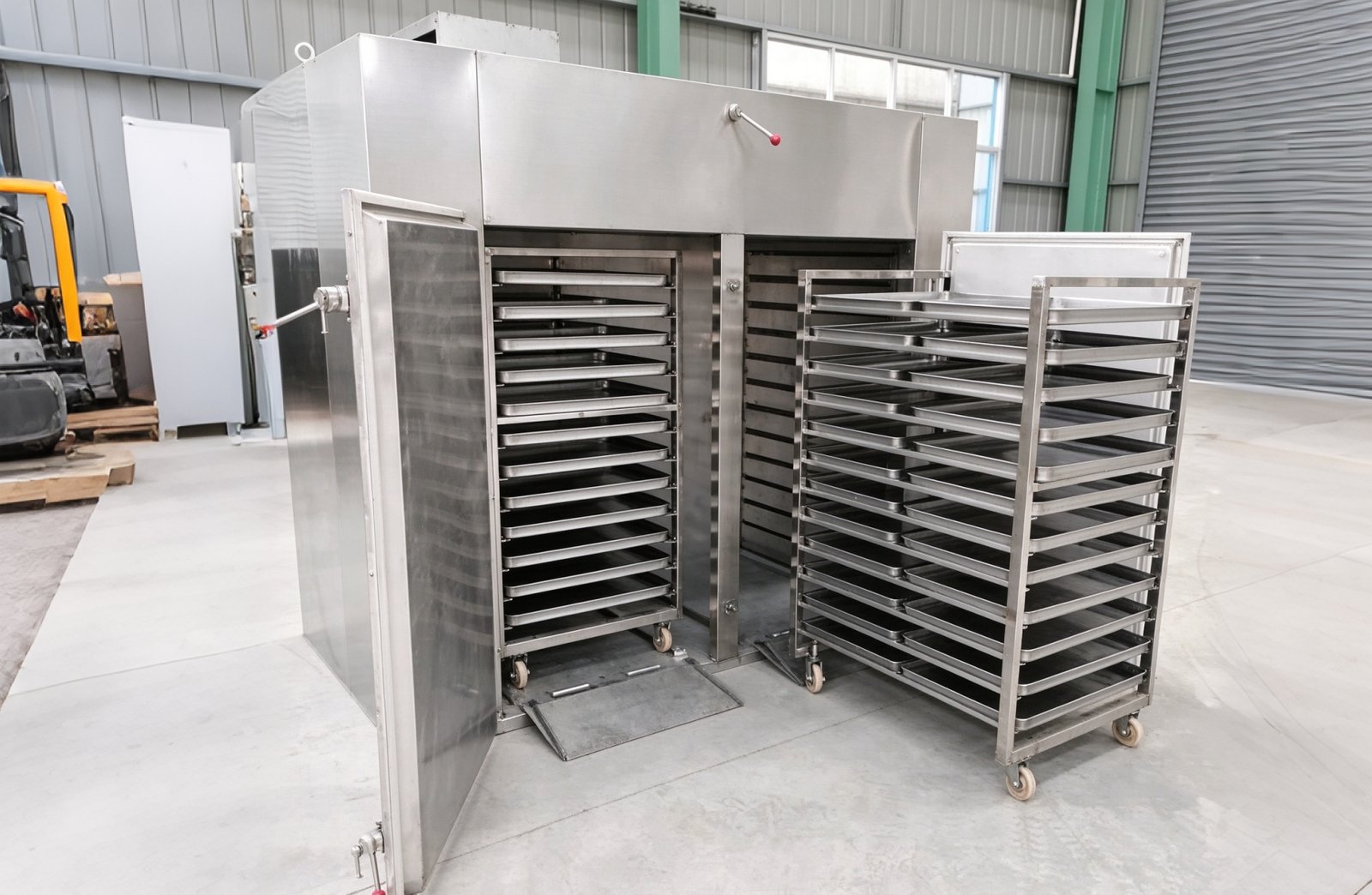
Industrial Drying Oven Manufacturer for Electric and Steam Heating
We manufacture hot-air circulation drying ovens for materials loaded on trays and trolleys. Choose electric or steam heating, with the chamber, loading arrangement and controls configured around your material and production process.
- Electric or steam heating
- Tray-and-trolley batch processing
- Configurable construction and controls
What Is an Industrial Drying Oven?
An industrial drying oven is an enclosed heating chamber that removes moisture from materials under controlled temperature and airflow conditions.
Our tray drying ovens process material in batches. Material is spread on trays, loaded into the chamber on trolleys and exposed to circulating hot air. Electric heaters or a steam heat exchanger supply the heat, while the ventilation system carries moisture out of the oven.
This arrangement suits materials that can be distributed in layers and remain stationary during drying. The chamber, tray arrangement and operating conditions are selected around the material and production requirements.
How Does an Industrial Drying Oven Work?
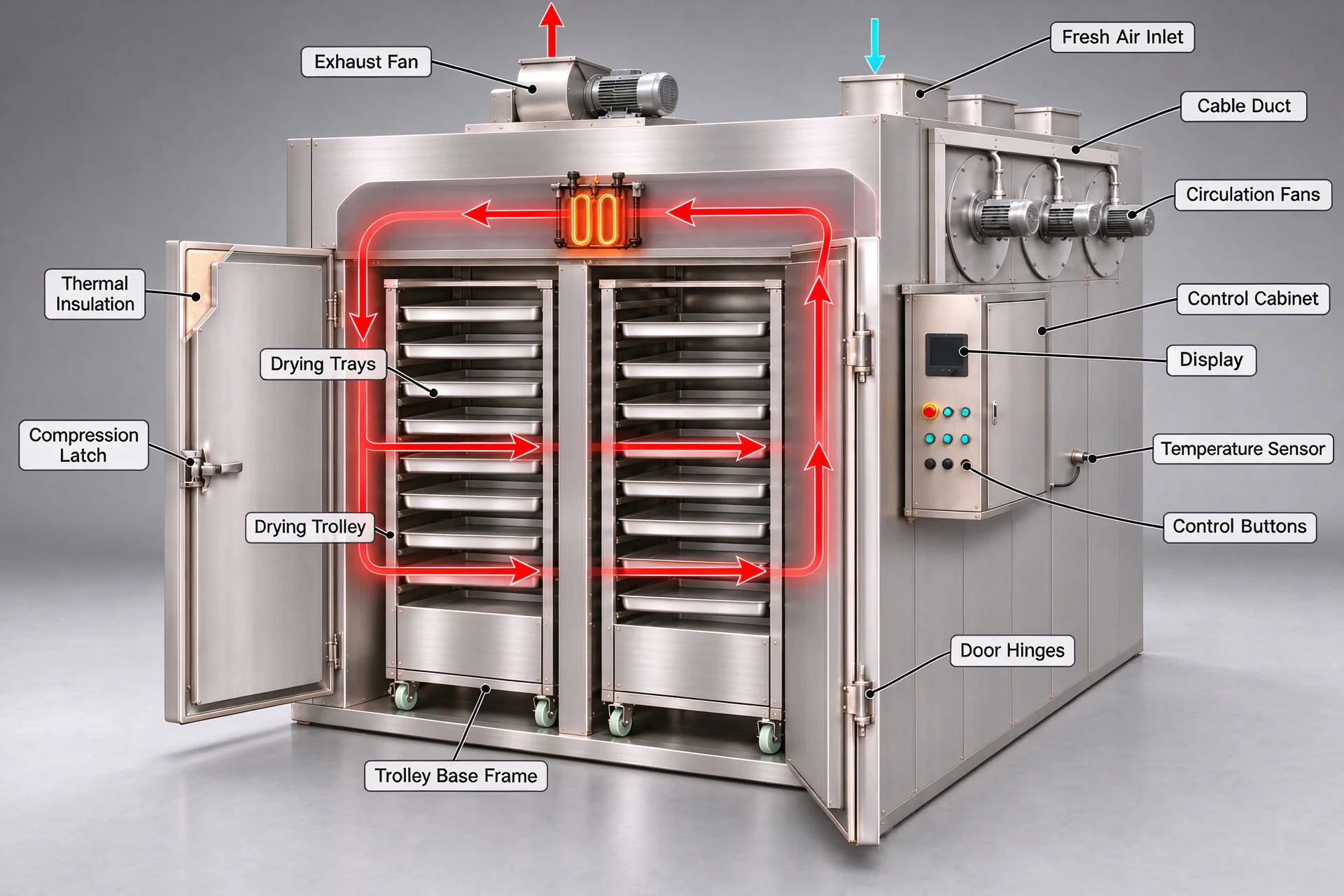
The oven supplies heat to evaporate moisture and moves air through the chamber to carry that moisture away. Heating, airflow and exhaust work together throughout the batch.
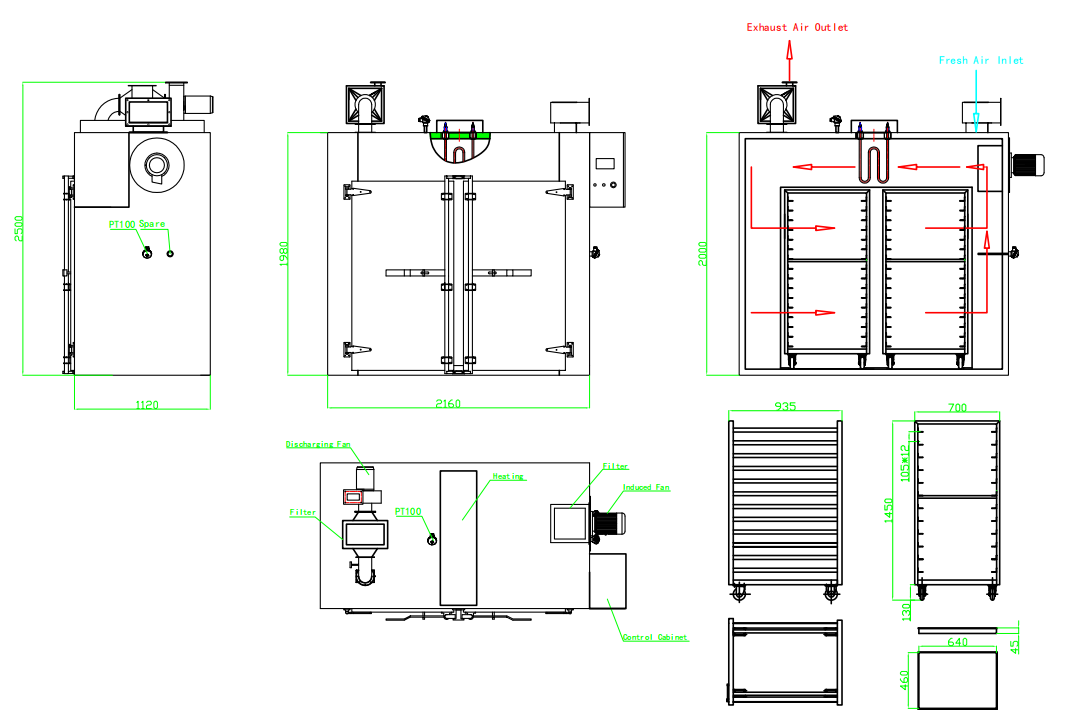
Diagram Components
- Fresh-air inlet
- Electric heater or steam heat exchanger
- Circulation fan
- Tray-loaded material
- Return air
- Moist-air exhaust
1. Load the Material
Material is spread across trays and loaded into the oven. Layer thickness and spacing between trays affect how readily air reaches the material.
2. Heat the Circulating Air
Electric heating elements or a steam heat exchanger warm the air. In a steam-heated configuration, steam transfers heat through the exchanger rather than contacting the material directly.
3. Move Air Across the Trays
A circulation fan moves heated air through the chamber. Heat passes to the material, allowing moisture to evaporate. Air-distribution panels help direct airflow through the working space.
4. Exhaust Moisture and Recirculate Air
Part of the moisture-laden air leaves through the exhaust, while fresh air enters and part of the heated air returns through the circulation path. The balance between recirculation and exhaust affects both moisture removal and heating demand.
Choose Your Heating Method
Both options use heated air to dry material arranged on trays. The main difference is how heat is supplied to the circulating air and which utilities your plant needs.
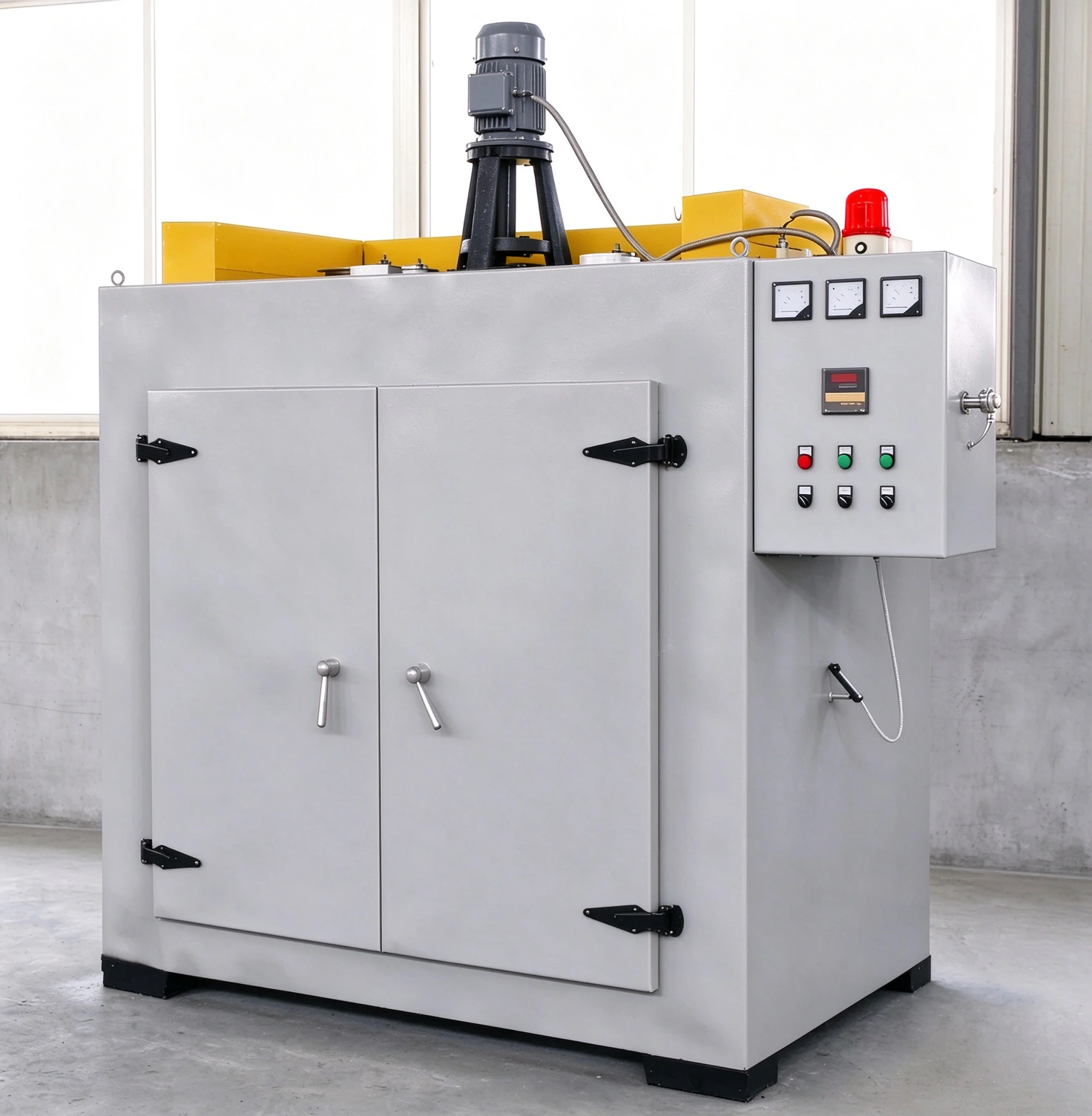
Electric-Heated Drying Ovens
Electric heating elements heat the circulating air. This option suits facilities without a steam supply and projects where electric heating fits the available power infrastructure.
Selection focus: available electrical capacity and the required process temperature.
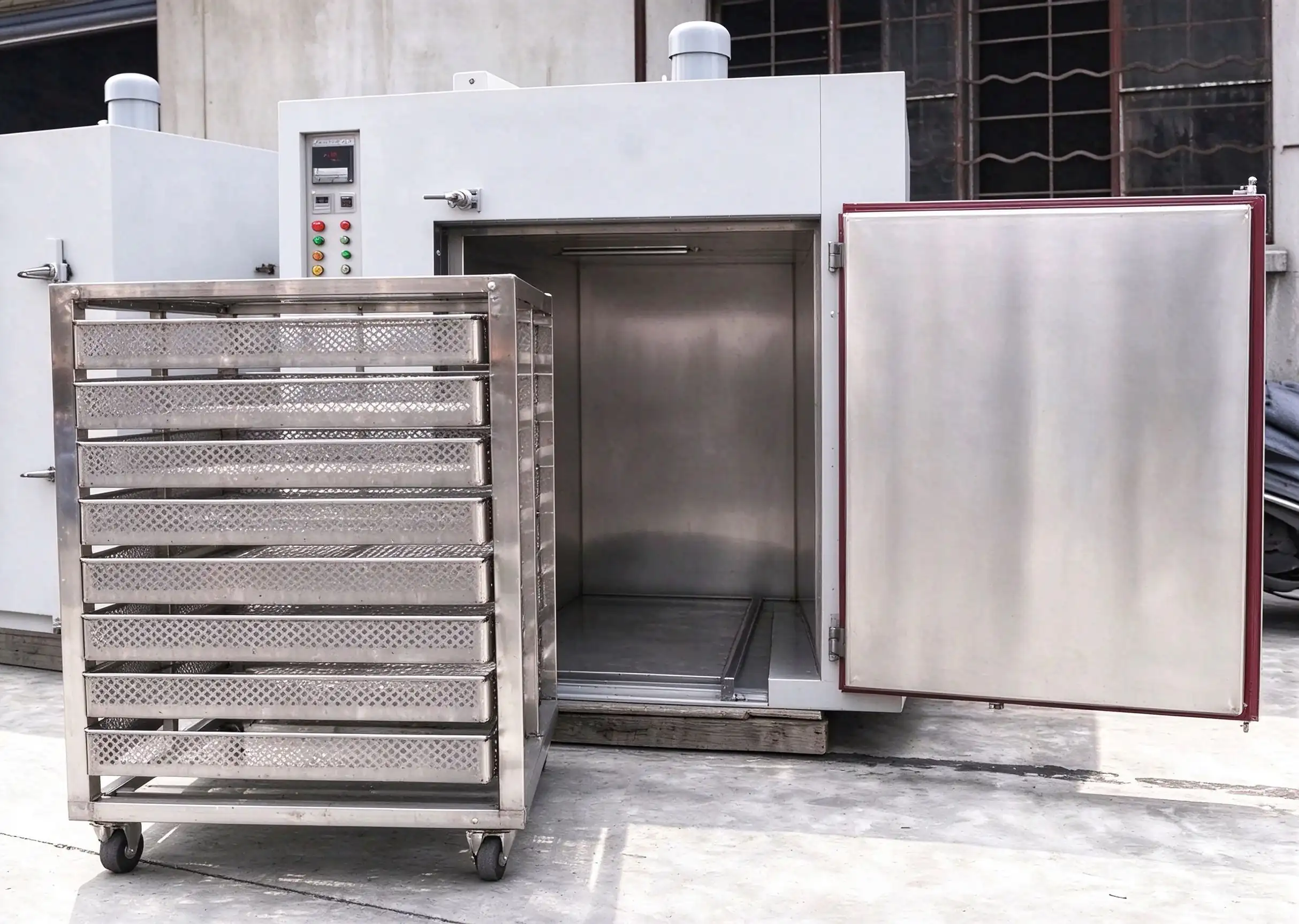
Steam-Heated Drying Ovens
Steam passes through a heating coil or radiator to warm the circulating air. This option suits facilities with a suitable steam supply and requires appropriate steam control and condensate drainage.
Selection focus: available steam conditions and the required process temperature.
Chamber size, tray arrangement and batch load are selected separately from the heating method.
Electric or Steam: Which Fits Your Plant?
Start with the utilities available at your facility, then check the heat required by the material and drying cycle. Compare installation requirements and total operating cost under the same production conditions.
| Selection factor | Electric heating | Steam heating |
|---|---|---|
| Heat supply | Electrical heating elements | Steam coil or radiator |
| Plant utilities | Electrical supply sized for the heater, fans and controls | Suitable steam supply, plus electricity for fans and controls |
| Installation | Electrical distribution and equipment connections | Steam piping, control valves, traps and condensate handling |
| Temperature selection | Heater and control design matched to the required process temperature | Steam conditions and heat-exchanger design matched to the required process temperature |
| Operating-cost assessment | Heater, fan and auxiliary electricity | Steam supply, distribution losses and auxiliary electricity |
| Practical starting point | Electric heating fits the available infrastructure | An existing steam service can support the drying duty |
Select the Working Load Around the Material
Usable tray area, material depth and airflow access determine how a batch occupies the chamber. More trays do not automatically mean a shorter drying cycle.
Production planning should include loading, heating, drying, cooling and unloading. The required moisture reduction determines the water-removal duty, while material behaviour helps establish a practical loading depth and cycle time.
Airflow, Loading and Access Built into the Configuration
Our hot-air circulation ovens combine forced airflow, adjustable air-distribution panels and automatic temperature control. Tray loading, exhaust settings and access for handling and cleaning complete the configuration.
Direct Air Through the Working Load
Deep material layers and tightly packed trays can restrict airflow and slow moisture removal. Adjustable air-distribution panels help direct circulating air through the chamber, while suitable tray spacing gives the air access to the material.
Balance Heat Recirculation and Moisture Exhaust
Recirculating heated air reduces the amount of fresh air that must be heated. Moisture-laden air must also leave the oven. The exhaust arrangement needs to balance moisture removal with the heat carried out of the chamber.
Configure the Oven Around Daily Handling
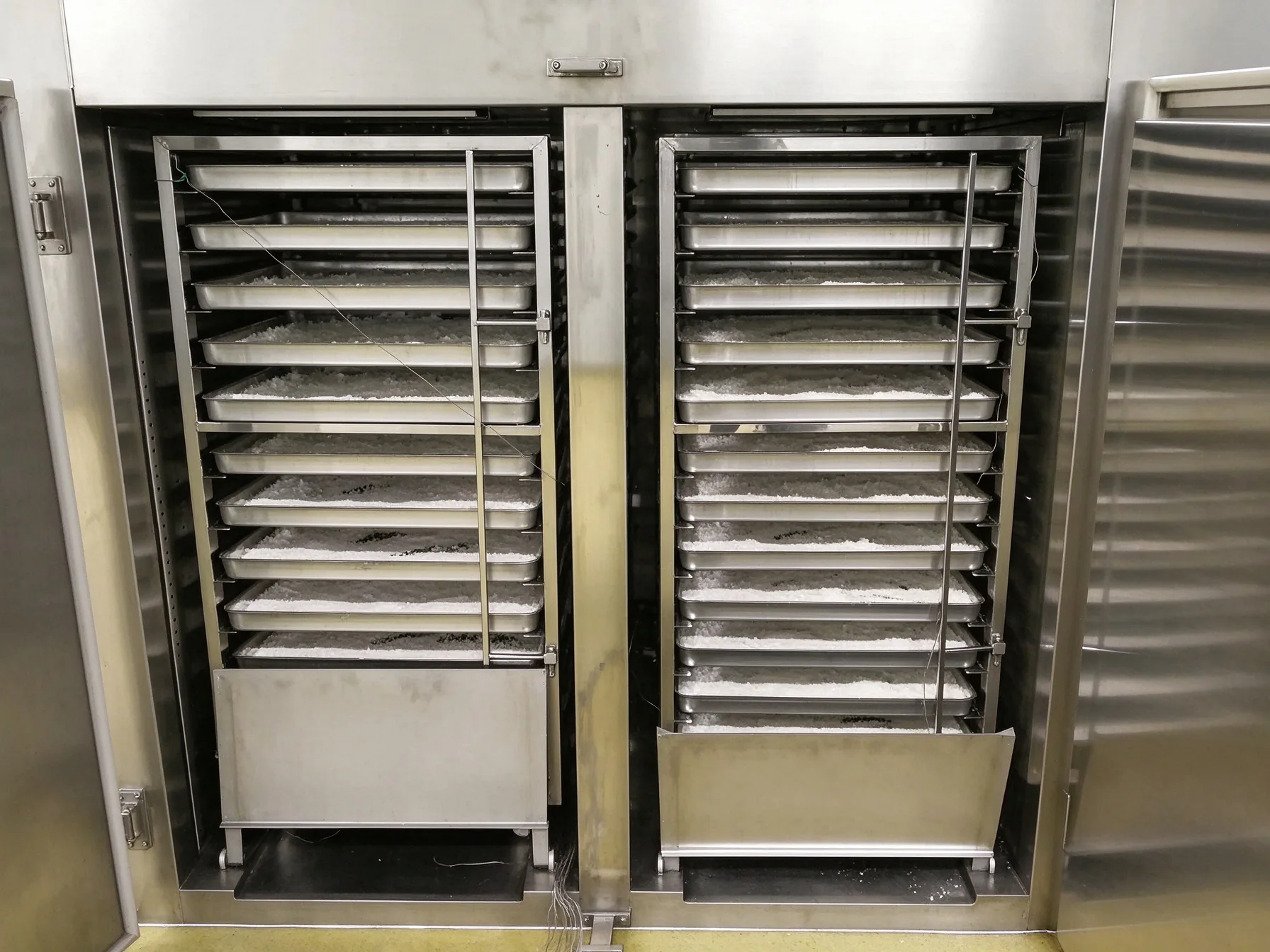
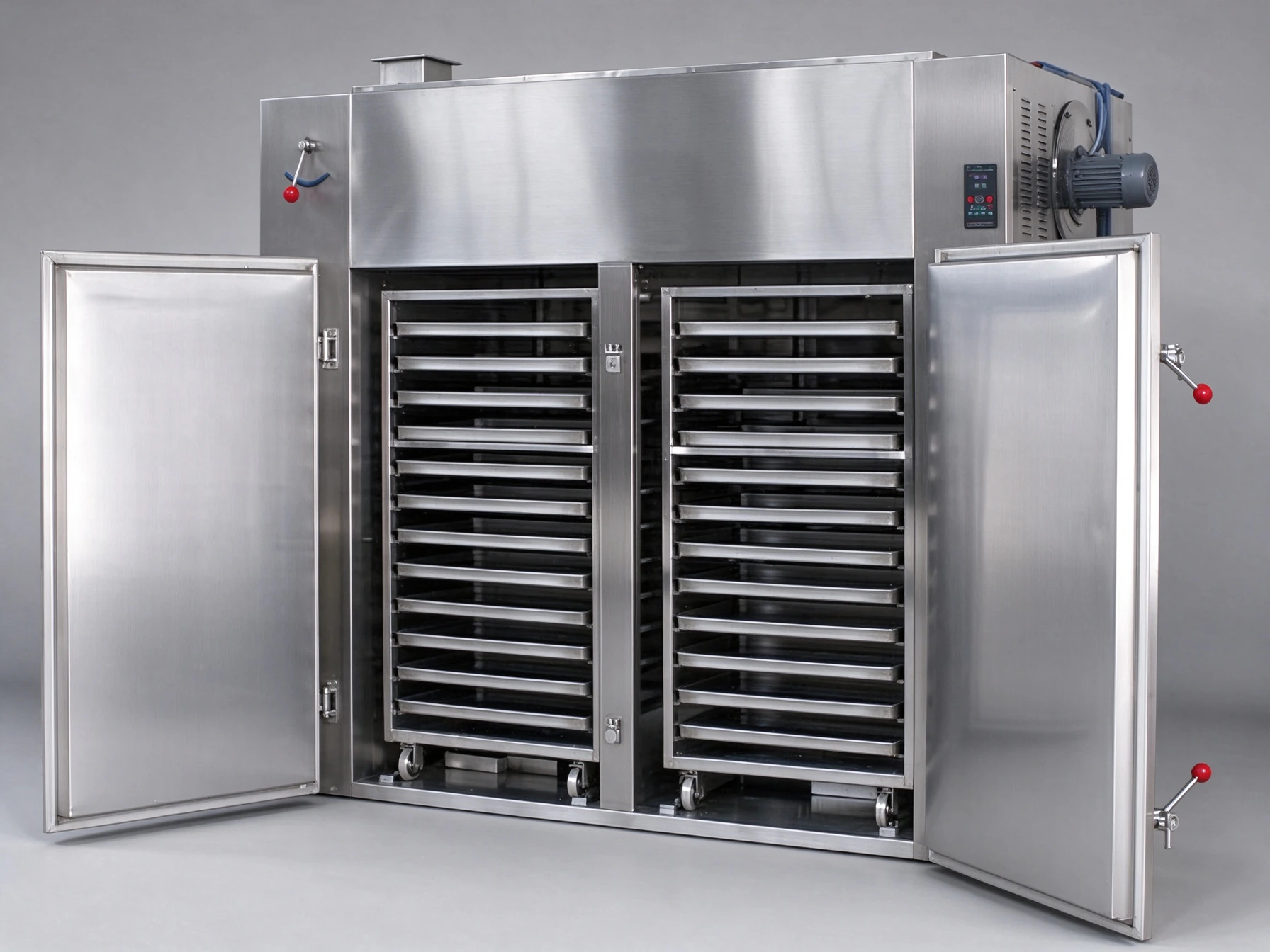
Trolleys allow trays to be loaded and moved as a batch. Chamber access, tray construction and materials of construction can be selected around the material, cleaning routine and available working space.
Operating Principles
- Heat input
- Circulating air
- Tray-loaded material
- Return air
- Moist-air exhaust
- Fresh-air inlet
Match the Drying Process to Your Material
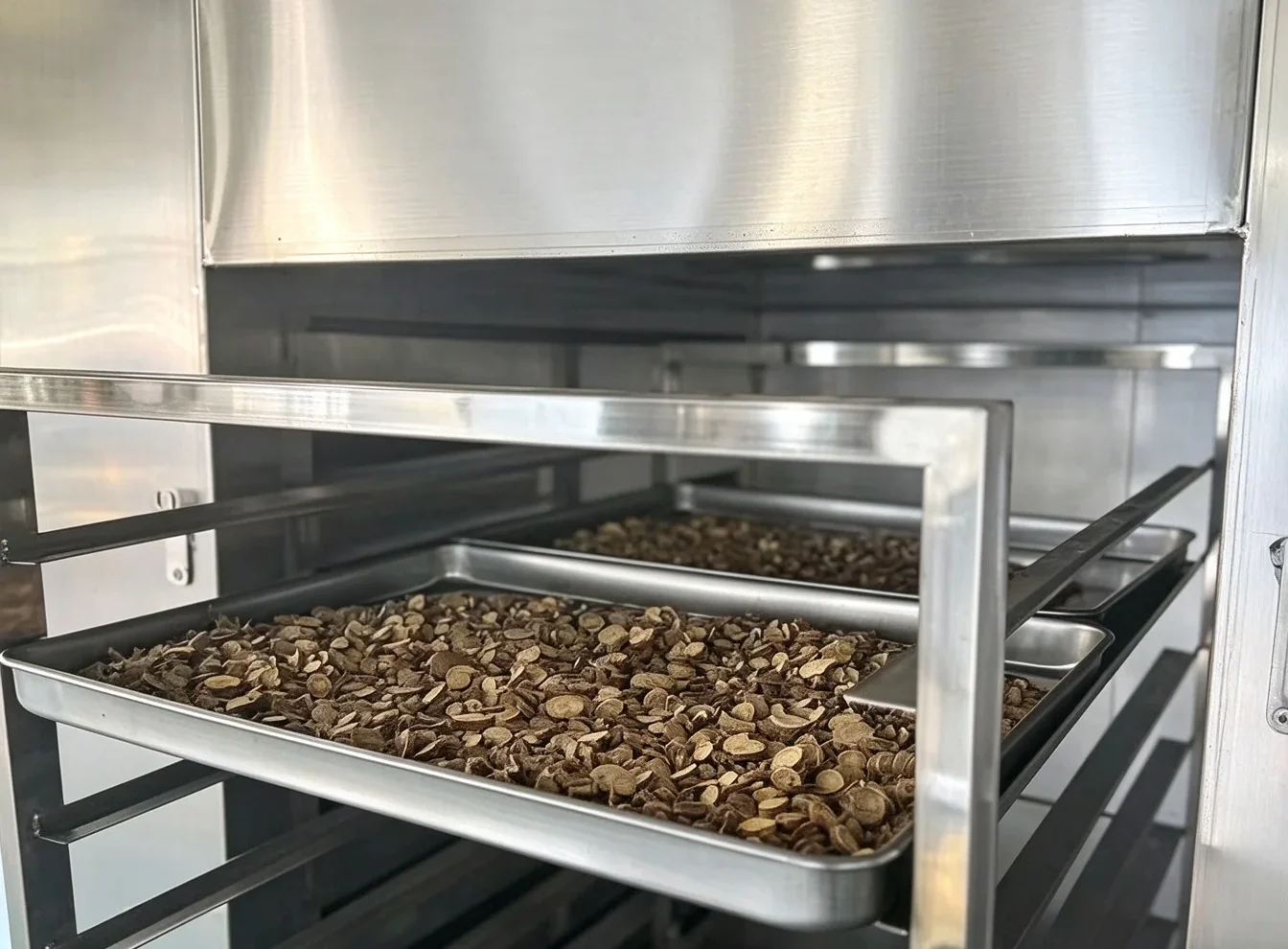
Tray drying is a practical starting point when material can be spread in layers and processed in batches. Temperature sensitivity, moisture content and material behaviour determine the configuration.
| Material or process | Main selection considerations | Application requirements |
|---|---|---|
| Food and agricultural materials | Layer thickness, heat exposure and cleaning access | Product quality, hygiene requirements and target moisture |
| Pharmaceutical powders, granules and extracts | Loading, containment, cleaning and documentation | Product-specific process and validation requirements |
| Chemical powders, pigments and resins | Temperature limits, corrosion and dust behaviour | Volatiles, combustibility and exhaust requirements |
| Heat-sensitive materials | Allowable product temperature and exposure time | Evaluation of hot-air drying versus vacuum drying |
Material evaluation helps establish whether atmospheric hot-air drying fits the process or whether another drying method should be considered.
Explore Vacuum Tray Drying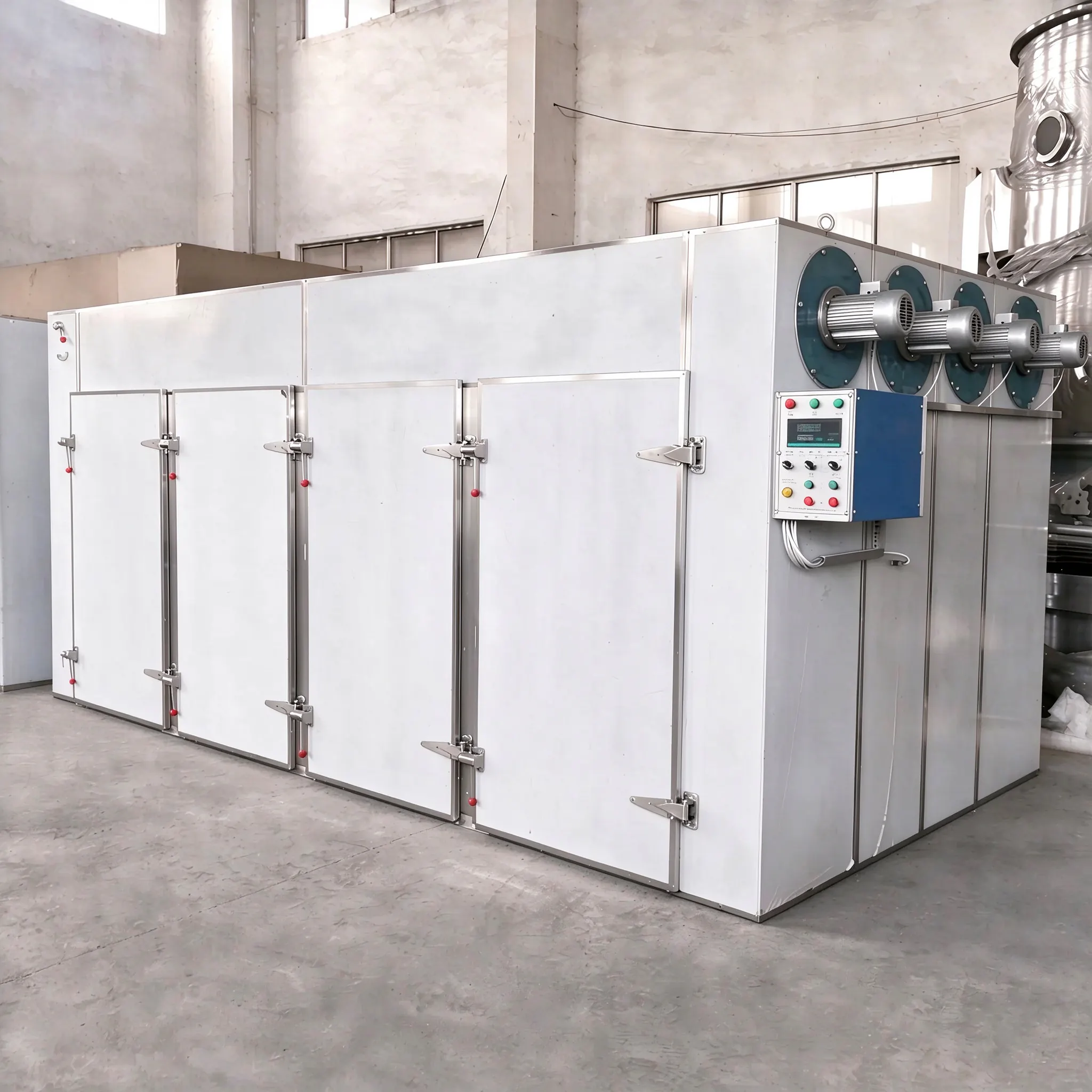
Industrial Hot Air Circulation Oven for Pharmaceutical Utensil Drying
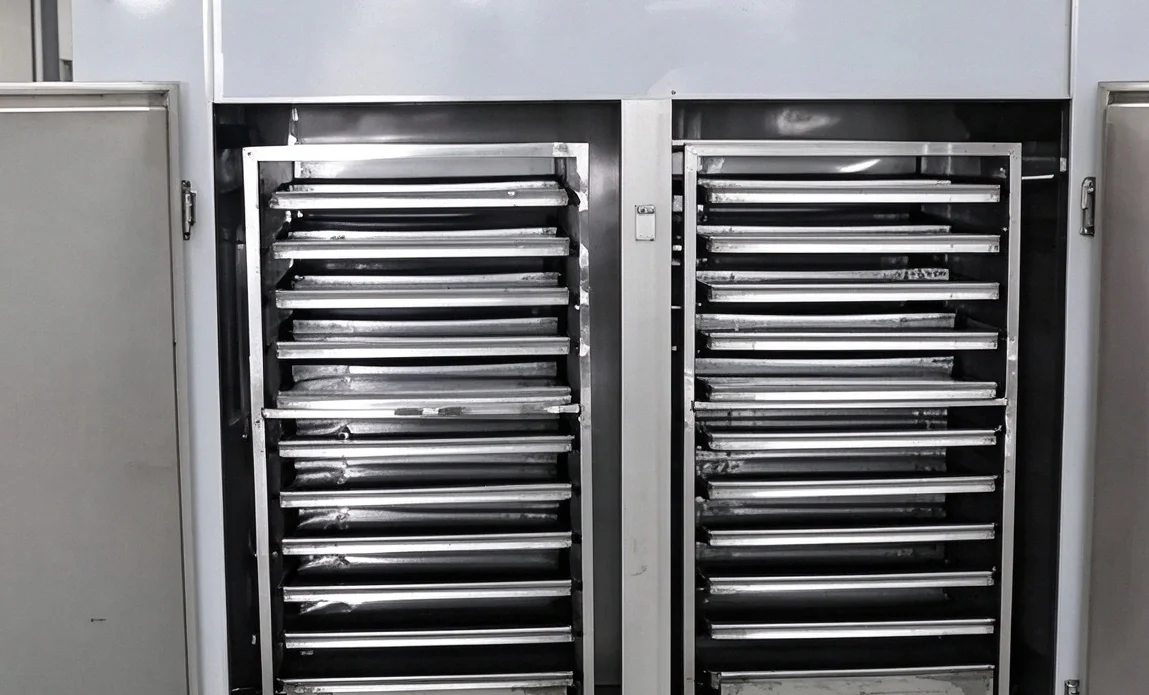
JEXDRY customized a steam-heated industrial hot air circulation oven for a Japanese customer’s process of drying utensils used in pharmaceutical production. Based on the customer's requirements, we developed a refined technical design that combines forced hot-air circulation, SUS304 stainless-steel inner and outer surfaces, filtered air intake and exhaust, and temperature monitoring and recording. Door-status sensing and a fan-running indicator were included to address the project’s operating-safety requirements. The oven was configured to the customer’s specified requirements for this project in Japan.
Manufacturing, Inspection and Technical Support
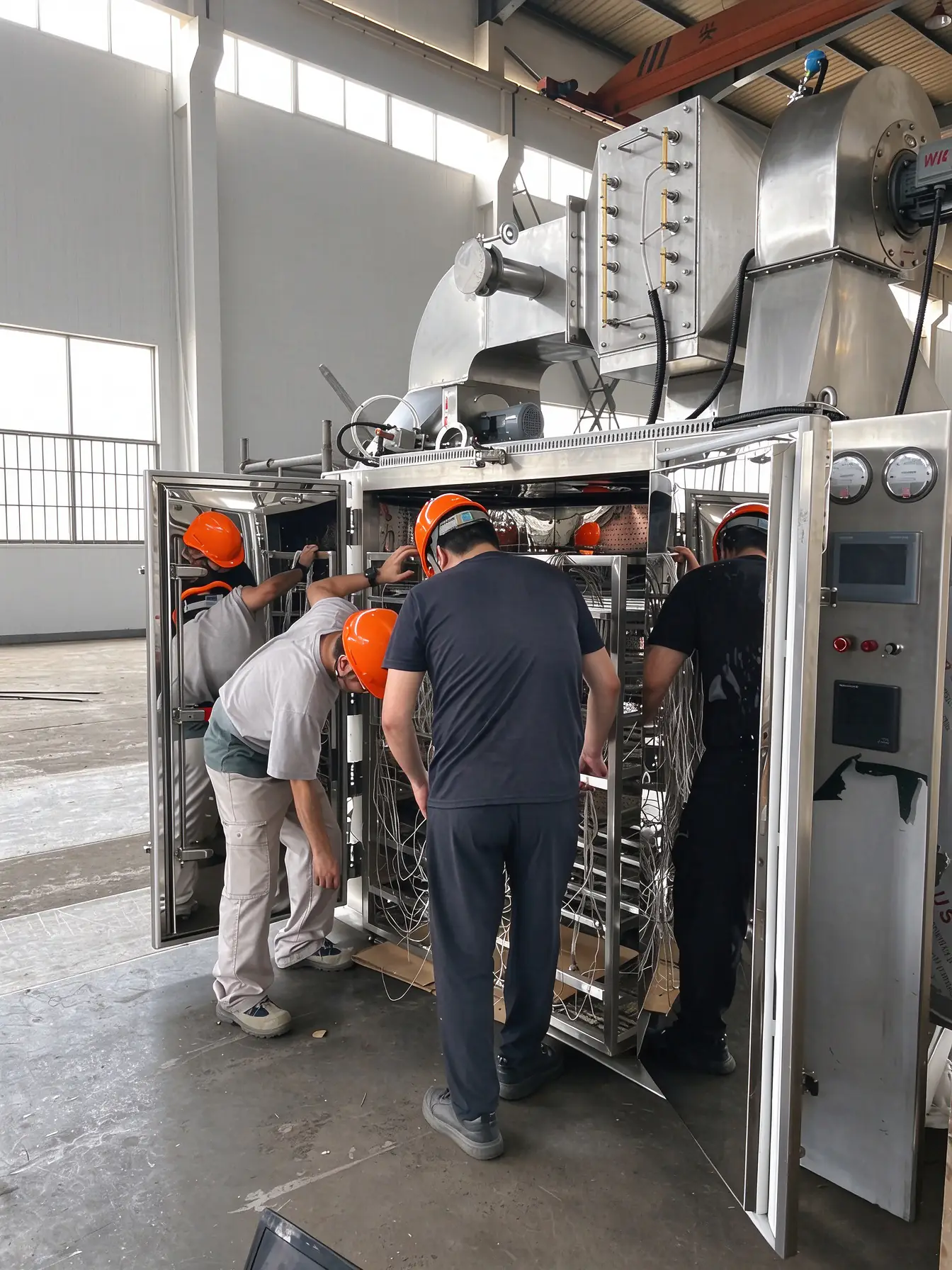
We manufacture, assemble and inspect our drying equipment in Changzhou, China. Agreed functional checks and Factory Acceptance Testing are completed before shipment.
For an oven project, the review connects the approved configuration with the equipment being supplied, including the chamber, trolley arrangement, heating method, controls and utility connections.
Support for Equipment Start-Up
We provide agreed English technical documents, installation and commissioning guidance, operator training and remote technical support. Inspection scope, document requirements and support arrangements are defined for the project.
Industrial Drying Oven FAQs
What is the difference between a tray drying oven and a vacuum tray dryer?
What materials can an industrial tray drying oven process?
Which heating source should I choose?
What temperature range is available?
How should batch capacity be estimated?
What features matter most when choosing an industrial drying oven?
How can I compare energy consumption?
How much does an industrial drying oven cost?
What information should I send for a model recommendation?
Discuss Your Industrial Drying Oven
Share your material, intended batch load, moisture target and available heat source. We can review the application and discuss a suitable oven configuration.