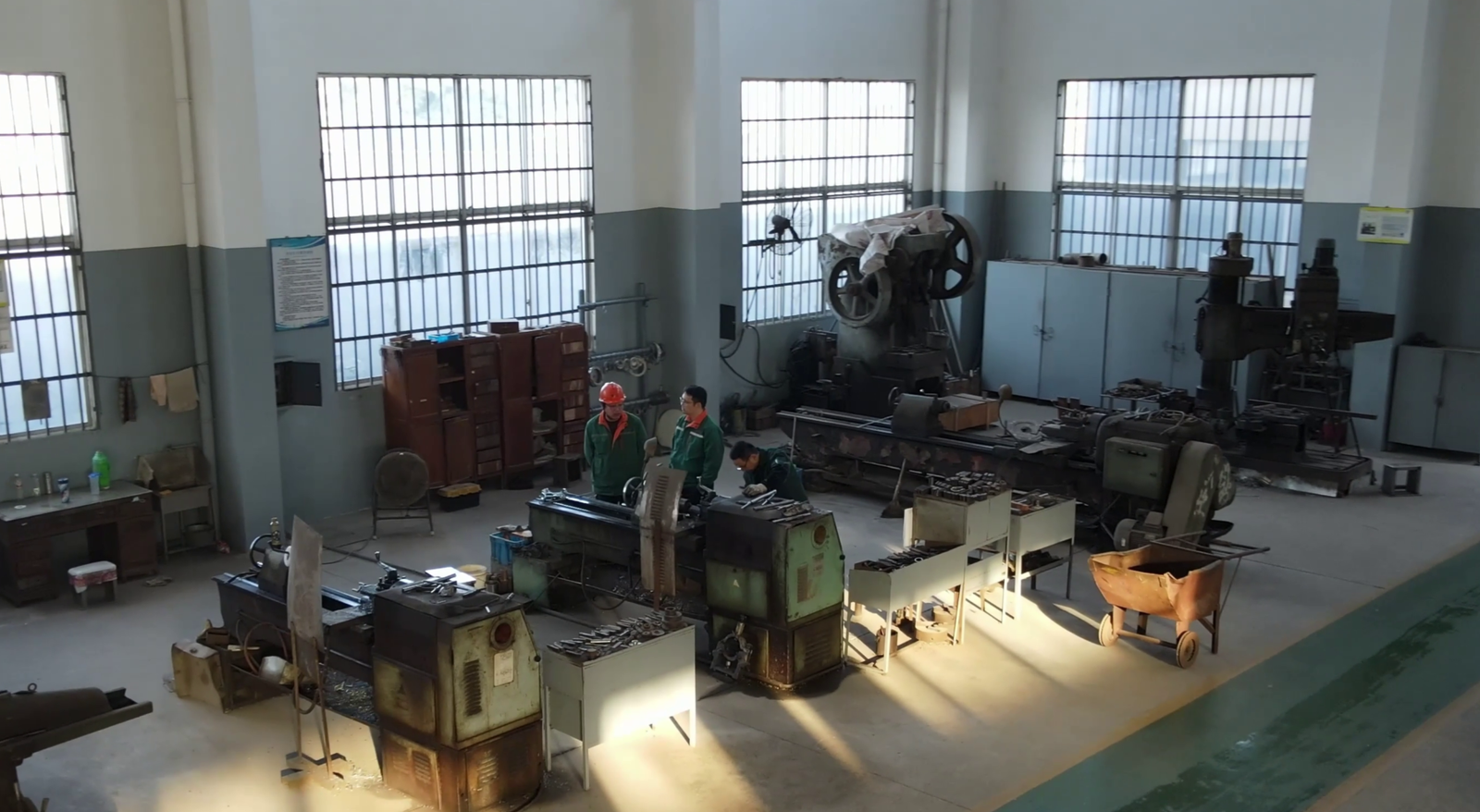
Industrial Spray Dryer Systems for Liquid-to-Powder Processing
JEXDRY supplies centrifugal and pressure spray drying systems for converting pumpable solutions, suspensions, emulsions and selected slurries into powder. Equipment selection is based on feed properties, evaporation duty, target powder characteristics, heat source and site conditions.
Quick Spray Dryer Selection Factors
Evaluating these core parameters helps our engineers configure
Is your feed a solution, slurry or emulsion?
The physical state, viscosity, and pumpability of your raw material dictate the type of atomizer and feed pump required.
How much water must be evaporated?
Capacity is measured by water evaporation per hour (kg/h), not just feed rate. This determines the drying chamber dimensions and thermal load.
Which atomization method fits the feed?
Choose between high-speed centrifugal discs or high-pressure nozzles based on feed abrasiveness, desired particle size, and maintenance preferences.
What particle size and moisture are required?
Final moisture content, bulk density, and particle size distribution targets influence the operating temperatures and system configuration.
Which heat source is available?
Electricity, steam, natural gas, or thermal oil. The available utility directly impacts the design of the air heating system and operational costs.
How should the powder be recovered?
Depending on environmental standards and product value, recovery may involve single cyclones, secondary cyclones, bag filters, or wet scrubbers.
JEXDRY Spray Dryer Product Series
Explore our core industrial spray drying platforms, configurable for
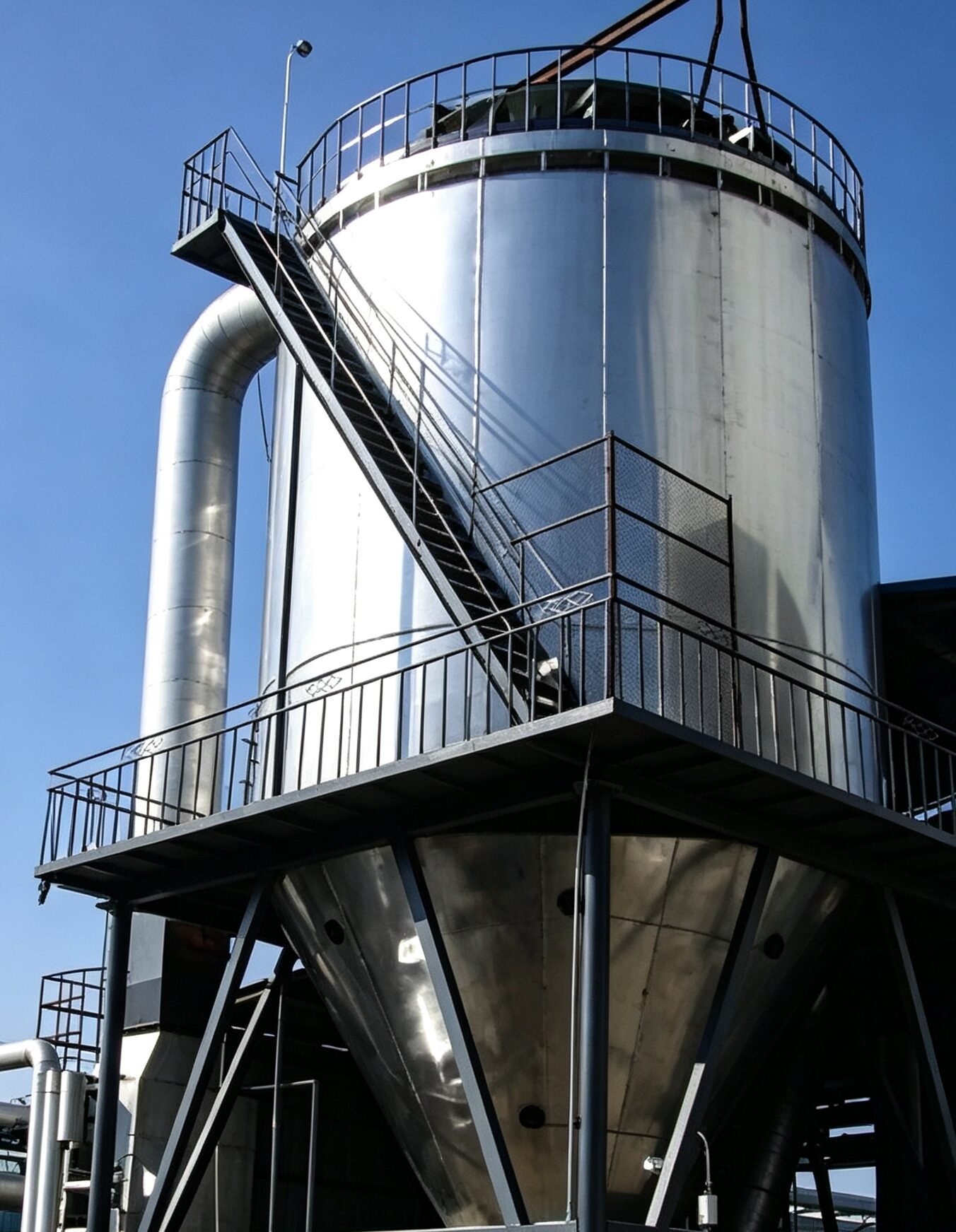
LPG Series High-Speed Centrifugal Spray Dryer
- • Centrifugal or rotary-disc atomization.
- • Eight brochure-listed models.
- • 3–1000 kg/h water evaporation range.
- • Suitable for selected pumpable solutions, emulsions, suspensions and slurries.
Spray Dryers
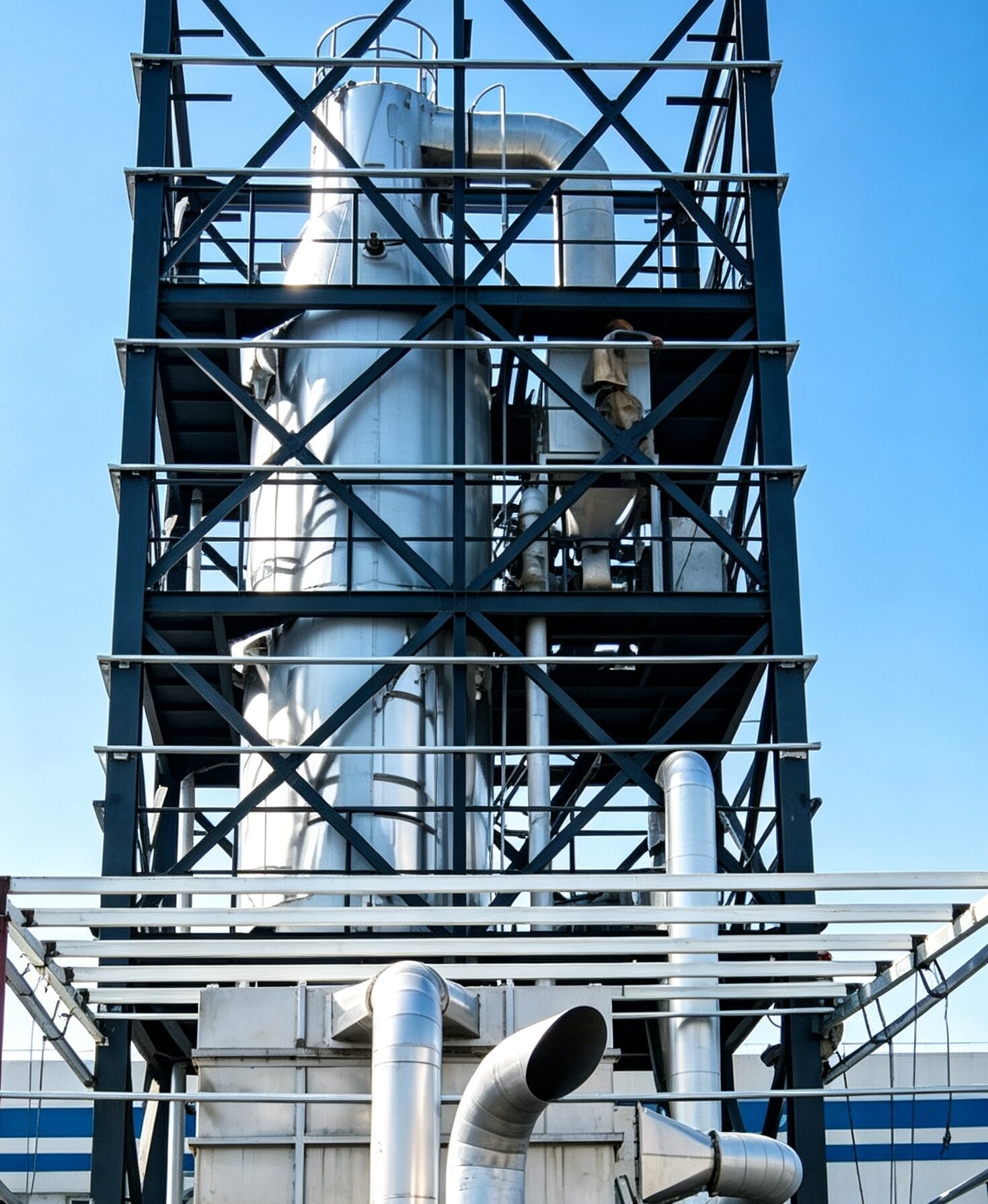
YPG Series Pressure Spray Dryer
- • Pressure-nozzle atomization.
- • Four nominal capacities.
- • 12.5–100 kg/h evaporation range.
- • 1.6–2.5 MPa working pressure.
Spray Dryers
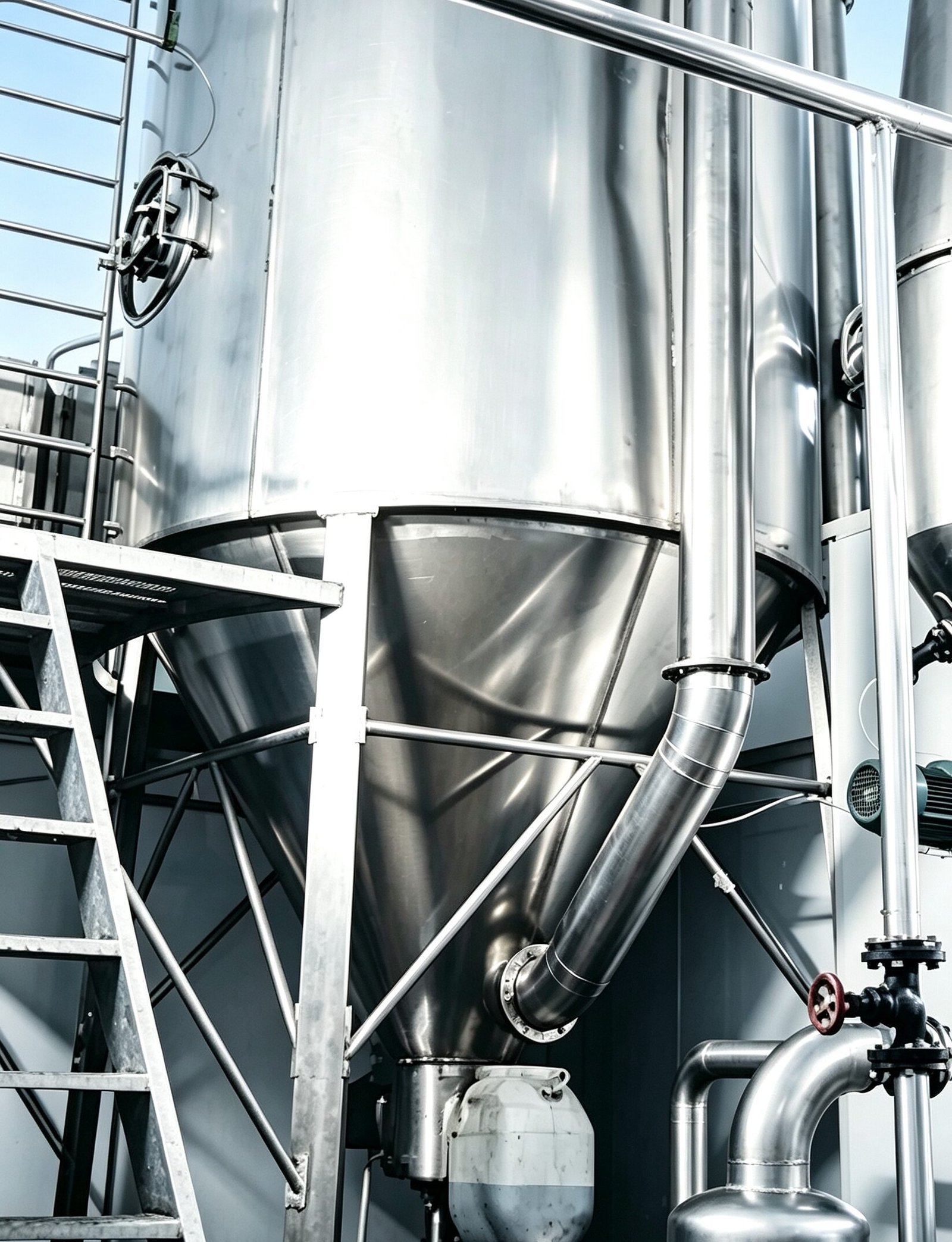
ZPG Series Extract Spray Dryer
- • Application-specific configuration for traditional Chinese medicine extracts.
- • Selection depends on concentration, viscosity, stickiness and thermal behavior.
Spray Dryers
Not Sure Which Series Fits Your Material?
Ask a Process EngineerWhat Is a Spray Dryer?
A spray dryer is an industrial drying system that converts a pumpable liquid feed into powder by atomizing the feed into fine droplets, contacting the droplets with controlled hot air, evaporating moisture and separating the dried particles from the exhaust air.
- Process Integration: Spray drying combines moisture evaporation and particle formation into a single, continuous step.
- Feed Versatility: The feed may be a solution, suspension, slurry, emulsion or pumpable concentrate.
- Evaluation Required: Product suitability depends on more than just pumpability. Feed solids, viscosity, thermal sensitivity, stickiness, abrasiveness and solvent properties must be rigorously evaluated.
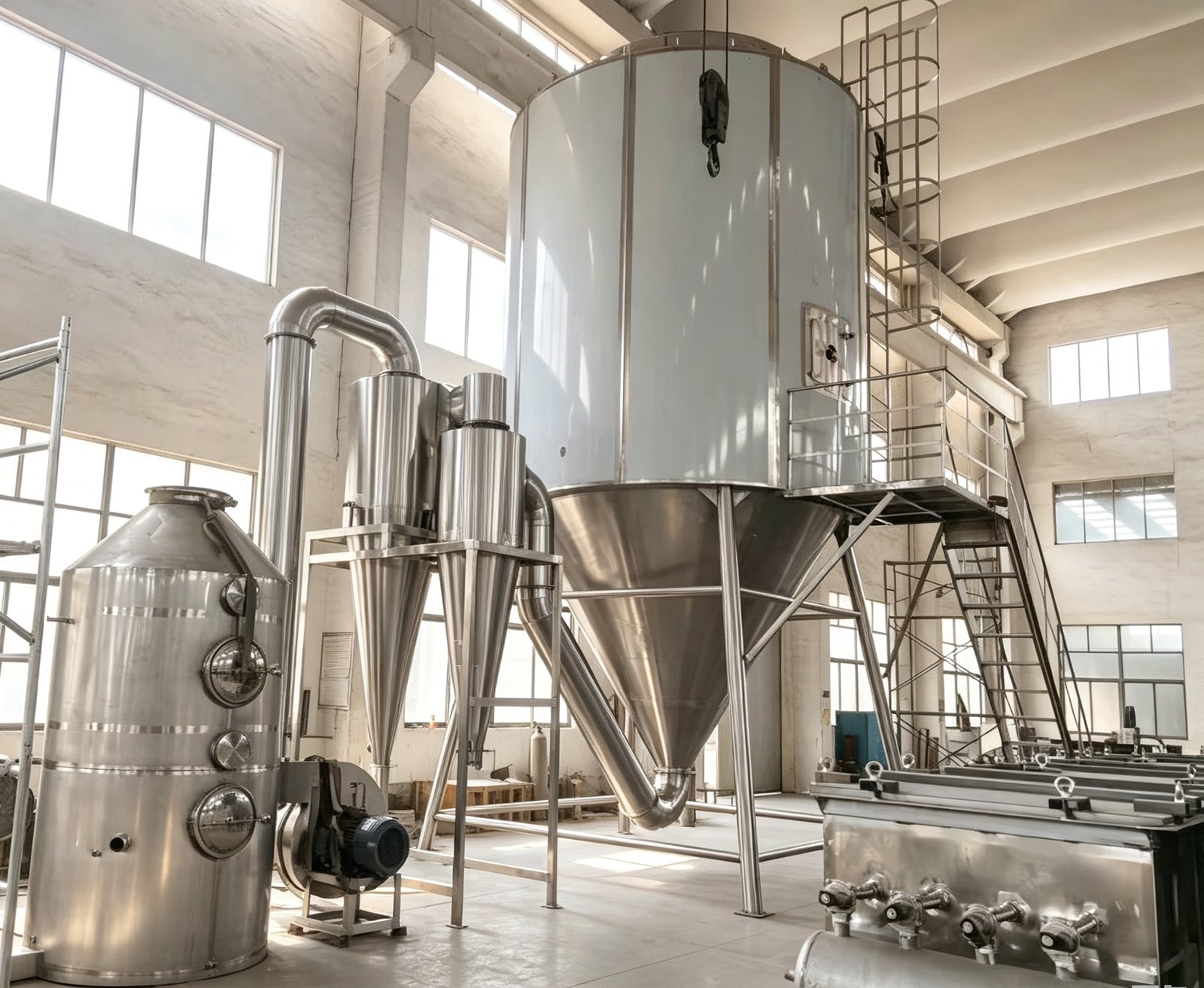
How Does a Spray Dryer Work?
The continuous liquid-to-powder transformation occurs through
Atomization
What happens: Liquid feed is pumped to an atomizer (centrifugal disc or pressure nozzle) which breaks it into millions of fine droplets.
Why it matters: Small droplets usually dry faster due to massive surface area, but can increase the fine-powder load.
Risk: Large droplets may remain wet or reach the chamber wall before drying, causing deposits.
Spray-Air Contact
What happens: The droplet cloud meets controlled hot air introduced through an air distributor at the top of the chamber.
Why it matters: Proper air distribution affects droplet residence time and prevents them from immediately hitting the walls.
Risk: Poor mixing leads to uneven drying and severe chamber wall deposition.
Moisture Evaporation
What happens: Heat transfers rapidly to the droplets, evaporating the solvent and forming solid particles in seconds.
Why it matters: Outlet air conditions relate more closely to final drying status and powder moisture than inlet temperature alone.
Risk: Excessive heat damages sensitive products; insufficient heat leaves powder sticky.
Powder Separation
What happens: Exhaust air carries particles to separation units like cyclones and bag filters where powder is collected.
Why it matters: Cyclones and filters recover different powder fractions (coarse vs. fines), impacting overall yield.
Risk: Inadequate separation leads to product loss and emissions.
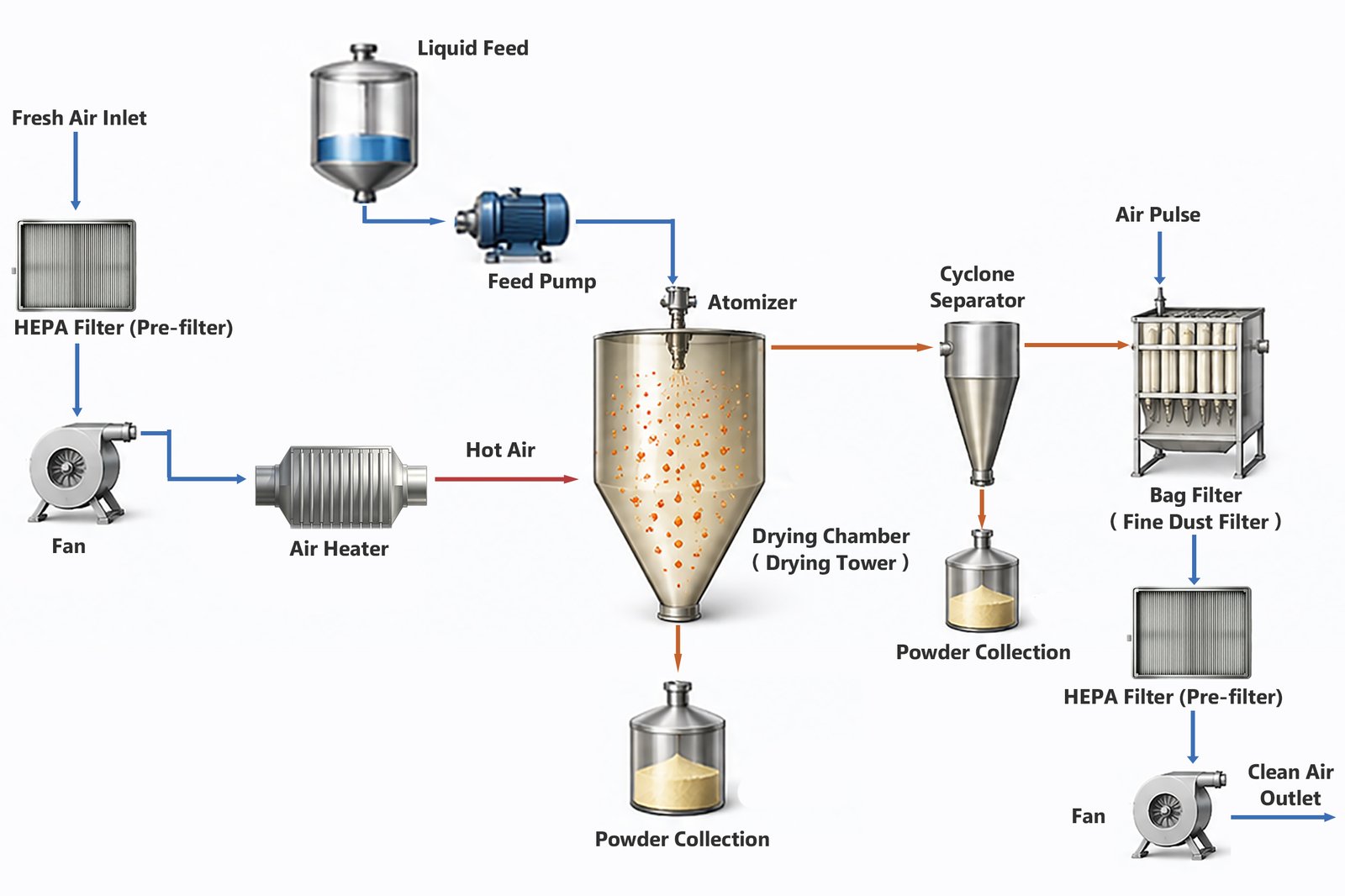
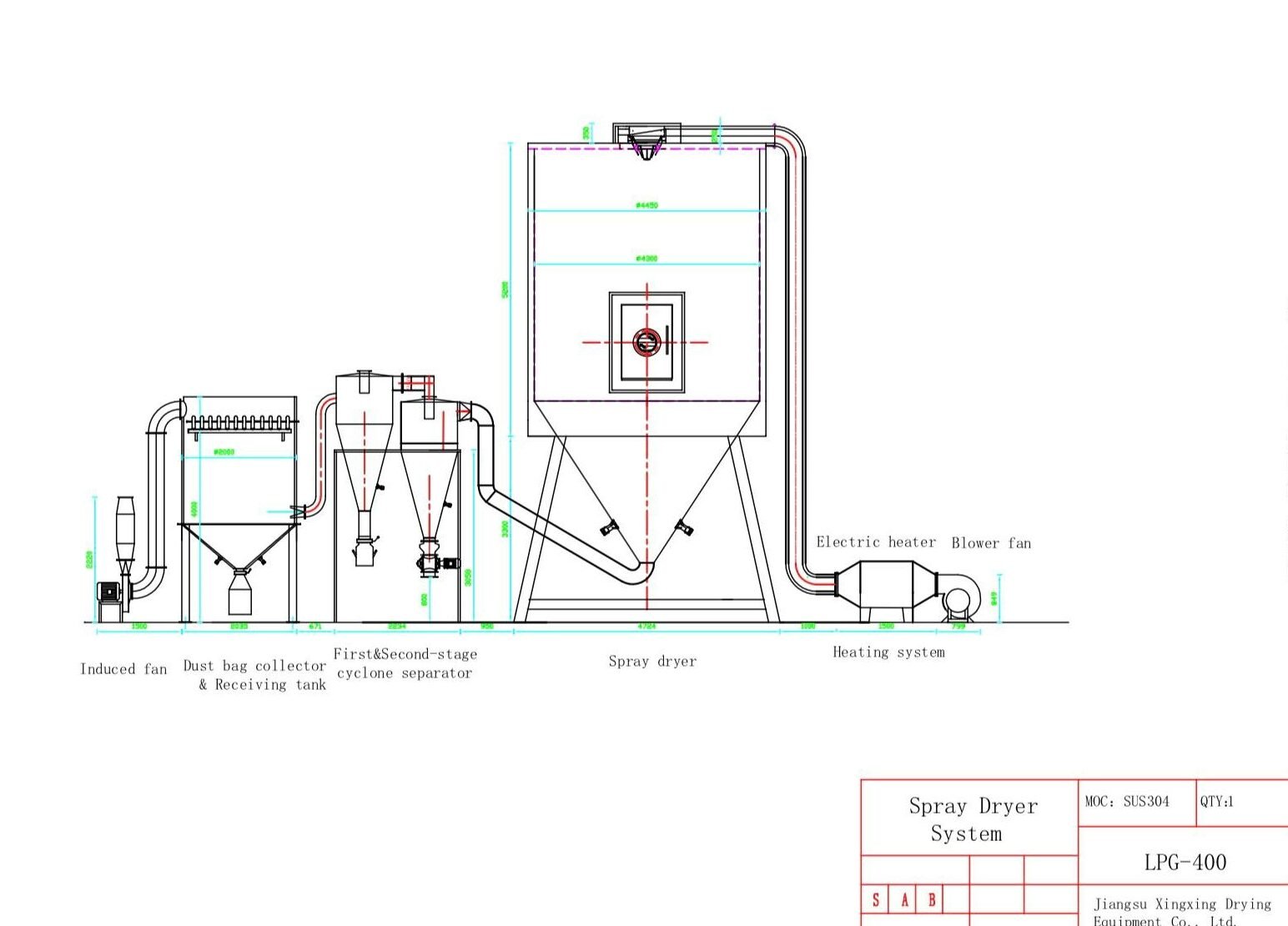
Main Components of a Spray Dryer System
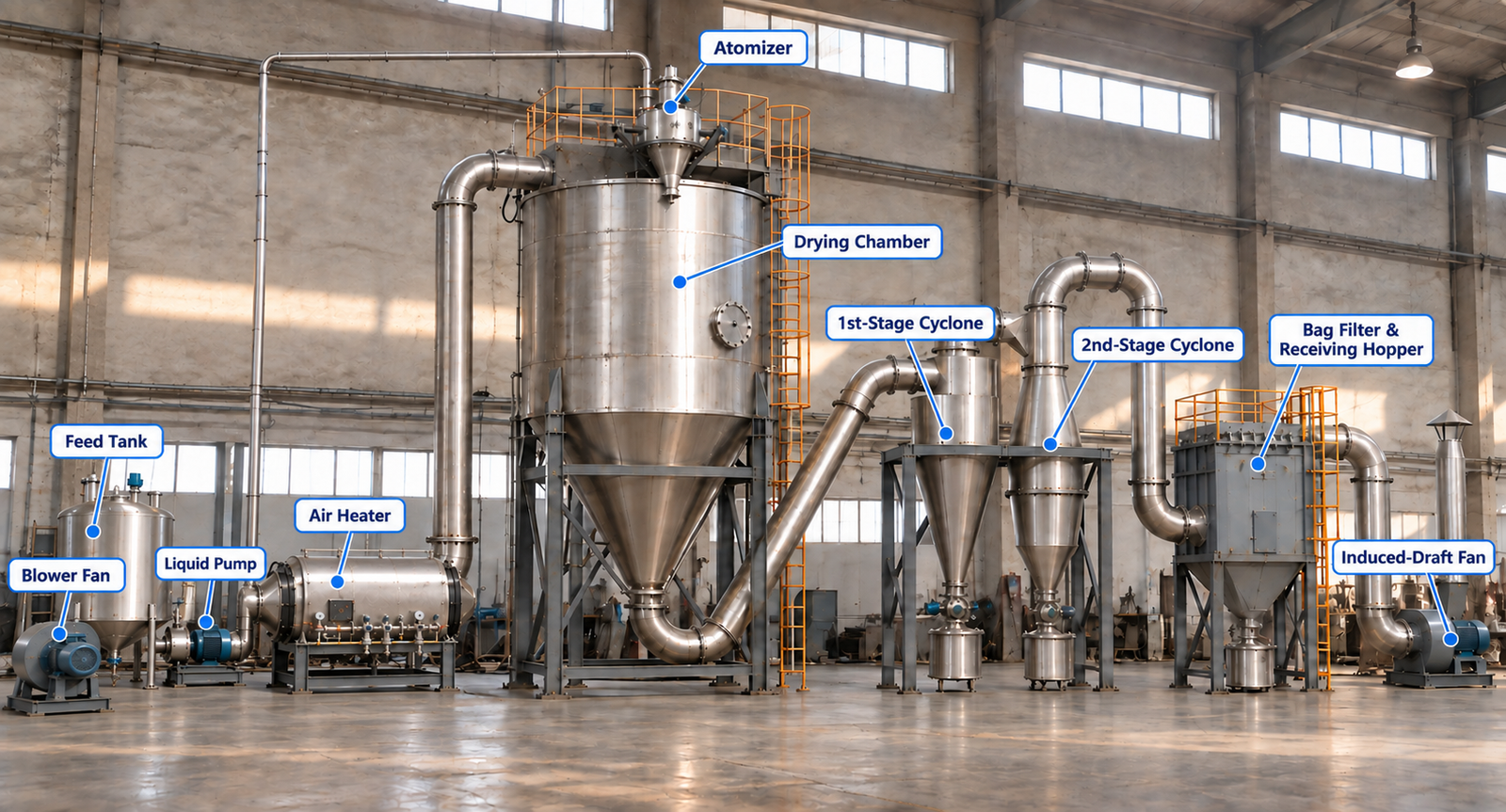
Feed Pump
Function: Delivers liquid to the atomizer. Selection: Screw pumps for slurries, diaphragm pumps for high-pressure nozzles. Maintenance: Stator wear, seal integrity.
Atomizer
Function: Creates droplet cloud. Selection: Centrifugal vs pressure based on required particle size and feed viscosity. Maintenance: Bearings, disc/nozzle wear, vibration.
Air Heater
Function: Heats process air. Selection: Steam, electric, or gas based on site utilities and max inlet temp required. Maintenance: Element scaling, burner tuning.
Air Distributor
Function: Mixes hot air with spray. Selection: Design dictates flow pattern (co-current, counter-current). Maintenance: Cleaning to prevent charring.
Drying Chamber
Function: Provides residence time for evaporation. Selection: Diameter and straight-side height based on evaporation duty and trajectory. Maintenance: Wall inspection, CIP efficiency.
Cyclone Separator
Function: Primary powder recovery. Selection: Sized for specific air volume and particle cut-point. Maintenance: Airlock valve function, blockage clearing.
Bag Filter
Function: Captures remaining fines. Selection: Filter media compatibility with product and temperature. Maintenance: Bag replacement, pulse-jet cleaning system.
What Types of Spray Dryers Are Available?
Equipment configurations vary by atomization method and process layout to
By Atomization Method
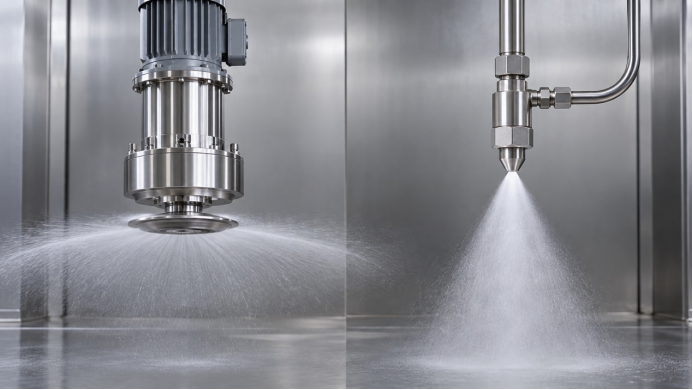
- Centrifugal / Rotary Atomizer Spray Dryer Uses a high-speed rotating disc. Highly flexible for varying feed rates and viscosities. (JEXDRY LPG Series)
- Pressure Nozzle Spray Dryer Uses high-pressure pumps. Produces narrower particle size distribution and higher bulk density. (JEXDRY YPG Series)
- Two-Fluid Nozzle Spray Dryer Uses compressed gas to atomize liquid. Common for lab scale or highly viscous pastes. (Optional configuration)
By Process Configuration
- Single-Stage Spray Dryer Drying is completed entirely within the chamber. Standard for many chemical and food products.
- Multi-Stage / Fluid-Bed Finishing Combines spray drying with an internal or external fluid bed for agglomeration or final cooling. (Industry reference/Optional)
-
Open vs. Closed-Cycle
Standard open-cycle exhausts to atmosphere.
Important: Solvent-based or oxygen-sensitive feeds require a dedicated closed-cycle (nitrogen) and safety evaluation. A standard open-cycle dryer must not be assumed suitable.
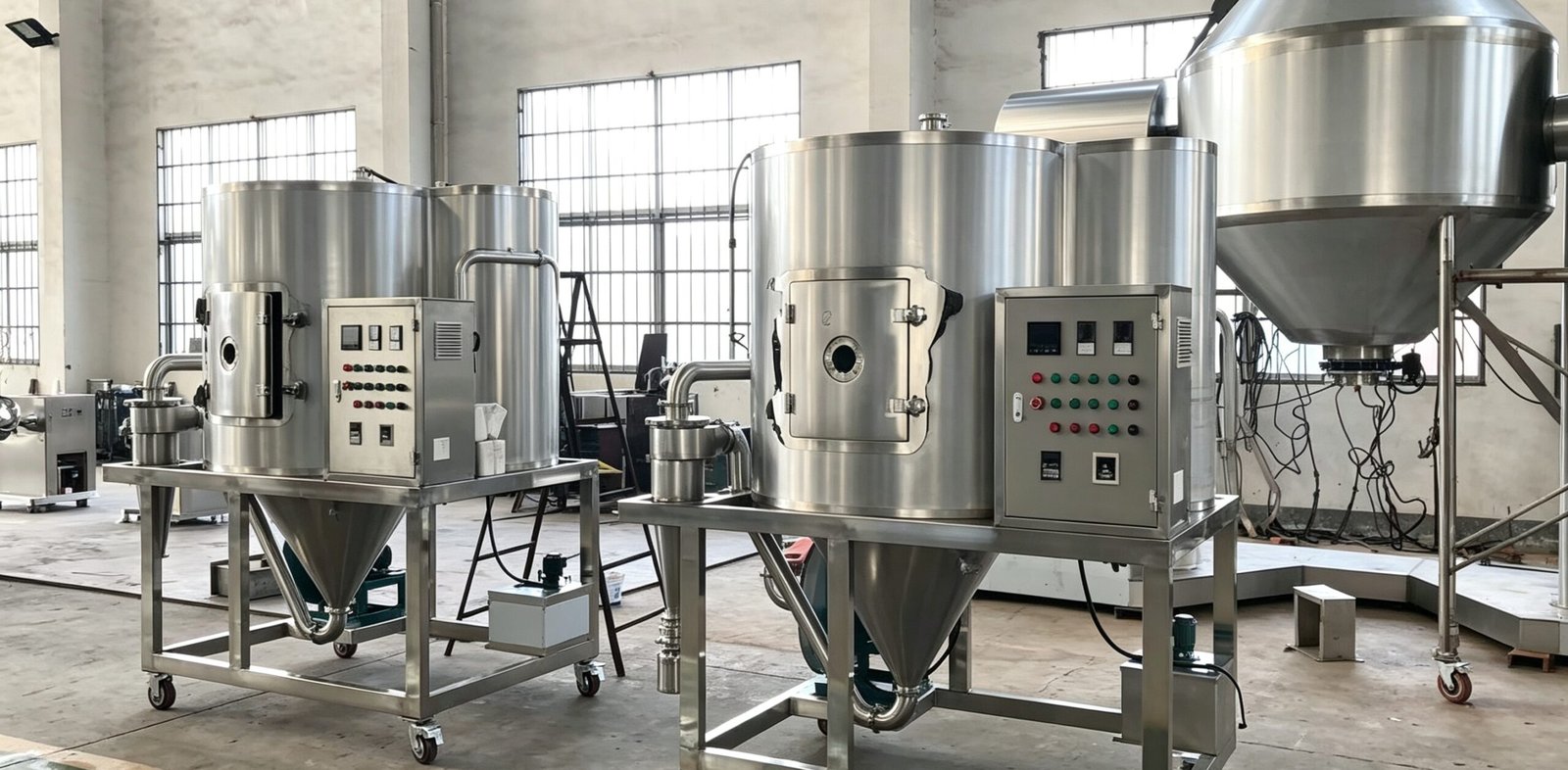
Centrifugal vs Pressure Nozzle Spray Dryer
There is no universally superior atomizer. Selection depends on feed properties,
| Selection Factor | Centrifugal Atomizer (LPG) | Pressure Nozzle (YPG) |
|---|---|---|
| Atomization principle | High-speed rotating disc or wheel | Liquid is forced through a nozzle under pressure |
| Main control variables | Rotation speed, feed rate, disc design, feed properties | Pressure, nozzle geometry, feed rate, feed properties |
| Feed pressure | Does not normally rely on high liquid pressure | Requires a high-pressure pump system |
| Feed variation | Can offer flexibility for selected variable feeds | Requires stable, nozzle-compatible feed |
| Blockage risk | No narrow pressure-nozzle orifice | Nozzle can block if feed contains oversized particles or crystals |
| Maintenance focus | Bearings, vibration, balance and disc wear | Nozzle wear, blockage and high-pressure pump condition |
| Spray pattern | Radial spray from a rotating disc | Directed spray pattern from one or more nozzles |
Spray Dryer Specifications at a Glance
| Series | Atomization | Available Models | Brochure Evaporation | Reference Data |
|---|---|---|---|---|
| LPG | Centrifugal | LPG-5 to LPG-1000 | 3–7 to 800–1000 kg/h | Inlet 130–300°C; outlet 70–90°C |
| YPG | Pressure nozzle | YPG-12.5 to YPG-100 | 12.5–100 kg/h | Working pressure 1.6–2.5 MPa |
| ZPG | Application-specific | Confirm current models | Project-specific | Designed for extract applications |
Parameter Disclaimer: Water evaporation capacity is not finished powder output. Actual capacity depends on feed rate, solids content, viscosity, feed temperature, solvent load, target moisture and ambient conditions.
The listed inlet and outlet temperatures are brochure equipment ranges, not recommended settings for every material. Final dimensions, heating duty, fan capacity and system layout require project-specific calculations.
What Materials Can Be Spray Dried?
Spray drying is applied across industries requiring controlled
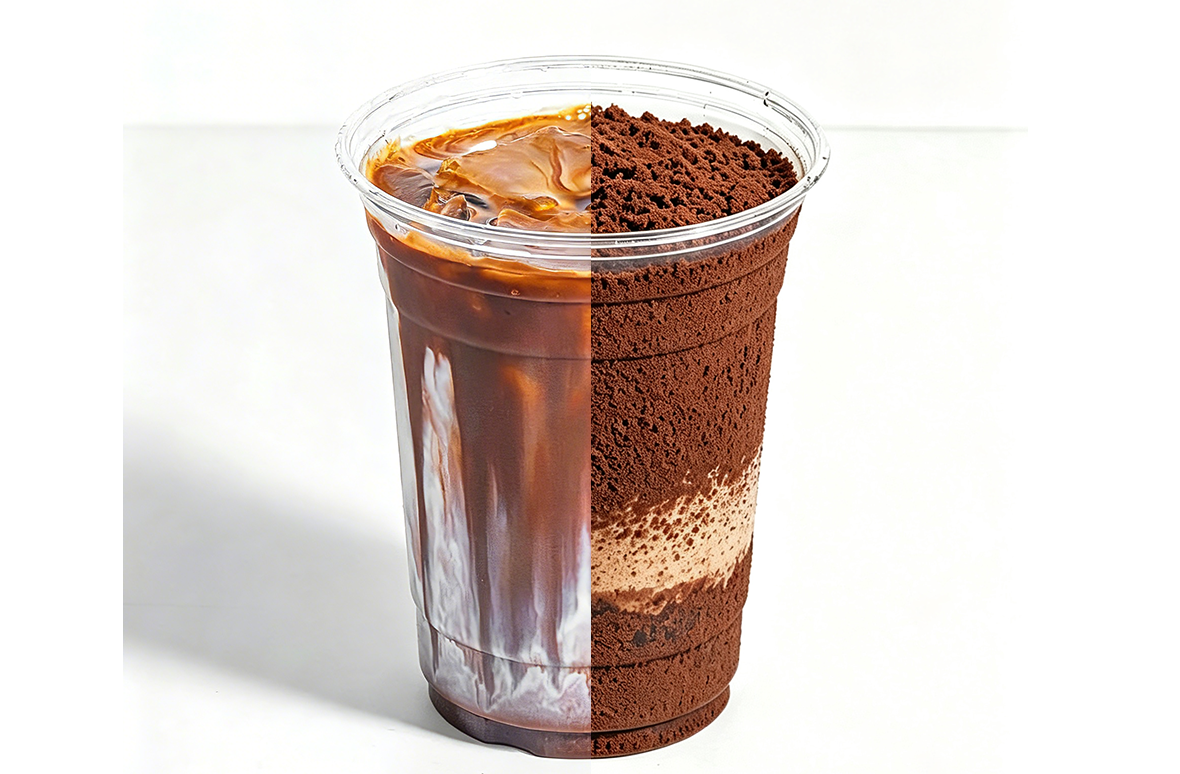
Food and Beverage
Coffee, egg products, flavors, starch derivatives, maltodextrin, plant proteins, and nutritional ingredients.
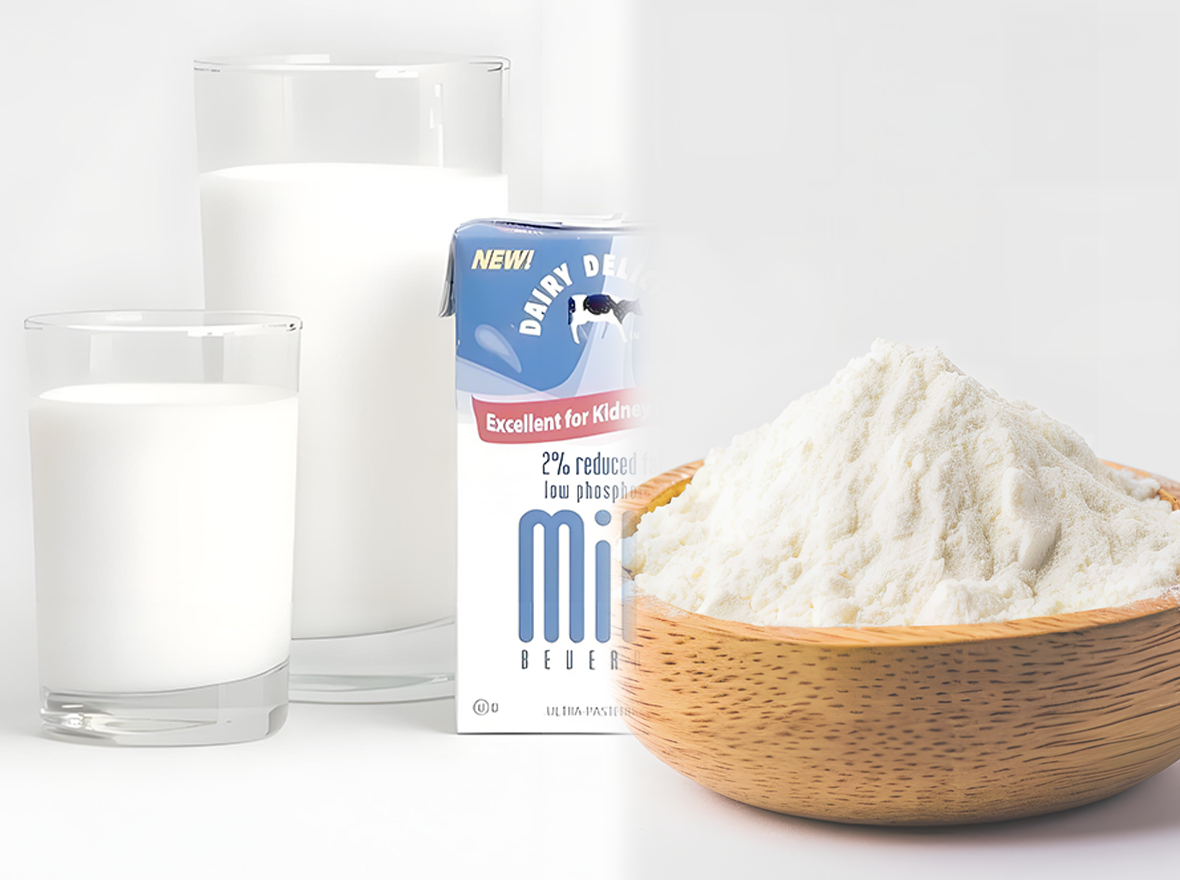
Dairy Processing
Specialized systems for whole milk, skim milk, and whey powder processing requiring strict hygiene and solubility control.
Milk Powder Spray Dryer for Dairy Processing →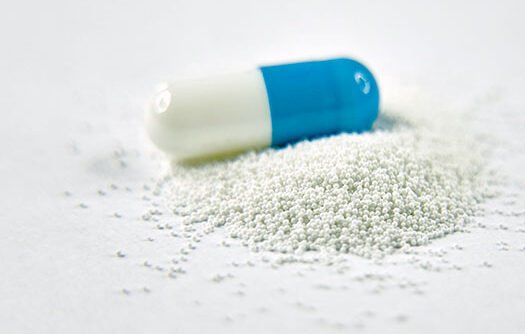
Pharmaceutical
Excipients, fermentation products, enzymes, and selected intermediates. (Hygiene and documentation subject to project review).
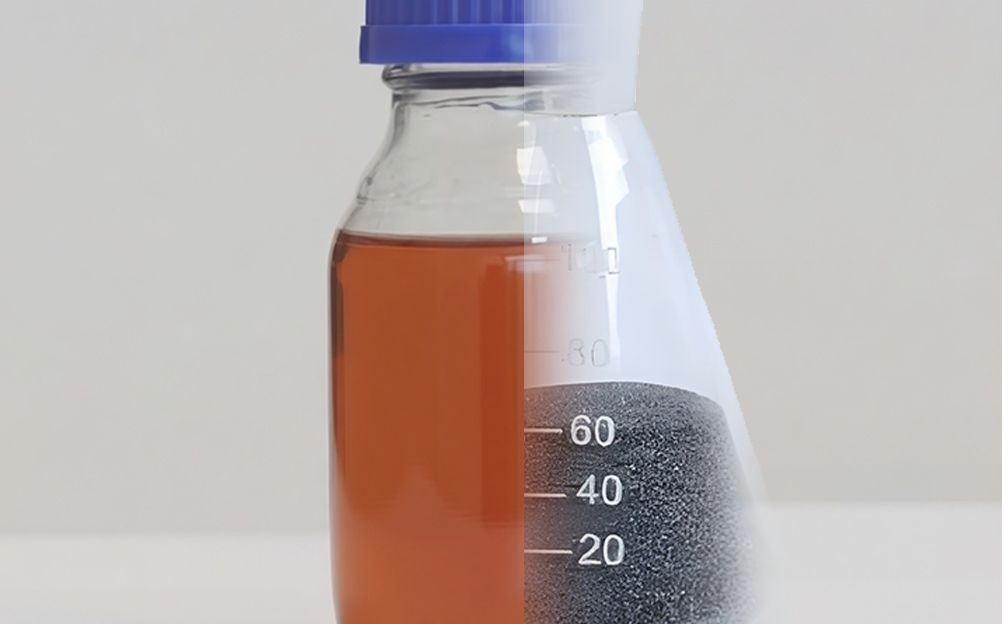
Chemical Industry
Dyes, pigments, inorganic salts, catalysts, polymer-related feeds, and selected chemical solutions.
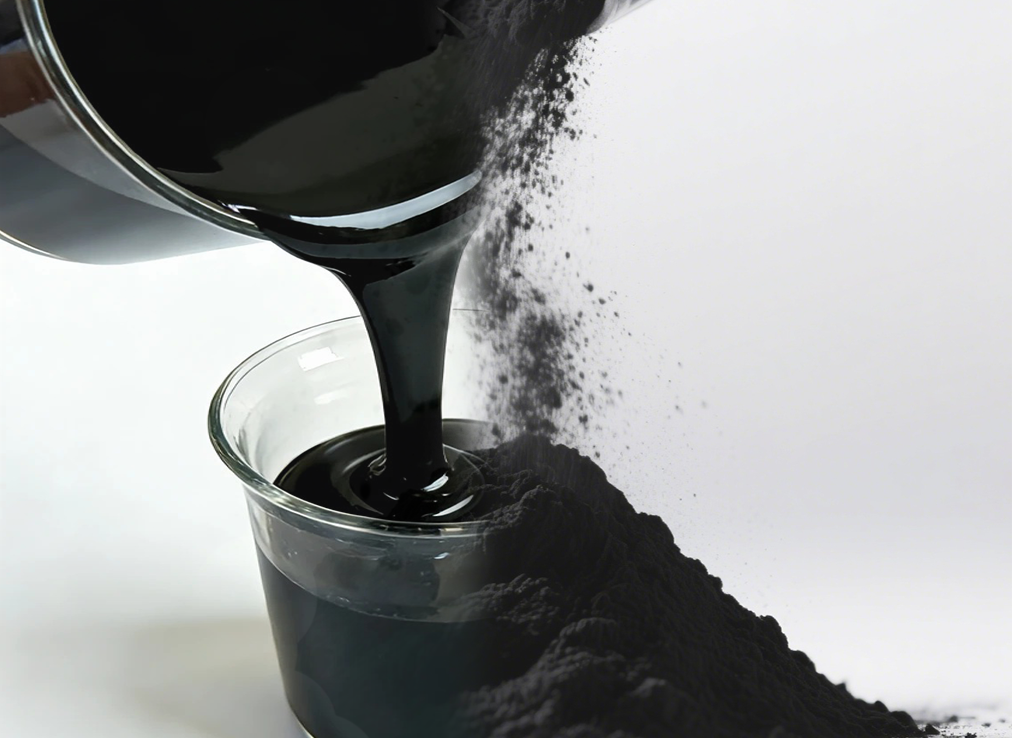
Ceramics & Minerals
Ceramic slurries, metal oxides, mineral suspensions, and advanced-material precursors.
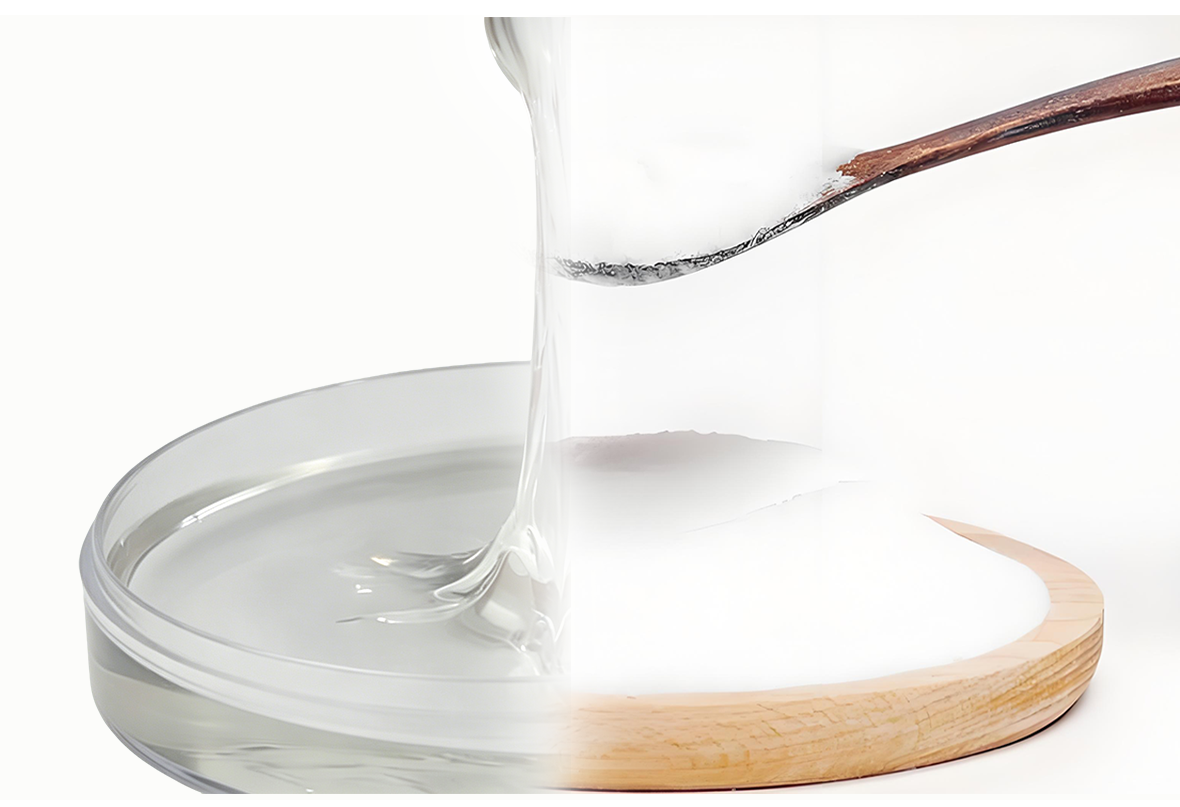
Botanical Extracts
Traditional Chinese medicine extracts and selected heat-sensitive concentrates prone to wall sticking.
When Is Spray Drying the Right Choice?
Suitable for Evaluation
- • Feed is pumpable and atomizable.
- • Dry powder is the required final form.
- • Continuous, automated production is preferred.
- • Final moisture control matters.
- • Specific particle size or powder morphology is needed.
- • Rapid liquid-to-powder processing prevents degradation.
Review Carefully
- • Feed is extremely viscous or acts as a wet cake (consider Flash Dryer).
- • Product becomes highly sticky within drying temperatures.
- • Suspended solids settle too rapidly to pump.
- • Feed is highly abrasive or corrosive.
- • Feed contains organic solvent (requires closed-cycle).
- • Feed is very dilute, creating excessive evaporation cost.
How Is Spray Dryer Capacity Calculated?
Spray dryer capacity should normally be evaluated by the amount of liquid that must be evaporated per hour, not only by liquid feed rate or finished powder output.
Mass Balance Formula:
P = F × S ÷ (1 − M)
E = F − P
- F = liquid feed rate (kg/h)
- S = dry-solids fraction of the feed (%)
- M = final powder moisture fraction (%)
- P = finished powder output (kg/h)
- E = water evaporation load (kg/h)
Illustrative calculation only. Final equipment selection requires engineering verification based on thermal mass balance.
Common Spray Drying Problems & Responses
Process optimization requires matching equipment design to material behavior.
Chamber Wall Deposition
Cause: Droplets hit wall before drying, stickiness, or poor air distribution.
Response: May require adjusting atomizer trajectory, lowering feed rate, or adding air sweep systems.
Wet Powder
Cause: Insufficient thermal energy, high feed rate, or low outlet temperature.
Response: Can often be improved by increasing inlet temp or decreasing feed rate, subject to product testing.
Excessive Fines
Cause: Over-atomization, low feed viscosity, or brittle particles.
Response: Depending on the root cause, lower atomizer speed or pressure, or integrate fines-return.
Nozzle Blockage
Cause: Oversized suspended solids or crystallization in feed lines.
Response: Requires feed filtration review or switching to a centrifugal atomizer.
Low Powder Recovery
Cause: Inefficient cyclone separation or bag filter bypass.
Response: Requires an engineering review of exhaust air volume and cyclone cut-point.
Atomizer Vibration
Cause: Imbalanced disc due to wear or uneven feed distribution.
Response: Requires immediate cleaning, bearing check, and dynamic re-balancing.
How to Choose the Right Spray Dryer
-
1
Confirm pumpability
Ensure the feed can be reliably pumped to the atomizer.
-
2
Define feed properties
Document solids content, viscosity, and feed temperature.
-
3
Assess material risks
Evaluate heat sensitivity, stickiness, abrasiveness, and corrosion.
-
4
Set powder targets
Define final moisture, particle size, and bulk density.
-
5
Calculate evaporation duty
Determine water/solvent removal rate to size the chamber.
-
6
Compare atomization methods
Select centrifugal or pressure nozzle based on feed and powder goals.
-
7
Select heating and recovery
Match heat source to utilities and design cyclone/filter systems.
-
8
Confirm site details
Review material of construction, cleaning, safety, and installation space.
Required Data for Sizing
To receive an accurate proposal, please prepare:
- • Product name & Feed type
- • Feed rate (kg/h)
- • Initial moisture / total solids
- • Feed viscosity & temp
- • Thermal sensitivity limit
- • Solvent information
- • Target powder output
- • Target final moisture
- • Target particle size
- • Available heat source
- • Installation height limit
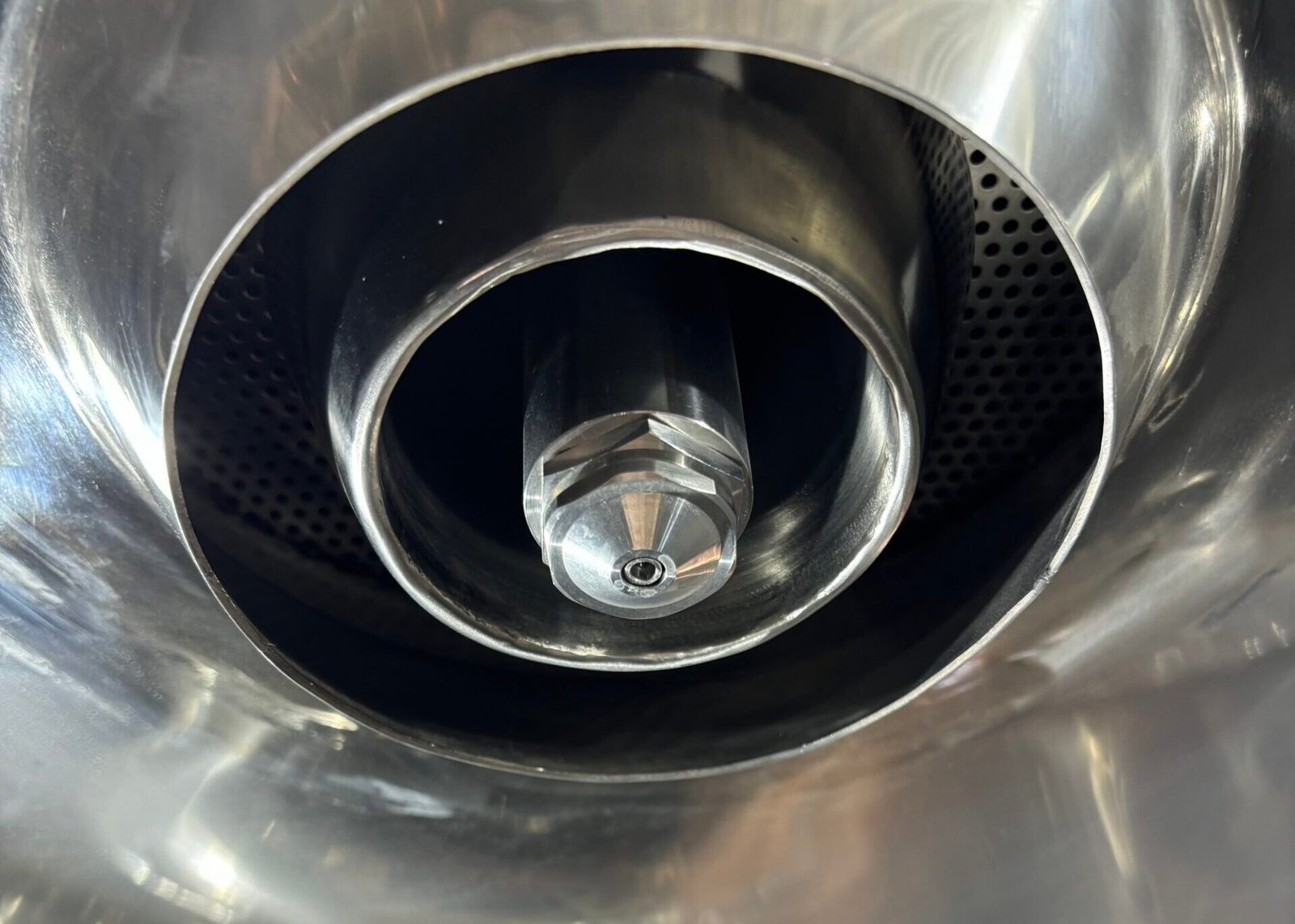
What Determines Spray Dryer Price?
Industrial spray dryers are engineered systems. A meaningful quotation requires feed data and a defined supply scope.
- • Water evaporation duty
- • Atomization method
- • Chamber dimensions
- • Product-contact material
- • Surface-finish requirement
- • Heat source & Air filtration
- • Powder recovery design
- • Exhaust treatment
- • Cleaning configuration
- • Control and automation
- • Solvent & dust-safety
- • Installation & commissioning
Why Choose JEXDRY?
Engineering and manufacturing drying solutions since 1998.
Established 1998
Decades of manufacturing experience in industrial drying and powder processing equipment.
Complete Series
LPG, YPG and ZPG series offering centrifugal and pressure atomization options.
Data-Driven Sizing
Equipment selection strictly based on feed data, water evaporation duty, and thermal mass balance.
System Integration
Integration with related upstream preparation and downstream powder-processing equipment.
Trusted Production & Testing Facilities
In-house manufacturing ensuring strict quality control from raw materials to final assembly.
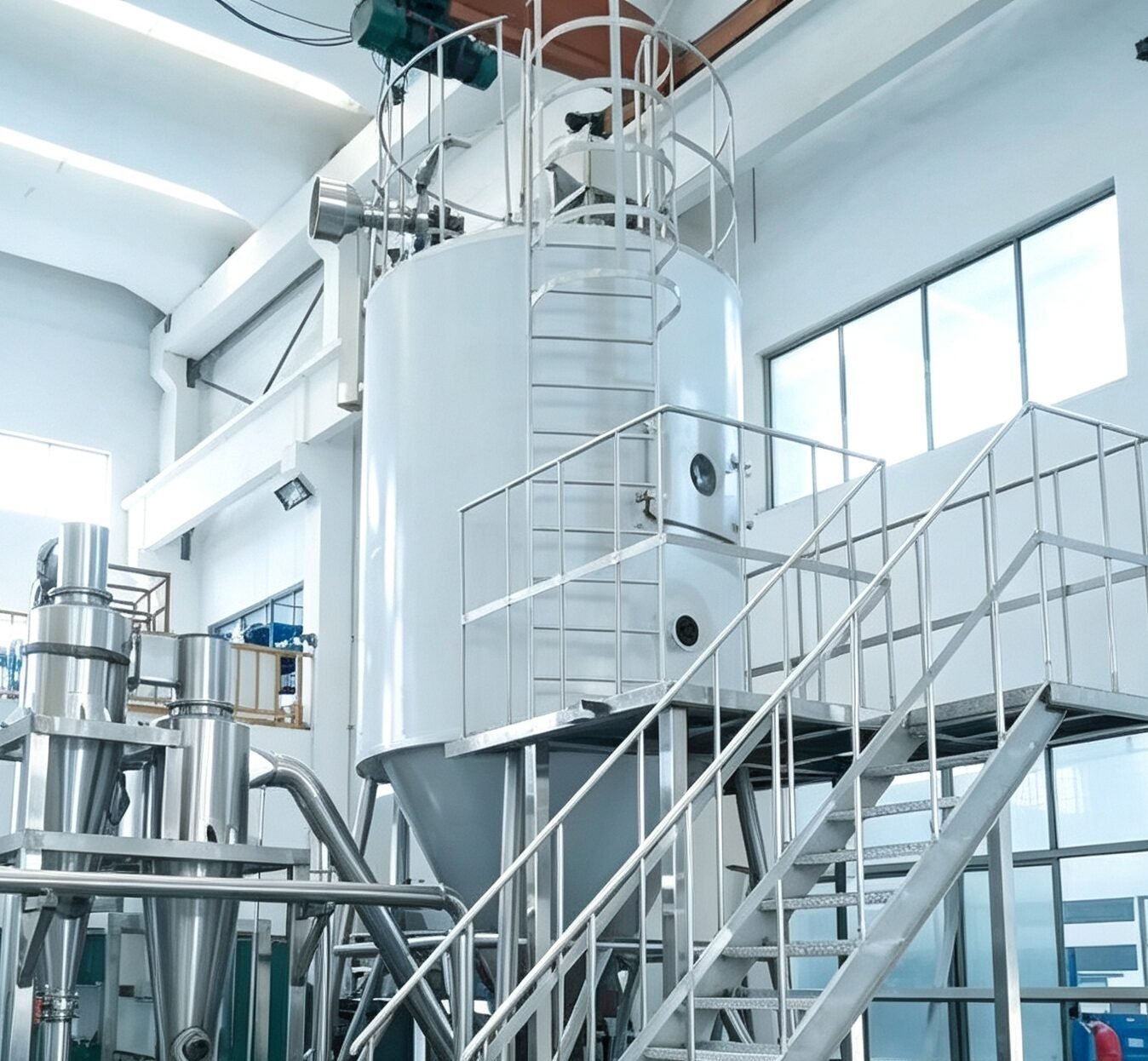
Advanced Manufacturing Facility
State-of-the-art fabrication of stainless steel drying chambers.
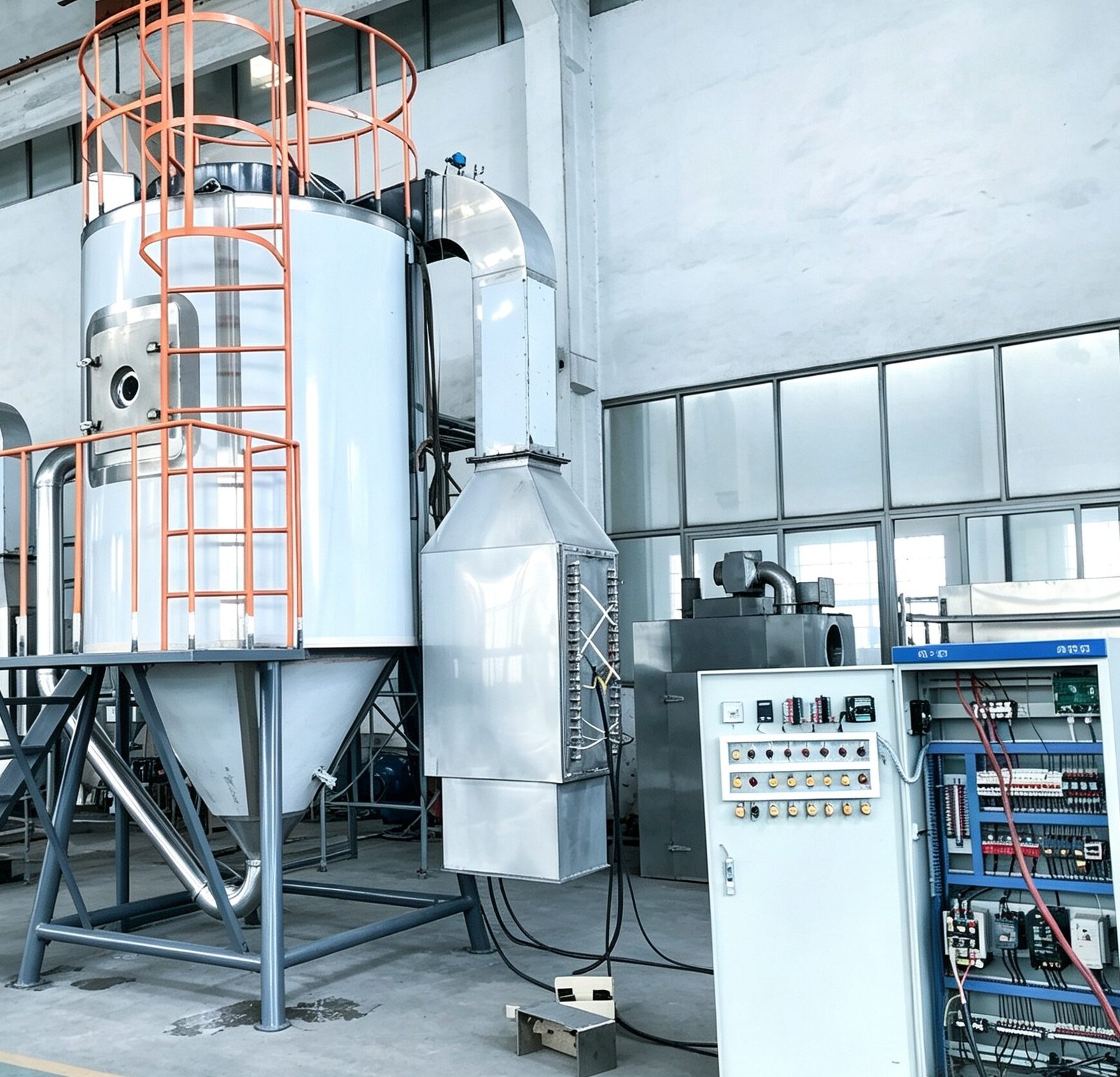
Material Testing Center
Pilot testing to guarantee optimal drying parameters before production.
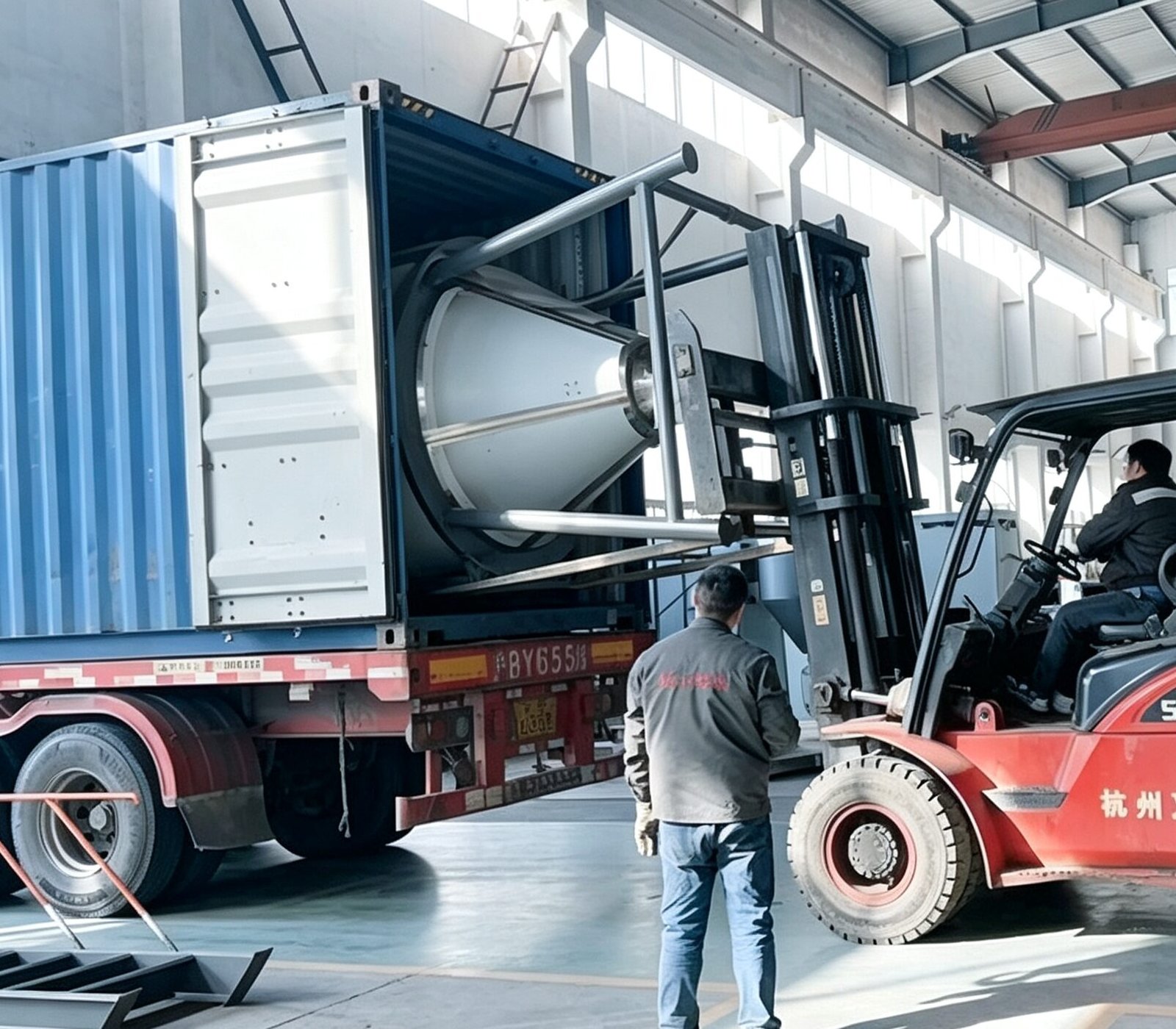
In-House FAT & Assembly
Comprehensive Factory Acceptance Testing (FAT) prior to shipment.
Frequently Asked Questions
What is a spray dryer and how does it work?
What liquids and slurries can be spray dried?
How is spray dryer capacity calculated?
Why is water evaporation different from powder output?
How do I choose between a centrifugal atomizer and a pressure nozzle?
When is a two-fluid nozzle used?
What controls particle size and residual moisture?
How do cyclone and bag-filter collection systems differ?
Can a spray dryer process heat-sensitive materials?
How can wall sticking and nozzle blockage be reduced?
Which heating source should I choose?
When is spray drying not the right drying method?
What information is required for an accurate quotation?
How are installation, commissioning and training arranged?
Tell Us What You Need to Convert into Powder
Submit your material data below. JEXDRY engineers will evaluate suitability, calculate evaporation load, and recommend an LPG, YPG, or application-specific configuration.
zar@jexdry.com
Phone / WhatsApp
+86 137 7501 3369
Factory Address
Jiaoxi Industrial Zone, Zhenglu Town, Tianning District, Changzhou, Jiangsu Province, China