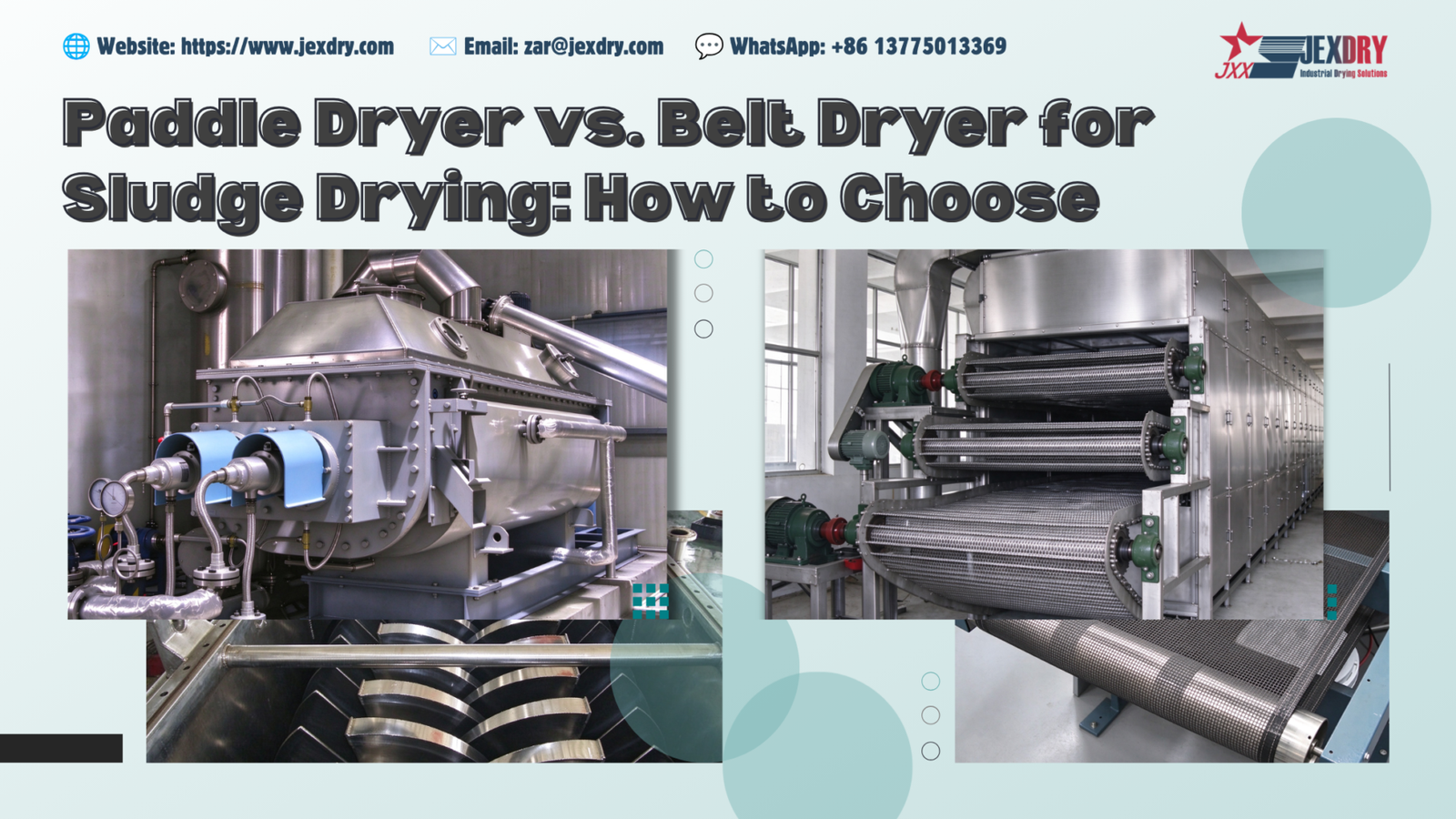
A paddle dryer transfers heat through metal surfaces while mixing the sludge. A belt dryer uses heated air to dry a layer of sludge carried on a moving belt. The way each dryer heats and moves the sludge determines how it handles sticky filter cake, what feed preparation it needs, and which heat sources it can use.
Evaluate a paddle dryer first if the cake is too sticky or soft to form a stable layer on a mesh belt, particularly if the plant has steam or thermal oil and limited floor space. Evaluate a belt dryer first if the cake can be formed into a permeable layer and the plant has reliable low-temperature waste heat. Both types can be configured around the sludge, evaporation load, and site utilities.
What Is a Paddle Dryer and How Does It Work?
A paddle dryer is an indirect contact dryer used for wet materials such as dewatered sludge, filter cake, and pastes. In a typical continuous unit, steam or thermal oil heats the jacket and hollow paddles. As the paddles rotate slowly, they turn the cake and bring fresh material into contact with the heated metal.
The sludge gradually moves toward the discharge. Evaporated moisture leaves through a separate vapor outlet and can be routed to a condenser and odor treatment system as required.
What Is a Belt Dryer and How Does It Work?
A belt dryer is a continuous convective dryer that carries material through drying zones on a moving belt. In a mesh belt sludge dryer, dewatered cake is often extruded into short strands and spread evenly across the belt. Fans circulate heated air through or over the sludge layer. The air transfers heat to the sludge, picks up moisture, and can be partly recirculated.
The sludge travels through the dryer without continuous stirring. Belt speed controls how long it stays in the drying zones. Depending on the design, steam, hot water, or recovered heat can warm the air.
Paddle Dryer vs Belt Dryer at a Glance
| What to compare | Indirect paddle dryer | Hot-air belt dryer |
| Heat transfer | Contact with the heated jacket and paddles | Hot air flows through or over the sludge layer |
| Sludge movement | Slow paddles mix the cake as it moves toward discharge | The belt carries the layer through drying zones |
| Feed preparation | Meter the cake and check how it mixes and discharges | Extrude or condition the cake to form a permeable layer |
| Heat source | Commonly steam or thermal oil | Steam, hot water, or recovered heat |
| Exhaust and service | Check vapor treatment and access to the shaft and drive | Check exhaust treatment and access to belts, fans, and extruder |
Can a Belt Dryer Handle Sticky Sludge?
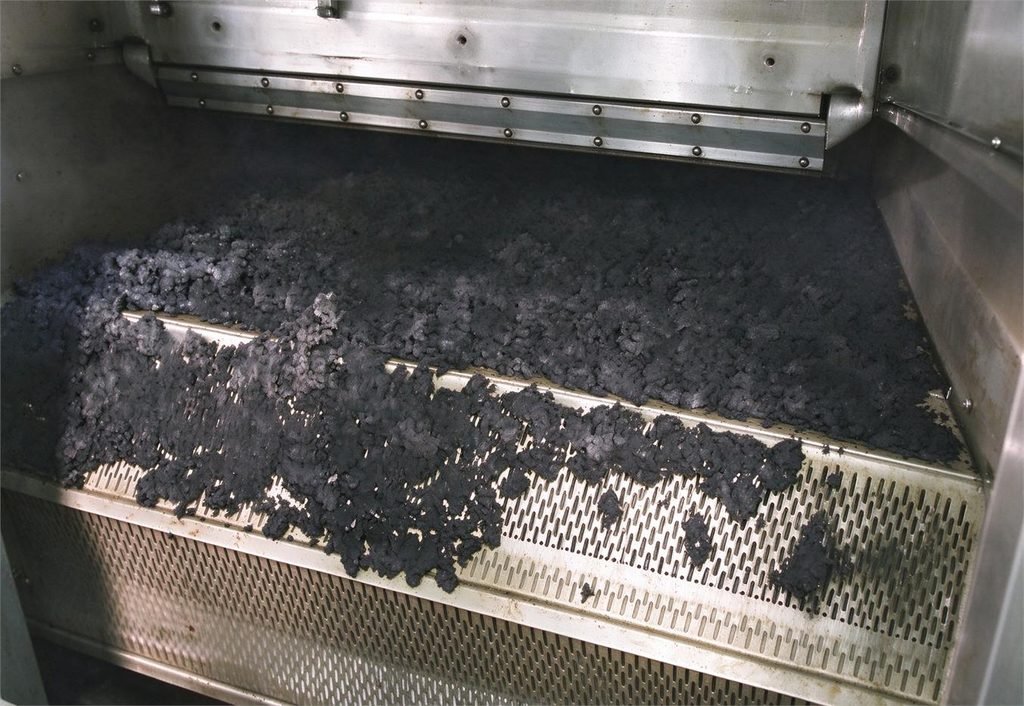
A belt dryer can handle sticky sludge if the feed system forms the cake into a stable layer that allows air to pass through. Sludge cakes with similar moisture contents can behave differently. One may hold its shape after extrusion, while another may slump, smear across the mesh, or squeeze through the openings. Test the actual cake to see whether extrusion alone is sufficient or whether dried solids need to be mixed back into the feed.
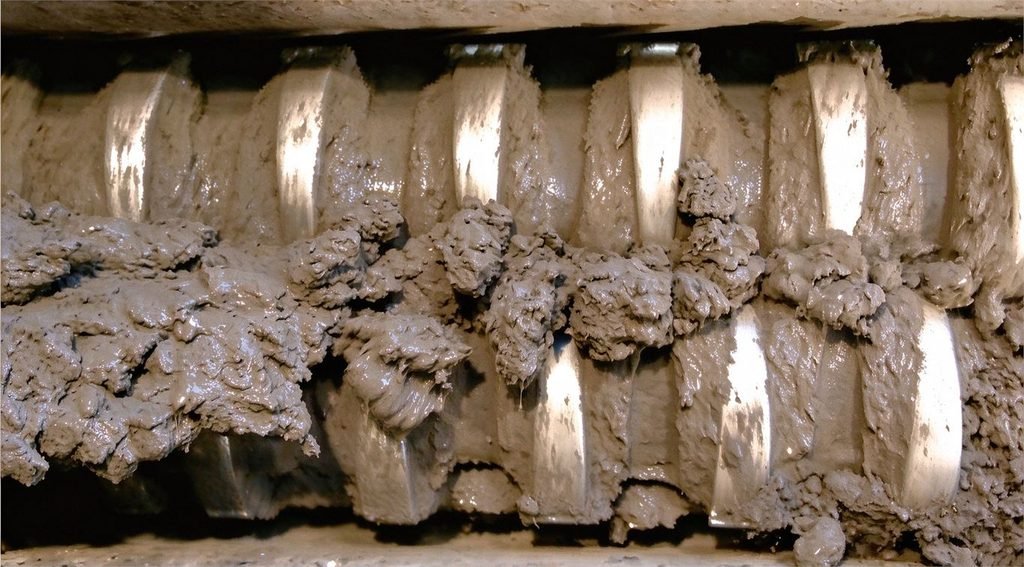
A paddle dryer can handle cake without first forming a permeable layer. During a trial, watch how the cake behaves between the wet inlet and the dry discharge. Some sludges become stickier at an intermediate moisture content. Deposits on the paddles can increase drive load, reduce heat transfer, and lower sustained throughput. ISPT paddle dryer trial
Which Sludge Dryer Costs Less to Run?
In this illustrative cost comparison, assume that both steam-heated lines treat 2,700 kg/h of wet sludge and reduce its moisture from 80% to 20%, both on a wet basis. Each produces 675 kg/h of dried sludge and evaporates 2,025 kg/h of water, equivalent to 0.75 tonnes of water removed per tonne of wet feed.
This example uses USD 44.94 per tonne of steam and USD 0.1198 per kWh of electricity as budgeting assumptions. To estimate costs for your plant, use your own delivered steam cost and electricity rate. Actual consumption depends on the sludge, steam conditions, and equipment configuration. For general context, see Ontario’s sewage works energy guidance.
| Budget input or result | Paddle dryer | Belt dryer |
| Assumed steam use, tonnes per tonne of water evaporated | 1.30–1.70 | 1.40–1.75 |
| Assumed electricity use, kWh per tonne of water evaporated | 55–90 | 25–45 |
| Illustrative energy cost (USD per tonne of wet sludge) | 48.76–65.38 | 49.43–63.02 |
| Base-case energy cost (USD per tonne of wet sludge) | 56.85 | 55.38 |
Currency conversion uses the original assumptions of CNY 300 per tonne of steam and CNY 0.80 per kWh. The rate was CNY 6.6760 per USD on November 6, 2026. Table values use unrounded inputs. Federal Reserve exchange rate via FRED.
In this example, the belt dryer costs about USD 1.5 less in energy per tonne of wet sludge. The ranges overlap, so measured steam and electricity use can change which system costs less.
The base case assumes 1.50 tonnes of steam and 70 kWh for the paddle line and 1.55 tonnes of steam and 35 kWh for the belt line, per tonne of water evaporated. At that electricity difference, the paddle line would match the belt line’s energy cost if it used about 0.09 tonnes less steam per tonne of water evaporated. If a belt line uses waste heat, include the cost of delivering that heat and of backup heat when the supply falls short.
For a full operating-cost comparison, count electricity for feeding, extrusion or recirculation, fans, pumps, and exhaust treatment. Add labor, cleaning, wear parts, and condensate or scrubber wastewater treatment. Use the same process stages and operating conditions for both quotes.
What to Check Before Choosing a Paddle Dryer or Belt Dryer
Use the same feed data, site conditions, and discharge requirements when requesting both custom sludge drying proposals.
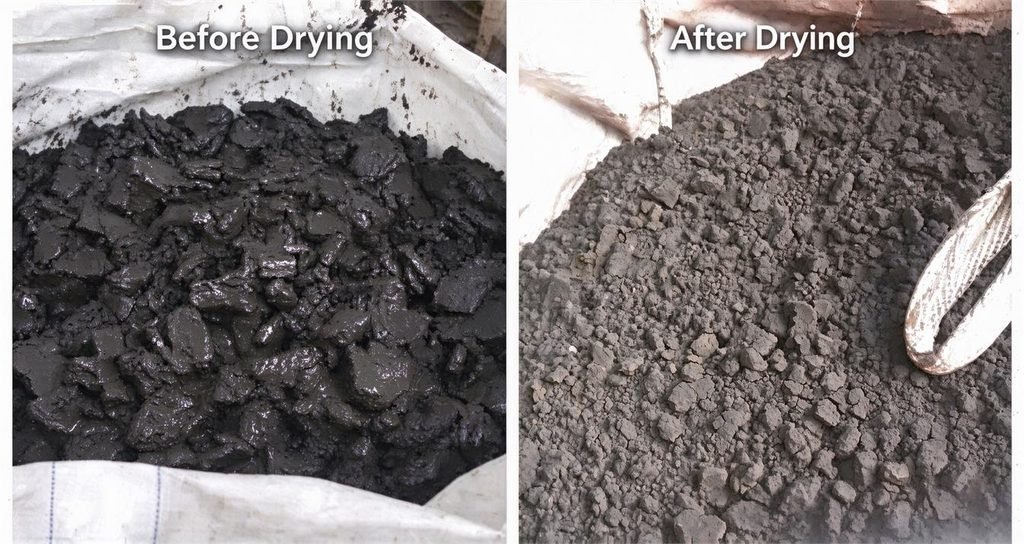
- Test the actual sludge. For a paddle dryer, check drive load, buildup, and discharge through the sticky phase. For a belt dryer, check whether the cake holds its shape after extrusion, stays on the mesh, and allows air to pass through. If recirculation is needed, include its equipment and power use.
- Size for normal and wetter feed conditions. Give the expected range of wet feed rates and inlet moisture. Ask what throughput the dryer can sustain at the wettest expected condition while meeting the outlet target.
- Match the dryer to the available heat. For steam, confirm pressure, temperature, and flow at the dryer inlet. For thermal oil or recovered hot water, provide supply and return temperatures, flow, and operating hours. Ask what throughput the system can sustain when heat supply drops.
- Compare the complete lines. Include feeding, extrusion or recirculation, discharge, dust and odor control, and condensate handling. Check access for cleaning, shaft removal, or belt replacement. Account for wear parts and downtime.
- Agree on the acceptance test. Confirm the outlet moisture and product form required for transport, storage, incineration, or reuse. Specify the sludge sample, continuous feed rate, test duration, sampling method, and how energy use will be measured.
Frequently Asked Questions
Can a paddle dryer dry sludge below 15% moisture?
Yes, where the sludge and dryer configuration support it. At the Ambarli wastewater treatment plant, paddle dryers produced sludge at 90–95% dry solids, equivalent to 5–10% moisture. Use your sludge and required throughput when setting a guarantee. ANDRITZ Ambarli project
Can a belt dryer reach 1–2% final moisture?
If your downstream process requires 1–2% moisture, ask the supplier to demonstrate it with your sludge at the required continuous feed rate. Verify moisture across multiple discharge samples so the result reflects the variation in the finished product.
Is a belt dryer the same as a belt filter press?
A belt filter press squeezes liquid water out of sludge to produce a cake. A belt dryer uses heat to evaporate water remaining in the cake. A belt filter press can supply dewatered sludge to either dryer type. U.S. EPA belt filter press fact sheet
Can better mechanical dewatering reduce dryer operating costs?
Yes. At the same dry-solids throughput and final moisture target, a drier cake reduces the amount of water the dryer needs to evaporate. Compare proposals using the cake moisture your dewatering system can sustain during normal operation, including wetter periods.
Send JEXDRY your sludge type, expected feed rate and moisture range, target outlet moisture, and available heat source to discuss a material trial and compare both drying lines on the same basis.